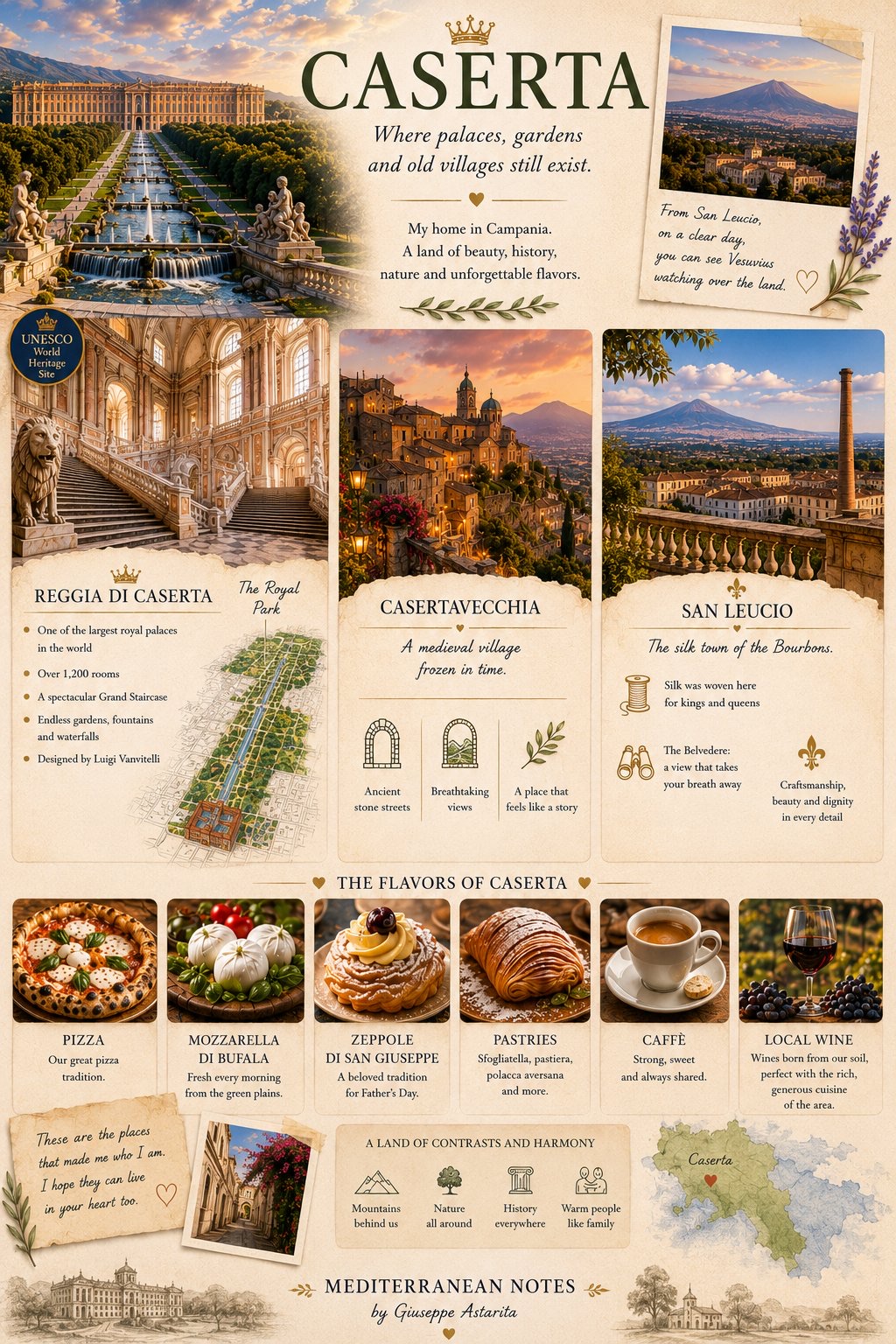
Caserta
Where palaces, gardens and old villages still exist.
The town I grew up in.
A city of 60,000 people in Campania, very close to Naples. Every time we went for the evening passeggiata we met people we knew — every other person on the street was familiar. This is the land I grew up in. And the food I remember. These are my family recipes. The recipes of a family from Caserta, in southern Italy, in the Campania region.
There is a specific quality to growing up in a city where most people know each other. Caserta in the 1970s and 1980s was not a village — 60,000 people, a provincial capital with its own administrative, commercial, and cultural life — but it functioned socially more like a large town than a city in the modern sense. You walked the corso in the evening for the passeggiata and you stopped constantly. Your parents recognized people from school, from work, from the neighborhood, from the market, from church, from decades of accumulated acquaintance. You knew your neighbors not just as faces but as people with histories and habits and specific opinions about food, which is to say as full participants in the life of the place.
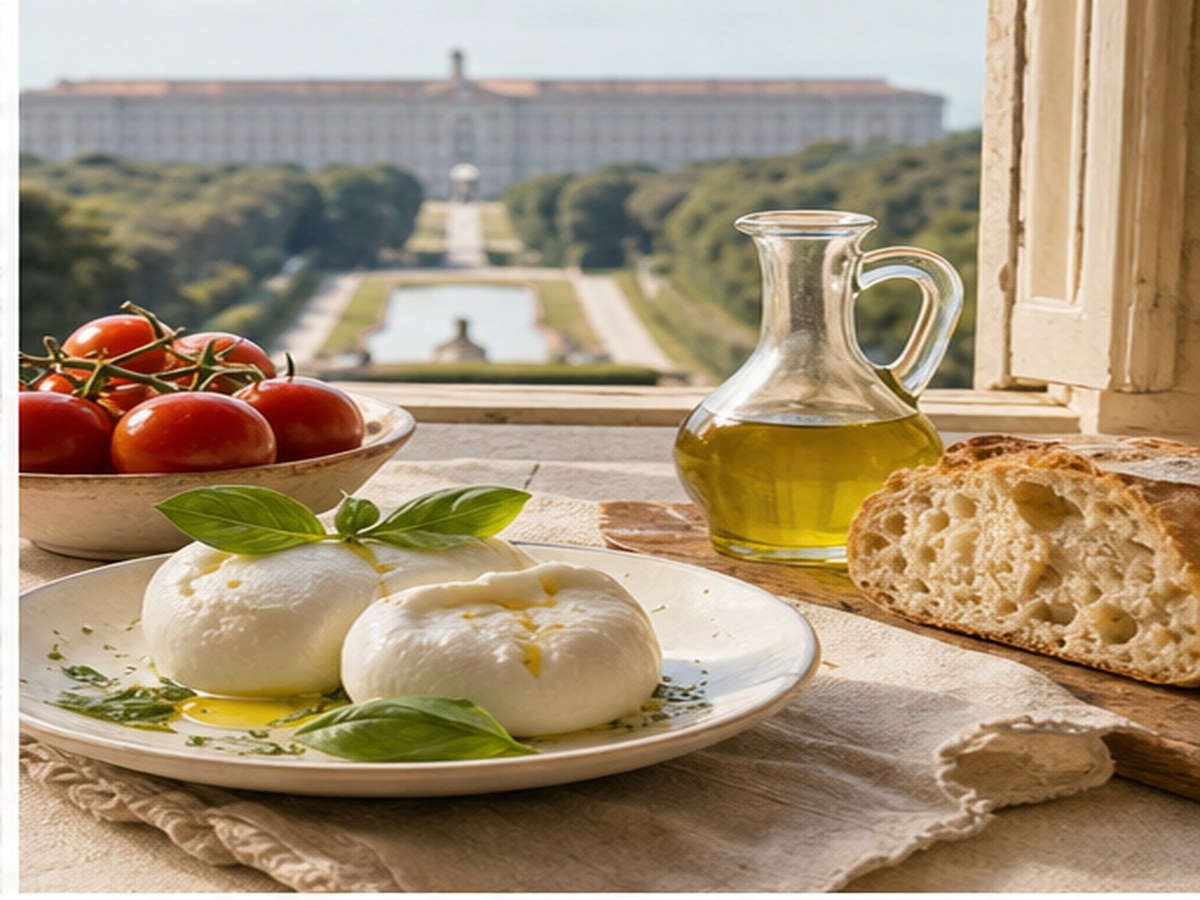
The Reggia di Caserta — the Royal Palace — is the most famous thing about the city and the thing most people associate with the name Caserta if they associate anything at all. It is a genuine wonder: one of the largest royal palaces in the world, designed by Luigi Vanvitelli for the Bourbon King Charles III in the eighteenth century, with a park of three kilometers and cascading fountains that were the envy of Versailles. It is a UNESCO World Heritage Site. It sits at the center of the city and you pass it constantly, so constantly that you stop seeing it the way you stop seeing any landmark you have grown up around. I am more aware of its beauty now, in Massachusetts, than I was when I lived five minutes from it.
The buffalo plain that begins south and west of the city — the zone that produces the mozzarella di bufala described elsewhere in this collection — was part of the local identity in a way that people who ate the mozzarella elsewhere could not quite understand. The water buffalo have been there for centuries. The caseifici were known by name. You had a preferred one, and your preference was considered an opinion worth having. This is the kind of knowledge that accumulates when a city has been eating the same things in the same territory for a very long time.
Casertavecchia — the medieval village above the modern city, still intact, its stone streets unchanged for centuries — was where you went on particular occasions or when you wanted to understand what Caserta had been before the Bourbon palace reshaped it. San Leucio, the silk-weaving town built by the Bourbons on the hill above the city, is something stranger: a utopian community founded in the eighteenth century with its own laws, its own social structure, and its own trade in fine silk. These places gave the city a texture and a depth that a younger settlement would not have. You grew up aware, even if dimly, that people had been living here and making things here for a very long time.
The places that shaped it
The flavors of Caserta
These are my family recipes
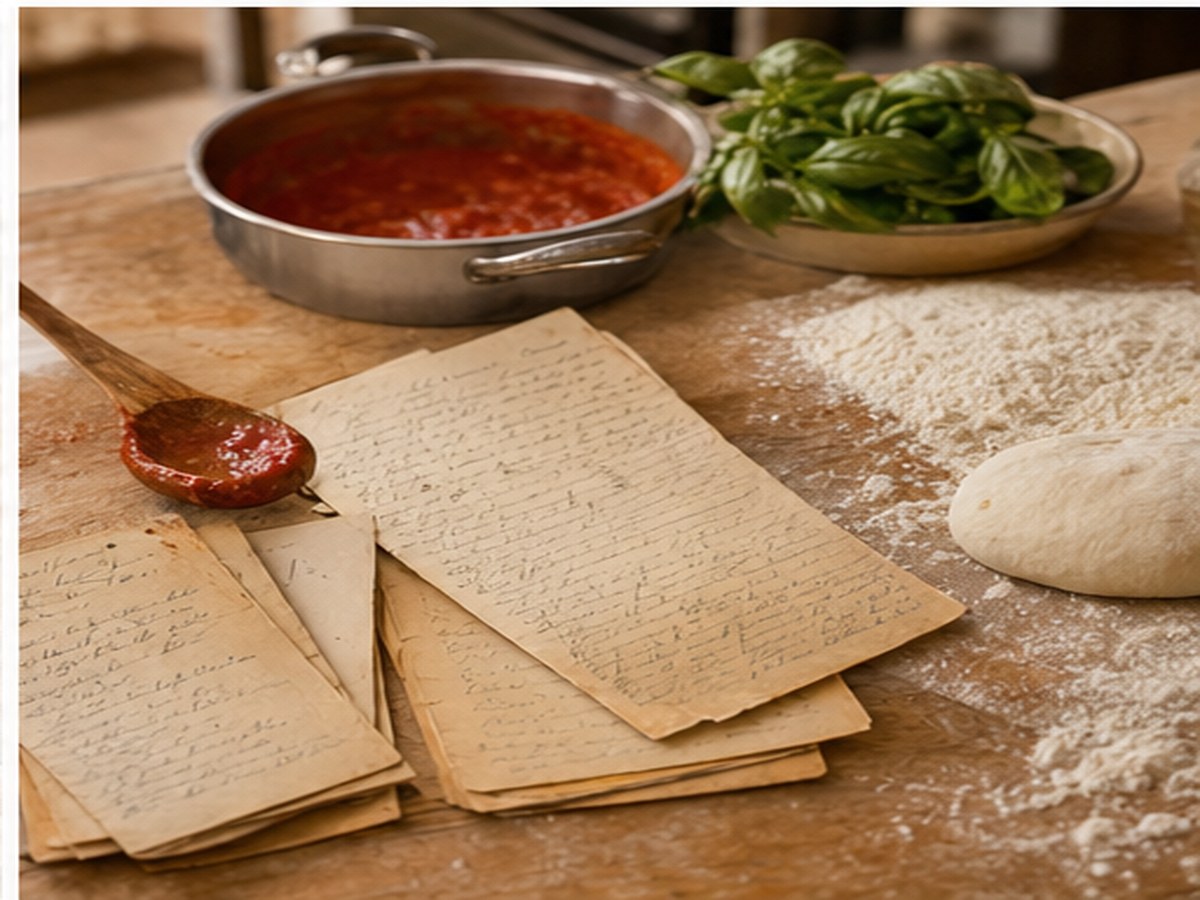
The recipes in this collection are the recipes I grew up eating in southern Italy, in the Campania region, in Caserta, very close to Naples. They are my mother's recipes and my father's preferences and the compromises they reached between two family traditions. They are the dishes made in a specific kitchen in a specific city in specific decades, and they carry all of that specificity with them. They are not the general case of Italian cooking or the authoritative version of Neapolitan cuisine. They are one family's version, from one city, over roughly three decades.
Many of these dishes I can no longer make — not because I have forgotten them but because the ingredients are not here in Massachusetts, or the person who made them is no longer here to make them, or the occasion that required them no longer arises in quite the same way. The carne alla pizzaiola with the particular smell of oregano in a hot pan. The pastiera made two days before Easter and given to the doctors who helped the family. The ragù that went on the stove at nine in the morning and was the first smell in the hallway before the door was open. These are not instructions I am missing. They are moments that cannot be fully reconstructed.
Or at least — now, on this blog — they will not be lost
on the day I won't have any memories left.
That is what this collection is for. Not a cookbook, not a reference, not a guide to Neapolitan cuisine as a category. A record. The specific dishes of a specific family in a specific city, written down while the memory is still clear, so that my daughters — who are growing up in Massachusetts with their own food memories — will have access to the table I grew up at even after I am no longer at the table myself.
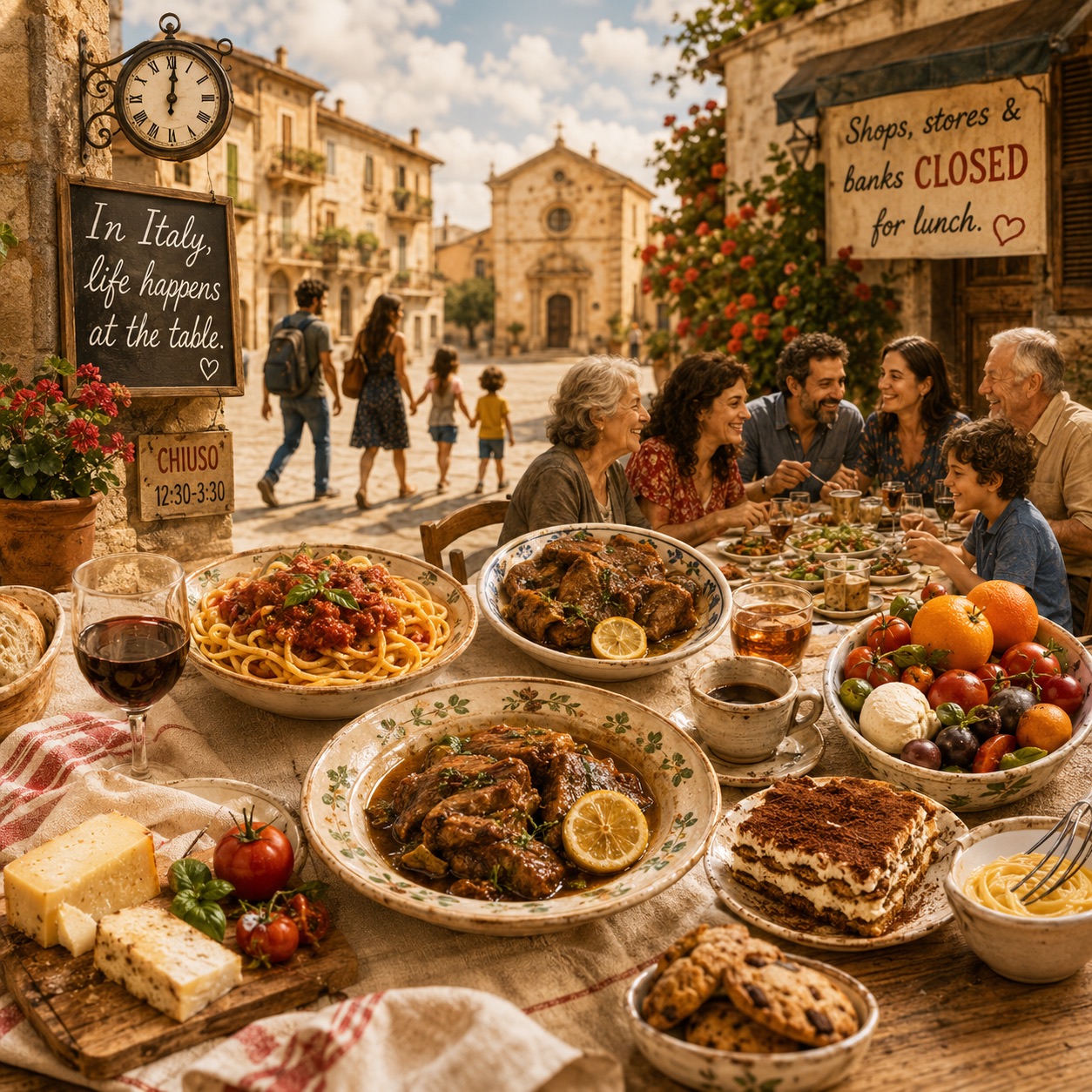
The passeggiata in Caserta in the 1980s: the corso in the evening, the familiar faces, the conversations that lasted longer than planned, the people my parents had known for decades and would know for the rest of their lives. The food that was made the next morning in those houses. The sauces that went on the stove on Sunday while the city was still quiet. The flavors that meant, specifically and unmistakably, that we were here, in this place, in this time, together.
These are the places that made me who I am. I hope they can live in your heart too.
The collection — every recipe, from that table
Non sono andate perdute nella memoria.
These are my family recipes. They are not lost in memory.