Finto Ragù Napoletano
No Meat, Full of Soul
The third of the three Sunday sauces — and the one I still make most often. No meat, just onion and tomato and olive oil and two hours of patience. Grated cheese at the end. Bread before, during, and after. Scarpetta even though it is not polite.
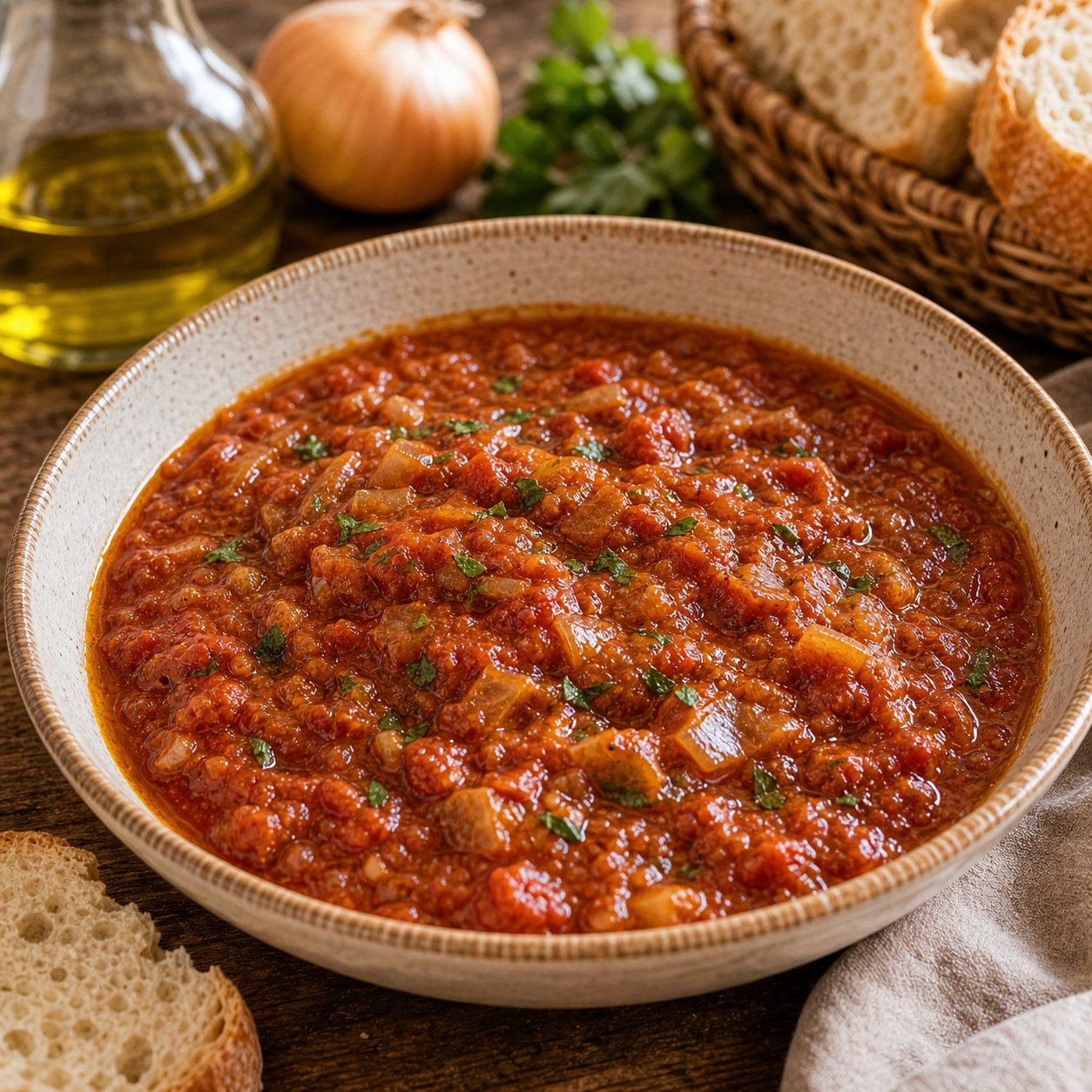
The name is honest about what it is and slightly unfair at the same time. Finto ragù — fake ragù, pretend ragù — implies something missing, a lesser version of the real thing made in the absence of meat. This is not quite right. The finto ragù is not the ragù napoletano with the meat left out. It is a different sauce that uses the same slow technique and produces its own result — one that is lighter in texture but no less serious, and that in some moods is exactly what you want on a Sunday without the ragù's weight.
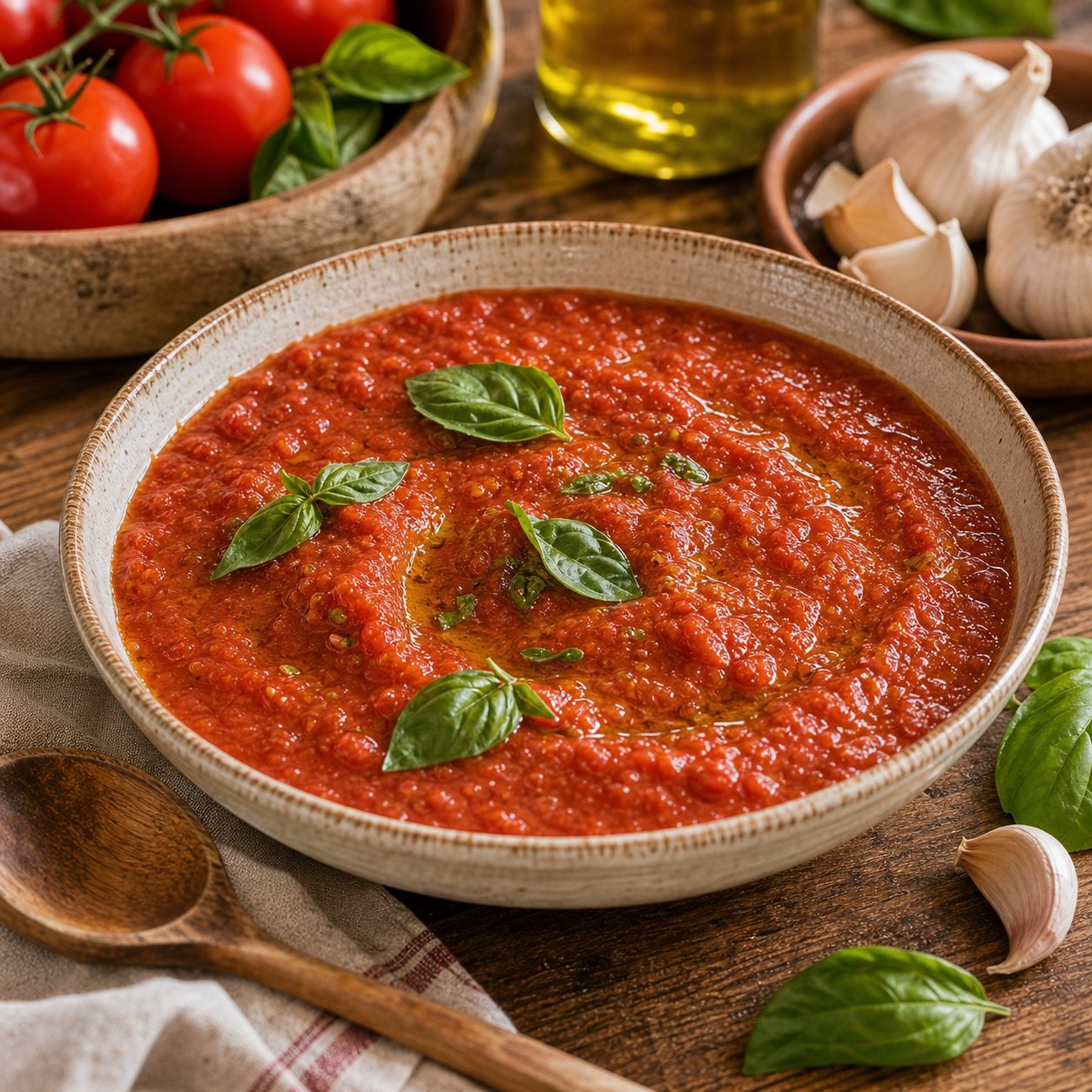
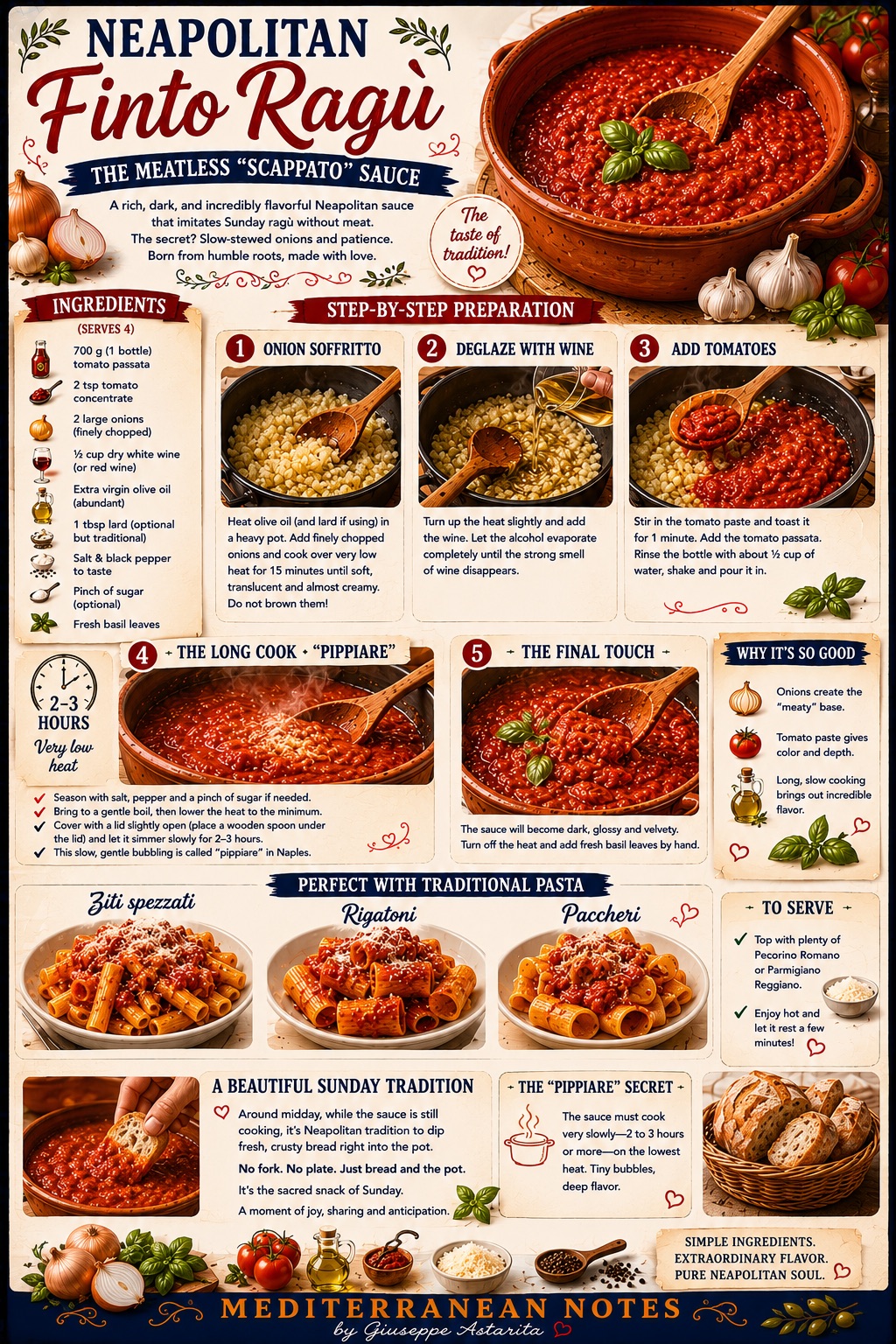
The logic of the sauce is simple: a large golden onion, cooked very slowly in olive oil until it dissolves completely — not browned, not caramelized in the restaurant sense, just softened and sweet and almost invisible in the pot. Then tomatoes, passata or hand-crushed pelati, a spoonful of concentrate to deepen the color and flavor, salt and pepper, and then the heat goes to its lowest setting and the pot is left alone. Two hours, sometimes more. The pappuliare, that slow irregular bubble. The lid propped open with a wooden spoon. The sauce reduces and the tomato sweetens as the water evaporates and the sugars concentrate, and somewhere in the second hour it stops tasting like a simple tomato sauce and starts tasting like something that required effort. Which it did, but the effort was mostly time.
I make this in Massachusetts on Sundays more than any other sauce, including the ragù. Partly because it is simpler — no meat to source, no multiple cuts, no early morning start. Partly because after years of cooking in a country where finding the right sausage or the right pork ribs requires a special trip, the finto ragù is always possible with what is in the kitchen. And partly because it is genuinely what I want: a sauce that is rich without being heavy, that coats pasta completely, that works as a base for everything and needs nothing added to it.
In my family, pasta came with bread. This is not etiquette. It is not the correct thing to do by any formal standard — pasta is already a carbohydrate, bread alongside it is redundant in a strictly nutritional sense, and in a formal setting you would not see it. But in a family kitchen in Caserta it was normal. A piece of pane cafone next to the bowl, used to push the pasta onto the fork and to clean the sauce that escaped to the sides. The bread was not decoration and it was not a concession to hunger — it was part of how we ate pasta, inseparable from it. And then the scarpetta at the end, which was also not technically polite, and which everyone did regardless.
The grated cheese went on generously, as it did on every Sunday sauce — Parmigiano Reggiano or Pecorino Romano, freshly grated, enough to see the layer rather than just detect it. On a meatless tomato sauce this matters more than on the ragù, because without the fat and depth from the meat the cheese is doing more of the final flavor work. The Pecorino in particular — sharper, saltier, slightly gamey — adds a dimension to the finto ragù that is not present in the sauce itself. The combination of slow-cooked sweet tomato and sharp aged sheep's cheese is one of the reliable pleasures of the Neapolitan table.
The flavor depth in a finto ragù comes almost entirely from two chemical processes: the slow cooking of the onion and the long reduction of the tomatoes. The onion, cooked very slowly in olive oil at low heat for fifteen to twenty minutes, does not undergo significant Maillard browning — that requires temperatures above 140°C, which a gently sweating onion in oil never reaches. What happens instead is extensive hydrolysis of the onion's cell walls, releasing fructose and glucose, and the conversion of fructooligosaccharides (the complex sugars responsible for onion's raw sharpness) into simpler, sweeter compounds. A properly sweated onion tastes mild, sweet, and almost creamy — not browned or bitter — and it dissolves into the sauce during the long simmer, contributing body without visible presence.
The tomatoes' transformation over two hours is equally significant. Lycopene — the red carotenoid pigment in tomatoes — becomes more bioavailable as the tomatoes cook, because heat breaks down the cell matrix that traps it. The natural glutamates in tomatoes (tomatoes are one of the richest vegetable sources of free glutamic acid) concentrate as water evaporates, which is why a long-cooked tomato sauce has a depth of savory flavor — umami — that a quick sauce does not. This umami is what the palate registers as "something that took time." There is no trick and no shortcut: glutamate concentration is a direct function of how much water has left the pot. The finto ragù tastes of patience because patience is literally what produced it.
The recipe — serves 4
Notes and the Sunday sauce cluster
The three Sunday sauces — each with its own character, all sharing the same slow logic:
Buona domenica — e buona scarpetta.