Ragù napoletano: the Sunday smell that filled the building
Every Sunday, at my grandmother's house, with my parents and sister and uncle and aunt — all together around the same table. The ragù started at five or six in the morning. By the time we woke up the whole apartment smelled of it. In Italian five-story buildings on Sunday mornings, every staircase smelled of ragù. The pasta first, with freshly grated Parmigiano grated by the children. Sunday lunch in Italy is the largest meal of the day — not dinner, as Americans tend to assume. The ragù came out at midday. The meal went on for hours.
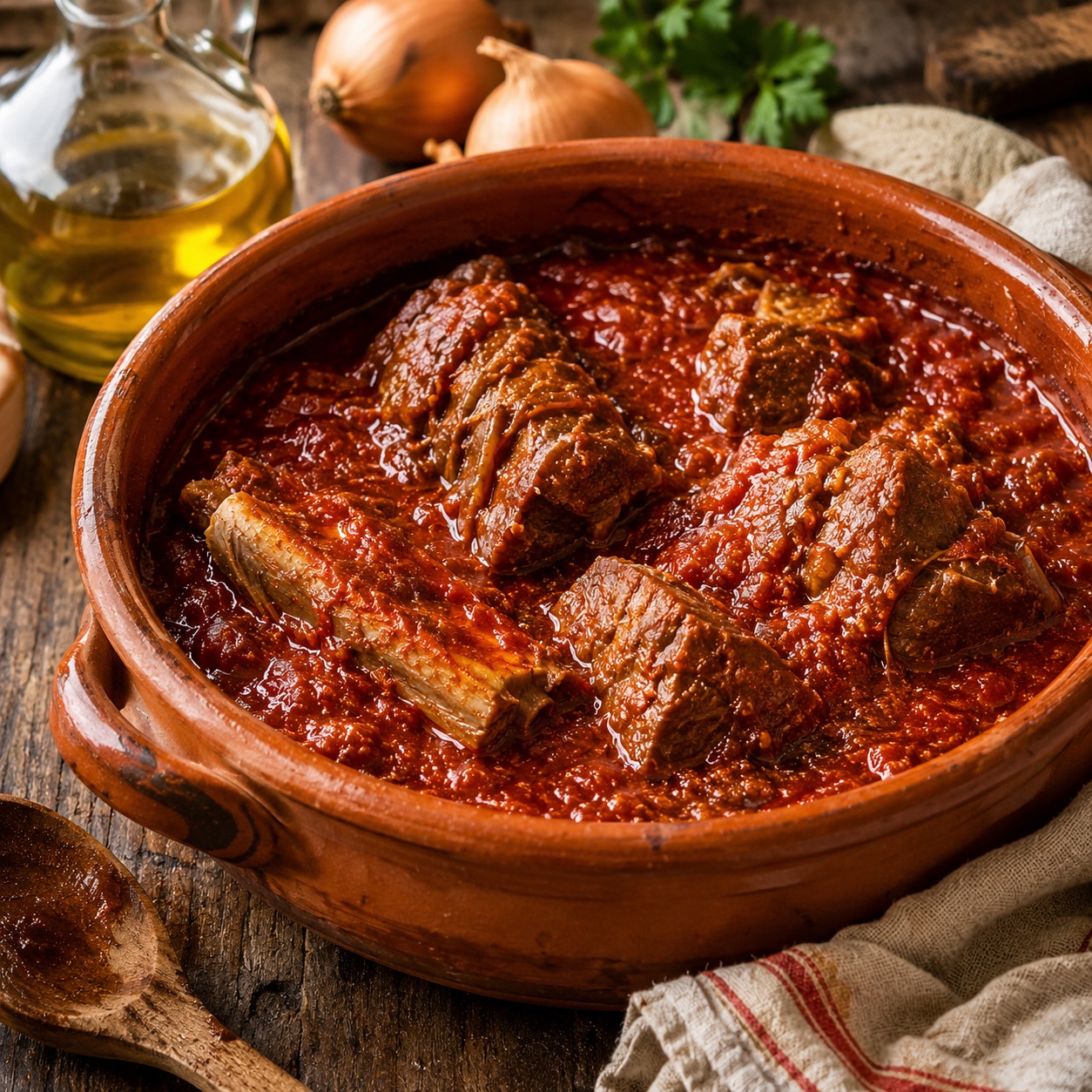
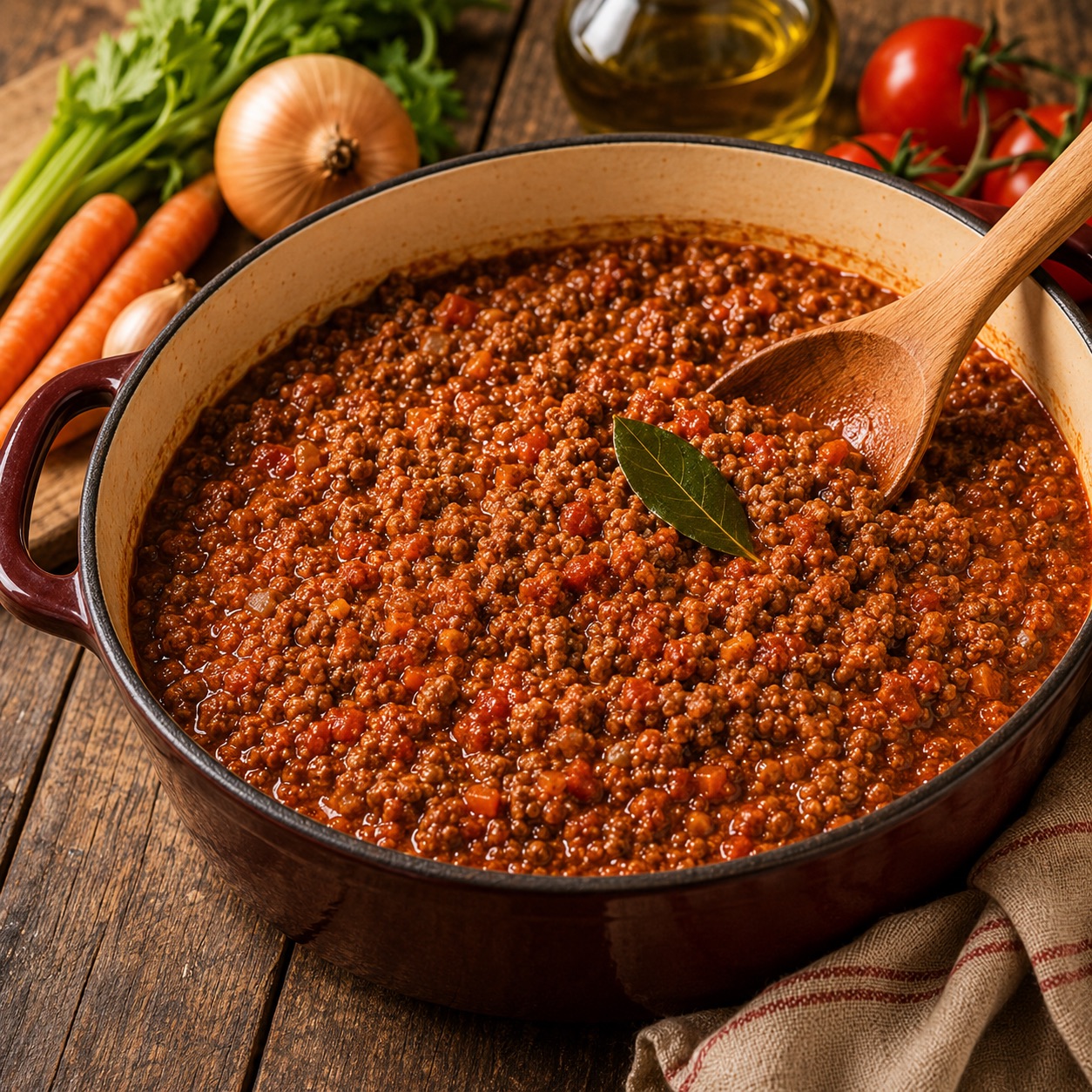
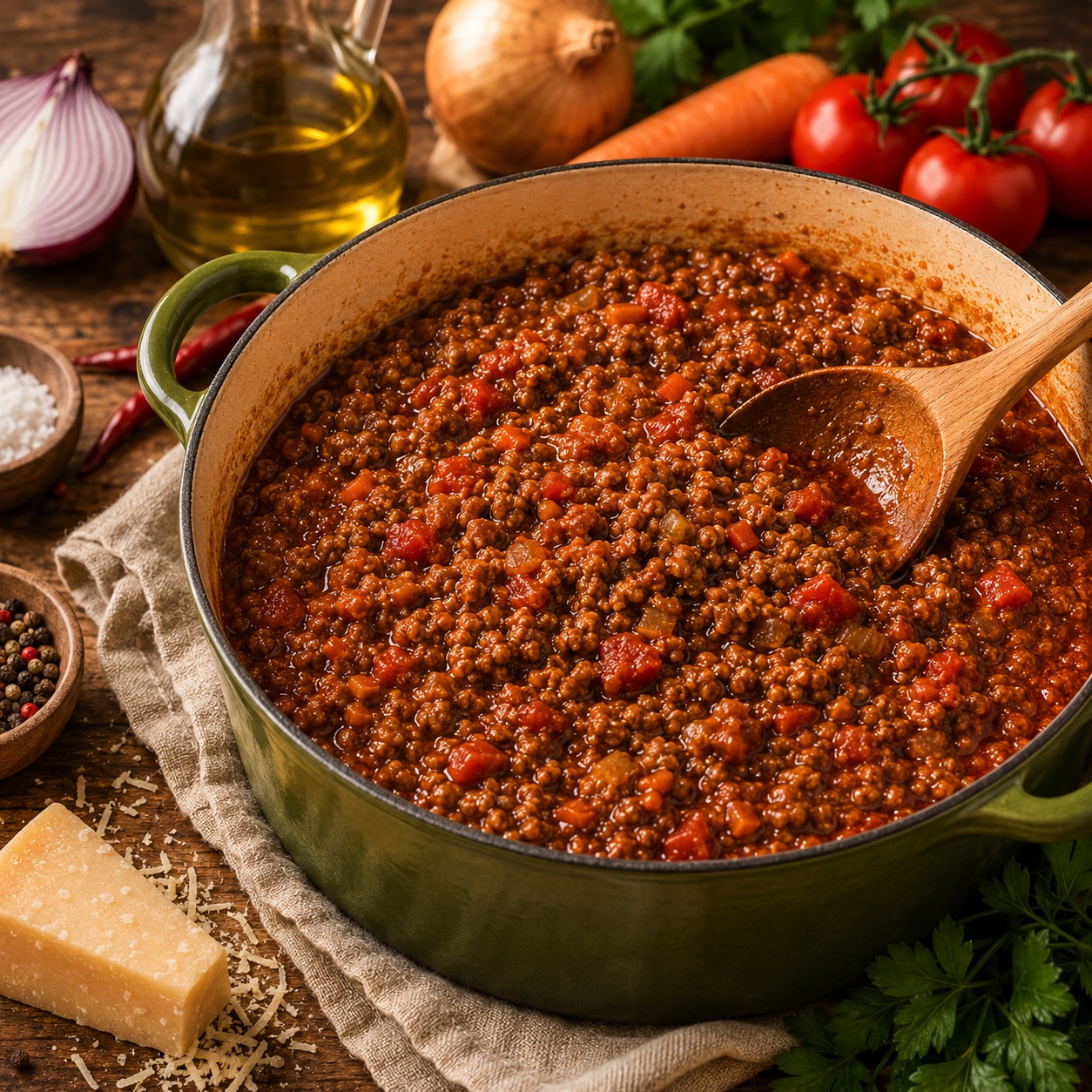
The 'o rraù — the Neapolitan ragù, pronounced in dialect with the accent that distinguishes it immediately from the Bolognese — is one of the foundations of Italian Sunday cooking, and it is a fundamentally different preparation from the Bolognese discussed in the adjacent post. Where the Bolognese is minced meat simmered for three hours until it becomes a dense, fine-textured sauce, the Neapolitan ragù is whole or large cuts of meat that simmer in a tomato-based sauce for five to six hours until the sauce itself becomes almost the product — dark crimson-mahogany in color, concentrated to a richness that is unlike any other Italian sauce, and the meat falls apart at the touch of a fork. The sauce dresses the pasta. The meat is the second course. The whole Sunday meal is organized around the single pot that has been on the stove since before anyone was awake.
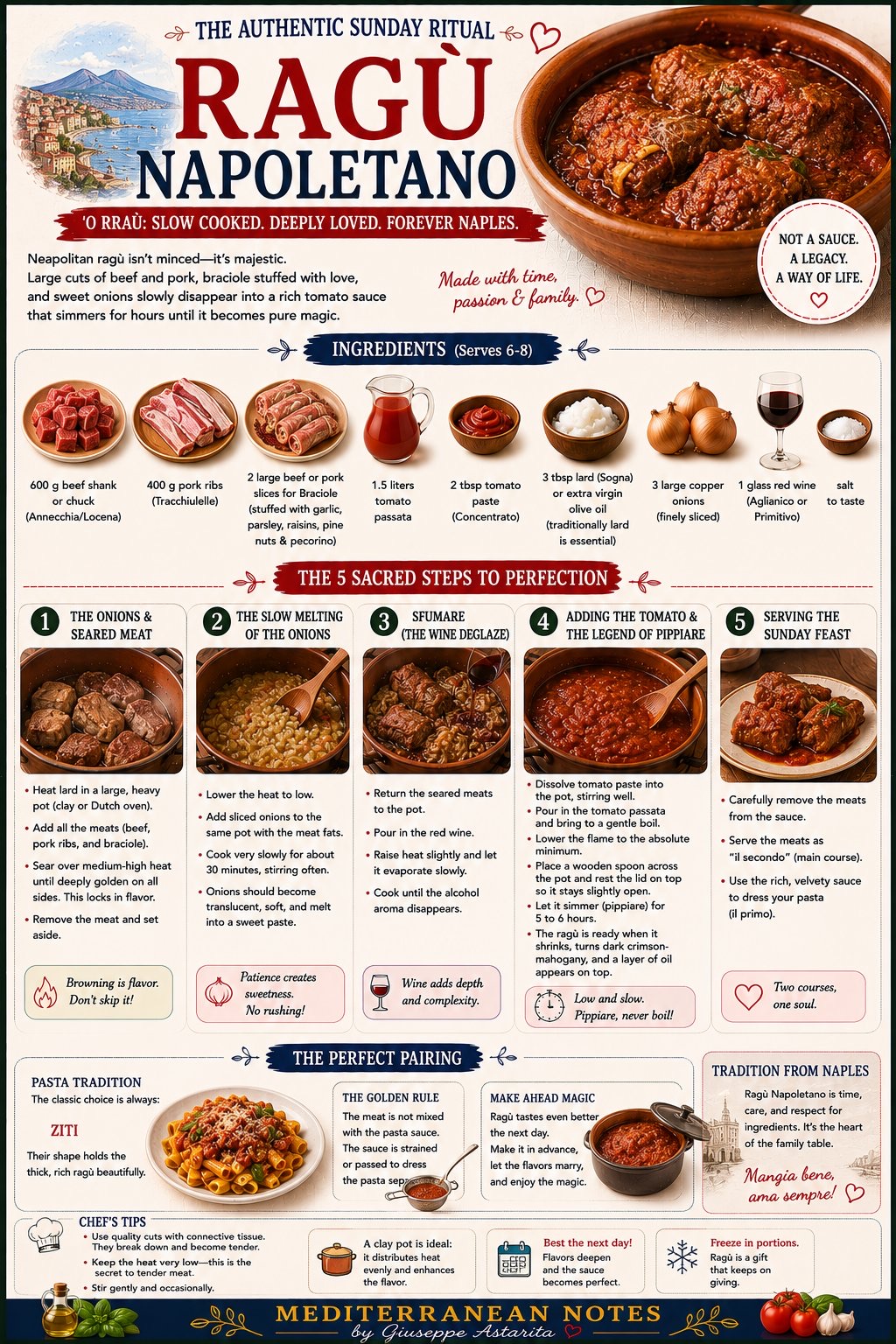
The specific elements of the Neapolitan ragù that distinguish it from every other version are the braciole, the lardo, and the pippiare. The braciole are thin slices of beef (or pork) beaten flat, spread with a filling of garlic, parsley, raisins, pine nuts, and Pecorino Romano, then rolled and tied. They cook in the sauce for the full duration, releasing their filling into the sauce and absorbing it in return. The lardo — rendered pork fat — is the traditional cooking medium, replacing olive oil in the oldest and most authentic versions. And the pippiare is the verb that describes the required cooking motion: the barest possible simmer, where the surface barely trembles, bubbles break at two- or three-second intervals, and the sauce reduces so slowly and so gently over so many hours that it develops a complexity that a normal simmer could not produce in twice the time.
This happened at my grandmother's house on some Sundays, but it also happened at home in Caserta on the Sundays we stayed. My mother was up at five or six in the morning. By the time I woke up — not too late, but not early either — everything was already cooking or set up and ready. The smell reached my bedroom before I was fully awake. It was not just our apartment: on Sunday mornings in Caserta, the whole town smelled of food. Every window open, every kitchen working. You could walk down the street and trace which families were cooking what. The smell was the announcement that Sunday had arrived.
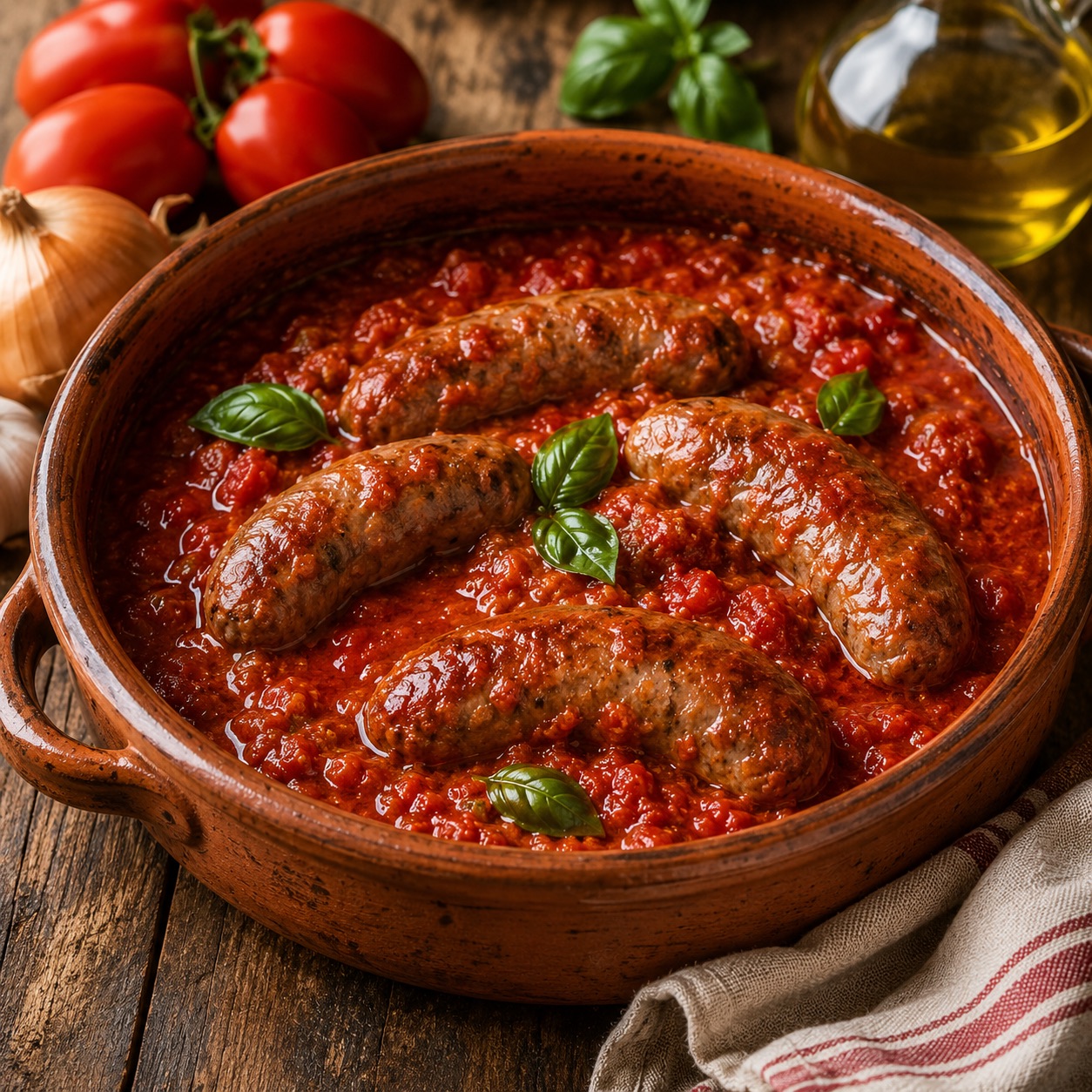
No two ragù were the same, and everyone in Campania knows this. The type of meat varied by household — some families used only beef, some mixed beef and pork, some added sausage or neapolitan meatballs. The tomatoes varied: passata, pelati, fresh pomodorini del piennolo in season. The spices varied — basil, a bay leaf, the amount of wine, whether lardo or olive oil or both. Even the pot was part of the identity: my grandmother used a clay pot, and I am convinced it was not the same ragù in a steel one. Each household had its own version, defended quietly and without argument, because there was no argument to be had. It was simply how it was made in that kitchen, and that was the version that tasted like home.
The Sunday meal structure was specific. The pasta — ziti broken by hand, or rigatoni, or paccheri, dressed in the ragù sauce — was the first course, il primo. The Parmigiano was grated by the children at the table with the table grater — a task that was given to the youngest willing hands and that produced the generous snowfall of cheese that is as much part of the Sunday memory as the sauce itself. The second course at Sunday lunch was typically something different — grilled meat, a roast beef with potatoes, something that required its own effort and was fitting for the occasion. The braciole and ribs from the ragù were saved for dinner that evening, or for the next day, when they were reheated in what remained of the sauce and eaten quietly at the table without ceremony, and in some ways were even better than they had been the day before. There was one exception: after the pasta, after the scarpetta through the remaining sauce in the bowl, sometimes a single piece of meat was pulled from the pot and passed around — just to taste it, just to not wait. Not a course. A moment. Then the proper secondo came out, something made separately for the occasion. The meal was long. The table was full.
I am not entirely sure I have replicated the same ragù since leaving Campania. There are variables in the memory that are difficult to account for in a recipe: the clay pot that my grandmother used, which distributed heat in a way that a modern stovetop pot does not quite replicate; the specific quality of Campanian passata made from San Marzano tomatoes at the peak of the season; the presence of the whole family around the table and the long morning during which the smell accumulated in the apartment. The recipe below produces an excellent ragù. Whether it produces the same ragù is a question I cannot answer, and perhaps should not try.
Collagen extraction, slow Maillard development, and the science of the Sunday sauce
The Neapolitan ragù is a masterclass in low-temperature, long-duration collagen extraction and Maillard product development. The cuts used — beef shank (annecchia/locena), pork ribs (tracchiulelle), and braciole made from tough secondary cuts — are chosen specifically for their high connective tissue content. Over five to six hours at the absolute minimum simmer temperature, the collagen in these cuts hydrolyzes progressively to gelatin — the same mechanism described in the tagliolini brodo post, but here over a much longer duration and with a higher ratio of meat to liquid. The gelatin dissolves into the sauce, giving it the viscous, almost syrupy body that distinguishes a proper ragù from a tomato sauce with meat. The fat rendered from the pork ribs and the traditional lardo emulsifies partially into the tomato base, contributing to the glossy surface layer that appears on a correctly made ragù — the oil that glistens on top when the sauce is ready is not a sign of excess fat but of proper emulsification between the tomato's water phase and the rendered meat fat. The Maillard browning of the meat before adding to the sauce (step 1 — searing all sides deeply golden) produces thiazoles, pyrazines, and hundreds of other volatile compounds that define the flavor of the finished sauce. The onions, cooked very slowly for 30 minutes until they become sweet and paste-like, contribute caramelization products (fructose and glucose from sucrose breakdown) and pyrazines. The braciole filling — garlic, parsley, raisins, pine nuts, Pecorino — diffuses into the sauce during the long simmer: the raisins' sugars contribute sweetness that balances the tomato's acidity; the Pecorino's glutamate adds umami; the garlic's allicin-derived compounds contribute depth. The red wine deglazed after the searing step contributes tartaric acid, phenolics (resveratrol, quercetin), and Maillard precursors from the grape sugars. The pippiare cooking method — barely simmering — is physically optimal: too vigorous a boil agitates the sauce, breaks the emulsion, and makes the meat tough by driving rapid moisture loss. The barely-trembling surface maintains the temperature just above the gelatin-extraction threshold (~70–80°C) for long enough to complete the collagen conversion without damaging the meat texture. This is why the word exists — because the Neapolitan cooking tradition understood, empirically, that there is a specific motion the pot should make, and that achieving it is the skill the ragù requires.
The recipe
The meats
The braciole filling
The sauce
Method — the 5 sacred steps
Make the braciole. Lay the beaten meat slices flat. Spread each with the filling: garlic, parsley, raisins, pine nuts, Pecorino. Roll tightly and tie with kitchen string at two or three points. Season the outside with salt.
The braciole filling diffuses into the sauce during the long simmer. The raisins' sweetness, the Pecorino's glutamate, and the garlic's depth become part of the sauce character — not visible in the finished bowl but present in every spoonful.
Sear all the meats. Heat the lardo or olive oil in a large, heavy-bottomed pot — clay or Dutch oven. Add all the meats: beef, pork ribs, braciole. Sear over medium-high heat until deeply golden on all sides — about 10–12 minutes total, turning often. Do not rush and do not crowd. Remove the meats and set aside. The browned fond left in the pot is flavor — do not discard it.
Melt the onions — slowly. Lower the heat to the minimum. Add the very finely sliced onions to the same pot with the meat fat. Cook very slowly for about 30 minutes, stirring often, until the onions are completely translucent, soft, and have melted into a sweet paste. They should not brown at all. Add a splash of water if needed. Patience is the skill this step requires.
Sfumare — the wine deglaze. Return the seared meats to the pot. Raise the heat slightly. Pour in the red wine and let the alcohol evaporate completely over medium heat — cook until the wine smell transforms and only the grape depth remains, about 5 minutes. Stir constantly, incorporating the browned fond from the bottom of the pot into the wine.
Add the tomato and pippiare. Dissolve the tomato concentrate in a ladle of warm water and stir into the pot. Add the tomato passata. Bring to a very gentle boil, stirring to combine. Then reduce the heat to the absolute minimum — the surface should barely tremble, a bubble breaking every 2–3 seconds at most. Place a wooden spoon across the pot and rest the lid on the spoon, leaving a small gap for steam to escape. Simmer for 5 to 6 hours. Stir gently and occasionally.
This is the pippiare — the barely-trembling simmer. If the sauce boils, the meat toughens and the emulsion breaks. If the heat is too low, the collagen does not convert. The correct setting is between the two, and finding it is the skill the ragù asks of the cook. After 5–6 hours, the sauce should be dark crimson-mahogany, the meat falling-tender, and a layer of glistening oil visible on the surface.
The Sunday meal — two courses, one pot
Il primo — pasta al ragù
Remove the meat from the sauce and set aside. Strain or pass the sauce through a food mill if preferred, or serve chunky. Cook ziti (broken by hand into irregular pieces), rigatoni, or paccheri al dente. Dress generously with the sauce in the pan, tossing for one minute. Serve in deep bowls. Top with Parmigiano Reggiano — freshly grated at the table, generously, ideally by the children. This is il primo.
Il secondo — the braciole and ribs
The meats served as the second course: braciole sliced to reveal the filling spiral, pork ribs falling from the bone, beef falling apart at the fork. With cooked greens alongside — escarole, friarielli, or simple boiled broccolini with olive oil and salt. Or eaten cold for dinner later, with whatever the kitchen offered. The meal goes on for hours. Nobody needs to cook again that day.
For lasagna napoletana
The ragù napoletano is the sauce for the lasagna napoletana — the great Carnival and New Year's lasagna in this collection. The same sauce, the same braciole (sliced and layered), the same long cooking. The ragù and the lasagna are the same tradition expressed in two forms.
The leftover sauce — three days of meals
A Sunday ragù produces more sauce than one meal requires, and it improves significantly over two to three days in the refrigerator. Monday pasta, Tuesday pasta, each bowl better than the last as the flavors deepen. It also freezes well in portions. The ragù is an investment — the Sunday that produces it feeds the week.
The ragù napoletano is time, patience, a clay pot, and good meat. It is also the smell of Sunday morning in a Campanian apartment building — the smell that rose through five floors before anyone was at the table. I have made it many times since and the sauce is always good. Whether it is the same sauce I ate at my grandmother's is a question I cannot fully answer. The people at the table, the pot, the specific Sunday morning, the children grating the Parmigiano — those are part of the recipe too, and they cannot be written down.
Buon appetito — e buona domenica in famiglia.