Pollo alla Cacciatora
Italian Hunter's Chicken
My mother and aunts made this constantly — chicken seared and then left to braise in tomatoes, wine, and herbs until the sauce in the pot thickened and stuck to the pan. Potatoes in the same pot, to absorb everything. Scraped out with bread at the end.
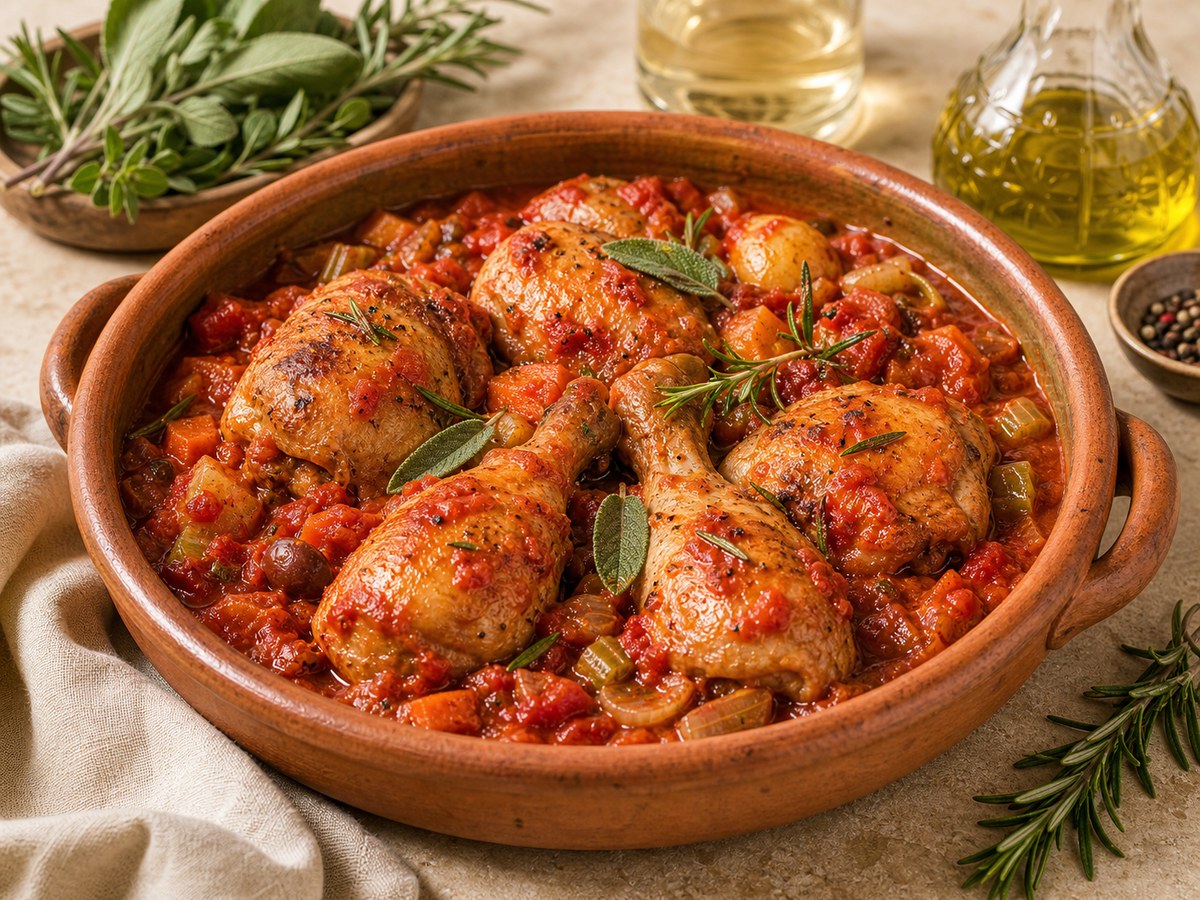
The cacciatora appeared regularly in my mother's kitchen and in those of her sisters — it was not a special-occasion dish and it was not a Sunday dish specifically, which already tells you something about it. It was the kind of thing that worked on a weekday evening: a single pot, relatively inexpensive cuts of chicken, no particular technique required beyond searing properly at the start and leaving it alone afterward. The effort was in the patience, not in the skill, and the result was a second course that filled the kitchen with rosemary and tomato and something deeper that came from the chicken fat reducing with the soffritto into the sauce.
My aunts each made it slightly differently — one with white wine, one with red, one who added olives and capers that gave hers a more southern character, one who kept it strictly to tomato and herbs. These were not disputes about which version was correct. They were just different kitchens making the same dish in the way it had settled into their particular habits. What they all shared was the potato: cut in chunks and added to the pot for the last twenty minutes of braising, so they cooked in the sauce rather than separately, absorbing the chicken fat and the tomato and the herb-scented braising liquid until they tasted completely unlike a boiled potato and entirely like this dish.
The soffritto — carrot, celery, onion, smashed garlic — goes in after the chicken comes out of the pan, cooked in the fat left behind from the searing. This is the correct order: the chicken leaves behind rendered fat and browned bits that become the base of the sauce, and the soffritto absorbs them as it softens. Then the wine goes in, the alcohol evaporates, the tomatoes follow, and the chicken goes back into the pot. From that point it requires nothing except occasional turning and a low flame. The rosemary and sage — fresh, not dried — perfume the sauce throughout the braise and are removed before serving.
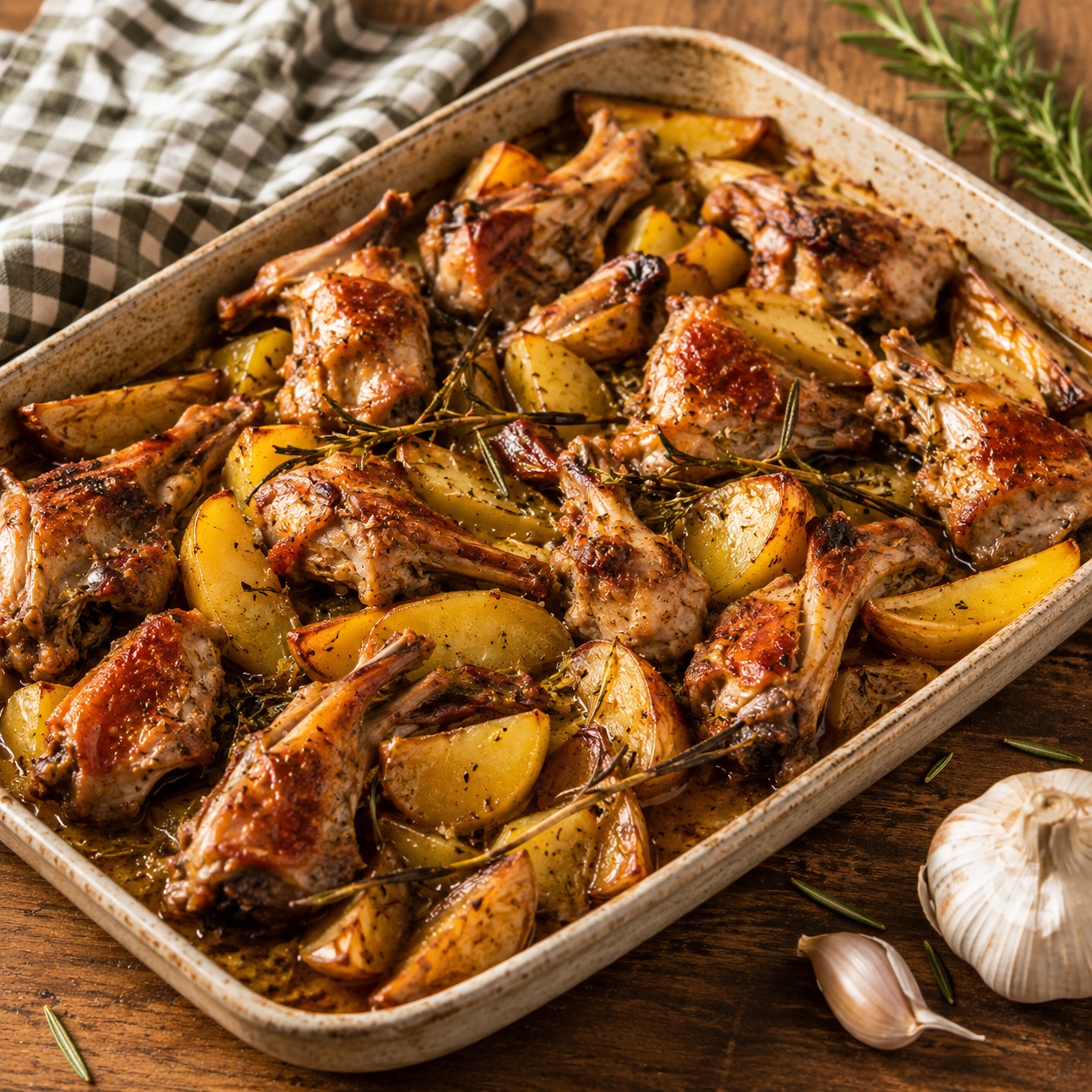
In Ischia, the island in the Gulf of Naples, the same recipe is made with rabbit rather than chicken — coniglio alla cacciatora, one of the emblematic dishes of the island's cuisine. The technique is identical, the aromatics are the same, but rabbit meat is leaner and slightly more gamey than chicken thighs, which gives the sauce a different character: less fat renders into it, so the braise is slightly lighter in texture, but the rabbit's own flavor is more present. If you can find good rabbit — not always easy outside Italy — the Ischia version is worth making at least once alongside the chicken version to understand how much the protein changes the dish while the method stays the same.
Chicken thighs and drumsticks — the cuts used here — contain significantly more collagen and intramuscular fat than breast meat. Collagen is the structural protein in connective tissue; under sustained moist heat above 70°C it hydrolyzes into gelatin, which gives braised chicken its characteristic sticky, unctuous texture and enriches the braising liquid. Breast meat lacks this collagen and becomes dry and stringy when braised; thighs become more tender the longer they cook, which is why the cacciatora is forgiving about timing in a way that a sautéed breast is not. The fat that renders from the skin during searing also contributes: it carries the fat-soluble aroma compounds from the rosemary and sage — primarily rosmarinic acid, camphor, and various terpenes — through the entire sauce rather than leaving them localized near the herbs.
The potatoes added late in the braise are doing something more interesting than simply cooking in a convenient location. Starch granules in the potato absorb water as they gelatinize — but in a braising liquid that already contains chicken fat, tomato solids, and dissolved gelatin from the collagen, they absorb all of that rather than plain water. The result is a potato that has physically incorporated the flavor of the braise into its starch matrix. This is fundamentally different from a potato cooked in water and dressed with sauce afterward: in that case the flavor sits on the surface; here it is inside the potato. The caramelized layer that forms where the sauce sticks to the bottom of the pan is a further concentration of this — the Maillard reactions between the tomato sugars and the amino acids from the chicken produce compounds that do not exist in the sauce itself, only in the part that touches the hot metal. That is the layer worth scraping out with bread.
The recipe — serves 4
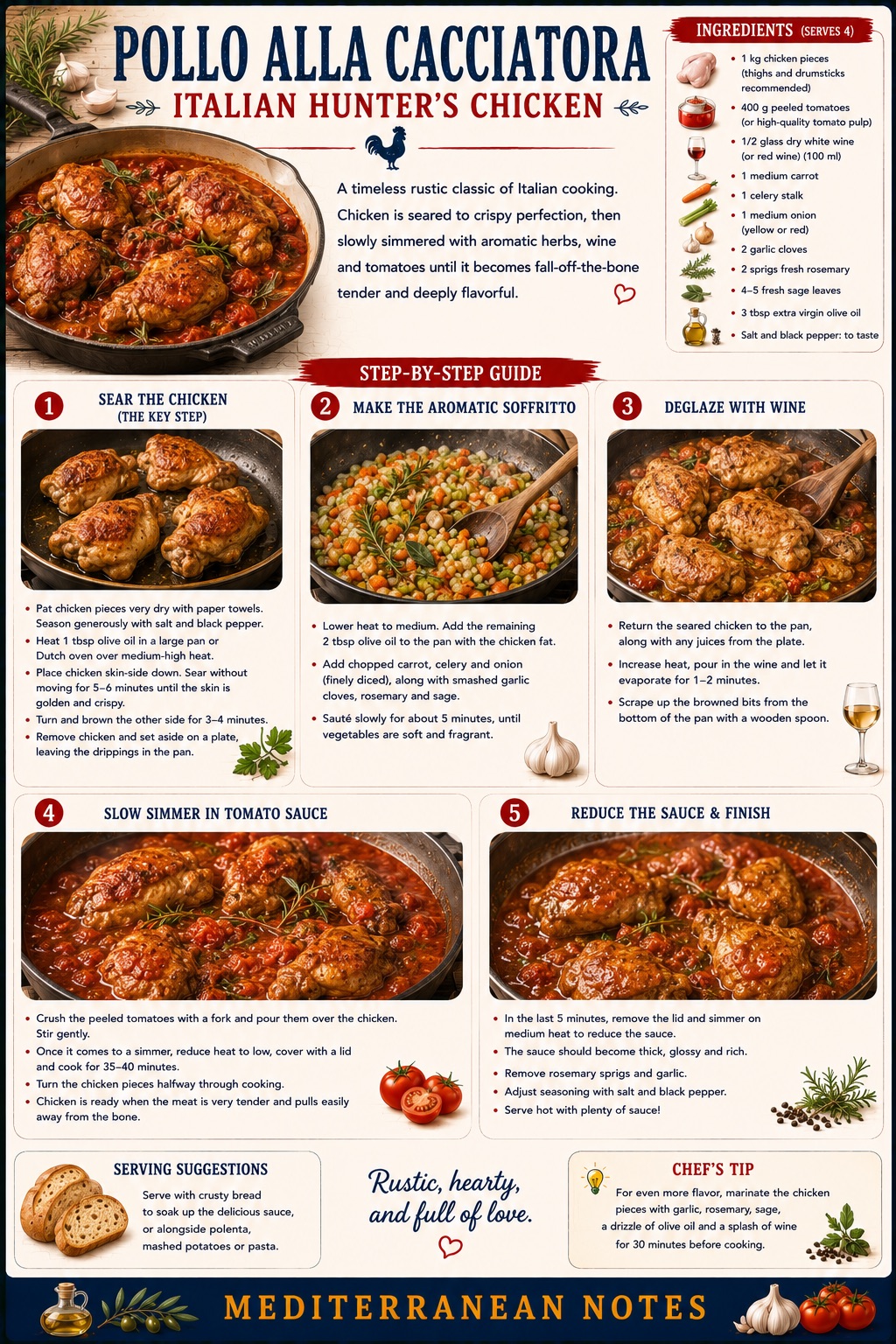
Variations across kitchens and aunts
The cacciatora was the dish that appeared without announcement — not the Sunday ragù, not a holiday preparation, just dinner on a Tuesday when there was chicken in the house and time to let the pot do its work. It is the kind of dish that does not require occasion to justify it, which is perhaps why it appeared so regularly in my mother's kitchen and in those of her sisters. It asks for patience more than technique, and the result is always better than the effort would suggest.
Buon appetito — e non dimenticare il pane per raschiare.