Polpette alla Genovese
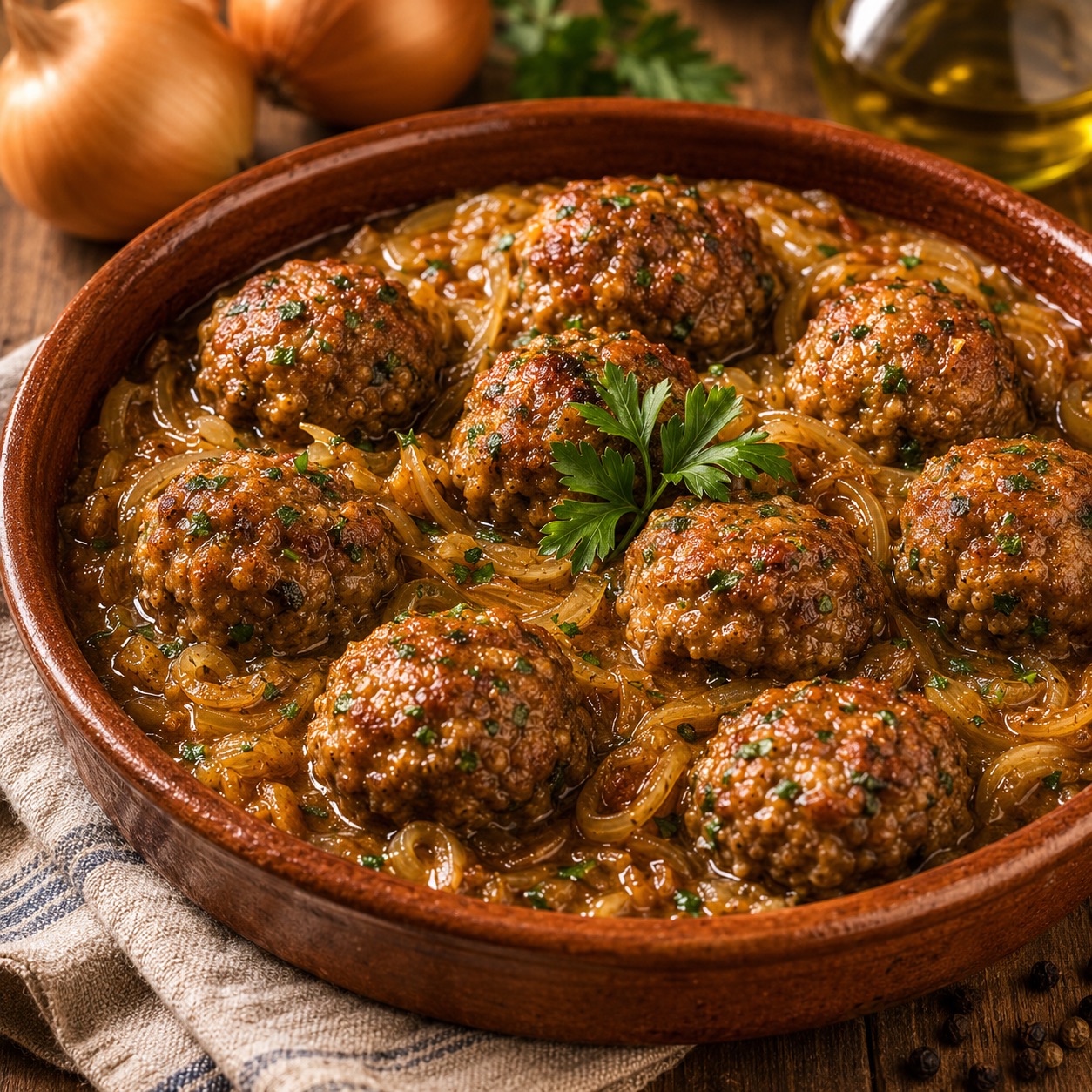
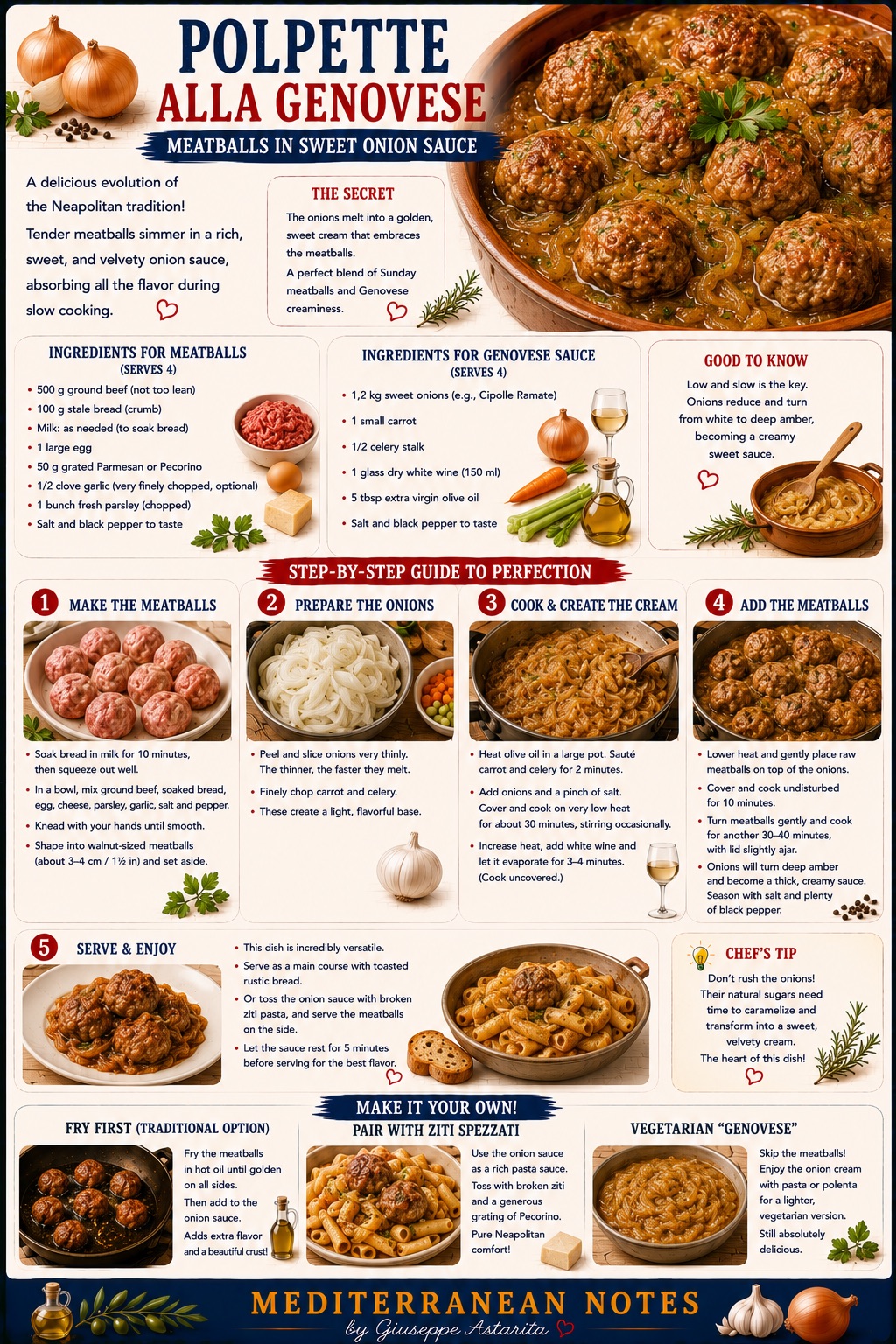
Meatballs cooked in the Neapolitan onion sauce, with beef, bread, eggs, cheese, and slow-cooked onions.
Ingredients · serves 4
Method
1. Make the meatballs. Soak the bread in milk 10 minutes, then squeeze dry. Mix with the beef, egg, cheese, chopped parsley, a little garlic, salt and pepper; knead smooth and roll into walnut-sized balls.
2. Prepare the onions. Slice the onions very thinly — the thinner, the better they melt. Finely chop the carrot and celery.
3. Cook & create the cream. Heat the oil, sweat the carrot and celery 2 minutes, then add the onions and a pinch of salt. Cover and cook very low for about 30 minutes, stirring now and then. Raise the heat, add the wine, and let it evaporate 3–4 minutes.
4. Add the meatballs. Lower the heat and lay the raw meatballs on the onions. Cover and cook undisturbed 10 minutes, then turn gently and cook another 30–40 minutes with the lid ajar, until the onions are deep amber and creamy. Season well.
5. Serve. Rest 5 minutes. Beautiful as a main with bread — or toss the onion sauce through broken ziti and serve the meatballs alongside.
The genovese was my father's favorite pasta. Not because he was a complicated eater — he was not — but because the onion sauce, slow and amber and faintly sweet, was exactly the kind of thing he liked: something that had been cooked for a long time and tasted like it. On Sundays when my mother made the full genovese, the apartment filled with the smell of onions softening for two hours. It was a particular smell, not the sharp bite of raw onion but something gentler and deeper, and it spread from the kitchen through the hallway and under the front door to the stairwell. You knew what was cooking before you even opened the door.
The genovese is the great anomaly of Neapolitan cooking: a sauce named after Genoa that is found nowhere outside Naples and has no traceable Genoese ancestor. The leading theory is that Genoese merchants, present in Naples in large numbers during the fifteenth century, brought a technique of braising meat with onions slowly in wine, and that Naples absorbed and transformed it entirely. By the nineteenth century it appears in Neapolitan cookbooks as a local dish, no northern trace remaining.
The meatball version is the weekday adaptation — you make the genovese sauce, you brown the polpette first, and then they finish inside the onion for the last thirty minutes. Lighter than the traditional whole-cut version but the sauce does the same work either way. The pasta still comes first.
Raw onion is pungent because of organosulfur compounds — primarily allicin and its breakdown products — released when the cell walls are cut. These compounds are volatile and largely dissipate with heat. What remains after thirty minutes of cooking is mostly water, sugars, and fiber. The flavor transformation in a genovese, however, happens not from sulfur loss but from two overlapping chemical reactions: caramelization and the Maillard reaction. Caramelization begins above 160°C and breaks sucrose into hundreds of flavor compounds including furans, lactones, and diacetyl — producing the sweet, nutty, amber character of deeply cooked onion. The Maillard reaction, occurring between the onion's free amino acids and its reducing sugars, contributes additional brown color and savory depth. At low heat over two to three hours, both reactions proceed slowly — which is why the genovese cannot be rushed. High heat accelerates browning but produces bitterness and unevenness. The patience is chemical necessity, not culinary tradition.