Alici del Sud
The Anchovy Tradition of Southern Italy
Pesce azzurro — the inexpensive, healthy, blue-backed fish that my mother cooked in a dozen different ways, and that my father refused to touch. You need to be in the Mediterranean to eat the real ones.
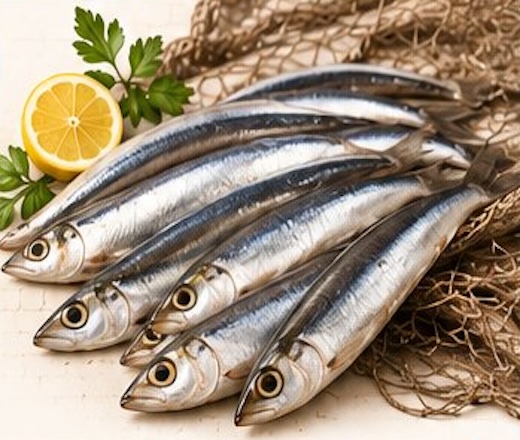
Fish nights in our house had a particular dynamic. My mother would cook alici — or whatever other pesce azzurro was good that week — for herself and for us children, and my father would have pasta al pomodoro. He was a selective eater in specific and consistent ways: he did not eat fish or seafood, with very few exceptions, and anchovies were not among them. He never made a fuss about it. He simply had a different dinner on those evenings. My mother did not consider this a problem worth solving. She cooked the fish she wanted and she made pasta for him and everyone ate.
The alici she cooked were fresh — alici fresche, small and silver, from the fishmonger near the market. Caserta is not a coastal city, but it is not far from the sea either: fifteen miles to the coast at Castel Volturno, less to the Gulf of Naples if you go south. Fresh pesce azzurro traveled well enough in those days, and the fishmonger knew what he had. My mother cleaned them herself — head, gut, spine — quickly, the way she did everything in the kitchen without appearing to rush. Then she cooked them in whatever way she had decided on that evening.
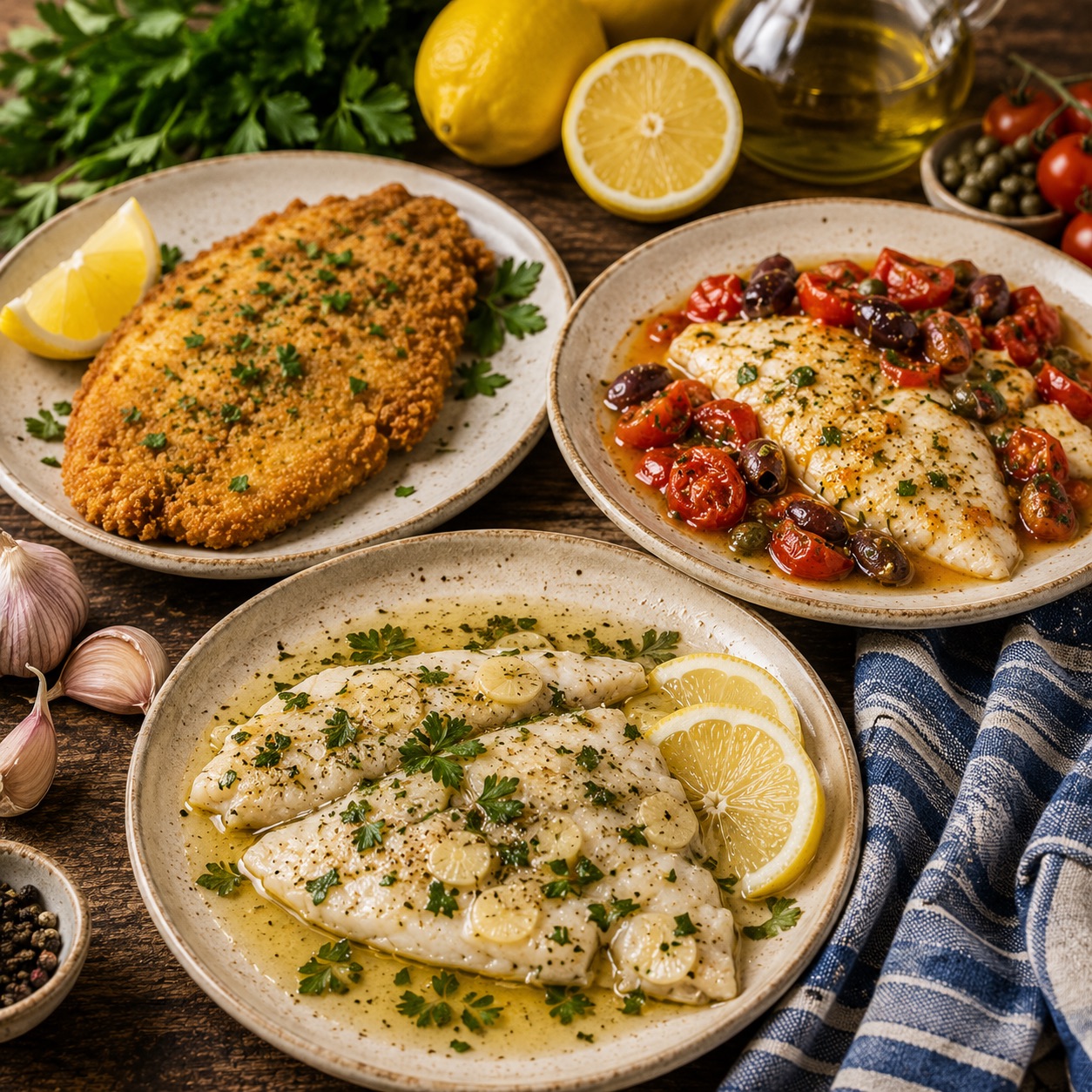
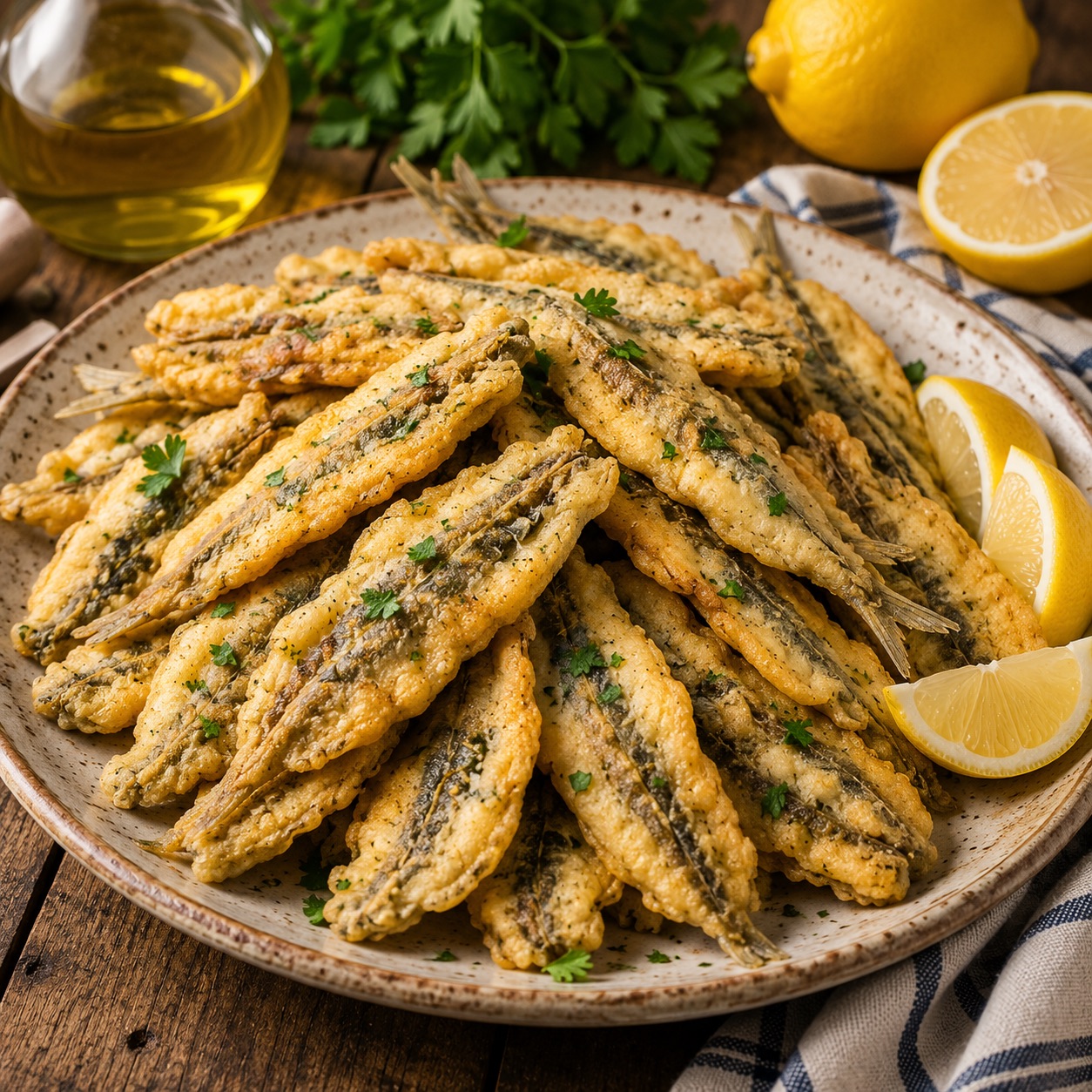
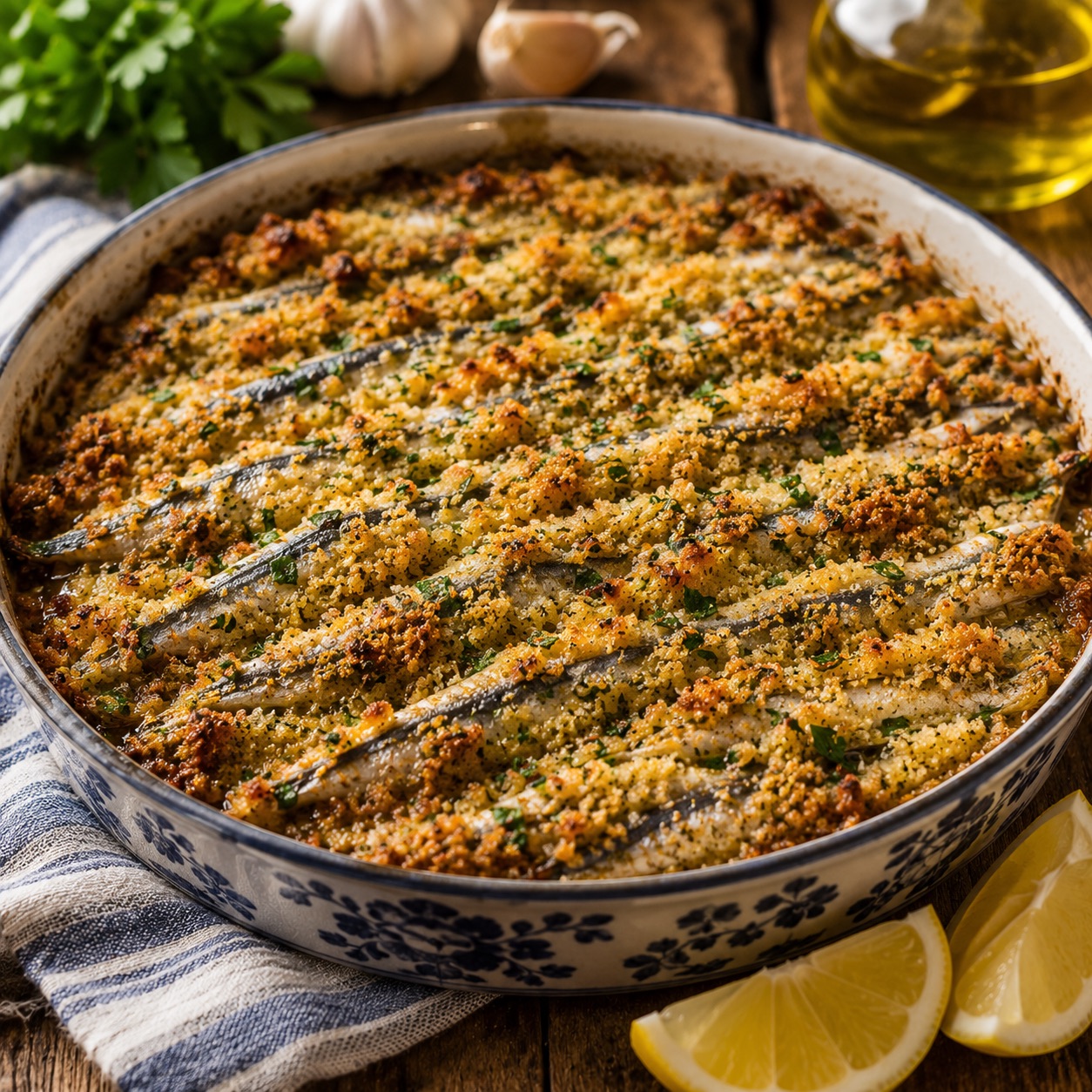
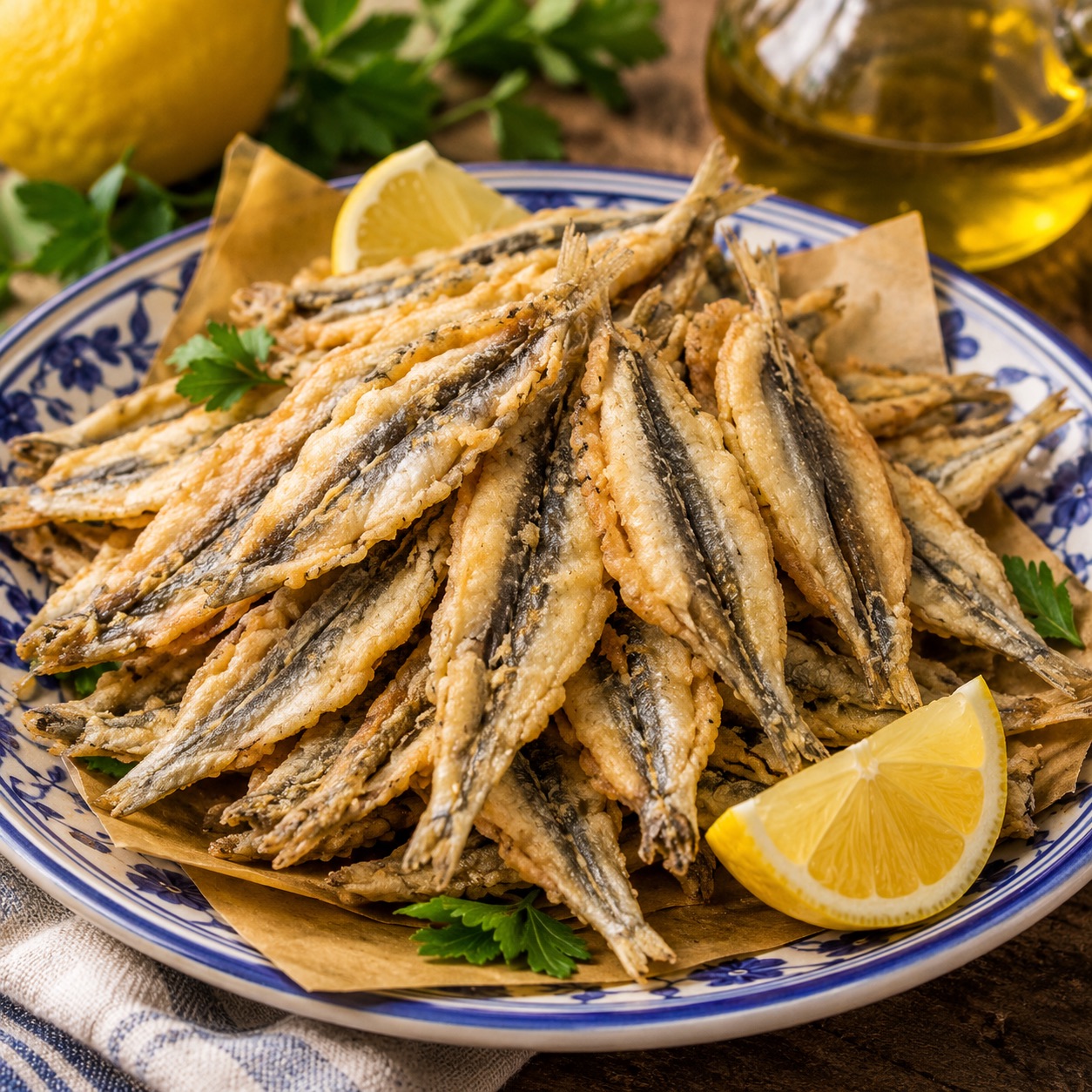
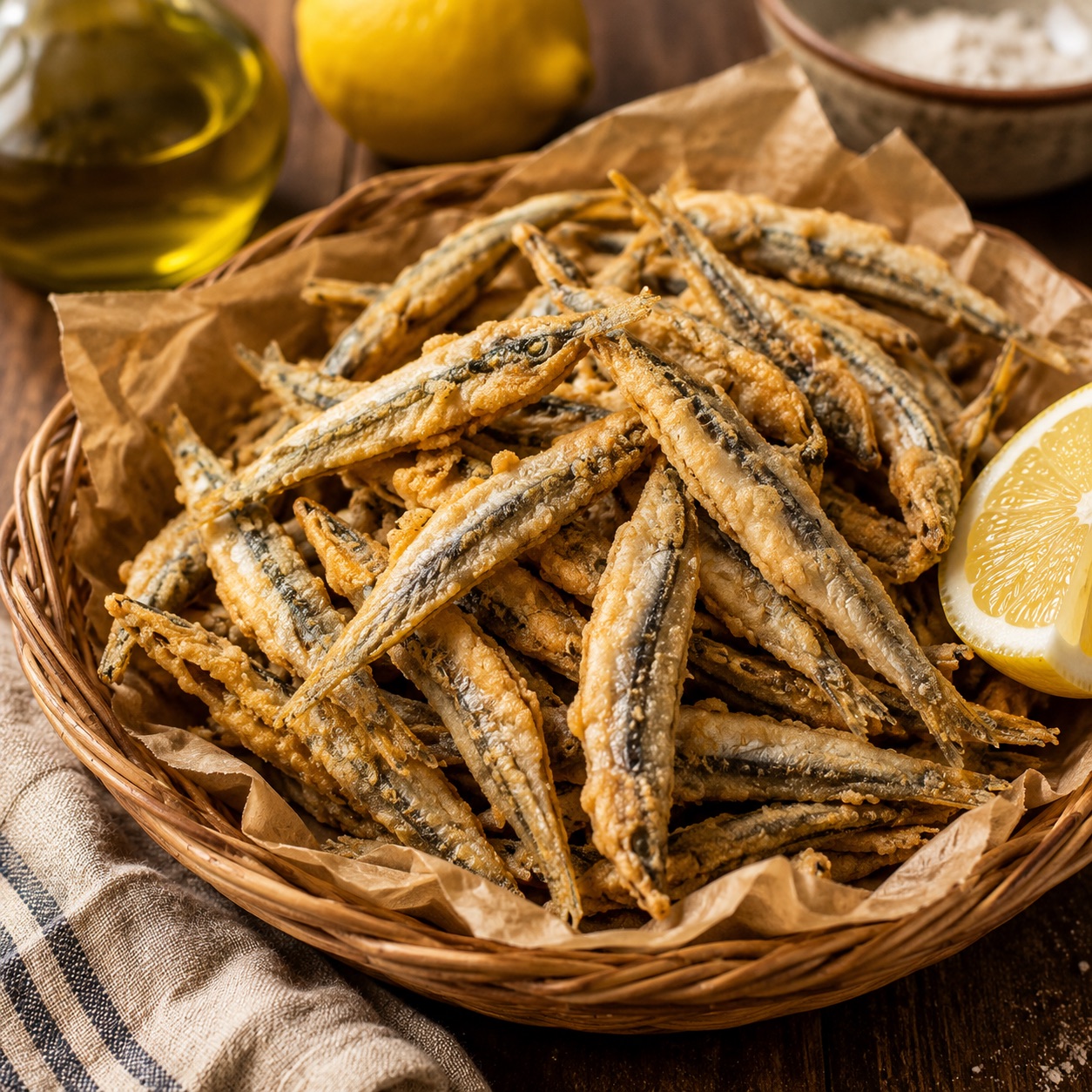
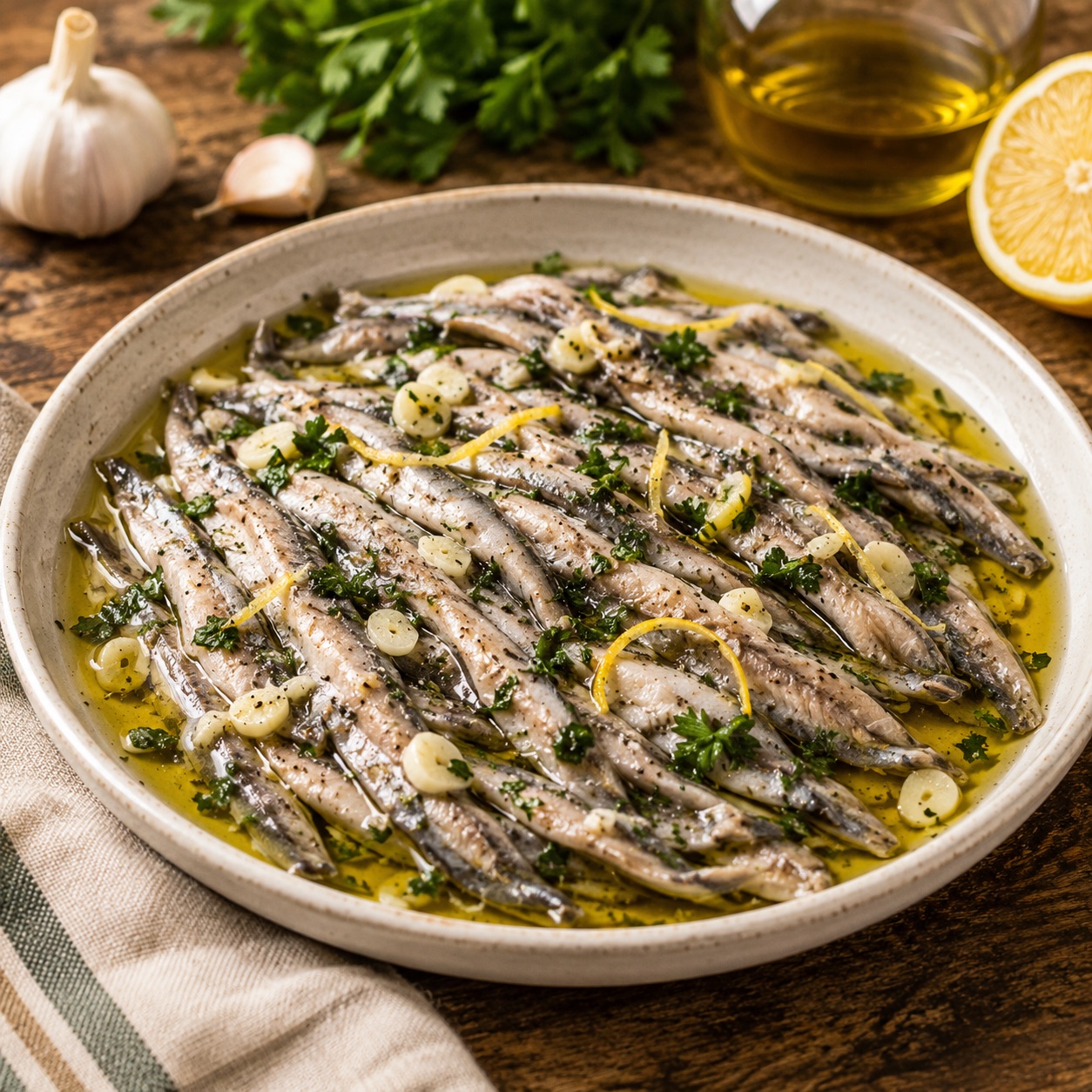
The fried ones were the best, as they almost always are with small fish. Floured lightly, dropped into hot oil, eaten immediately with lemon. The gratinate — baked with breadcrumbs, garlic, parsley, olive oil — were the more considered version, the one she made when she wanted a proper second course rather than something quick. The ones sotto aceto — marinated under vinegar with garlic and sometimes a little chili — came out of the refrigerator cold, good for a summer lunch or alongside other things. Each method produced a different fish, almost a different ingredient.
The phosphorus explanation was common at that time — fish as brain food because of its phosphorus content, which is real but not the most important part of the story. What she was actually serving us was one of the best dietary sources of long-chain omega-3 fatty acids, particularly EPA and DHA, which are genuinely important for neural function and which the body cannot synthesize efficiently on its own. She arrived at the right answer by the wrong route, which is how a lot of traditional food wisdom works. The tradition encoded the correct behavior before the mechanism was understood.
Finding fresh alici in the United States is genuinely difficult. What is available — canned in oil, salted in jars — is a useful pantry ingredient but a different thing from the fresh fish. Even the imported versions, packed in good olive oil and properly cured, are not what you eat fried at a table near the Tyrrhenian coast. This is one of the foods I look forward to without reservation every time I return to the Mediterranean. The small fish, fried or baked with lemon, eaten with bread and a glass of whatever white is open. Some things do not travel. There is one variety of small fish from this coast that is even more fleeting: cicinielli — the newborn larvae of anchovies and sardines, translucent and barely formed, harvested from the Tyrrhenian in late winter for a few weeks only. Fried in hot oil until just set, eaten in a paper cone on the street, they are one of the most ephemeral pleasures of the Neapolitan friggitoria. The season is short, the catch uncertain, and they exist almost nowhere outside the coast.
The traditional belief that fish is good for the brain because of phosphorus is not entirely wrong — phosphorus is a component of phospholipids, which are the structural building blocks of every cell membrane in the body, including neurons. But the more important reason small oily fish like anchovies benefit brain and cardiovascular health is their content of long-chain omega-3 fatty acids, specifically EPA (eicosapentaenoic acid) and DHA (docosahexaenoic acid). DHA in particular is the dominant fatty acid in brain tissue and in the retina. It is not optional for normal neural function; the question is only where you get it.
Anchovies are among the richest dietary sources of both EPA and DHA precisely because they are small, short-lived, and feed low on the food chain — primarily on plankton, which is where the omega-3 originates. This also means they accumulate very little mercury and other heavy metals compared to large predatory fish like tuna or swordfish, which bioaccumulate toxins through every fish they eat. A can of tuna and a tin of anchovies are nutritionally quite different in this respect: the anchovies give you the omega-3 with minimal heavy metal burden; the tuna gives you omega-3 along with meaningful mercury exposure if eaten regularly. My mother's instinct to serve us small fish frequently rather than large fish occasionally was, from a lipidomics standpoint, correct. The phosphorus explanation was imprecise. The practice was right.
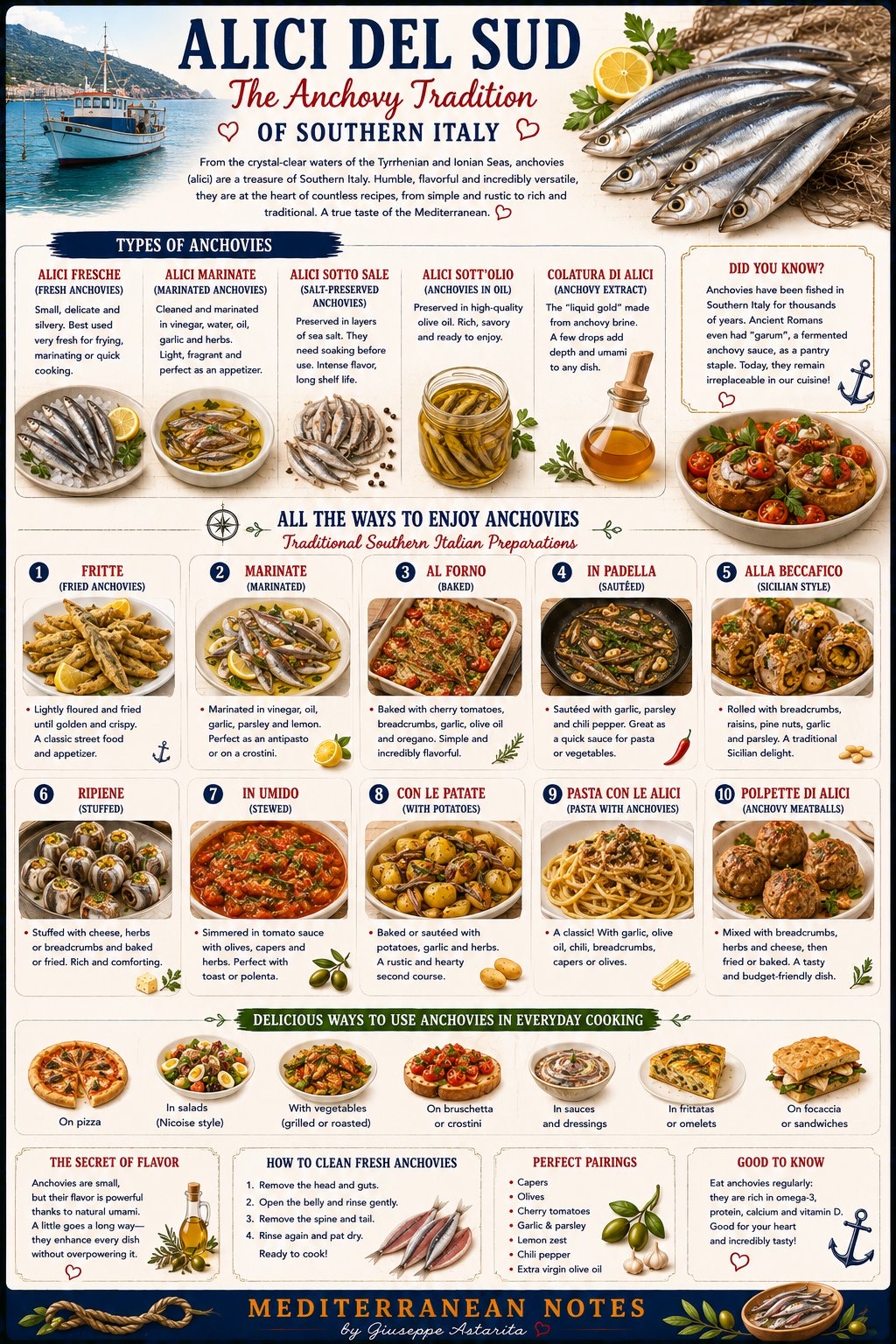
The forms — what you will find
How my mother cooked them — and the other ways
My mother was right about the fish, even if the explanation she had at the time was incomplete. She cooked alici regularly, in multiple forms, for years, and we ate them because they were good and inexpensive and what she made. The science caught up eventually. The tradition was already correct.
The recipes
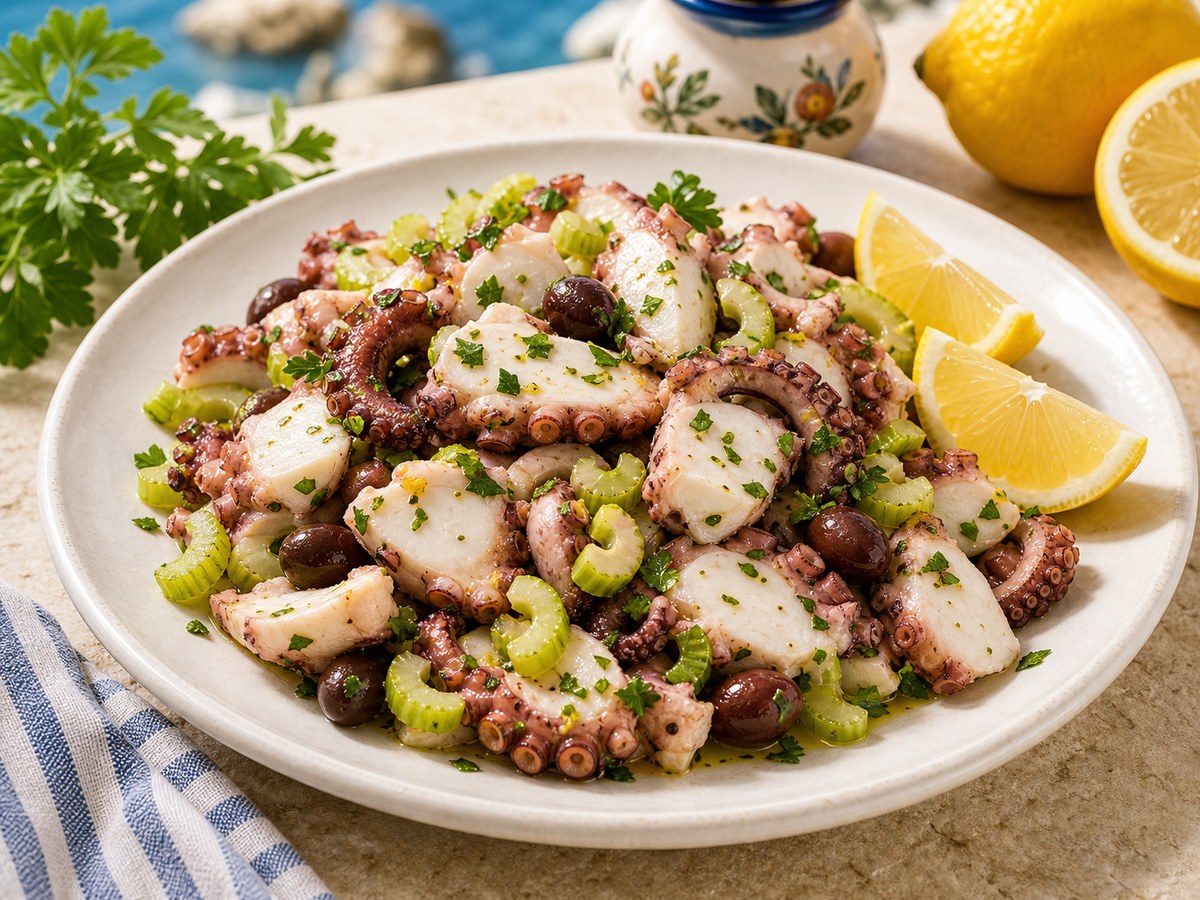
Each preparation produces a different fish — almost a different ingredient. The fried ones disappear in minutes. The baked ones are the considered version. The marinated ones come out of the refrigerator cold, for summer lunches and antipasti.
Buon appetito — e buon pesce azzurro.