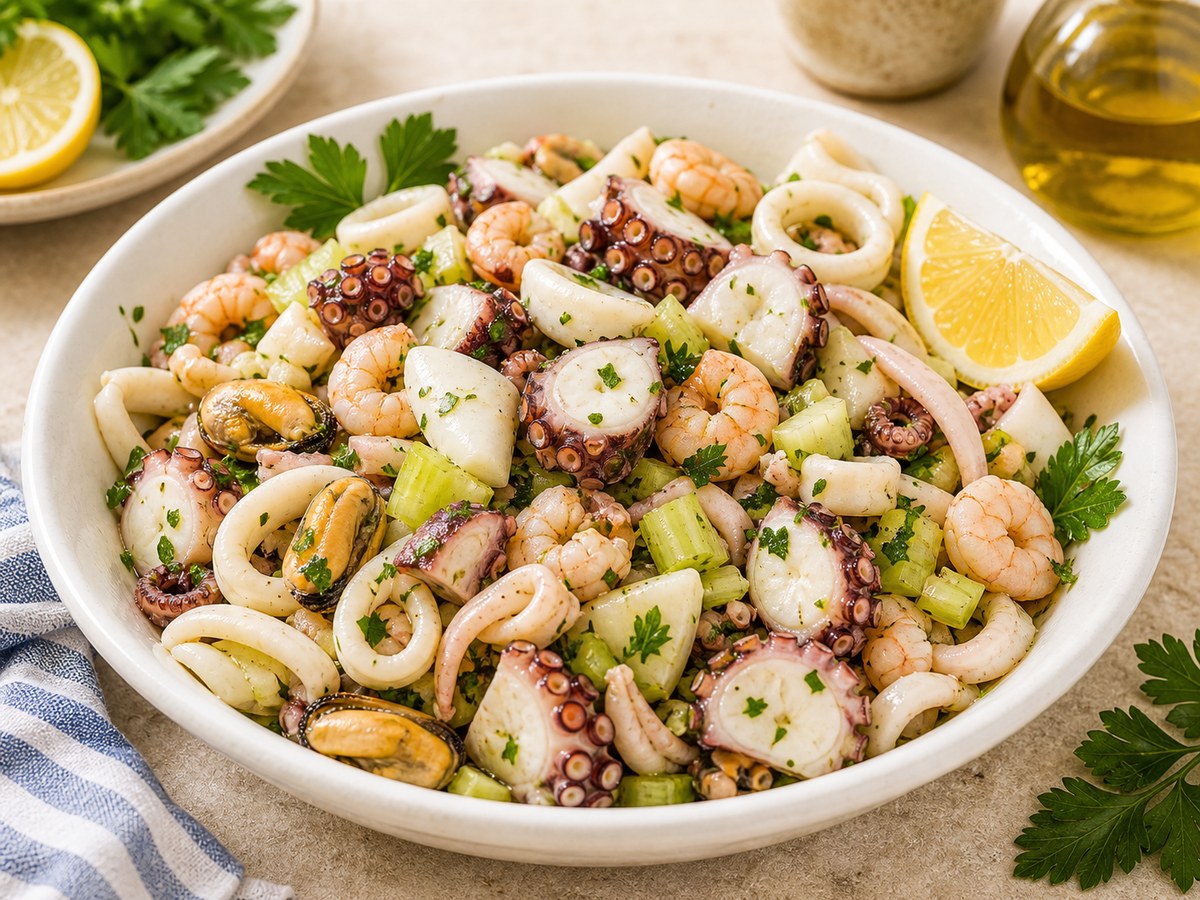
'O Purpo All'Insalata
The octopus salad that even my father ate — which was not a given. Cooked in its own water, cooled in the pot, dressed simply with olive oil, lemon, and parsley. The Neapolitan way with octopus. Nothing added that does not belong.
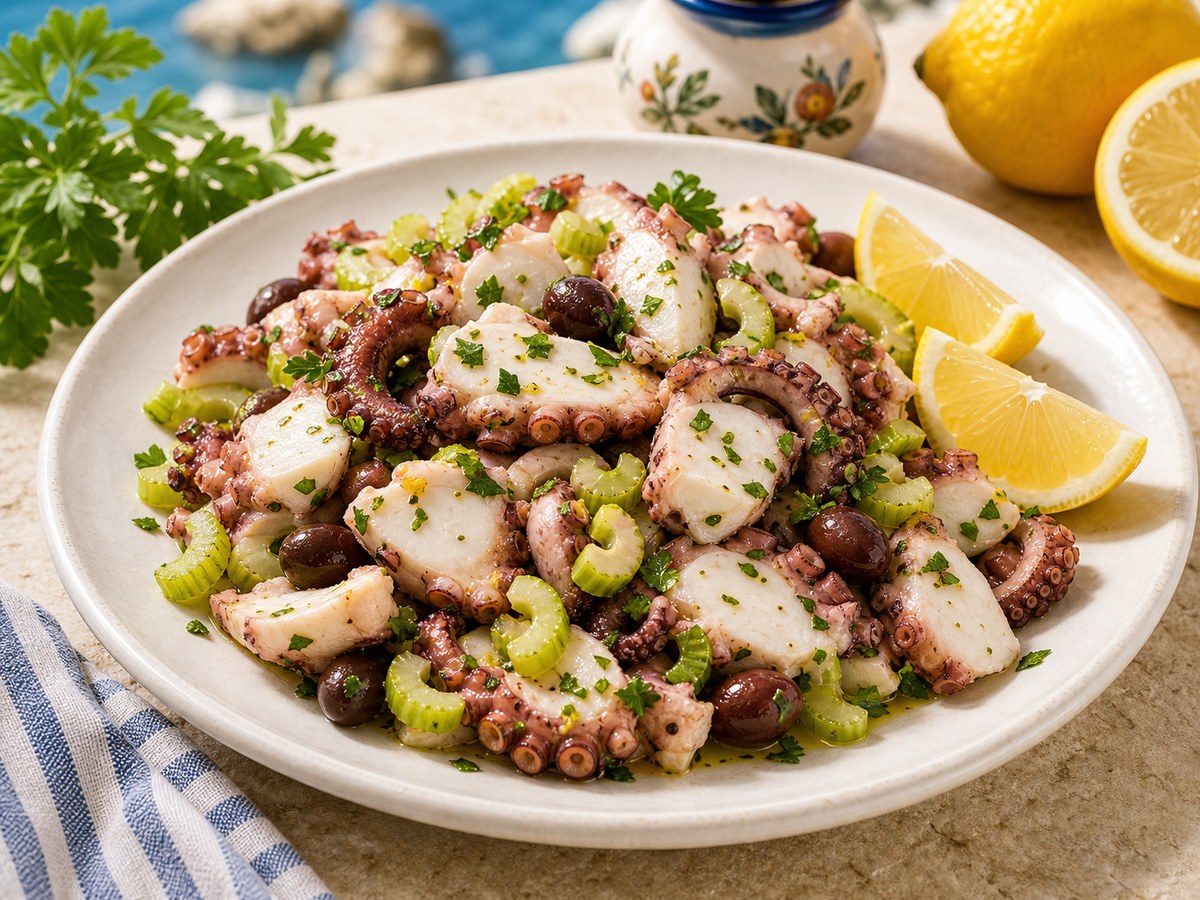
My father's relationship with seafood was specific and well-established: he ate very little of it, and what he did eat had to be on his own terms. The octopus salad was one of the few exceptions — perhaps because the octopus, properly cooked and dressed simply with olive oil and lemon and parsley, is mild enough and substantial enough to appeal to someone who generally avoided fish and shellfish. The insalata di tonno with olive oil and lemon was another exception. Beyond that, the sea was mostly my mother's territory and ours.
The name in Neapolitan dialect: 'o purpo all'insalata — the octopus as a salad. The true Neapolitan tradition calls for cooking the octopus in its own water with minimal aromatics, preserving the pure scent of the sea. The dipping technique — lowering the tentacles into boiling water three or four times before submerging — curls them and keeps the skin intact. The rest is time.
This follows the same principle that governs all Neapolitan seafood cooking: the sea provides the flavor, you provide the olive oil and the lemon, and you resist the urge to add anything else. The temptation is always to add more — more aromatics, more complexity, more dressing components. The Neapolitan answer is always the same: less.
Octopus toughness is a collagen problem. The muscle tissue contains a high proportion of collagen — a fibrous structural protein that, when exposed to heat rapidly, contracts and tightens, producing the rubbery texture that overcooked octopus is known for. Slow cooking at low heat converts this collagen to gelatin gradually, and cooling the octopus in its cooking water allows this gelatin to remain in the tissue rather than leaching out. The result is octopus that is tender, slightly yielding, and moist rather than dry and chewy.
Freezing fresh octopus before cooking serves the same purpose as beating it — the formation of ice crystals inside the muscle tissue mechanically disrupts the collagen fibers, weakening the protein network before cooking begins. A frozen-and-thawed octopus cooks to tenderness more reliably and more quickly than a fresh one. This is why freezing is not a workaround but the preferred approach for consistent results.
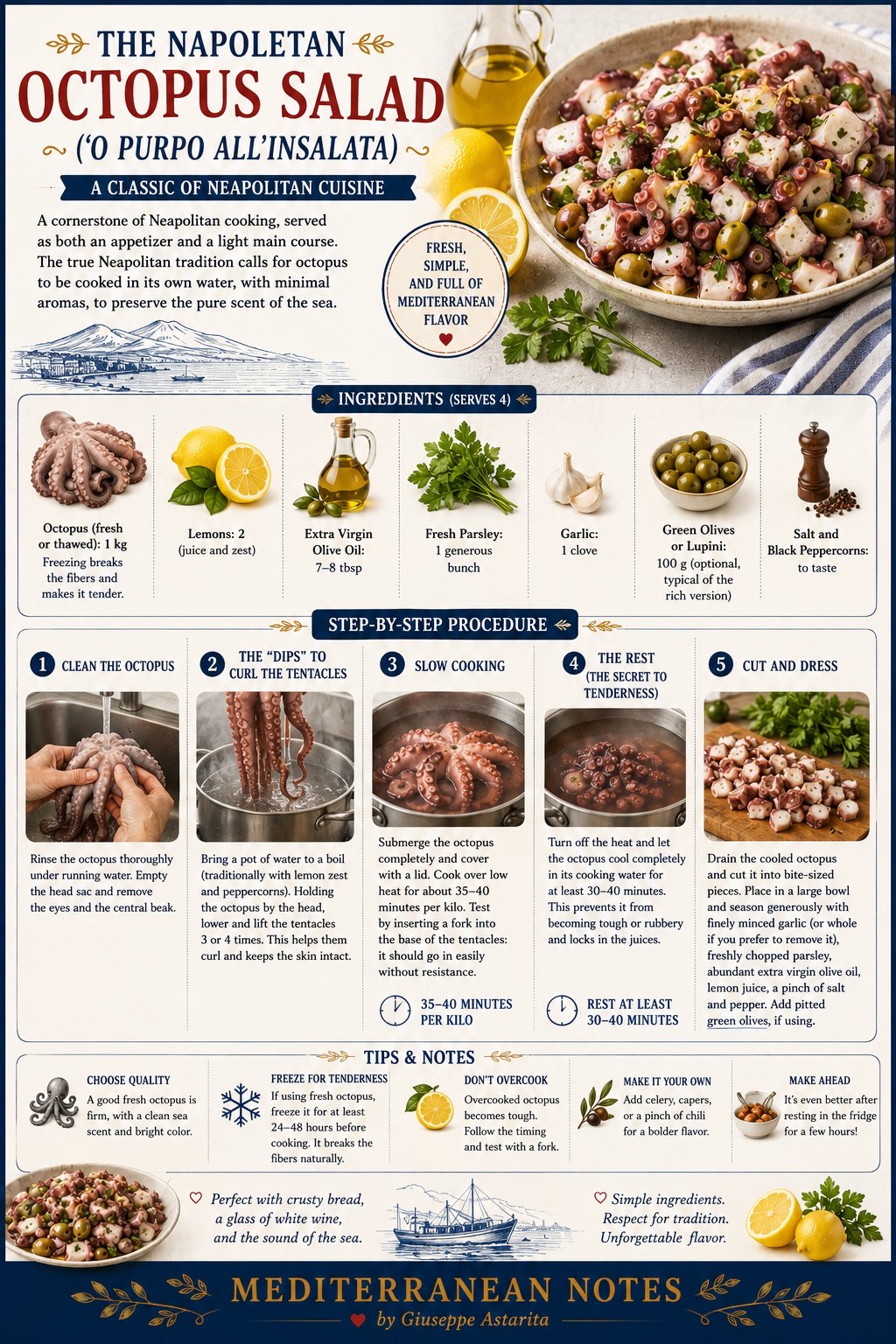
This is a summer preparation — not because you cannot make it in winter, but because the instinct for cold seafood salad arrives with the heat. In July and August in Campania, a bowl of insalata di polpo on a hot afternoon is not a dish so much as a restoration. The cold, the acid of the lemon, the clean salt of the sea in the octopus. There is no complicated version of this salad. It is already complete.
Buona estate — e sempre il mare nel piatto.