Insalata di Mare
The full mixed seafood salad — octopus, calamari, cuttlefish, shrimp, celery, lemon and olive oil. A summer appetizer, a picnic by the sea. It smells of where it came from wherever you eat it.
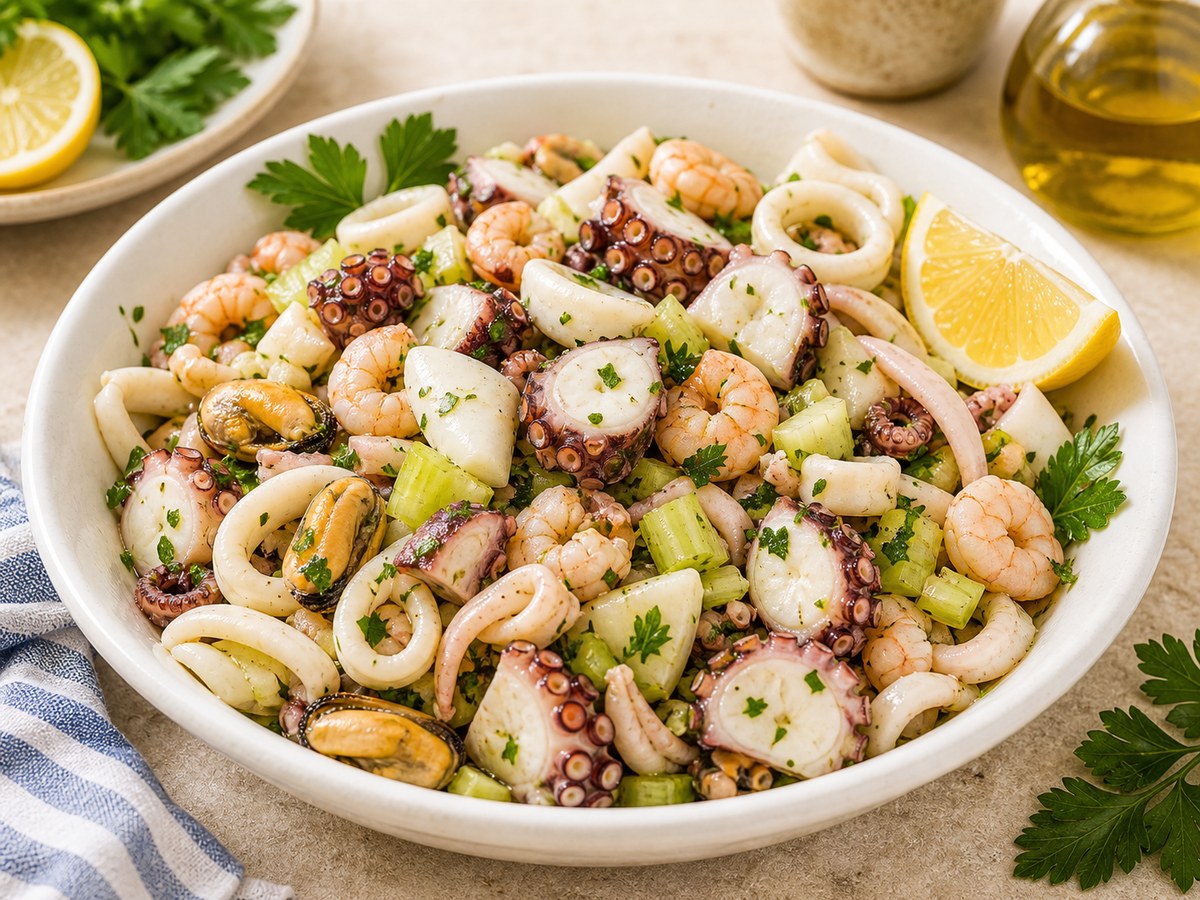
The insalata di mare was the summer appetizer when the family sat down for a full seafood lunch — or the thing you made for a picnic at the sea, packed cold and eaten from the container in the sun. My father had already had his octopus salad, which was the one seafood dish he actually ate. The rest of us had this: the full version, everything together, the whole summer sea in a bowl.
You can take it to the beach. You pack it in a sealed container with ice, bring it out when you are already at the water with bread and a glass of whatever white is open. The smell of the lemon dressing when you open the container, in front of the sea, is one of the most specific sensory experiences of an Italian summer. It smells of where it came from. It smells of sea wherever you eat it.
The secret is separate cooking for each seafood — because each requires a different time and temperature. Mixing them in the same pot produces some things overcooked and some things raw. The discipline of cooking them apart and combining them only at the dressing stage is what makes the salad what it is.
The principle here is the same as for the octopus salad: the sea provides the flavor, you provide the olive oil and the lemon, and you resist the urge to add anything else. The temptation is always to complicate it — a little vinegar, some herbs beyond parsley, a touch of something. Resist. The freshness of the seafood is the point.
Why each seafood cooks differently — and why this matters
The four seafoods in this salad have entirely different protein and collagen structures. Octopus has the highest collagen content and needs the longest cooking — 25–30 minutes at a gentle simmer. Cuttlefish is similar but slightly more tender, needing 15–20 minutes. Calamari (squid) is more delicate: 3–5 minutes in boiling water or it becomes rubbery — the myosin proteins in squid denature and contract rapidly above 60°C, squeezing out moisture and producing the characteristic tough texture of overcooked calamari. Shrimp is the most sensitive of all: 40–50 seconds in boiling water is enough. The glutathione and other heat-sensitive proteins in shrimp coagulate almost immediately; the moment the flesh turns fully opaque, it is done and should be removed from the heat at once.
The lemon juice in the dressing continues to act on the cooked seafood during the resting period — the citric acid partially denatures surface proteins and contributes to the tenderizing effect, particularly noticeable in the octopus after an overnight rest. This is the same principle as ceviche, but gentler and applied to already-cooked seafood rather than raw.
Cooking times at a glance:
Octopus
25–30'
cool in water
Cuttlefish
15–20'
until tender
Calamari
3–5'
last in the pot
Shrimp
40–50"
just until pink
Ingredients — serves 4
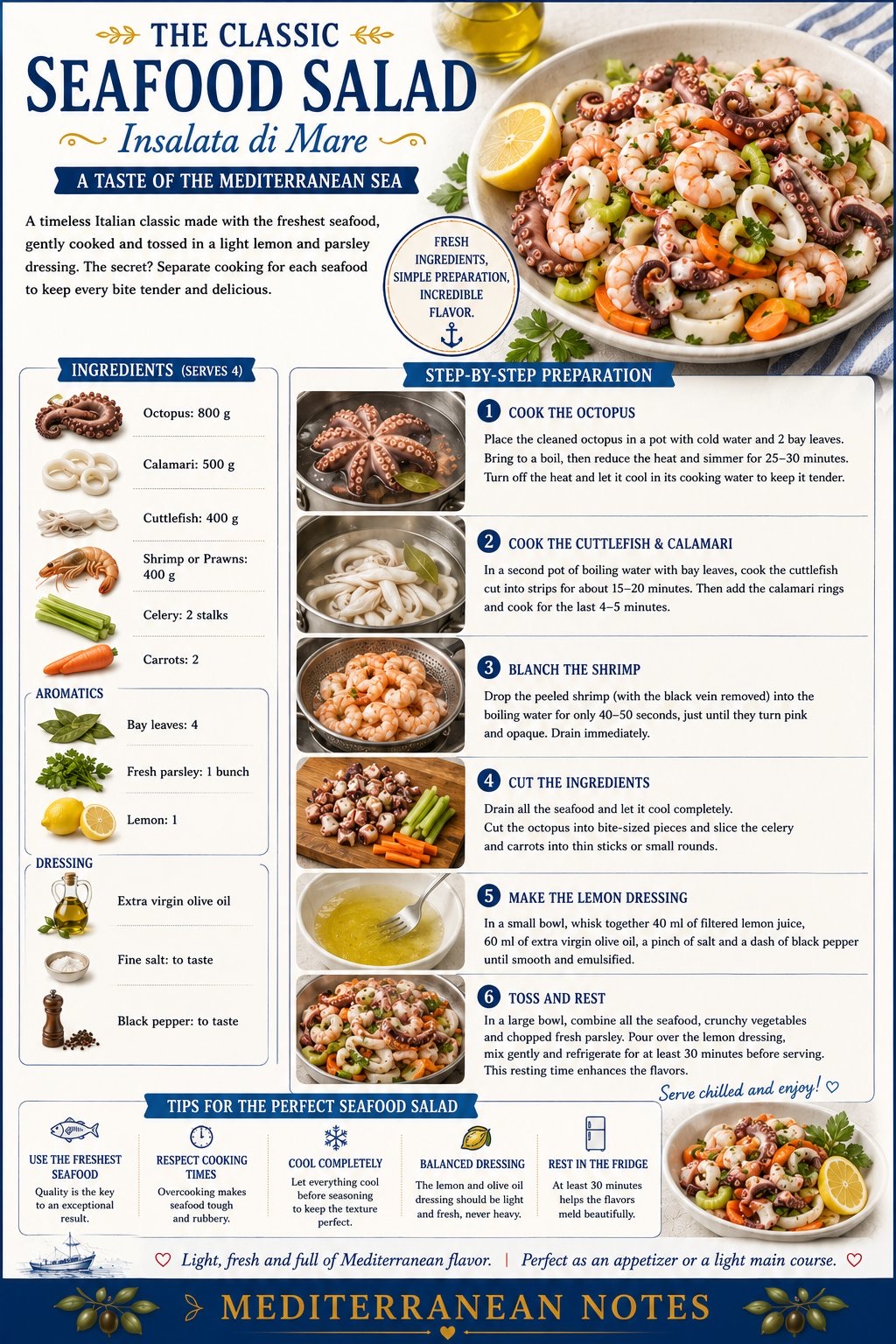
Insalata di mare — each seafood cooked separately, dressed together. Click to enlarge.
800 gOctopus, cleaned
500 gCalamari, cleaned and cut into rings
400 gCuttlefish, cleaned and cut into strips
400 gShrimp or prawns, peeled and deveined
2 stalksCelery, thinly sliced
2 mediumCarrots, diced or sliced thin
4Bay leaves (for the cooking water)
1 bunchFresh parsley, chopped
40 mlLemon juice (about 1 lemon)
60 mlExtra-virgin olive oil
to tasteSalt and black pepper
1
Cook the octopus first. Place in a pot with cold water and 2 bay leaves, bring to a boil, reduce heat, simmer for 25–30 minutes. Turn off the heat and leave to cool in its water — at least 20 minutes. This keeps it tender and prevents the skin from tightening.
2
Bring a second pot of salted water with the remaining bay leaves to a rolling boil. Add the cuttlefish strips and cook for 15–20 minutes until tender. In the last 3–5 minutes, add the calamari rings. Drain.
Do not add the calamari at the start — they cook much faster than cuttlefish and will be rubbery before the cuttlefish is done.
3
In the same boiling water, drop in the shrimp for 40–50 seconds only — just until they turn pink and fully opaque. Drain immediately and spread on a plate to cool. Do not overcook. An overcooked shrimp is rubbery and dry and it is the most common mistake in this salad.
4
Drain the octopus and cut into bite-sized pieces. Let all the seafood cool completely to room temperature before assembling — never dress warm seafood.
5
Combine all the cooled seafood in a large bowl with the sliced celery and carrot. Whisk together the lemon juice, olive oil, salt and pepper. Pour over, add the chopped parsley, and toss gently. Taste and adjust.
Refrigerate for at least 1 hour before serving. Even better after 2–3 hours, or made the night before. Serve chilled, not at room temperature.
The rule — and the picnic logic
Never serve insalata di mare warm. The flavors are entirely different cold — the lemon has had time to work, the oil has emulsified with the juices, the texture of each seafood is at its best after resting. For a picnic by the sea — which is the correct setting for this dish — make it the evening before, pack it in a sealed container with ice, and bring it out when you are already at the water with bread and a glass of white. The smell when you open the container, in front of the sea, is one of the most specific pleasures of an Italian summer.
These are summer preparations — not because you cannot make them in winter, but because the instinct for cold seafood salad arrives with the heat. In July and August in Campania, a bowl of insalata di mare on a hot afternoon is not a dish so much as a restoration. The cold, the acid of the lemon, the clean salt of the sea in the seafood. There is no complicated version of this salad. It is already complete.
Buona estate — e sempre il mare nel piatto.
🐙
See also
'O Purpo All'Insalata
The octopus salad alone — simpler, the one even my father ate.