Pesce all Acqua Pazza
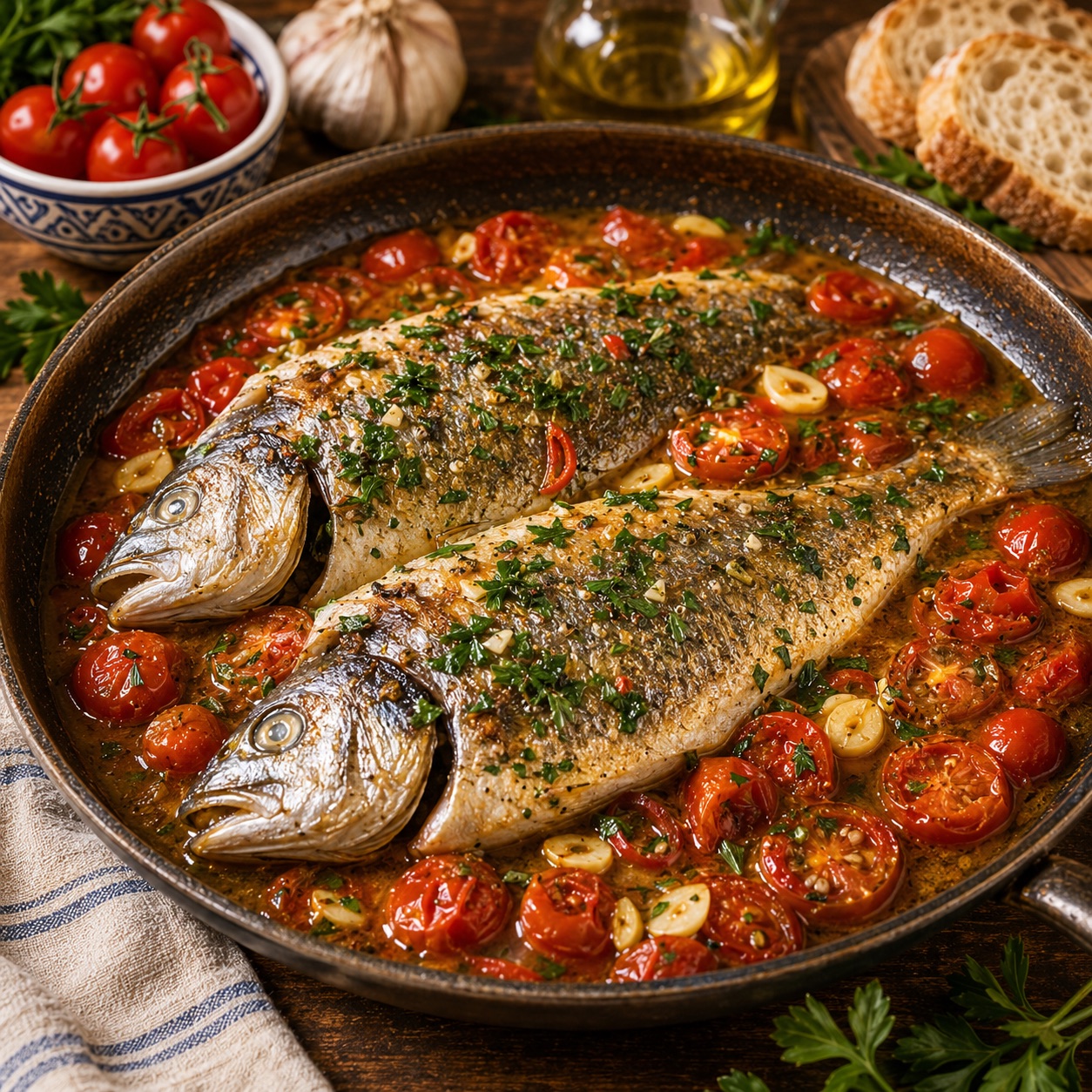
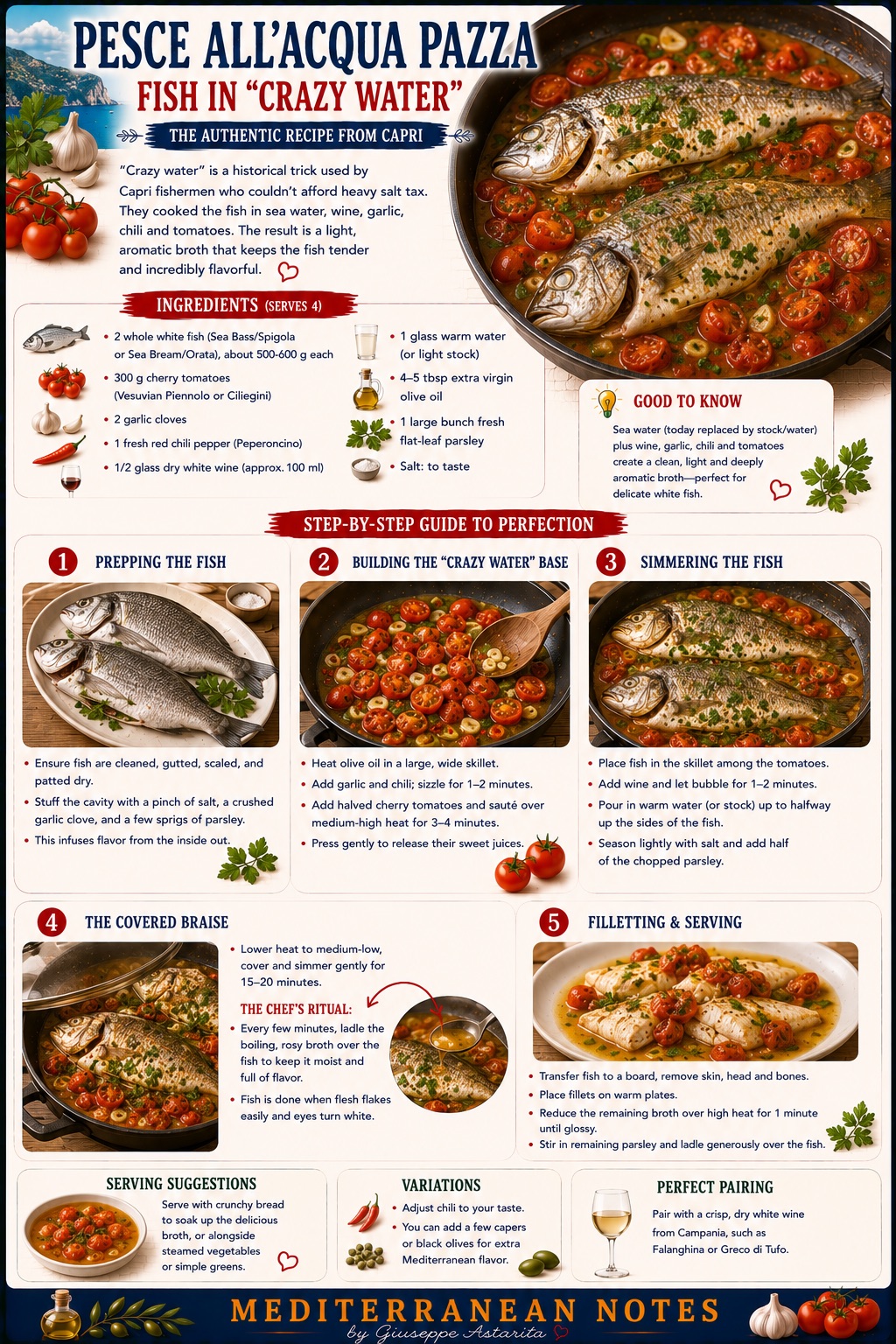
Fish cooked in crazy water with cherry tomatoes, garlic, parsley, white wine, olive oil, and seawater simplicity.
Ingredients · serves 4
Method
1. Prep the fish. Have the fish cleaned, gutted, scaled and patted dry. Tuck a pinch of salt, a crushed garlic clove and a few sprigs of parsley into each cavity — it seasons from the inside out.
2. Build the “crazy water.” Heat the oil in a wide skillet and sizzle the garlic (and chili, if using) for a minute or two. Add the halved cherry tomatoes over medium-high heat for 3–4 minutes, pressing gently with a fork to release their juice.
3. Simmer the fish. Slide the fish in among the tomatoes. Add the wine and let it bubble 1–2 minutes, then pour in warm water (or light stock) until it reaches halfway up the fish. Season lightly and scatter in half the parsley.
4. The covered braise. Lower the heat to medium-low, cover, and simmer gently for 15–20 minutes — basting every few minutes by tilting the pan and spooning the broth over the fish so it stays moist.
5. Fillet & serve. Lift the fish out, remove skin, head and bones, and plate the fillets. Reduce the broth over high heat for a minute until glossy, stir in the rest of the parsley, and spoon it generously over the fish.
My mother never called this acqua pazza. That was the trattoria name. She said "il pesce al pomodorino" or sometimes just "il pesce," as if there were only one way to cook a whole fish and this was it. She used whatever was at the market — orata most often, branzino when it was good, dentice on occasions that called for something slightly more expensive. The method was always the same. The fish went in whole, the cherry tomatoes went around it, garlic and parsley and a glass of white wine and a little water, the lid went on, and fifteen minutes later it was done.
Acqua pazza — crazy water. The name is old and describes the thing exactly: the liquid in the pan is not plain, it steams and moves and picks up tomato and garlic and wine, and arrives at the table somewhere between a broth and a sauce, wilder than water but simpler than a proper sugo. The dish is said to come from the fishermen of the Pontine Islands and the Campanian coast, who cooked at sea using actual seawater as the base. The result was not a recipe. It was a way of eating that happened to produce something extraordinary, and it made it to land without changing much.
The liquid that forms in the pan is the best part. My mother would always put a piece of good bread in the bowl to soak it up. This was not a suggestion. It was the point.
Fish muscle is structurally different from the muscle of land animals. The connective tissue between muscle segments — the myocommata — is much thinner and contains less collagen. This means fish proteins denature and set at lower temperatures: most finfish are fully cooked at a core temperature of 55–60°C, compared to 70°C or above for chicken or beef. The low collagen content also means there is nothing to convert to gelatin over time — which is why you cannot "braise" fish the way you braise beef. High heat or prolonged cooking simply dries the proteins out. The covered-pan method here maintains a gentle steam environment (around 95–100°C) that cooks the fish quickly but surrounds it with humid aromatic steam rather than direct contact with boiling liquid, keeping the flesh moist. The cherry tomatoes release their juice as they collapse, adding body and slight acidity to the cooking liquid. The result — what you eat with the bread — is essentially a light fish consommé built in fifteen minutes.