Campania:
Where History Became Cuisine
The southern Italian region I grew up in. Apennine mountains, volcanic plains, ancient temples, extraordinary coastline. Occupied and influenced by Greeks, Romans, Arabs, French, Spanish, and eventually Americans — each civilization leaving something behind in the kitchen. Unified to the rest of Italy only in 1861, later than most of Europe had assumed.
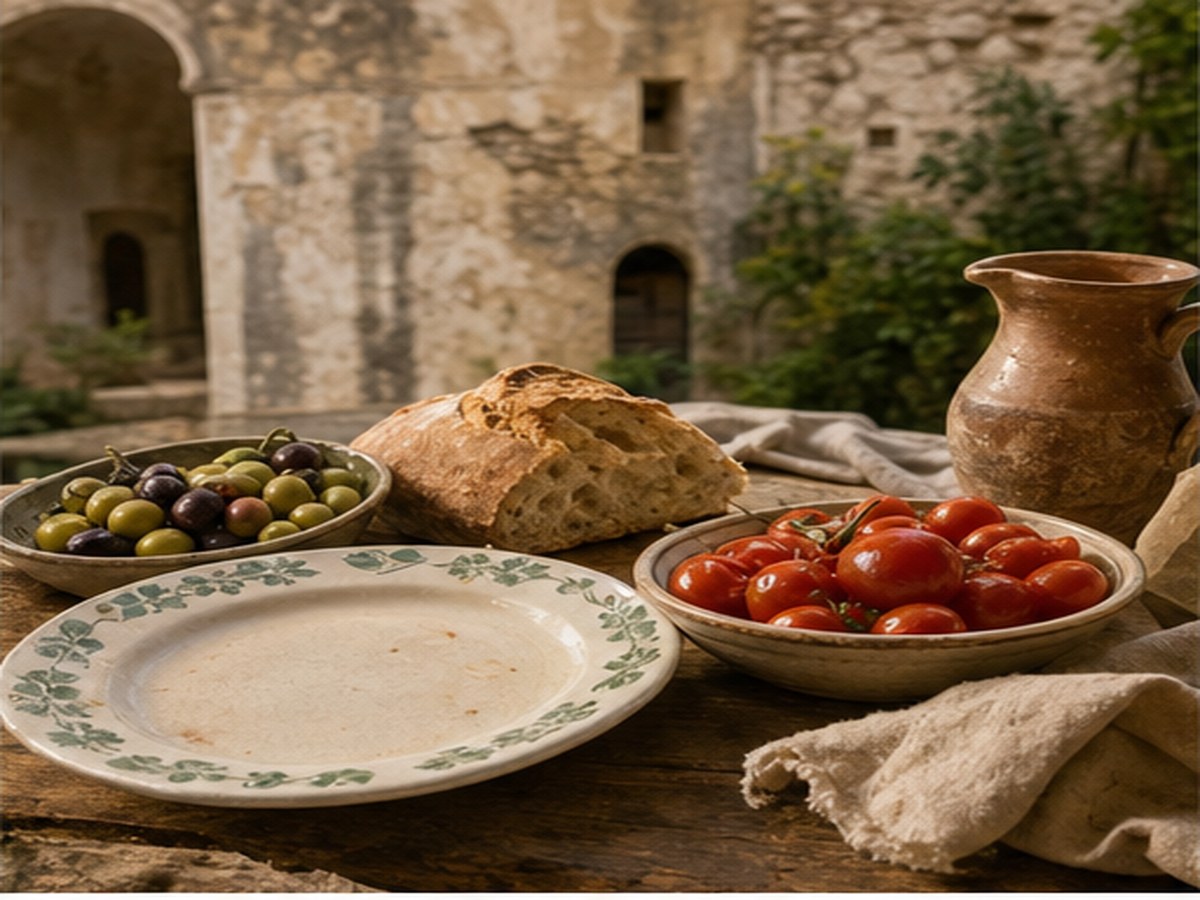
Campania is not a simple place to describe, which is part of why its food is not simple. It stretches from the fertile volcanic plains around Mount Vesuvius — where the San Marzano tomato grows in soil enriched by centuries of eruptions — north through the Casertano, where I grew up, and south to the Amalfi coast and the islands of Capri, Ischia, and Procida. The Apennine mountains form its eastern spine; the Tyrrhenian Sea shapes its western face. Agriculture, mountain shepherding, coastal fishing, and volcanic geology have all contributed to what the region produces, and what the region produces is what its kitchen is built from.
But the geography is only the foundation. What makes Campanian food as layered and complex as it is — why a simple onion sauce carries a name from Genoa, why the pastiera contains orange blossom water from a tradition that predates the Italian nation, why the tomato is the symbol of the Neapolitan kitchen despite arriving from the Americas only in the sixteenth century — is history. Campania has been one of the most coveted territories in the Mediterranean for three thousand years, and every civilization that passed through it left something behind. Not all of them left intentionally. But the kitchen absorbed it regardless.
"Campania is not just a place where recipes were born.
It is a place where civilizations met at the table.
Every dish tells a story older than Italy itself."
— Giuseppe Astarita
The landscape — what the land provides
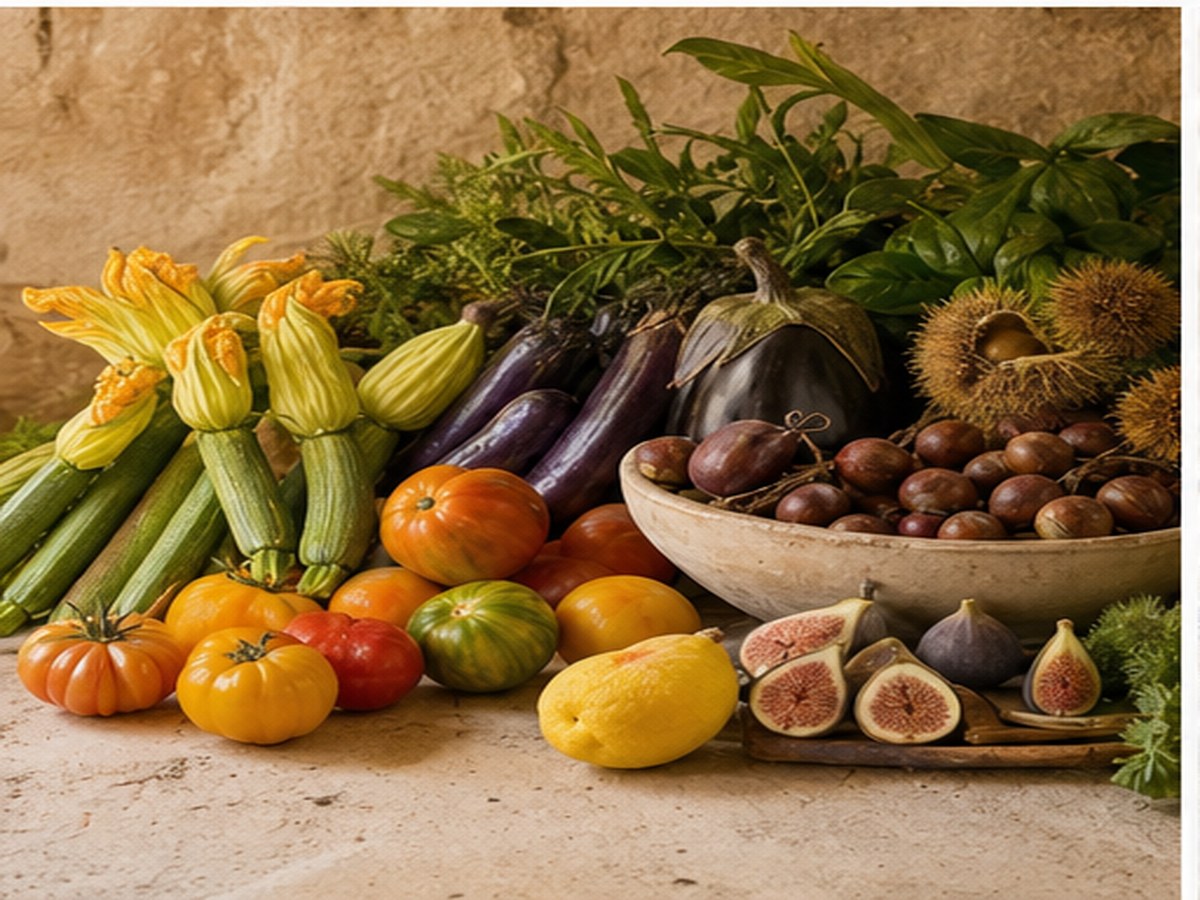
San Marzano tomatoes
Grown in the volcanic soil of the Agro Nocerino-Sarnese, sweeter and less acidic than other varieties. The tomato of Neapolitan pizza and ragù.
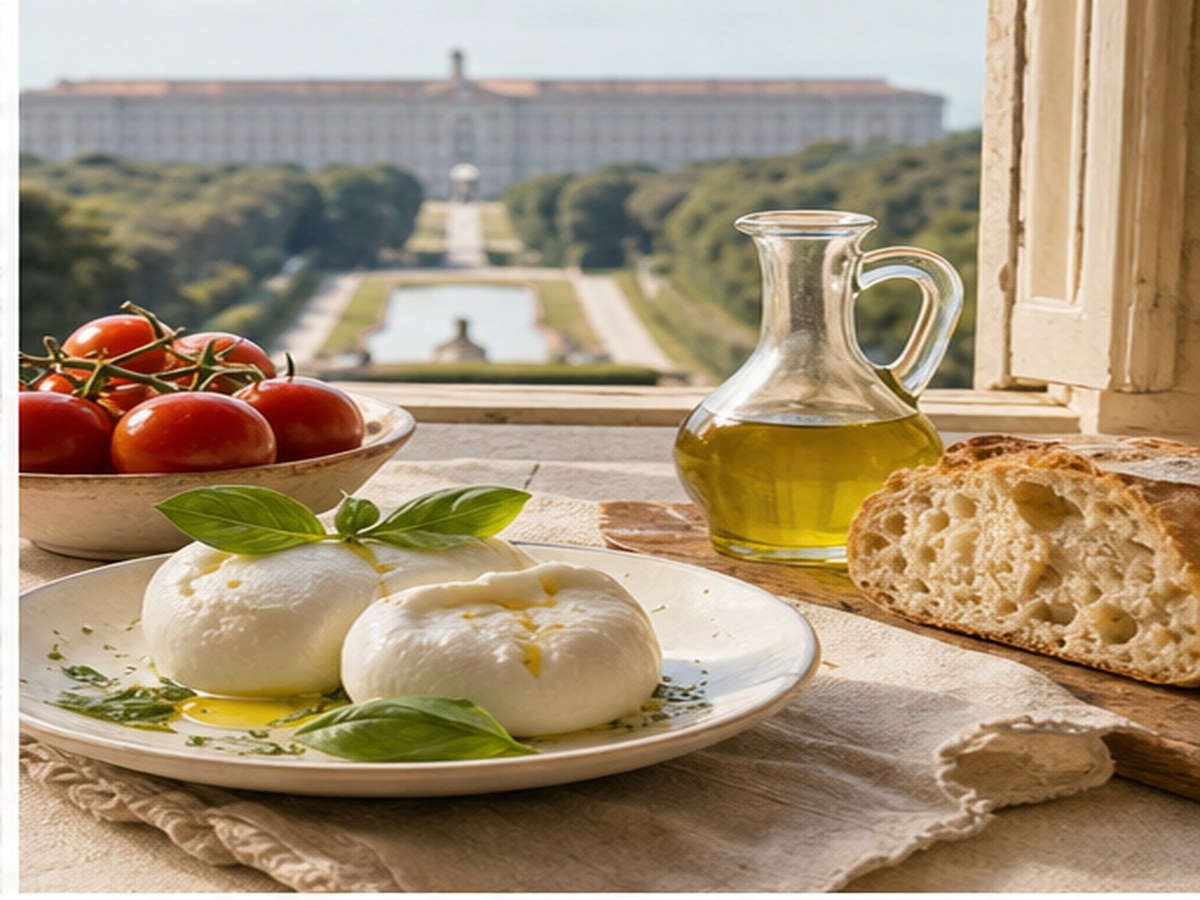
Buffalo mozzarella
From the water buffalo herds of the Caserta and Salerno plains. 95% of Italy's buffalo population.
Already described at length in this collection.
Amalfi and Sorrento lemons
Sfusato amalfitano and Sorrento limoni — fragrant, thick-rinded, low acidity. The lemon of the coast that appears in limoncello, pastry, and in every pan sauce that calls for citrus.
Mediterranean seafood
The Tyrrhenian and its bays supply the
alici, the clams, the swordfish, the mussels. The coast shaped half the region's weekly menu.
Olive oil
Campanian olive oil has been produced since Greek settlement. The Cilento in particular has ancient olive trees and a production tradition that predates Roman records.
Durum wheat and pasta
The volcanic plains and the dry, windy Amalfi coast provided ideal conditions for pasta drying. Gragnano, near Naples, became a center of pasta production that still supplies the world.
Wine
Aglianico, Falanghina, Greco di Tufo — indigenous varieties cultivated since Greek colonization. Campanian wine culture is among the oldest in Europe.
Grains and legumes
The Campanian hinterland — including the Caserta plain — has produced wheat, beans, lentils, and chickpeas since antiquity. The
cucina povera built its foundation on these.
The occupations — every civilization left something in the kitchen
Campania has been occupied, influenced, or ruled by Greeks, Romans, Normans, the Aragonese crown, the French, the Spanish Bourbons, and briefly by Napoleonic France before unification in 1861. Each left traces in the food culture that are still legible in the dishes made today.
~700 BCE onward
The Greeks — the foundation
Greek settlers founded Neapolis — "New City," from which Naples takes its name — and brought Mediterranean agriculture: olive cultivation, wine culture, fishing traditions, and the earliest forms of grain-based cooking. The word "pasta" itself has roots in the Greek word for dough. Greek food culture established the Mediterranean diet framework that Campania still follows. The Campania Felix — "happy countryside" — was named by those who first saw what the volcanic soil could produce.
200 BCE – 500 CE
The Romans — refinement and scale
The Romans transformed Campania into one of the empire's most desirable regions — wealthy villas along the Bay of Naples, large-scale agricultural estates, the development of preservation techniques, and a sophisticated dining culture that influenced all subsequent European gastronomy. The garum — fermented fish sauce — that appears in Roman recipes from Campania is the ancestor of the colatura di alici still made in Cetara today. Roman roads connected Campania to the empire's supply chains and introduced new ingredients from across the Mediterranean.
~800 – 1100 CE
The Arabs — citrus, spices, and sweets
Arab influence through Sicily and southern Italy introduced citrus cultivation — the lemon, the orange, the citron that appears in the pastiera — along with spices, almond-based confections, and the techniques that eventually produced many of the region's holiday sweets. The agrodolce tradition — sweet-sour combinations — and the use of raisins and pine nuts in savory dishes (as in the pizza di scarola) both have Arabic roots. The candied fruit of the pastiera, the sfogliatelle's layered pastry — these arrive via this influence, however indirectly.
1400s – 1700s
The French — technique and sauces
French rule and influence under the Angevins and later under the Kingdom of Naples brought refined cooking methods, the development of complex sauces, and long braises. The ragù napoletano — the slow Sunday sauce — is plausibly connected to the French ragout. The Genovese onion sauce may have French braising influence. French culinary technique gave Neapolitan cooking a structural sophistication it built upon in its own direction — towards slower, longer, more patient preparations that the Neapolitan kitchen made entirely its own.
1500s – 1861
The Spanish — the tomato, and pork
Spanish rule through the Kingdom of Naples brought the most transformative single ingredient in Campanian food history: the tomato, arriving from the Americas via Spain in the sixteenth century. For centuries treated with suspicion, the tomato eventually became so central to Neapolitan cooking that it is now difficult to imagine the cuisine before it. The Spanish also reinforced pork traditions — the salumi, the lard in pastry, the cured meats that appear in the
pizza rustica and casatiello — and introduced peppers and other New World ingredients that reshaped the local kitchen permanently.
1861 and after
Unification, Garibaldi, and the North
Campania was part of the Kingdom of the Two Sicilies until 1861, when Garibaldi's campaigns incorporated it into the newly unified Italian kingdom — a political change that many southern families remember as a profound and not entirely welcomed turning point. Unification brought northern Italian administrative culture, standardization, and eventually a degree of economic integration that altered the south significantly. It also created the conditions for the great southern Italian emigrations of the late nineteenth and early twentieth centuries, through which Campanian food culture was carried to the Americas and beyond.
Post-1945
The American connection
After World War II, American influence arrived with occupying forces, Marshall Plan aid, and the cultural reach of American products and food habits. Processed foods, sandwich culture, and American ingredients entered the Italian market. More significantly, the returning emigrants from the United States brought back a hybrid American-Italian food culture that had itself been transforming for fifty years in New York, Philadelphia, and Chicago. The Mulino Bianco generation of biscotti and packaged snacks — described in the
daily rhythm post — is partly a product of this influence. The core of the kitchen remained Mediterranean. The edges changed.
Always
The land itself
Through all these occupations and influences, the most consistent force was the landscape: the volcanic soil that produces the San Marzano tomato, the sea that supplies the seafood, the mountains that shelter the interior and produce the lambs and the wild herbs, the climate that ripens the lemons and the peppers and the olives. Every civilization that arrived in Campania adapted to what the land could offer. The land's generosity made the kitchen rich enough to absorb all their contributions.
What this means for the recipes in this collection
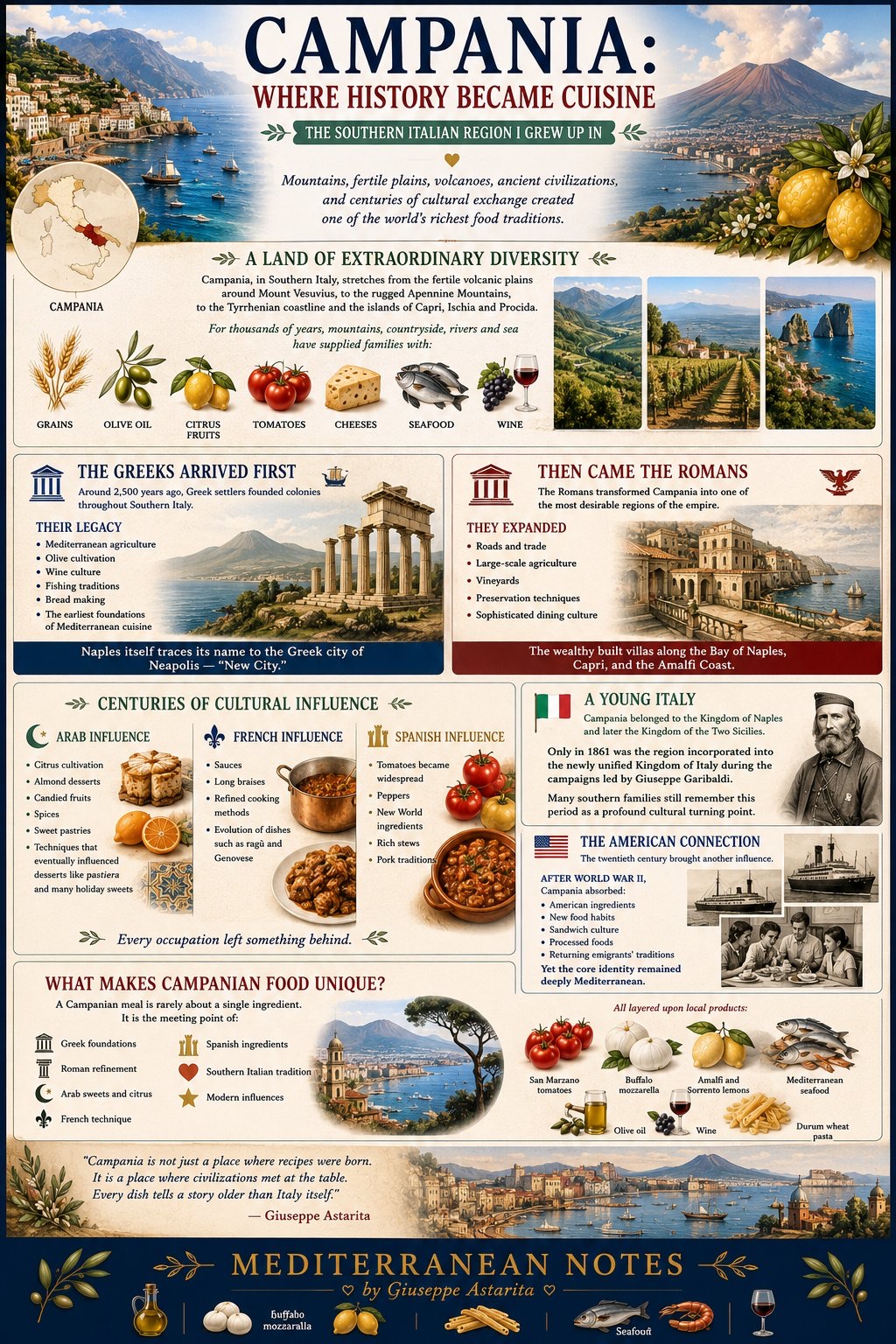
Campania: dove la storia è diventata cucina. Click to enlarge.
Every dish described in this collection carries some of this history in it, whether visibly or not. The pastiera's orange blossom and candied citrus trace to Arab influence through Sicily. The ragù napoletano's long braising technique has French antecedents. The Genovese carries a Genoese name it acquired during the Aragonese period. The tomatoes in the Sunday sauces arrived with the Spanish. The casatiello's lard-enriched dough reflects the Spanish pork traditions. The pizza di scarola's pine nuts and raisins in a savory filling are an agrodolce combination with Arabic roots. None of this erases the Neapolitan identity of these dishes — the kitchen absorbed all these influences and transformed them into something entirely its own. But understanding where the ingredients and techniques came from makes the dishes themselves more legible.
Campania was unified to the rest of Italy only in 1861 — later than most of Europe assumed a place so geographically close to the center would have been. For centuries before that it was the Kingdom of the Two Sicilies, a sovereign state with its own culture, its own laws, and its own food tradition. This long independence is part of why Campanian cooking feels distinct from the rest of Italian cooking rather than being a regional variant of a national style. The ragù is not a southern version of a northern ragu. The Genovese is not an onion sauce that happens to be made in the south. They are what they are because Campania is what it is — a place where history accumulated, where every civilization left something behind, and where the kitchen made use of all of it.
Campania is not just a place where recipes were born. It is a place where civilizations met at the table. Every dish tells a story older than Italy itself.
Campania felix — la terra fortunata.