Cucina povera: the art of doing more with less
Simple ingredients, authentic flavors, zero waste. Born from the ingenuity of peasant families and refined over generations, cucina povera is not a trend. It is a philosophy — and it produced some of the most enduring, nutritionally intelligent food in the world.
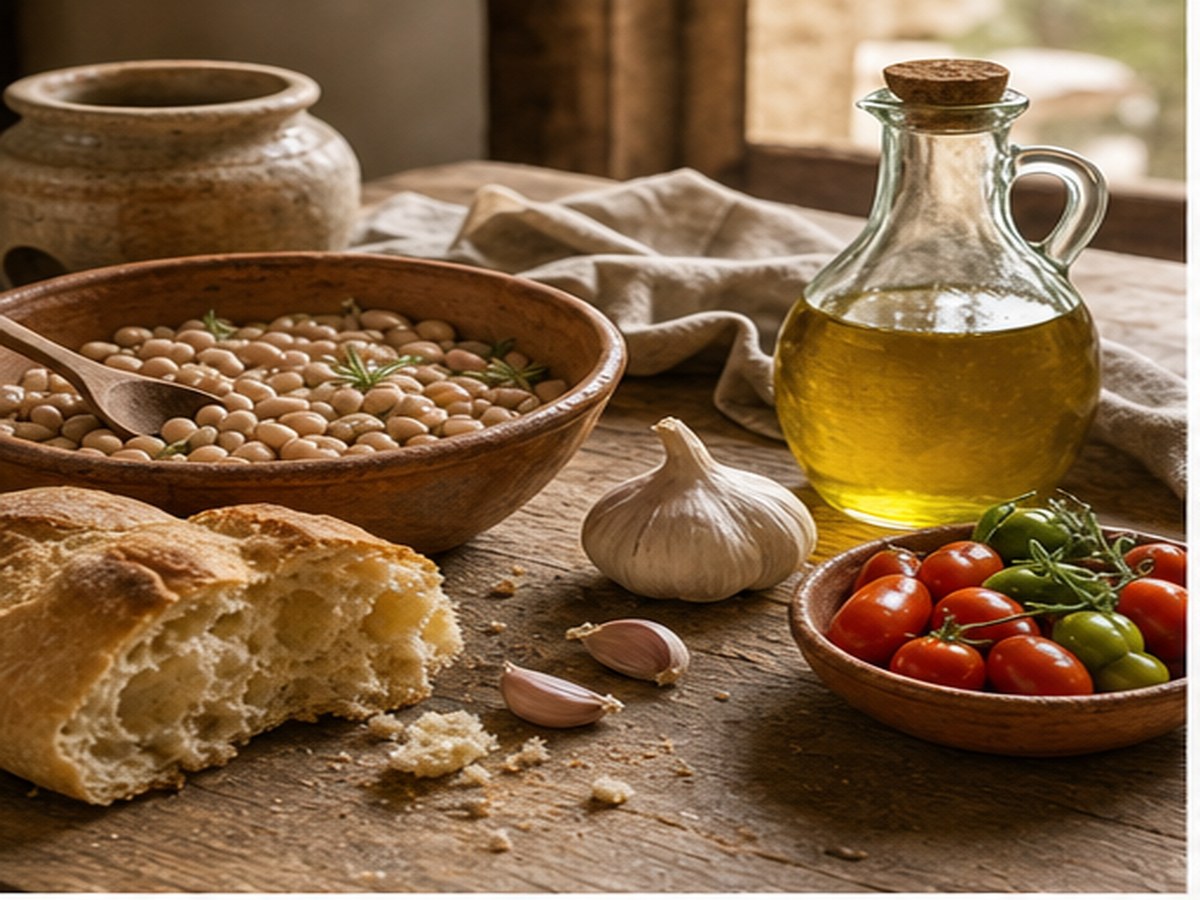
The translation is straightforward: cucina povera means poor kitchen. But the poverty that produced it was not a lack of imagination, or of skill, or of care. It was a lack of money and ingredients — and those constraints, applied over generations across the regions of southern Italy, produced a cuisine of extraordinary precision. Every part of an ingredient was used. Nothing was wasted. Flavor was extracted from what others might have discarded. Stale bread became soup or meatballs. Vegetable peels became broth. Last night's leftovers became today's dish, often better for having rested.
This is the kitchen I grew up in — not in the historical sense of poverty, but in the sense of values. My mother cooked with what was available, in season, without waste. A pot of beans was a meal. Eggs and whatever was in the refrigerator became a frittata. Potatoes, stretched with cheese and egg, became gattò or crocchè. The recipes were not inventions; they were inherited practices, each one the accumulated wisdom of families who had learned over time which combinations of humble ingredients produced the most sustenance and the most pleasure.
What strikes me now, looking at this tradition from the perspective of someone who spent decades studying the biochemistry of food and health, is how well it aligns with what nutritional science has arrived at through entirely different methods. The emphasis on legumes, vegetables, olive oil, whole grains, and minimal animal protein — with occasional eggs, cheese, and cured meat as flavoring rather than centerpiece — describes both the peasant diet of southern Italy and the Mediterranean dietary pattern that has accumulated the most robust evidence for health outcomes of any dietary approach studied to date. They arrived at the same place. One arrived there through necessity and accumulated experience; the other through randomized controlled trials and cohort studies.
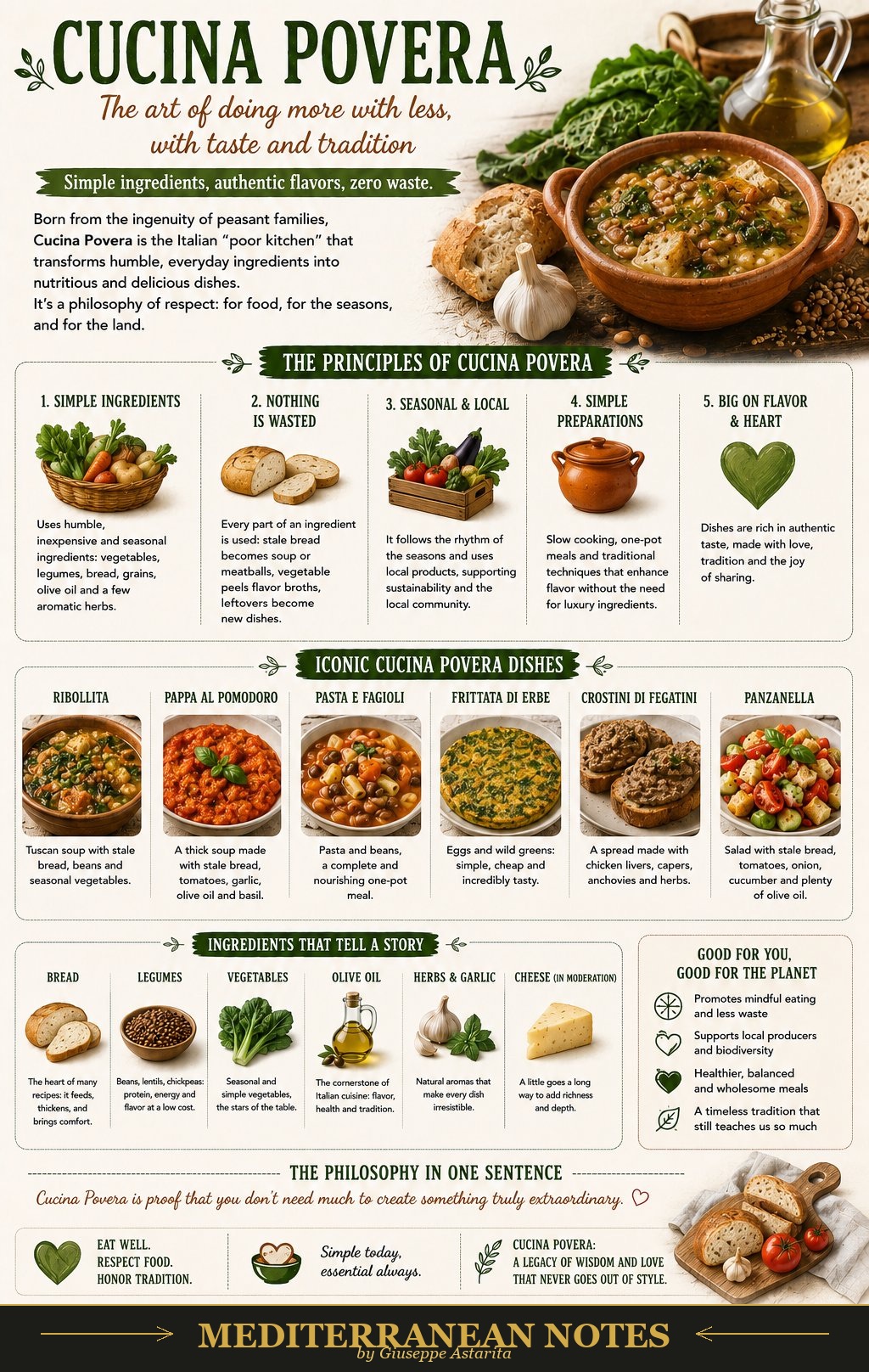
The five principles
Cucina povera is not a collection of recipes. It is a set of habits and instincts — a way of approaching ingredients and meals that can be summarized in five principles, each of which has direct implications for both the quality of the food and its effect on health.
01
Simple ingredients
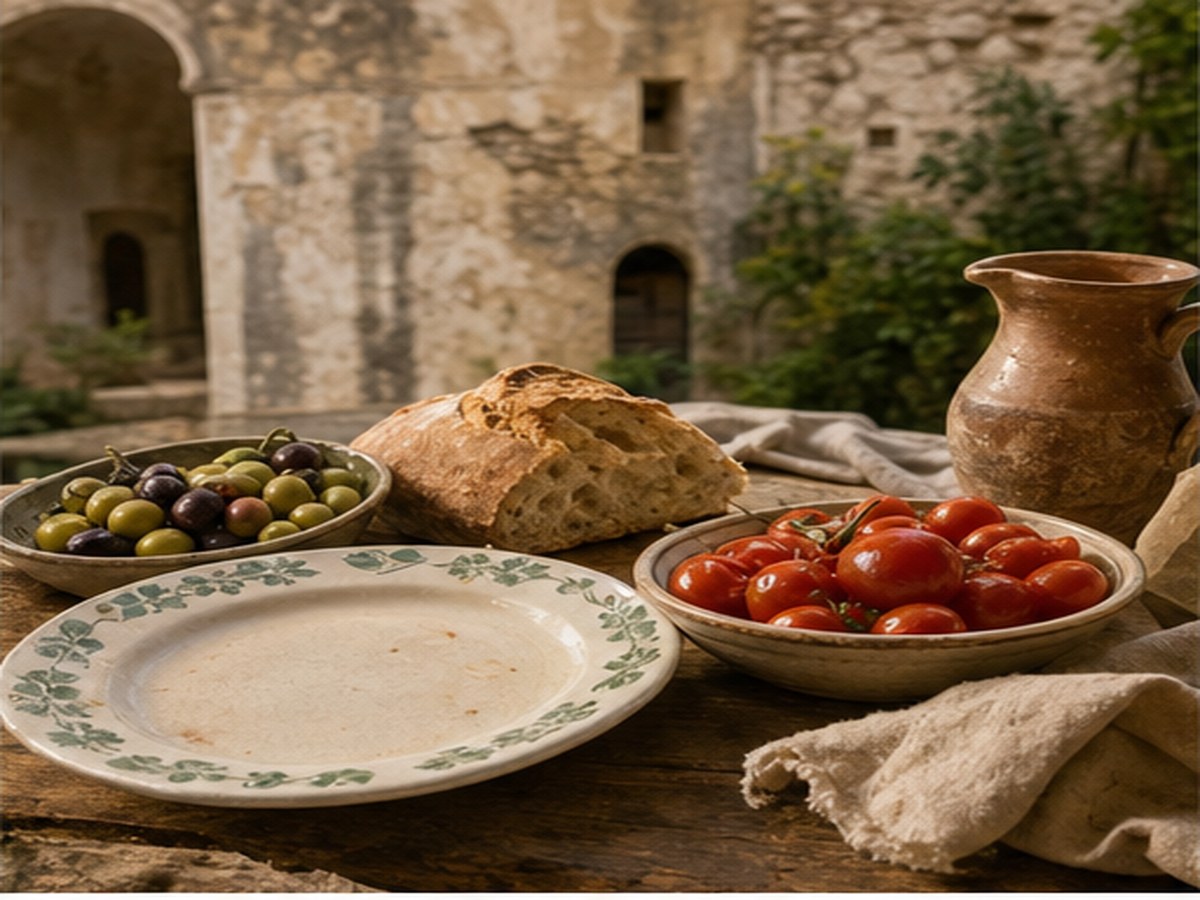
Vegetables, legumes, bread, grains, olive oil, a few herbs. Not poor ingredients — honest ones. Ingredients whose quality determines the quality of the dish, with nothing to hide behind.
02
Nothing is wasted
Stale bread becomes ribollita, pappa al pomodoro, or panzanella. Vegetable water becomes broth. Last night's ragù goes into arancini. The zero-waste instinct is not ecological theory — it was economic survival that happened to be correct.
03
Seasonal and local
The cuisine follows the rhythm of what is available: zucchini in summer, eggplant in late summer, legumes through winter. Seasonal eating is not a lifestyle choice in this tradition — it is the structure within which cooking happens.
04
Simple preparations
Slow cooking, one-pot meals, long braises — techniques that extract maximum flavor from minimal ingredients. Time replaces cost. Patience is the luxury ingredient of cucina povera.
05
Big on flavor and heart
Dishes made with care, shared at a table, eaten with people. The social dimension of cucina povera is inseparable from the food itself. The meal is not an individual act — it is a collective one.
The science of eating well with little
Legumes, olive oil, whole grains — why cucina povera maps to optimal nutrition
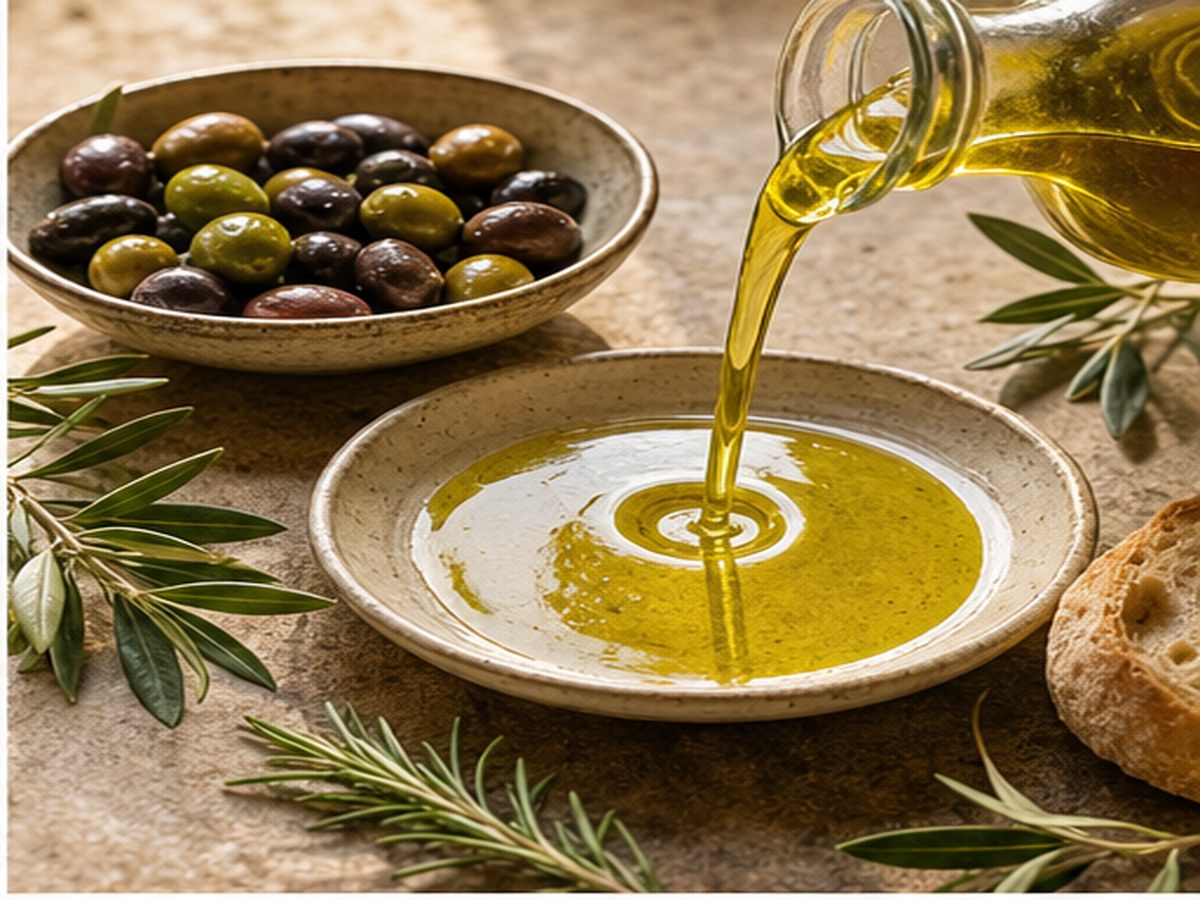
The nutritional architecture of cucina povera maps with remarkable precision onto what decades of epidemiological research have identified as protective dietary patterns. Legumes — beans, lentils, chickpeas — are the protein backbone of the poor kitchen: they provide complete or near-complete amino acid profiles when combined with grains (as in pasta e fagioli), substantial soluble fiber that reduces postprandial blood glucose and feeds beneficial gut microbiota, and polyphenols including flavonoids and isoflavones with documented anti-inflammatory effects. Whole grains and stale bread contribute resistant starch and B vitamins. Seasonal vegetables provide a rotating array of carotenoids, flavonoids, glucosinolates, and vitamin C — the exact range depending on what is in season, which means the diet naturally cycles through different phytochemical families across the year. Extra-virgin olive oil, the fat of this cuisine, contributes oleic acid (the primary monounsaturated fatty acid associated with reduced cardiovascular risk), hydroxytyrosol and oleuropein (phenolic compounds with antioxidant and anti-inflammatory activity), and vitamin E. Garlic and herbs — rosemary, parsley, basil, bay — contribute volatile sulfur compounds, terpenes, and phenolics at small but consistent doses across meals. Eggs and cheese appear in cucina povera not as the center of the plate but as flavoring and enrichment — a nutritionally sound approach that provides fat-soluble vitamins, complete protein, and calcium without the metabolic load of animal-protein-centered meals. The overall pattern — predominantly plant-based, high in fiber and polyphenols, moderate in healthy fats, low in refined sugar and processed foods — is precisely what large meta-analyses of dietary patterns and mortality risk have identified as optimal. The peasants of southern Italy did not have access to the PREDIMED trial. They had something more durable: necessity, tradition, and accumulated experience across hundreds of years of cooking for survival.
Iconic dishes — and what they represent
Every cucina povera dish is a lesson in a principle. Here are six of the most emblematic, each from a different region of Italy, each expressing the same underlying logic in a different way.
Tuscany
Ribollita
A thick winter soup of stale bread, cannellini beans, cavolo nero, and whatever vegetables are available. The name means "reboiled" — it was made once and reheated daily, improving each time. The bread breaks down and thickens the soup into something almost solid. One of the great Italian dishes, made entirely from things that might otherwise be discarded.
Tuscany
Pappa al pomodoro
Stale bread, ripe tomatoes, garlic, basil, and olive oil — cooked slowly until the bread collapses into a thick, fragrant porridge. The word pappa is what Italians call baby food; this dish, which looks like nothing, tastes like August in a bowl. A masterclass in what olive oil and tomato can do to stale bread.
Italy-wide
Pasta e fagioli
Pasta and beans — a complete protein in a single bowl, nutritionally sound, deeply satisfying, and endlessly variable by region. The Neapolitan version is soupier; the Venetian version is denser; all versions are built on the same principle: legumes and grain together, cooked slowly with aromatics and olive oil, finished with a thread of extra-virgin oil on top.
Italy-wide
Frittata di erbe
Eggs and wild greens — foraged herbs, whatever grows in the field or the garden. Simple, cheap, and a vehicle for phytochemicals in the greens: chlorophyll, carotenoids, flavonoids. The frittata is cucina povera's most flexible format: it accepts anything that needs using and returns something coherent and good.
Tuscany
Panzanella
Stale bread soaked in water and squeezed dry, combined with ripe tomatoes, cucumber, onion, basil, and olive oil. A summer salad built on the principle that stale bread, given time to absorb the juices of a ripe tomato, becomes something worth eating. No cooking required — just good ingredients and patience.
Campania
The Campanian spirit
In Naples and the surrounding region, cucina povera produced the frittata, the gattò, the crocchè, the zucchine alla scapece, the melanzane a funghetto — all dishes on this blog, all built on humble ingredients transformed by technique and tradition into something that far exceeds the sum of its parts. Campania did not invent cucina povera. But it perfected the emotional dimension of it.
The recipes on this blog, in this tradition
Every recipe in the Campanian section of this blog is, in some sense, a cucina povera dish — or directly descended from one. The frittata uses whatever is available. The crostata uses stale jam and the simplest pastry. The melanzane a funghetto makes something extraordinary from an eggplant, some tomatoes, garlic, and basil. The gattò transforms potatoes and leftover cheese into a celebration dish. The arancini exist because there was rice left over and it would have been wrong to waste it.
The links below connect to the full recipes — each one an expression of the same underlying logic that the peasant kitchens of southern Italy practiced for generations without calling it anything in particular.
What cucina povera is still teaching us
The contemporary relevance of cucina povera is not nostalgia. It is practical. Food systems globally are under pressure from the environmental cost of animal agriculture, the health consequences of ultra-processed food, and the social consequences of food insecurity. Cucina povera offers a worked example — not a utopian proposal, but an actual historical practice — of how to eat well, cheaply, with minimal waste, in a way that supports rather than undermines the health of the people eating it and the land producing it.
The peasant families of southern Italy did not choose their diet for ethical or ecological reasons. They ate what they had. But what they had, prepared with skill and care and the accumulated knowledge of generations, produced one of the healthiest dietary patterns ever documented — and some of the most delicious food in the world. That combination of constraints and ingenuity is worth paying attention to, even now, when the constraints are different and the ingenuity is optional.
Cucina povera is proof that you do not need much to create something truly extraordinary. What you need is respect — for the ingredient, for the season, for the person you are cooking for, and for the tradition that worked out all these combinations before you arrived at the table.
A memory that belongs here, because it is the lived version of everything above: growing up, it was inconceivable to throw away food. There was no take-away culture because there was no eating-out culture — and even at the pizzeria you would not leave food on your plate. At home, leaving food was cattiva educazione and possibly a review of the cooking, but above all it was waste, and my mother or my father would invoke, as every Italian parent did, the children starving in the world. They were right. And the result was never a feeling of scarcity — it was an abundance of imagination: the pane secco saved for weeks, the leftovers reborn with new names, the constant creativity of possibility about what to do with what was there.
Eat well. Respect food. Honor tradition.