La frittata: my mother's second course, and why we don't eat eggs for breakfast
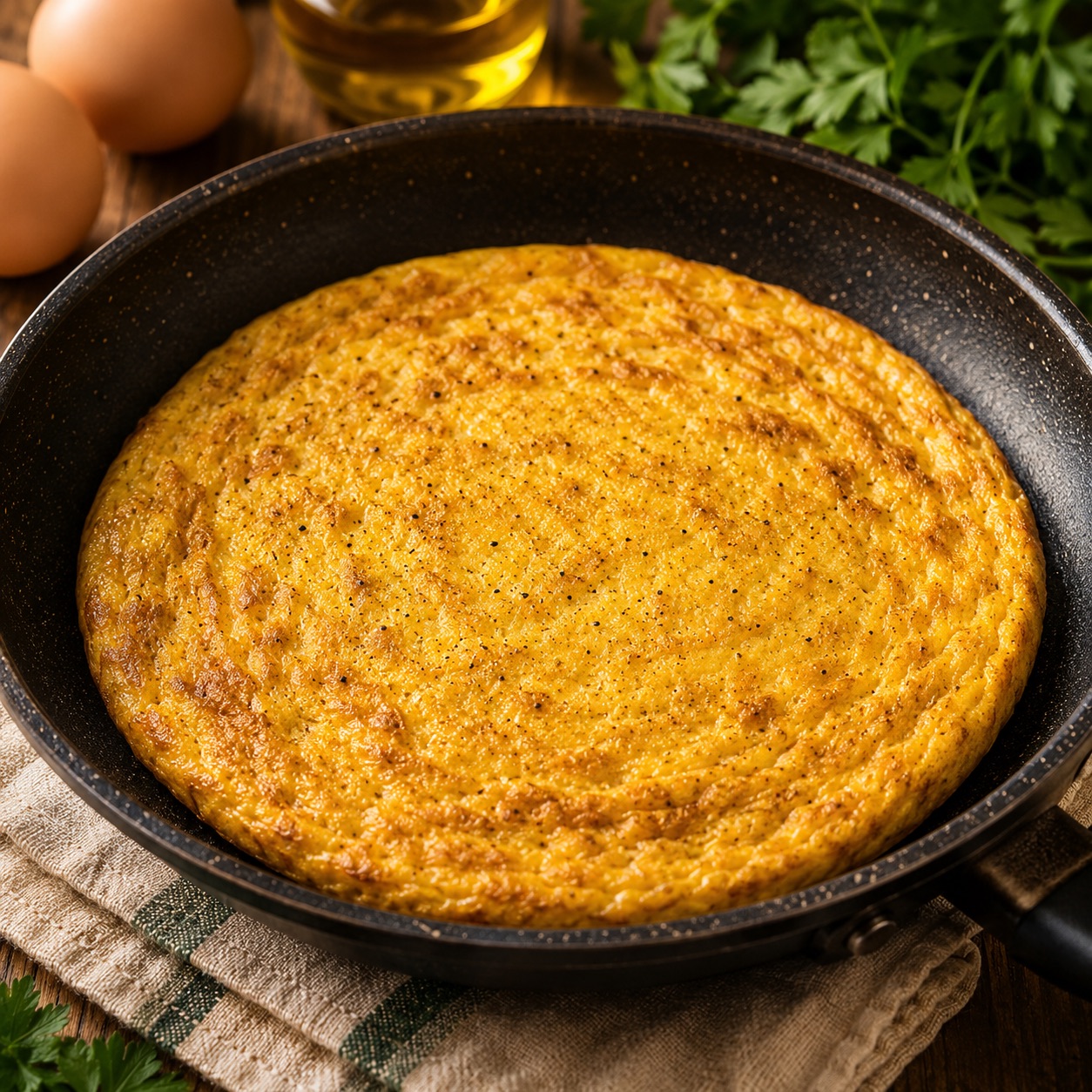
Growing up, I heard my mother say "ho fatto la frittata di..." regularly — as the secondo for Sunday lunch, as the main dish for a quick weekday dinner. I didn't quite appreciate it then. I still have trouble cooking it myself, specifically at the moment of the flip. Many cooks now suggest finishing the top in the oven. That is cheating, and I refuse.
There is a cultural misunderstanding about eggs and Italian cooking that surfaces every time an American asks an Italian about their breakfast. Eggs in Italy are not morning food. They are not scrambled, not fried, not poached, not made into omelets at seven in the morning before work. The Italian breakfast is a coffee drink and something sweet — a cornetto at the bar, fette biscottate with butter and jam at home. Eggs appear at the table at lunch and dinner, as a second course or a main dish, in the form of the frittata. This is not a minor distinction. It reflects a completely different relationship between eggs and the meal structure — one that confuses people used to thinking of eggs as morning food, and does not confuse anyone who grew up in an Italian kitchen where the sentence "ho fatto la frittata" meant that lunch was ready.
The frittata is not an omelette. This is not pedantry — they are genuinely different preparations. An omelette is thin, folded, soft in the center, cooked quickly over high heat, eaten immediately. A frittata is thick, flat, set through completely on both sides, cooked slowly over medium-low heat, eaten warm or at room temperature or cold the next day. The omelette is delicate and urgent. The frittata is robust and patient. The omelette is French. The frittata is Italian. They share eggs and a pan and nothing else that matters.
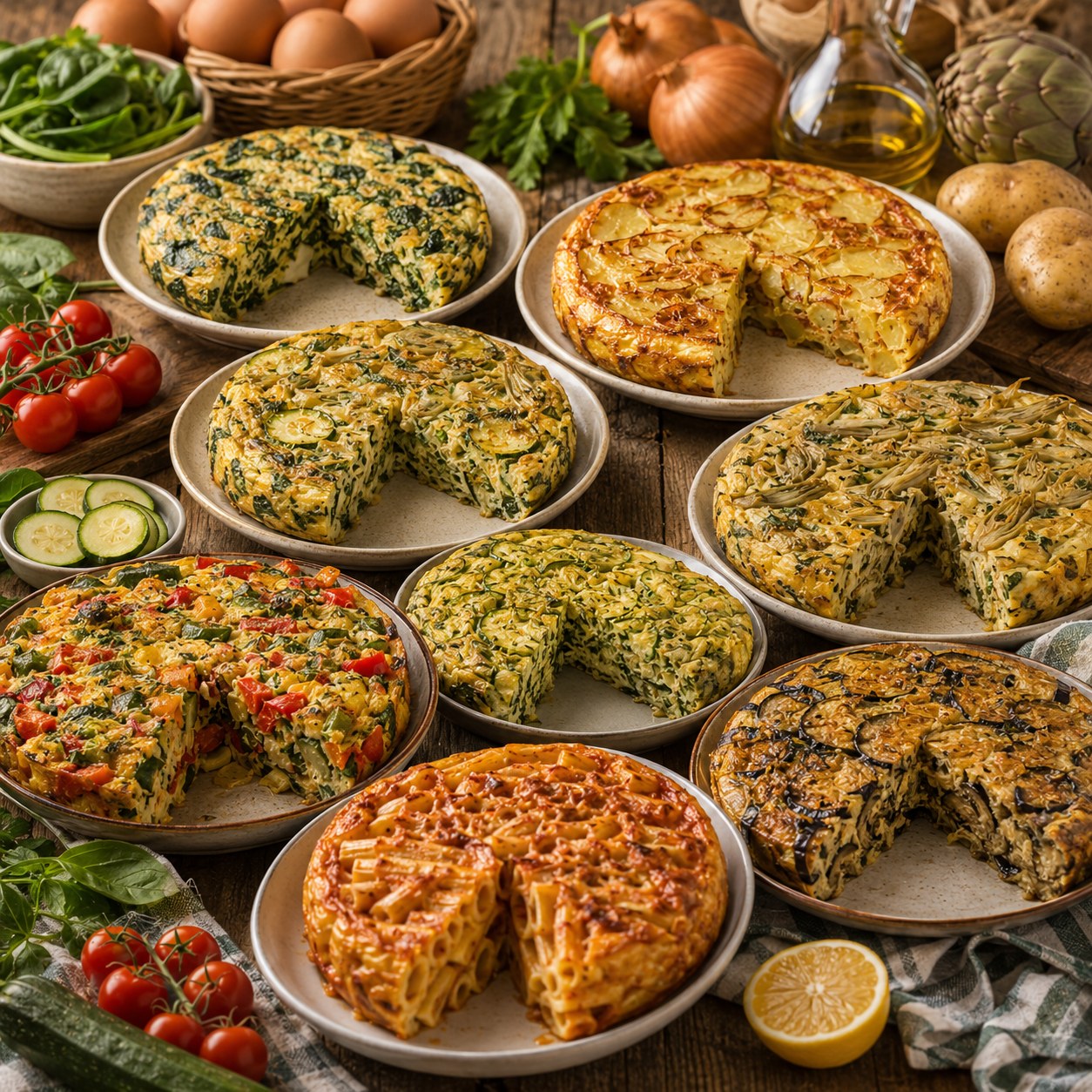
What follows "di" in the announcement changed with what was available, which meant it changed with the season. Frittata di zucchine in summer. Frittata di carciofi in spring. Frittata di cipolla — the simplest — any time of year. Frittata di patate with the potatoes sliced thin and cooked through before the egg arrived. Frittata di spinaci. Frittata di melanzane. And — as the previous post covers — frittata 'e maccarune when there was leftover pasta. The frittata is a format rather than a fixed recipe, a technique applied to whatever the kitchen offered. The result in each case is completely specific to its filling — a zucchini frittata tastes nothing like a potato frittata, which tastes nothing like an onion frittata — and each one is worth making when its ingredient is at its best.
I didn't quite appreciate the frittata growing up, in the way children don't fully appreciate the dishes that are always there. It was reliable and good and present, and I took that for granted. Now I make it myself and I find it harder than it looked when my mother made it — for a reason that is specific to the technique and that cannot be solved by reading about it: the flip.
The flip — il salto — and why the oven is cheating
The frittata must be cooked on both sides in the pan. The first side cooks low and slow, covered, until the egg is set from the bottom up and only a thin uncooked layer remains on top. Then it must be flipped — inverted onto a plate and slid back into the pan with the uncooked side down — and the second side cooked uncovered until golden.
Many recipes now suggest an alternative: put the pan in the oven or under the broiler to set the top without flipping. This produces a frittata that is cooked through. It also produces a frittata with only one golden crust — the bottom — and a top that is pale and slightly rubbery, set by oven heat rather than pan contact. The two golden sides, both developed through direct pan contact, are the point. The frittata should look the same on both sides. The oven produces a different dish. My mother flipped. I am still learning to flip without anxiety. The oven remains a shortcut I will not take.
Why the egg is the protein reference standard — biological value and yolk nutrition
The egg is one of the most nutritionally complete single foods available. A large egg provides approximately 6–7 g of complete protein with a biological value used as the reference standard against which all other dietary proteins are measured — biological value approximately 100, compared to beef at approximately 80, fish at 70, and legumes at 40–60. The yolk contains fat-soluble vitamins A, D, E, and K2; choline at approximately 150 mg per yolk (critical for membrane structure, neurotransmitter synthesis, and liver function — a nutrient most people chronically under-consume); lutein and zeaxanthin with protective roles in macular pigment; and cholesterol, whose dietary intake does not significantly influence blood cholesterol levels in most people, as the liver compensates by downregulating endogenous cholesterol synthesis. The frittata's fully-set format is nutritionally advantageous relative to soft scrambled eggs: complete protein denaturation through full cooking increases protein digestibility, and the medium-low heat used avoids the advanced glycation end products (AGEs) that form in significant quantities at high scrambling or frying temperatures. Each variety contributes its vegetable's specific micronutrient profile on top of the egg's: the zucchini frittata provides lutein and potassium; the spinach frittata provides iron and folate; the artichoke frittata provides inulin and cynarin; the potato frittata provides potassium and B6. Critically, the egg yolk's fat significantly enhances the absorption of fat-soluble carotenoids and vitamins from the vegetables cooked into it — a combined egg-and-vegetable preparation is nutritionally more than the sum of its parts, as the fat dissolves and transports what the vegetable contains but the body cannot absorb without it.
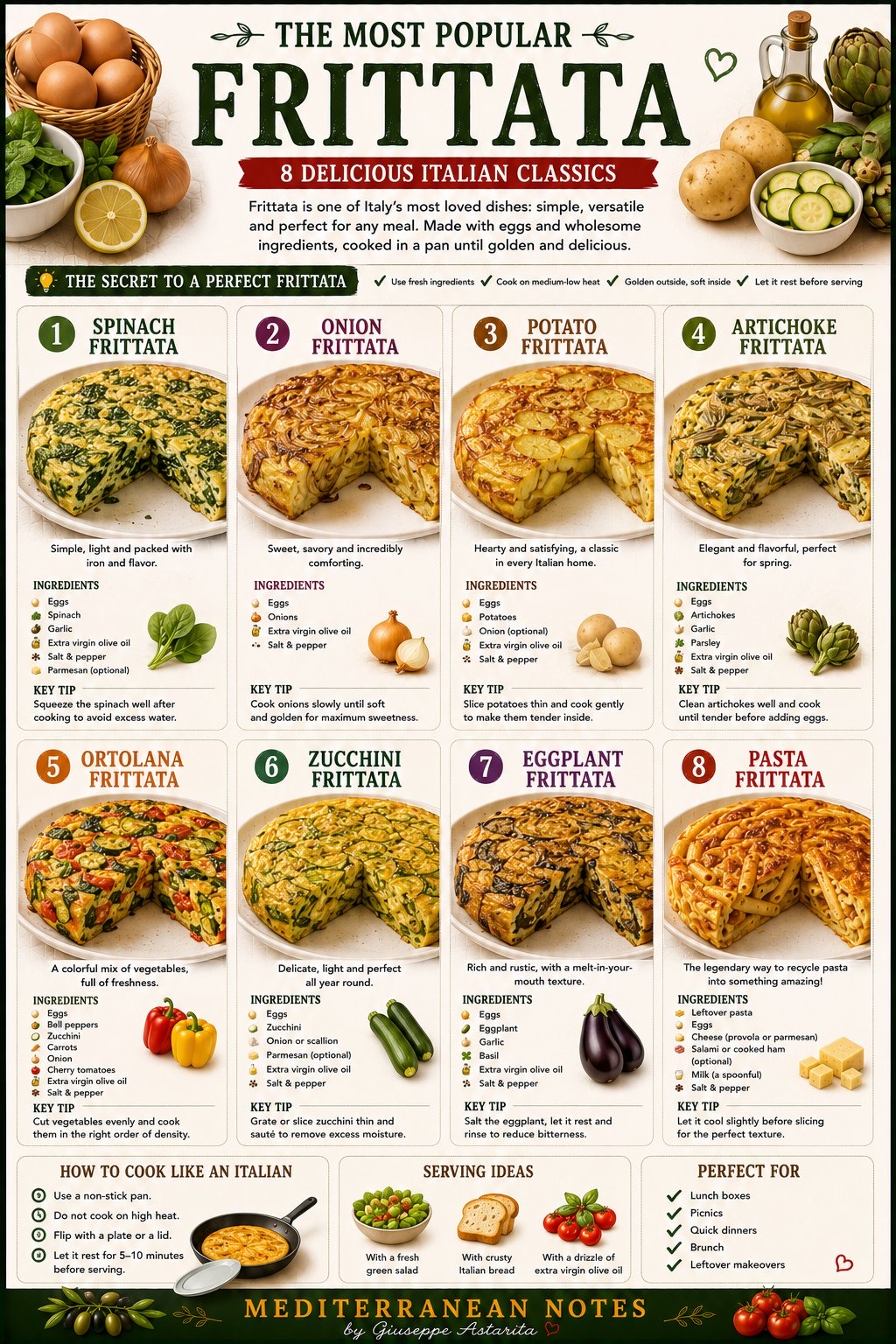
The base technique — works for all varieties
The eggs and the flip are the same for every frittata. The filling changes. Serves 3–4 as secondo.
Cook the filling completely before the eggs arrive. Whatever the filling — zucchini sautéed until golden, potatoes sliced thin and cooked through, onions sweated until sweet and collapsed, artichokes cooked with garlic and parsley until tender, spinach wilted and squeezed dry, eggplant salted and fried — it must be fully cooked and cooled slightly before meeting the eggs. A hot filling starts cooking the egg from contact before the pan does, producing uneven results.
Beat the eggs. 5–6 large eggs for a 24–26 cm frittata serving 3–4. Beat with a fork until fully uniform — not frothy. Add salt, plenty of black pepper, 2–3 tablespoons of grated Parmigiano or Pecorino, and a spoonful of milk to keep the interior soft. Add the cooled filling and mix gently.
Cook the first side — low and slow. Heat 2–3 tablespoons of olive oil in a non-stick skillet over medium heat. Pour in the mixture. Lower to medium-low. Cover with a lid. Cook undisturbed for 8–10 minutes until the edges are set, slightly pulling from the pan, and only a thin wet layer remains on top.
Do not rush. The lid traps steam that helps set the interior without burning the bottom.
The flip. Shake the pan gently — if the frittata slides freely, the crust is ready. Place a flat plate larger than the pan face-down over the skillet. In one quick, confident motion, invert the pan so the frittata falls onto the plate. Add a little oil to the pan if needed. Slide the frittata back in, uncooked side down. Be decisive. Hesitation is the enemy of the flip.
If it breaks: eat it anyway. It will still taste exactly right. The flip is a skill and skills are learned through the times they don't work.
Cook the second side and rest. Cook uncovered over medium-low heat for 5–6 minutes until the second side is golden. Slide onto a plate. Rest 5–10 minutes before cutting — the frittata firms as it cools and only slices cleanly after resting. Eat warm, at room temperature, or cold the next day. All three are correct.
Eight varieties — the seasonal calendar
Summer
Neapolitan cucuzzielle — striped, lower in water — fried in olive oil until golden at the edges, then folded with eggs, Pecorino and basil. The most summery of the group. Full post →
Year-round · the classic
Potatoes cubed and fried until genuinely arruscata — crispy, deeply golden — before the eggs and Pecorino arrive. Thin, firm, fully cooked through. Not a tortilla española. Full post →
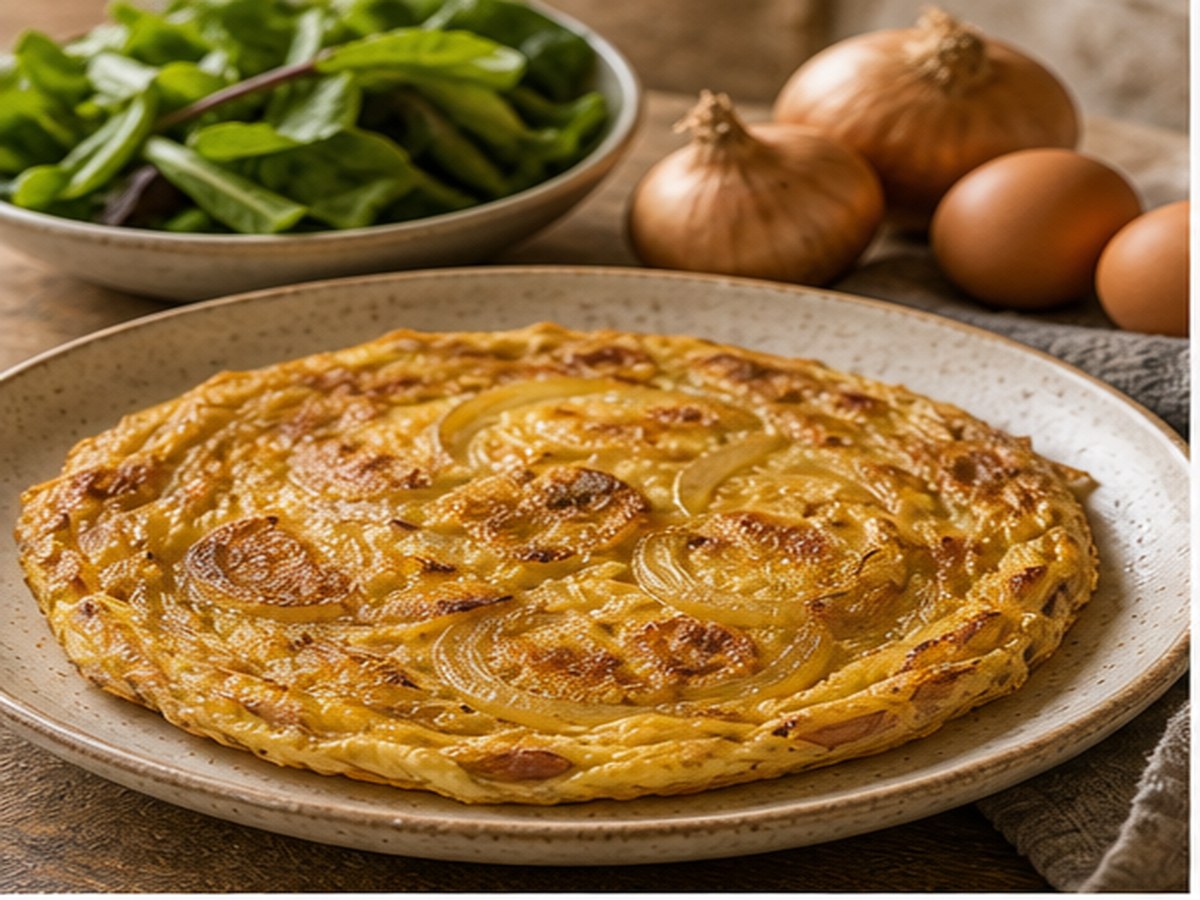
Frittata di cipolle
Year-round · the simplest
Onion sliced and cooked very slowly — 15–20 minutes — until completely soft, sweet, and golden. Nothing else needed. The simplest frittata and one of the best. The long-cooked onion produces a filling that is almost jammy against the egg. Underrated because of its simplicity.
Spring
Violet artichokes braised with garlic and parsley until tender, then folded with eggs and Pecorino Romano. The most elegant spring frittata — the iron-rich Carciofo Violetto di Schito from the Vesuvian plains. Full post →
Frittata di spinaci
Spring · winter
Spinach wilted with garlic, squeezed very well — this step is not optional; excess water prevents setting. With Parmigiano in the egg. Simple, green, iron-rich. The variety most likely to be given to children who need vegetables and will eat anything in egg form.
Summer
Eggplant fried until golden, or cooked a funghetto with cherry tomatoes — then bound with eggs, Pecorino and basil. The richest frittata. Substantial enough to be dinner by itself. Full post →
Summer · everything at once
All the summer vegetables — zucchini, eggplant, pepper, potato, spring onion — each cooked separately, then combined in the egg. The most colourful frittata. Every bite different. A full meal in one pan. Full post →
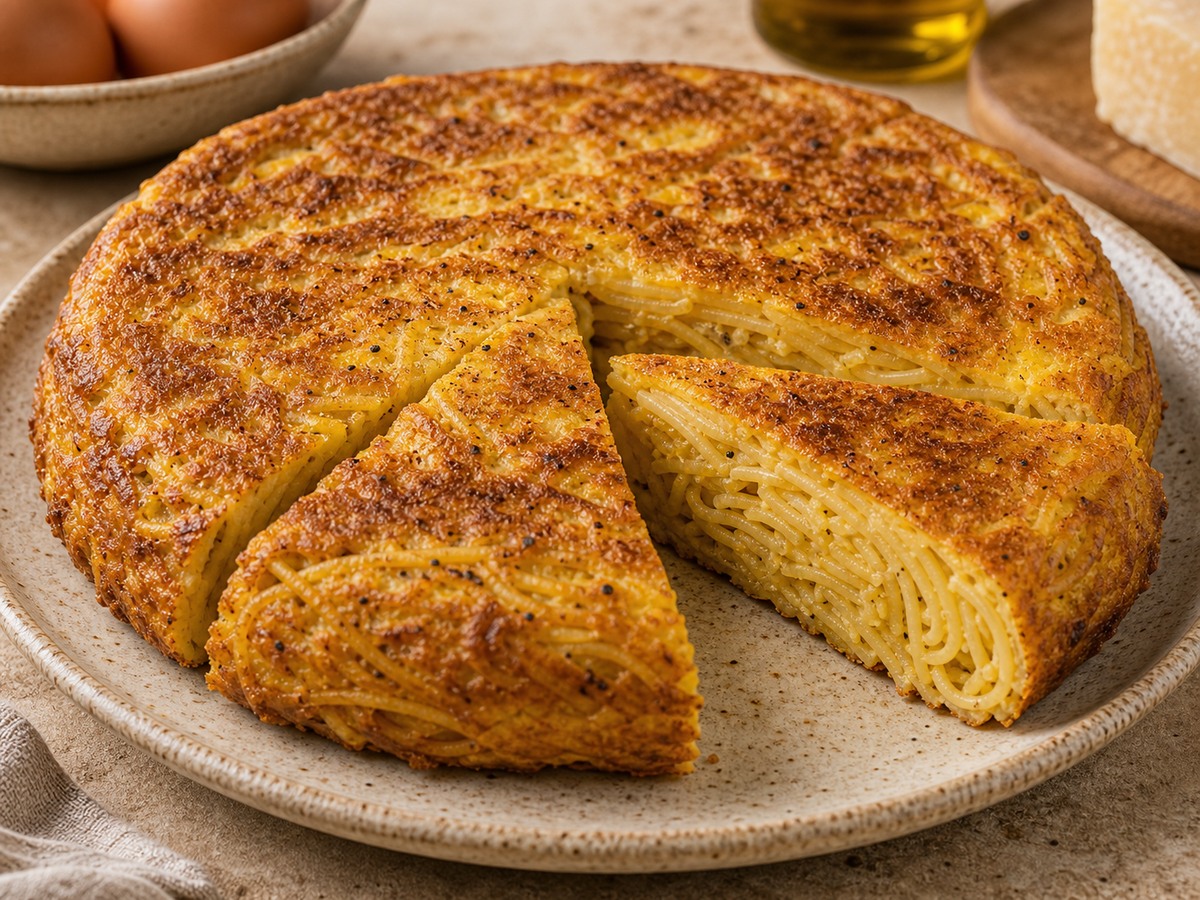
Frittata 'e maccarune
Any time · leftover pasta
Covered in full in its own post — the canonical cucina povera egg preparation, born from leftover pasta plus eggs plus cheese producing something better than the original. The one my mother brought to California for the road trip.
I still have trouble with the flip. I know the technique. I know to check that the frittata slides freely before attempting it, to use a plate larger than the pan, to be quick and decisive. I have broken frittatas that were perfectly good broken. I have also, occasionally, executed a clean flip that produced a golden second side matching the first, and the satisfaction of that moment is disproportionate to what was accomplished. My mother did it without thinking about it, which is how all difficult things look when done by someone who has done them many times. I am still learning.
Buon appetito — e buona fortuna con il salto.