Frittate e uova · Summer · Campanian Home Cooking
Frittata di Zucchine alla Napoletana
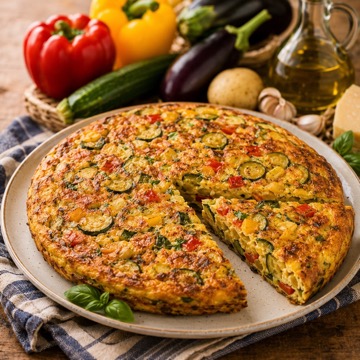
The summer frittata that arrives when the cucuzzielle are in season — fried until golden, folded with Pecorino and basil. Sweet, tender, and slightly crispy at the edges.
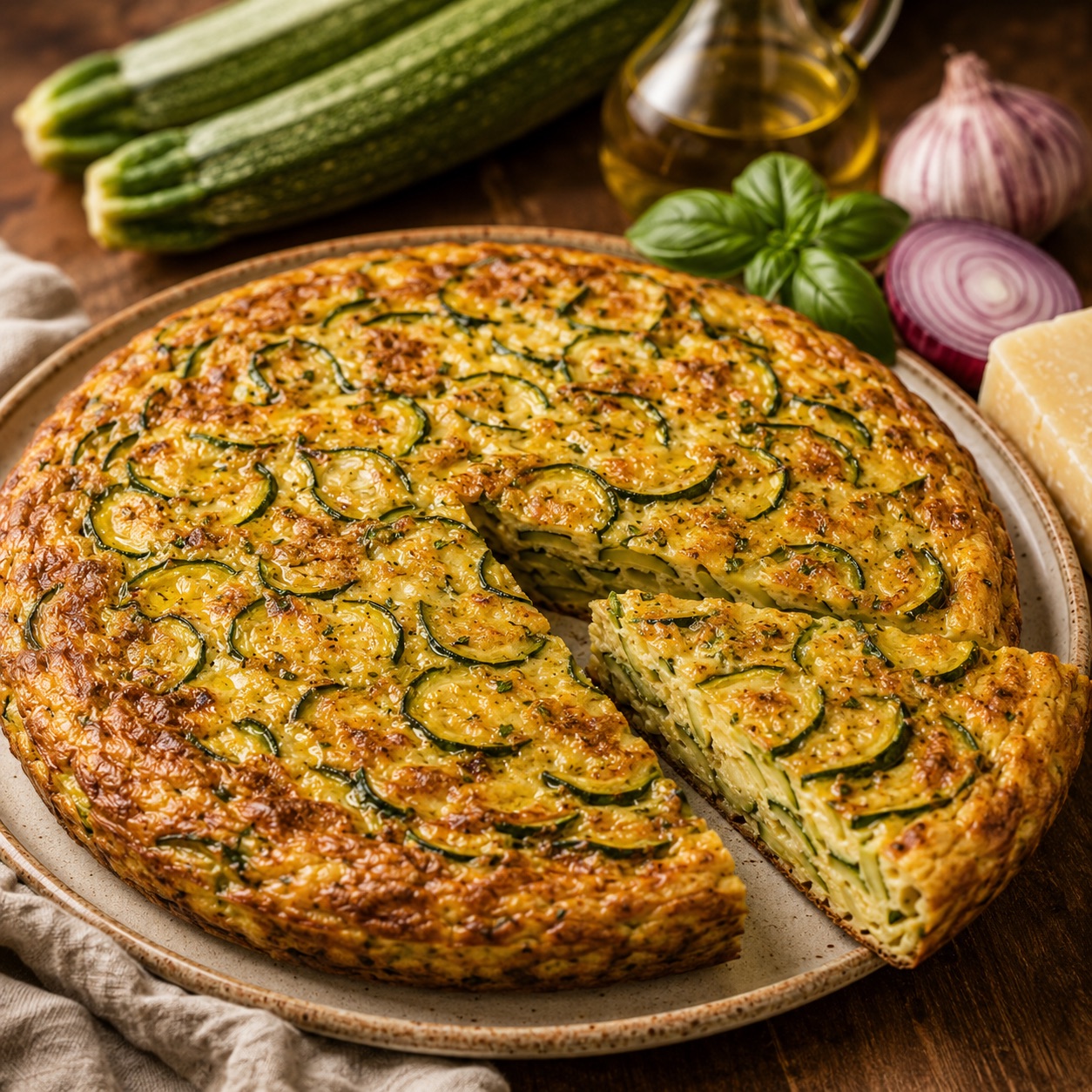
In Neapolitan dialect, the zucchini is a cucuzzielle — a small, pale green, striped thing quite different from the dark green zucchini you find at most supermarkets. The Neapolitan variety is lighter in colour, lower in water content, and slightly sweeter. When sliced into thin rounds and fried in olive oil until the edges turn gold, it becomes something entirely its own: soft inside, faintly caramelized at the edges, with a sweetness that deepens with heat.
The frittata d'e cucuzzielle is the summer secondo that appears in Campanian kitchens when these zucchini are in season — July, August, into early September. My mother made it for dinner, regularly, in the way that she made most frittate: without ceremony, in a large pan, with bread on the side and nothing else required. The zucchini went in first, fried in olive oil with a spring onion until properly golden. Then the eggs, beaten with Pecorino and basil, poured over them. Then the waiting, and the flip, and the second side.
It is a quieter dish than the frittata all'ortolana — no peppers, no eggplant, no potatoes competing. Just zucchini and eggs and cheese and basil, each element fully present because nothing else is in the way. This is one of those cases where simplicity is not a compromise but the point.
Yes, in ways that matter for cooking. The cucuzzielle napoletane — lighter-coloured, striated, heirloom — have a lower water content than the widely grown dark-green varieties. Water content in zucchini ranges from about 91% in some varieties to 95% in others. In a hot pan, that 4% difference determines whether the surface reaches browning temperatures (above 140°C) or stays trapped in steam below 100°C.
Lower water content also means more concentrated sugars per gram — which means more Maillard reaction at the surface during frying, producing the golden edges and the subtle sweetness that defines a good Neapolitan zucchini frittata. If you cannot find the Neapolitan variety, choose the smallest, firmest zucchini available and cook them the same day you buy them. Water content increases as they sit. The basil added at the end is not decorative: basil contains linalool and eugenol, volatile aromatic compounds that evaporate quickly with heat. Adding them to the egg mixture (rather than cooking them with the zucchini) preserves more of their fragrance.
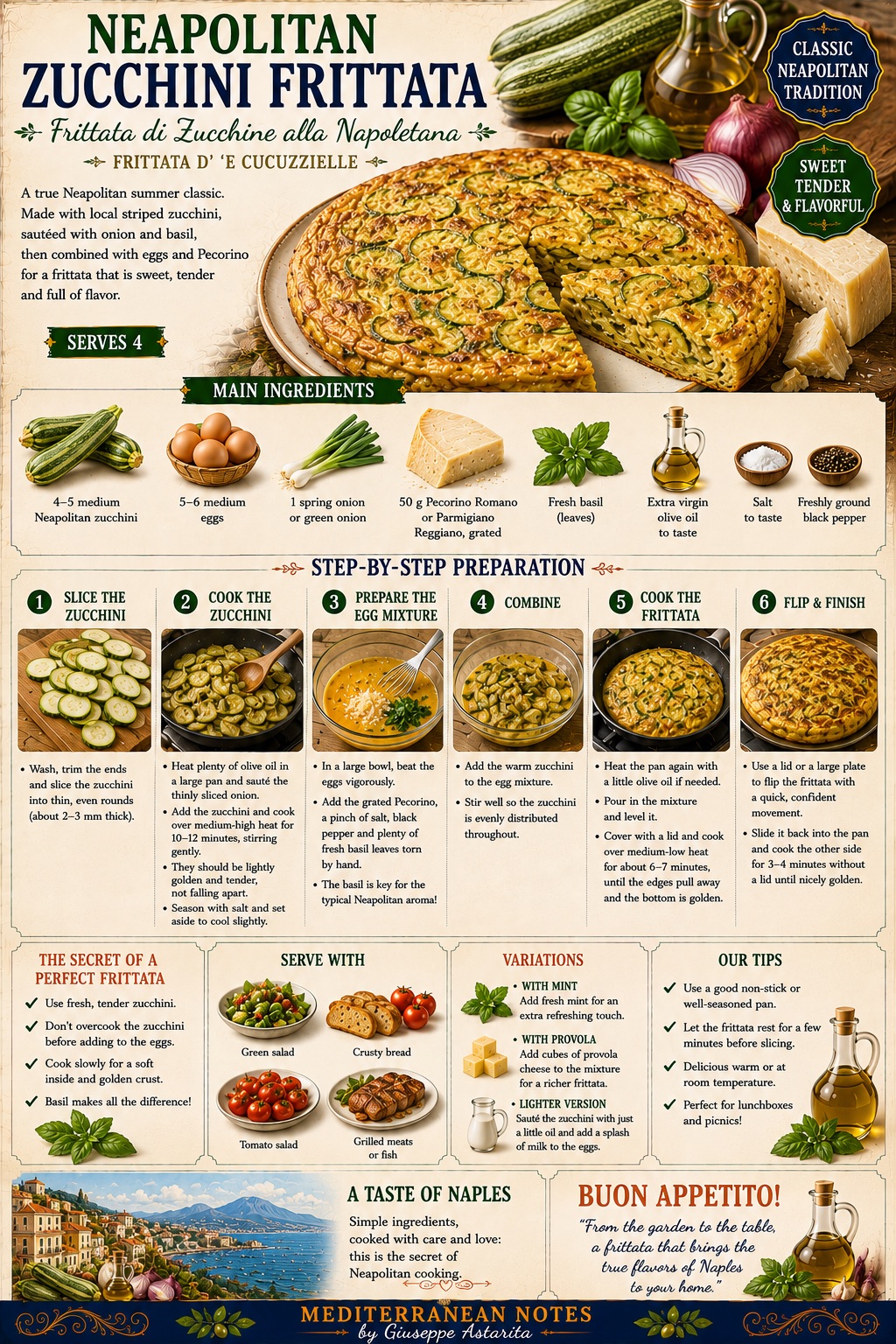
Tap to enlarge — Frittata d'e cucuzzielle: ingredienti, metodo, consigli
Recipe — Frittata di Zucchine alla Napoletana
Serves 3–4 · Ready in 30 minutes
- 4–5 medium Neapolitan zucchini (cucuzzielle) or any firm, fresh zucchini
- 5–6 medium eggs
- 50 g Pecorino Romano or Parmigiano Reggiano, finely grated
- 1 spring onion finely sliced
- Fresh basil a generous handful, torn
- Extra virgin olive oil generous amount for frying
- Salt and black pepper to taste
The frittata di zucchine is at its best in summer, made with the zucchini from the Campanian market stalls. In that window it is one of the simplest and most satisfying dinners the season offers — the kind that tastes like the time of year it comes from. Left over the next morning inside bread, it is a different pleasure entirely, but no less good.