Frittate e uova · Summer · Campanian Home Cooking
Frittata di Melanzane alla Napoletana
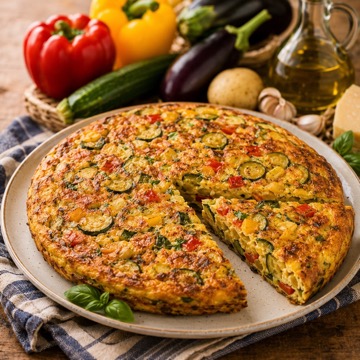
Eggplant fried until deeply golden, folded with eggs, Pecorino and basil — or cooked a funghetto with cherry tomatoes for a richer version. Summer in a pan.
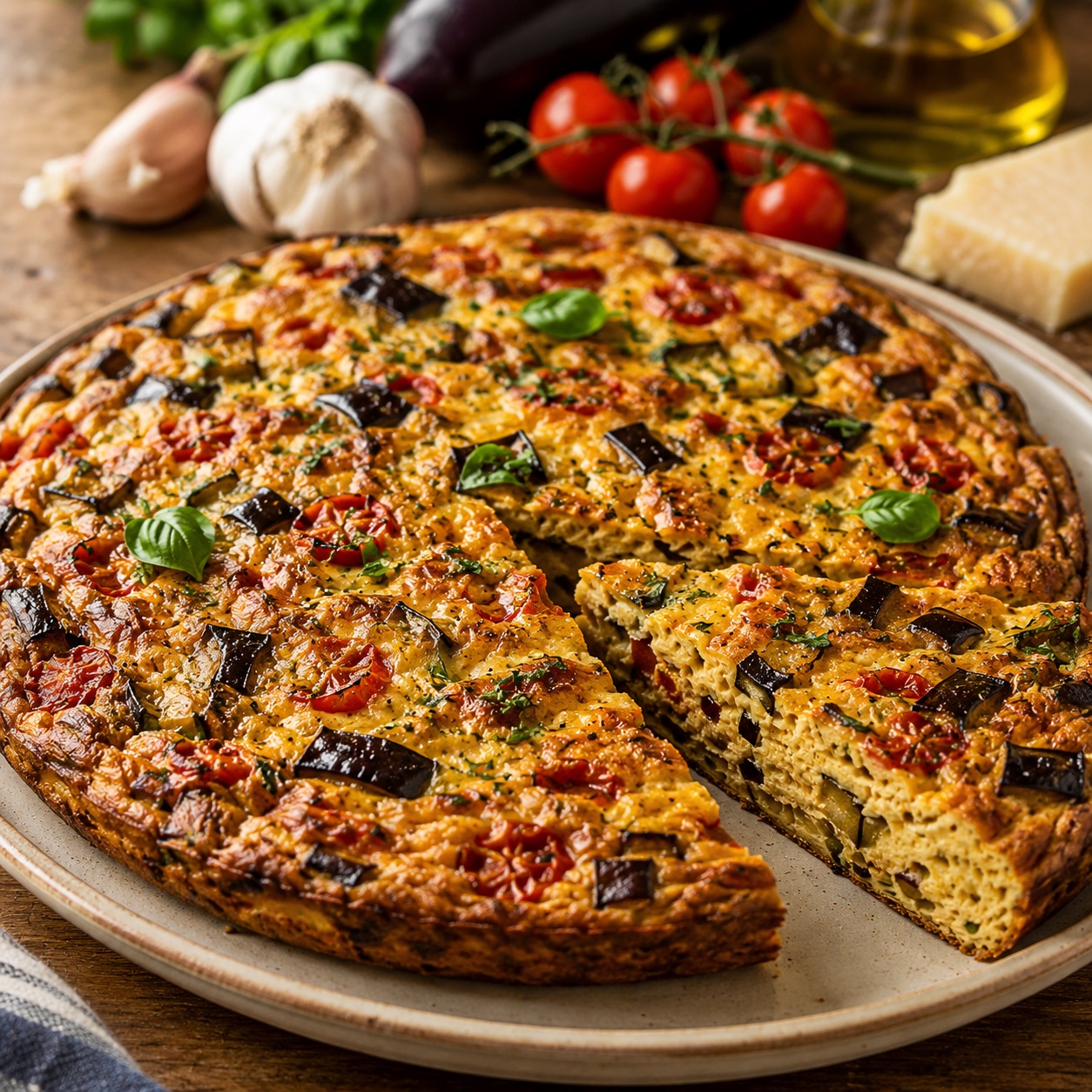
In Neapolitan dialect, the eggplant is a mulignana. The frittata d'e mulignane is one of the great summer frittate of the Campanian table — a dish that captures what eggplant becomes when it is properly fried in olive oil: deeply golden at the edges, faintly bitter at the centre, with a softness that makes it surrender into the egg mixture without losing its character.
There are two ways to approach it. The simpler version fries the eggplant in cubes or slices, drains the excess oil, and folds it into beaten eggs with Pecorino and basil. The richer version cooks the eggplant a funghetto — cubed, fried in olive oil with garlic, and finished with cherry tomatoes until they collapse into a loose, fragrant sauce. The tomato version is a full summer secondo; the plain fried version is closer to cucina povera.
My mother made both, depending on what was available. Summer in Campania meant both eggplant and cherry tomatoes were always at hand; the funghetto version appeared when there was time for it. The plain version appeared when dinner needed to come together quickly. Both were better than they had any right to be, which is the recurring story of frittata at home.
Eggplant has a sponge-like cell structure with large intercellular air spaces — unusual among vegetables. When submerged in hot oil, these air spaces expand as the trapped gases heat up and are pushed out, drawing oil inward in their place. At low frying temperatures (below 160°C), this process continues throughout the cooking time, resulting in an oil-saturated piece of eggplant. At higher temperatures (170°C and above), the cell walls on the surface denature rapidly, forming a crust that partially seals the piece and limits further absorption.
Salting beforehand — the traditional advice — works through osmosis: salt draws water out of the cells, partially collapsing the air spaces. Collapsed cells absorb less oil. However, research has shown that oil temperature matters more than pre-salting: an unsalted eggplant fried at 175°C absorbs about the same amount of oil as a salted one fried at 150°C. The practical advice is to use both — salt briefly to expel some moisture, then fry at high enough temperature to seal the surface quickly.
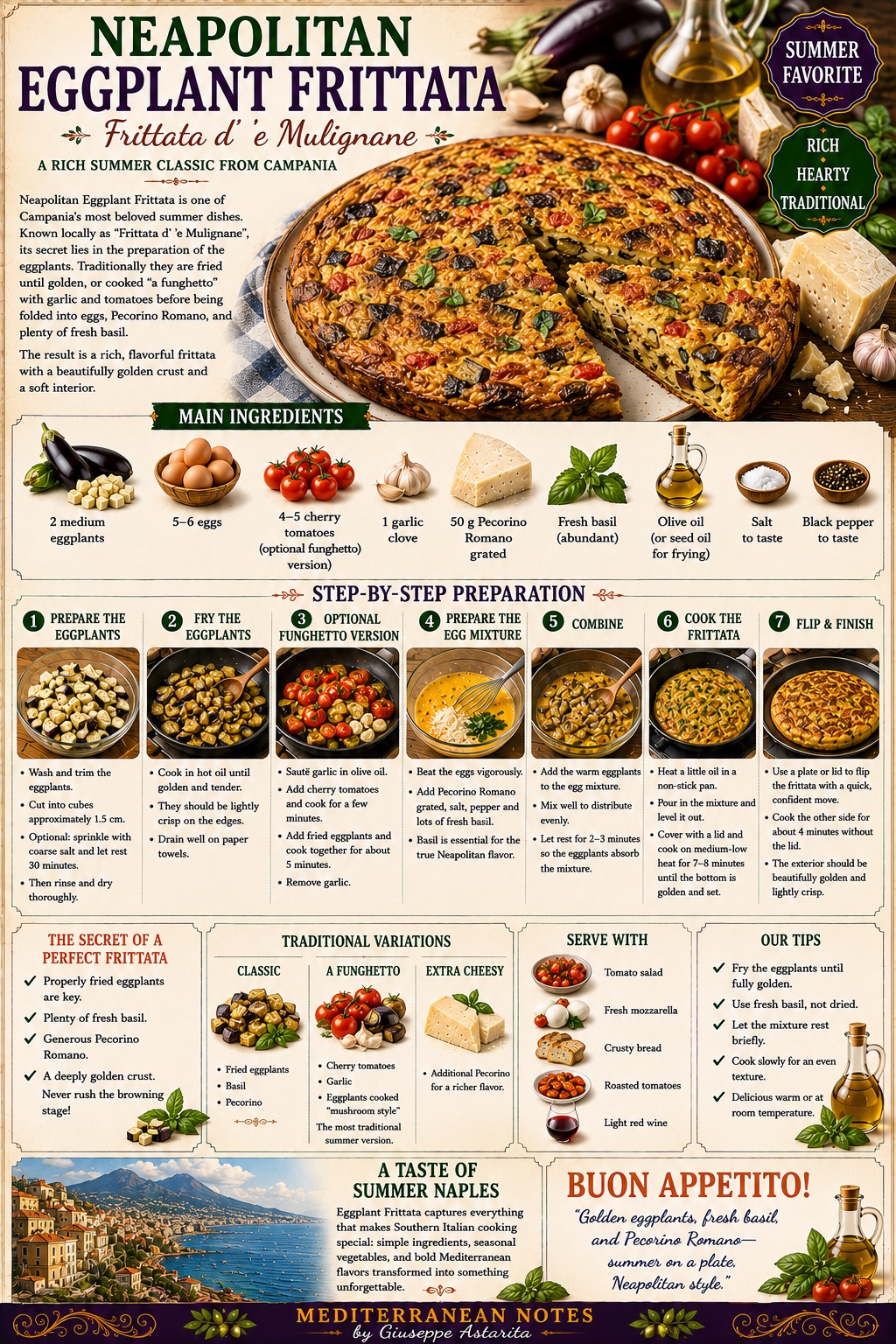
Tap to enlarge — Frittata d'e mulignane: ingredienti, metodo, consigli
Recipe — Frittata di Melanzane alla Napoletana
Serves 3–4 · Ready in 35 minutes
- 2 medium eggplants cut into 1.5 cm cubes
- 5–8 medium eggs
- 4–5 cherry tomatoes halved — optional, for the funghetto version
- 1 garlic clove lightly crushed
- 50 g Pecorino Romano finely grated
- Fresh basil a generous handful
- Olive oil generous amount for frying
- Salt and black pepper to taste
Eggplant is generous in summer Campania — at the market, at the garden, piled in bowls in every kitchen. It goes into parmigiana, into pasta, into the melanzane a scarpone, into this frittata. The frittata version is the least complicated path to summer eggplant on the table — and left over the next day, inside bread, it is the reason leftovers exist.