La frittata: the one recipe every Italian knows before they know anything
Four eggs, a pan, and ten minutes. The frittata is not really a recipe — it is a reflex. And once you have it, you always know what to make for dinner.
In Italy, the frittata is the thing you make when you don't want to think about what to make. It is faster than pasta. It uses what is already in the kitchen. It is neither breakfast nor dinner — it belongs to the meal in front of you, whatever that happens to be.
Growing up in Campania, frittata appeared at the table in two ways. The first was at dinner, cut into wedges, served with bread and a salad dressed in olive oil. The second was the next day, cold, slipped between two slices of bread for lunch — the panino con la frittata. I carried that sandwich to school more times than I can count. At the time I thought nothing of it. Now, raising my daughters in Massachusetts and occasionally making the same thing for their lunchboxes, I understand it a little differently. It was just good food, made quickly, from almost nothing.
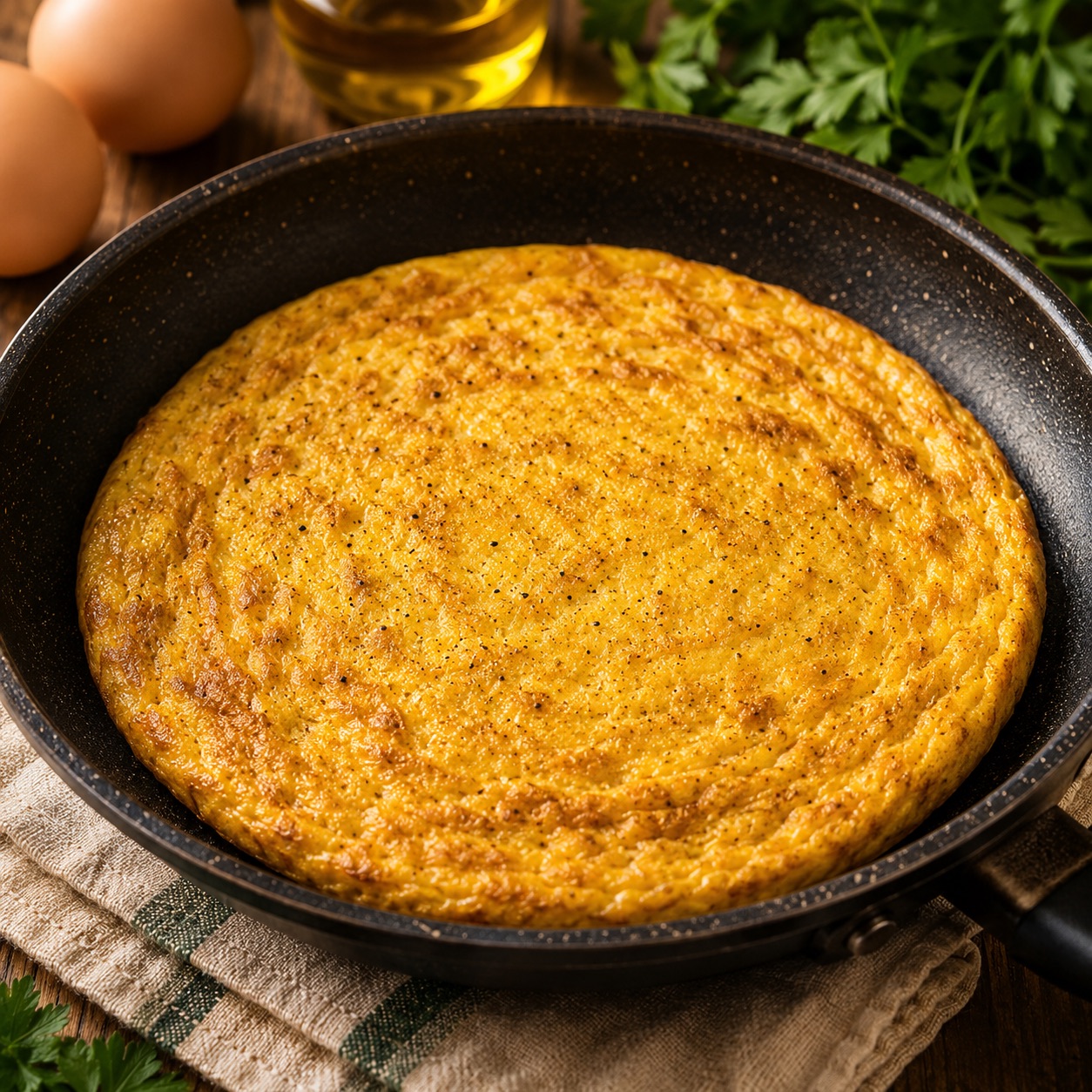
My daughters are at the age where they prefer things plain. No parsley. No onion visible in the eggs. No herbs of any kind, thank you. So the frittata I make most often at home now is the plainest version — just eggs, olive oil, salt, pepper, and a handful of Parmesan whisked in at the end if I can get away with it. They eat it. They ask for more. That is about all you can ask.
The plain frittata is also the foundation. Once you can make this, you can make the frittata with potatoes, with artichokes, with spinach, with zucchini — all things I grew up eating, all built on the same simple base. The eggs do not change. The technique does not change. Only what goes inside varies.
The egg as nutritional benchmark — complete protein, fat-soluble vitamins, choline
Eggs are one of the most complete foods in the human diet — a full complement of essential amino acids, fat-soluble vitamins A, D, E, and K concentrated in the yolk, and choline, which is essential for cell membrane synthesis, lipid transport, and neurotransmitter production, and which most adults chronically under-consume. Two eggs deliver roughly 12 grams of high-quality protein and around 250 mg of choline — more than half of the daily adequate intake for adults. Cooking in olive oil adds oleic acid and phenolic antioxidants. Adding Parmesan contributes calcium and additional glutamate — the compound responsible for the savory depth that makes even a plain frittata more satisfying than it looks on paper.
Ingredients · serves 2
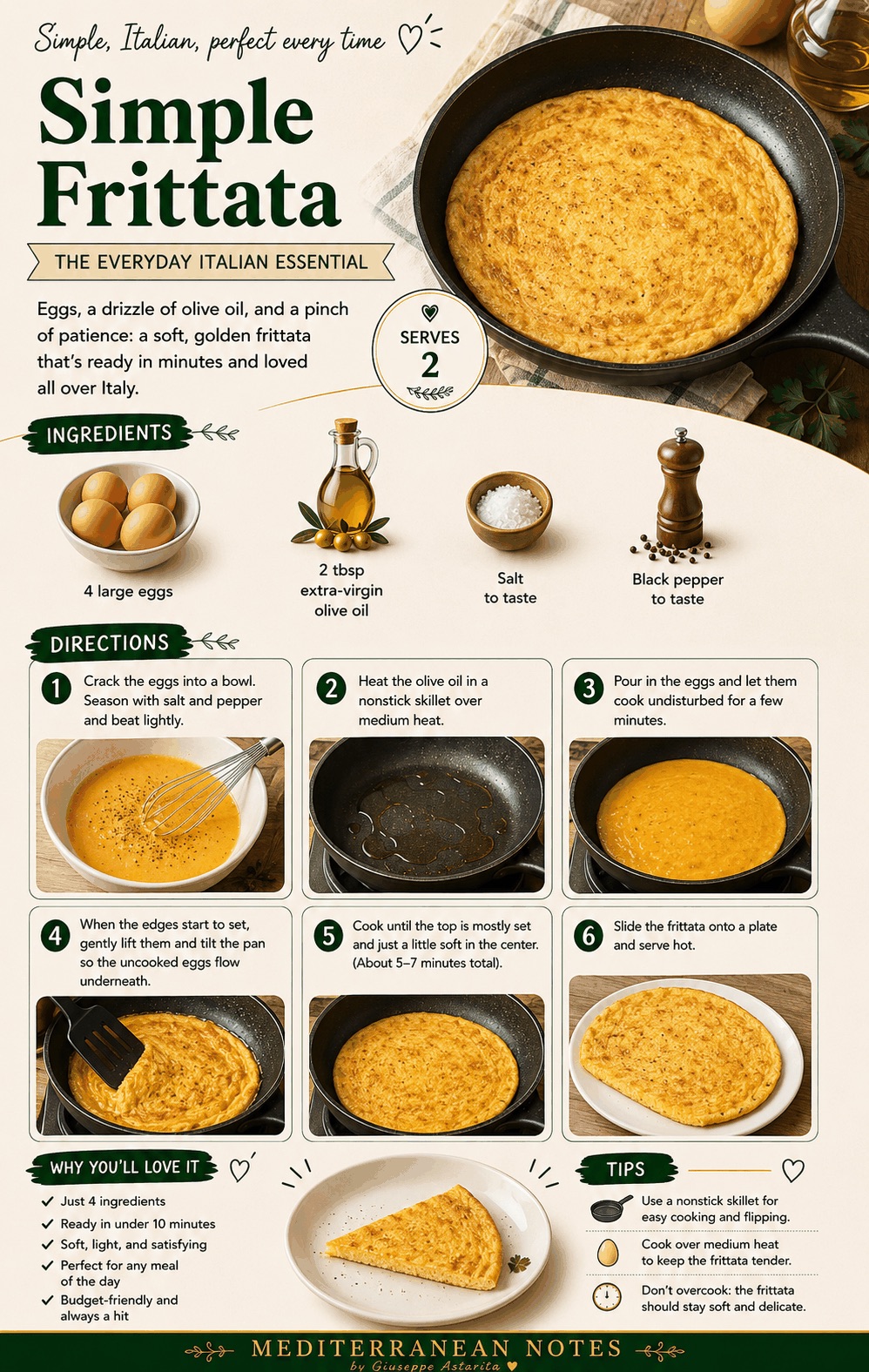
Method
Crack the eggs into a bowl. Add a pinch of salt and a grind of black pepper. Beat well with a fork until the yolks and whites are completely combined and slightly frothy — about 30 seconds of real effort.
If adding Parmesan, whisk it in now. The cheese distributes evenly into the eggs and gives the finished frittata more body and depth.
Heat the olive oil in a non-stick or well-seasoned skillet — about 22–24 cm for 4 eggs — over medium heat. The oil should shimmer but not smoke.
A knob of butter alongside the olive oil is not against the rules. It adds richness and a gentle golden color to the bottom. Add it with the oil and let it melt together before pouring in the eggs.
Pour in the eggs. Lower the heat slightly. Let the frittata cook undisturbed until the edges are fully set and the bottom is golden — about 3 minutes. The center will still look slightly soft. That is correct.
Shake the pan gently once or twice to make sure nothing is sticking.
To flip: place a flat plate or lid over the pan. In one confident motion, invert the pan so the frittata falls onto the plate, cooked side up. Slide it back into the pan, uncooked side down. Cook for another 1–2 minutes.
If the flip feels uncertain, finish the top under a broiler for 1–2 minutes instead. The result is identical.
Slide the frittata onto a cutting board. Let it rest for 2 minutes before cutting. Serve in wedges. Eat hot, warm, or at room temperature — all three are correct.
Variations — the same frittata, one ingredient at a time
The plain frittata is the template. Everything below follows the same method: cook the filling first if it needs cooking, stir it into the beaten eggs, proceed from step 3 above. The eggs and the technique never change.
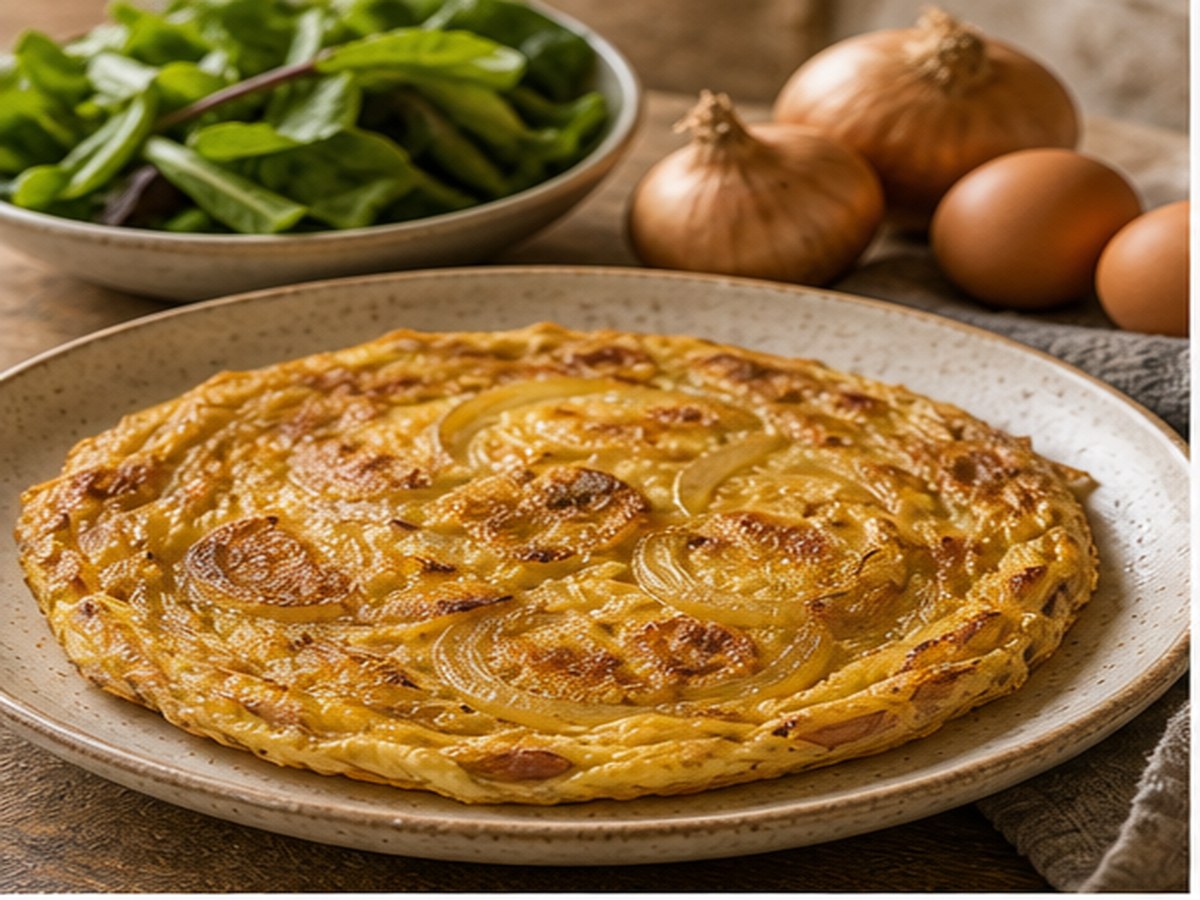
Frittata con le cipolle
One large onion, thinly sliced, cooked slowly in olive oil until sweet and completely soft. The sweetness of the onion against the eggs is one of the great simple combinations. Do not rush the onion — brown is wrong, soft and translucent is right.
Frittata con le patate
Potatoes cut thin — about 3mm — fried gently in olive oil until cooked through and just beginning to color. Salt them well. Stir into the eggs. This is the most substantial frittata, the one that becomes a real meal. The Spanish call this a tortilla; in Campania it was just lunch.
Frittata con i carciofi
Artichoke hearts — trimmed and sliced — sautéed in olive oil with a little garlic until tender. A squeeze of lemon before they go into the eggs. Seasonal, slightly bitter, completely satisfying. This was a spring dish at home, when artichokes were cheap and everywhere.
Frittata con gli spinaci
Fresh spinach wilted in a pan with olive oil and a clove of garlic, then squeezed dry and roughly chopped before being added to the eggs. A handful of Parmesan works especially well here. Simple and green and good.
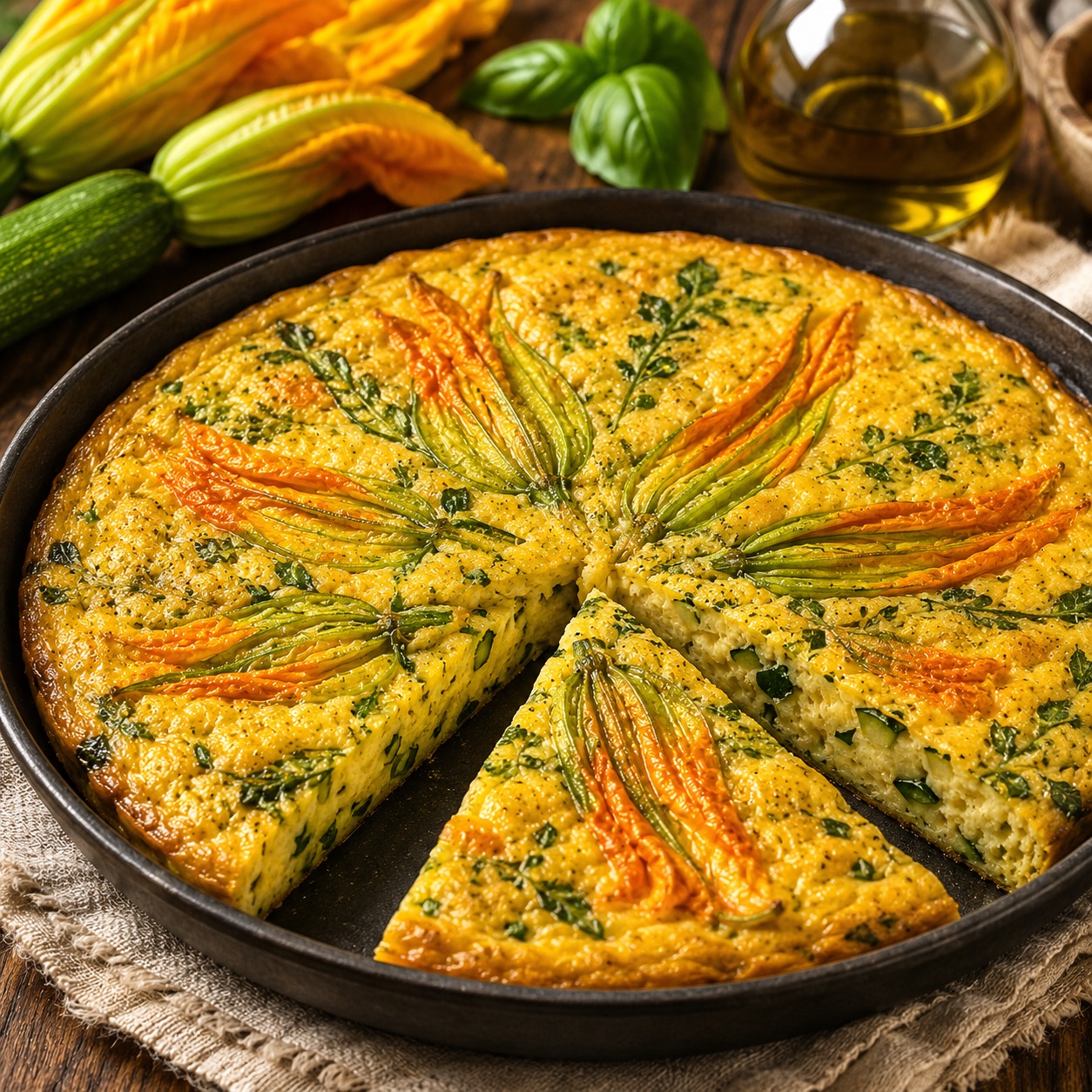
Frittata con le zucchine
Zucchini sliced into thin rounds, sautéed in olive oil until soft and lightly golden. A summer frittata. Add a few fresh basil leaves into the eggs if you have them. If you do not, it still works perfectly without.
Frittata plain — for the kids
Just eggs, salt, pepper, and Parmesan whisked in. Nothing visible. Nothing to pick around. My daughters eat this happily, which is the only metric that matters at the moment. We are working up toward the onions.
A few things worth knowing
Two eggs per person. This is not negotiable. Four eggs for two people. Six for three. Scale the pan accordingly — a 20cm pan for 4 eggs, a 26–28cm pan for 6–8.
Parmesan goes in the eggs, or grated on top at the end. Either works. In the eggs gives a more uniform flavor. On top gives a slightly crisp, browned finish if you put it under the broiler.
Butter and olive oil together is a legitimate combination — particularly for the plain or potato versions. The butter adds richness; the olive oil keeps the smoke point manageable.
A frittata keeps. Covered and refrigerated, it is perfectly good the next day at room temperature. Which is to say: make extra, and you have tomorrow's lunch already handled.
Buon appetito.