Zucchine alla Scapece: the Neapolitan dish you'll always want bread for
Fried zucchini, a sharp dressing of vinegar and fresh mint, garlic, and a little time to let the flavors find each other. My advice: double the recipe, and make sure you have bread.
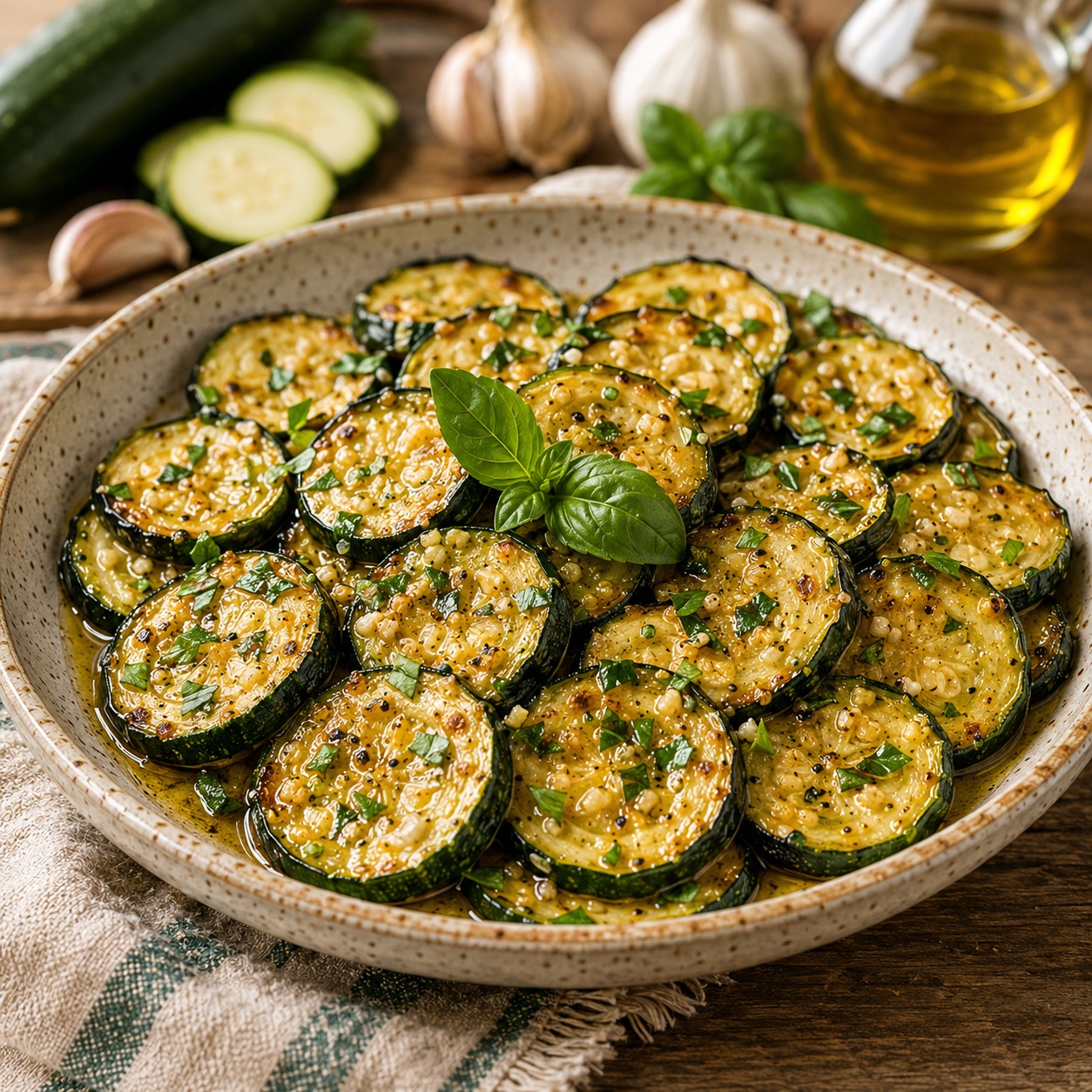
There is a category of Neapolitan dish that exists somewhere between antipasto and snack — things you make in advance and put on the table while everything else is still cooking, and that disappear before the main course arrives. Zucchine alla Scapece is exactly that. It is fried zucchini, dressed while hot with white wine vinegar, extra-virgin olive oil, garlic, and a generous handful of fresh mint. Then it rests. The longer it rests, the better it gets.
The word scapece comes from the Spanish escabeche — a technique of preserving fried fish or vegetables in vinegar and aromatics — brought to Naples during the centuries of Spanish rule in southern Italy. In Campania, the technique migrated from fish to zucchini, which is abundant in summer and takes the vinegar-mint combination with particular grace. It is one of those recipes that sounds like more than it is — the result is bright, sharp, slightly sweet from the cooked zucchini, cooling from the mint — and it is done in twenty minutes, plus whatever resting time you can give it.
This dish was on the table every summer growing up. It was made in the morning for lunch, or the day before for Sunday dinner, always with more than enough and always with bread nearby. It still is.
Zucchini carotenoids, vinegar acidity, and the anti-inflammatory logic of scapece
Zucchini is mostly water — about 95% by weight — but its modest nutrient density is paired with a genuinely interesting phytochemical profile. It contains lutein and zeaxanthin, two carotenoids concentrated in the peel that are associated with eye health and accumulated in the macula of the retina. Frying in a neutral oil at the right temperature (around 175–180°C) creates a brief, high-heat Maillard reaction on the surface that develops flavor while the interior remains soft and sweet. The vinegar in the dressing contributes acetic acid, which has been studied for its effects on postprandial blood glucose — small but consistent reductions when consumed with carbohydrate-containing meals. Fresh mint provides menthol and rosmarinic acid, a phenolic compound with antioxidant and anti-inflammatory properties. Garlic contributes allicin — the sulfur compound formed when garlic is cut or crushed — which has well-documented antimicrobial and cardiovascular effects. Together, the dressing is doing more than flavoring the zucchini; it is a reasonably well-constructed combination from a nutritional standpoint.
Ingredients · serves 4 — but double it
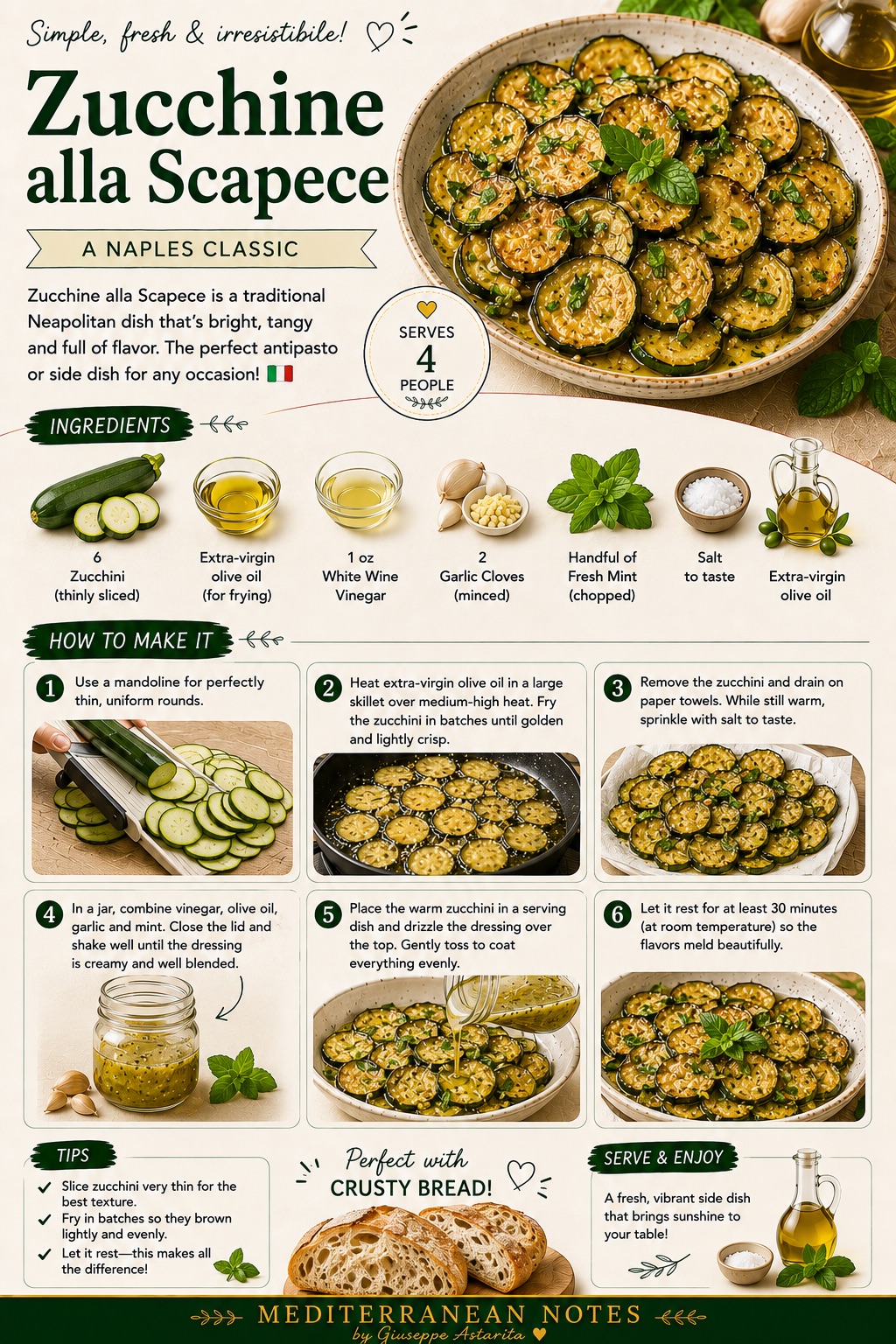
Method
Slice the zucchini into thin, uniform rounds — about 3–4 mm. A mandoline is the right tool here. Uniform thickness means uniform cooking; if the slices vary, some will be burnt before others are done.
No mandoline? A sharp knife and patience work. Keep the slices as consistent as you can manage.
Heat a generous pour of olive oil in a wide skillet over medium-high heat until shimmering. Fry the zucchini in small batches, without crowding the pan. Cook until golden and just beginning to crisp at the edges, about 2–3 minutes per batch. Crowding causes steaming; steaming produces soft, pale zucchini. Fry in batches.
The oil should sizzle immediately when you add a slice. If it doesn't, wait longer before adding the next batch.
Lift the zucchini out with a slotted spoon and drain on paper towels. Salt immediately while they are still hot — this is the only moment the salt will adhere properly.
Make the dressing: combine the olive oil, white wine vinegar, minced garlic, and chopped mint in a small jar. Close the lid and shake until emulsified — about 20 seconds. The mixture should look creamy and cohesive.
Arrange the fried zucchini in a single dish or on a large plate. Drizzle the dressing generously over the top. Toss gently to distribute, or leave them layered if you prefer a more composed presentation.
Let the dish rest for at least 30 minutes at room temperature before serving. This is not optional — it is where the dish actually happens. The zucchini absorb the dressing, the garlic mellows, the mint blooms. An hour is better. Overnight in the refrigerator is better still; bring back to room temperature before serving.
Serve with crusty bread. This is the instruction, not a suggestion.
Zucchine alla Scapece belongs on a summer antipasto table alongside olives, cured meats, and whatever else is in the kitchen. It works equally well as a side dish for grilled fish or chicken. It travels well to a BBQ. It holds for two days in the refrigerator. It is one of those recipes that asks very little and gives back considerably more — which is, in the end, the Neapolitan way with vegetables.
The only real mistake you can make is not making enough of it.
Buon appetito.