CoursesBasicsFirst CoursesSecond CoursesSides & VegetablesSoupsSaucesEggs & FrittatePizza & BreadBreakfastSnacksStreet FoodDesserts
DietVegetarianVegan
SeasonSpringSummerAutumnWinter
MainSeafoodMeatEggs
MoreCulture & TraditionsGlossaryAbout

Pizza Rustica Napoletana
The Sweet Pastry, Savory Heart

My mother would announce it when she finished: ho fatto la pizza rustica. That sentence meant something was being celebrated — a holiday, a picnic, a gathering of enough people to justify the work.
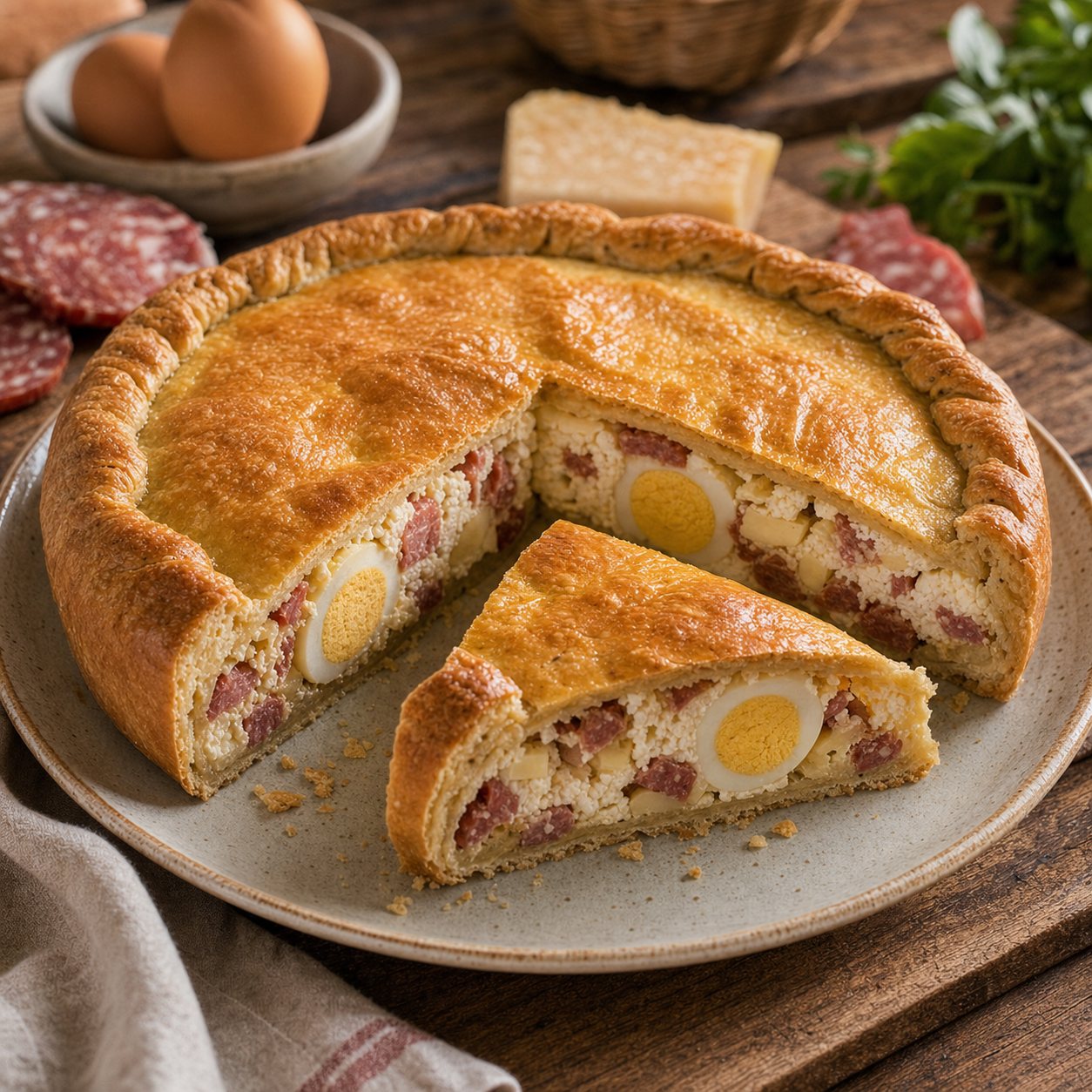
Pizza Rustica

There is a particular kind of dish that takes real time to make and that announces itself when it is done. My mother would say it plainly, coming out of the kitchen: ho fatto la pizza rustica. I have made the pizza rustica. It was not said casually. It meant she had spent a good part of the morning on it — the pastry made and rested, the ricotta drained, the meats and cheeses diced and mixed and packed inside a double crust that had to be sealed properly and baked long enough to set. It was a project, not a weeknight dinner.

The pizza rustica appeared at Easter and at other celebrations I can no longer fully separate from each other. It was the kind of food that came out at the beginning of a long meal, sliced in wedges, alongside other things — but it was also the kind of food that traveled. We took it on picnics, wrapped in cloth, carried in a bag. It held its shape. It was good cold. In some ways it was better cold, the pastry firmer and the filling denser than when it came warm from the oven. It did not require anything else. Bread and a slice of pizza rustica was already a sufficient meal.

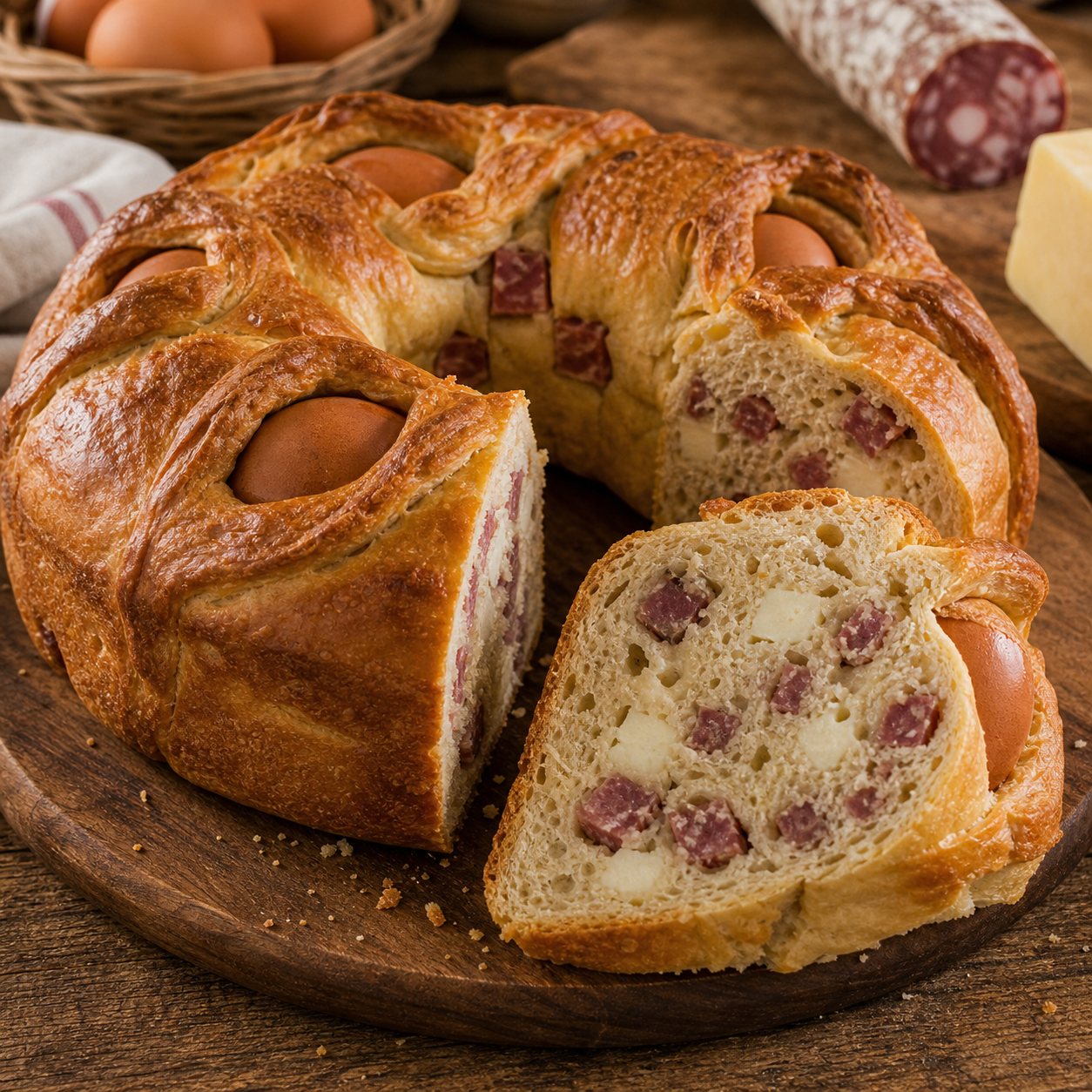
The name causes confusion outside Naples, and even within Italy. Pizza rustica is not pizza in any sense you might expect — there is no leavened dough, no tomato sauce, nothing resembling a Neapolitan pizza. It is a savory pie, enclosed top and bottom in a sweet shortcrust pastry — the sweetness of the pastry against the salt of the filling is the defining contrast of the dish. Do not confuse it with casatiello, which is a leavened savory bread also made at Easter, or with pizza chiena, which is a related preparation with a different dough. The pizza rustica I am describing has a pasta frolla shell — the same buttery pastry you would use for a crostata — and a filling that is essentially a compression of every good cured meat and cheese in the Campanian kitchen into a single slice.

I cannot remember now whether it was Easter specifically or some other holiday. What I remember is the announcement, and the kitchen smell before it came out of the oven, and how heavy it was in the hand when you picked up a slice.

The filling starts with ricotta — well-drained, which matters; wet ricotta makes a wet pie — mixed with eggs, grated Parmigiano and Pecorino, and a generous amount of black pepper. Into this go the diced meats and cheeses: Neapolitan salami, cooked ham or mortadella, provola or Emmental. Some families add caciocavallo, or small cubes of pancetta, or hard-boiled eggs chopped through the filling. There is no single canonical version. What is consistent is the quantity — a pizza rustica is not subtle. It is fully packed, and the slice you cut shows a cross-section of everything inside it.

I have made it a few times since moving to Massachusetts. The ingredients are findable, though the Neapolitan salami requires either an Italian deli or a substitution. The result is close enough to be recognizable and different enough from what I remember that I notice the difference. This is probably true of most things made from memory in a different kitchen. The dish is still good. It is just not exactly hers.


Why the sweet pastry works with a savory filling — and why ricotta needs draining

The combination of sweet shortcrust and a heavily salted, fatty filling is not accidental — it is the structural logic of the dish. Pasta frolla contains sugar, butter, and egg yolk, which together produce a tender, slightly sweet crust that melts in the mouth rather than chewing like a bread dough. This softness provides contrast to the dense, protein-rich filling and prevents the overall bite from feeling heavy. The fat in the pastry also acts as a moisture barrier, slowing the transfer of liquid from the filling into the crust during baking — which is part of why pizza rustica holds its shape so well and is good cold the next day.

The ricotta draining step is more important than it appears. Fresh ricotta contains a significant amount of whey — sometimes 30–40% of its weight — which is free liquid that will migrate into the pastry and the surrounding filling during baking if not removed first. Draining the ricotta overnight in a colander lined with cheesecloth, or for at least a few hours, reduces this moisture substantially. The result is a denser, more cohesive filling that sets firmly under heat rather than remaining soft and wet. The eggs in the filling contribute to this as well: they coagulate during baking and bind the ricotta, meats, and cheeses into a slice that holds together when cut. A pizza rustica that falls apart when you cut it was almost certainly made with undrained ricotta.


The recipe — pan 24–26 cm
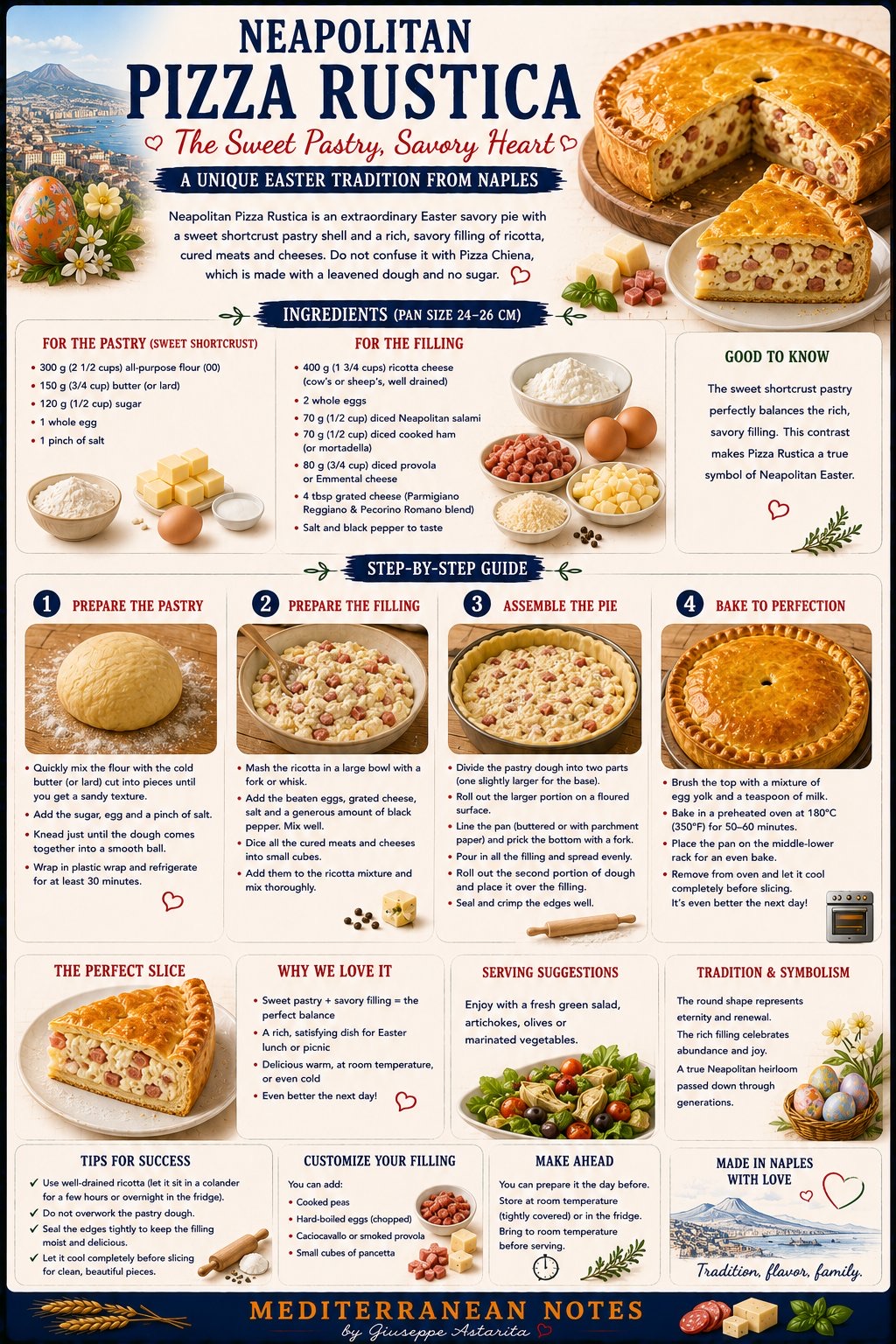
Pizza Rustica Napoletana — step-by-step infographic
Pizza rustica napoletana — la ricetta completa. Click to enlarge.
For the pastry (pasta frolla)
300 g All-purpose flour (00)
150 g, cold Butter (or lard)
120 g Sugar
1 whole Egg
1 pinch Salt
For the filling
400 g, drained Ricotta (cow's or sheep's)
2 whole Eggs
70 g Neapolitan salami, diced small
70 g Cooked ham or mortadella, diced
80 g Provola or Emmental, diced
4 tbsp Parmigiano Reggiano + Pecorino Romano, grated
to taste — generously Black pepper
1
Make the pastry: cut the cold butter into the flour until you have a sandy, crumbly texture — work quickly so the butter stays cold. Add the sugar, egg, and salt and knead just until the dough comes together into a smooth ball. Do not overwork it. Wrap in cling film and refrigerate for at least 30 minutes.
Cold butter is what gives pasta frolla its tenderness. If the dough warms up while you work it, the butter starts to melt into the flour and the crust will be tough rather than short. Work fast, then let the fridge do the resting.
2
Make the filling: mash the drained ricotta with a fork until smooth. Beat in the eggs, then add the grated cheeses and a generous amount of black pepper — more than you think is necessary. Dice all the meats and provola into small cubes (1 cm or less) and fold them through the ricotta mixture until evenly distributed.
Drain the ricotta overnight if you can, or for at least 3–4 hours in a colander. Wet ricotta makes a pie that doesn't hold its slice. The effort is worth it.
3
Divide the rested pastry into two pieces — one slightly larger for the base. Roll the larger piece out on a floured surface to about 3–4 mm thickness. Line a buttered 24–26 cm pan, letting the pastry overhang the edges. Prick the base with a fork. Pour in all the filling and spread evenly.
4
Roll out the second piece of pastry and place it over the filling. Trim the excess and crimp the edges firmly together — press with a fork or fold and pinch. The seal needs to hold during baking. Make a small hole in the center to let steam escape. Brush the top with a mixture of egg yolk and a teaspoon of milk.
5
Bake in a preheated oven at 180°C (350°F) for 50–60 minutes, on the middle-lower rack, until the top is deep golden. Let it cool completely in the pan before slicing — at least 2 hours. It will firm up considerably as it cools and the slices will hold.
It is better the next day. Make it the day before and refrigerate overnight. Bring to room temperature before serving — about an hour out of the fridge. This is also the correct format for taking it on a picnic.
On not cutting it warm
Do not cut the pizza rustica while it is still warm. The filling needs time to set as it cools — the eggs and the ricotta firm up together, and the pastry stops being fragile. A warm slice will collapse. A cold slice, properly rested, holds its shape and shows the cross-section of everything inside it cleanly. The waiting is the last step of the recipe.

Variations and the question of what goes inside

With hard-boiled eggs
Some Neapolitan families add whole or roughly chopped hard-boiled eggs through the filling. They add substance and a different texture against the ricotta — visible in the slice as yellow-and-white pockets. The casatiello salato tradition does the same thing; the two preparations are cousins.
With caciocavallo or smoked provola
Caciocavallo has a sharper, nuttier flavor than provola and ages well inside the filling. Smoked provola adds a light smokiness that registers especially in a cold slice. Either works; the choice changes the flavor profile of the whole pie slightly. My mother used whatever provola she had.
With pancetta or lard in the pastry
Replacing some or all of the butter in the pastry with lard (strutto) gives a shorter, crumblier crust with more savory depth. The traditional Campanian version often used lard. Butter produces a more delicate pastry. Both are correct and produce noticeably different results.
The picnic version
Made the day before, refrigerated overnight, transported whole and sliced on arrival. It does not need plates — a slice and a napkin is sufficient. It does not need accompaniment. This is how it traveled to our picnics and how it should travel to yours. The cold makes the pastry snap cleanly and the filling hold firm.

The pizza rustica is one of those dishes that records a moment — not a specific Sunday I can name, but a category of occasion, a type of day. A celebration was coming, or had just happened, or the family was going somewhere together. My mother had made the pizza rustica. That was enough information to know what kind of day it was.

Buona Pasqua — e buona pizza rustica.
More from Pizza e pane
Tortano e casatiello
Naples' Easter ring — the same dough and filling, two names.
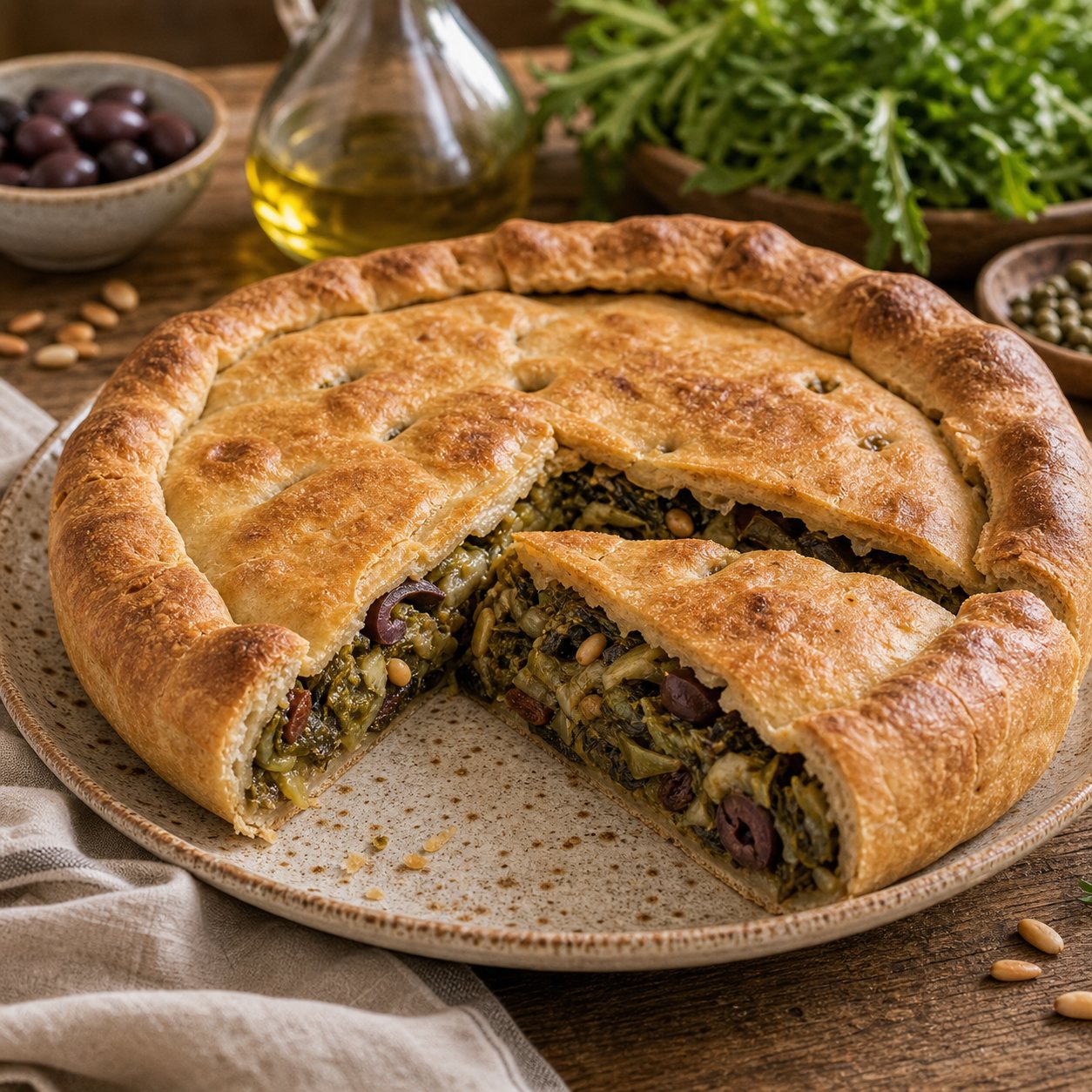
Pizza di scarola
Pizza di scarola
Escarole pie with olives, capers, and pine nuts.
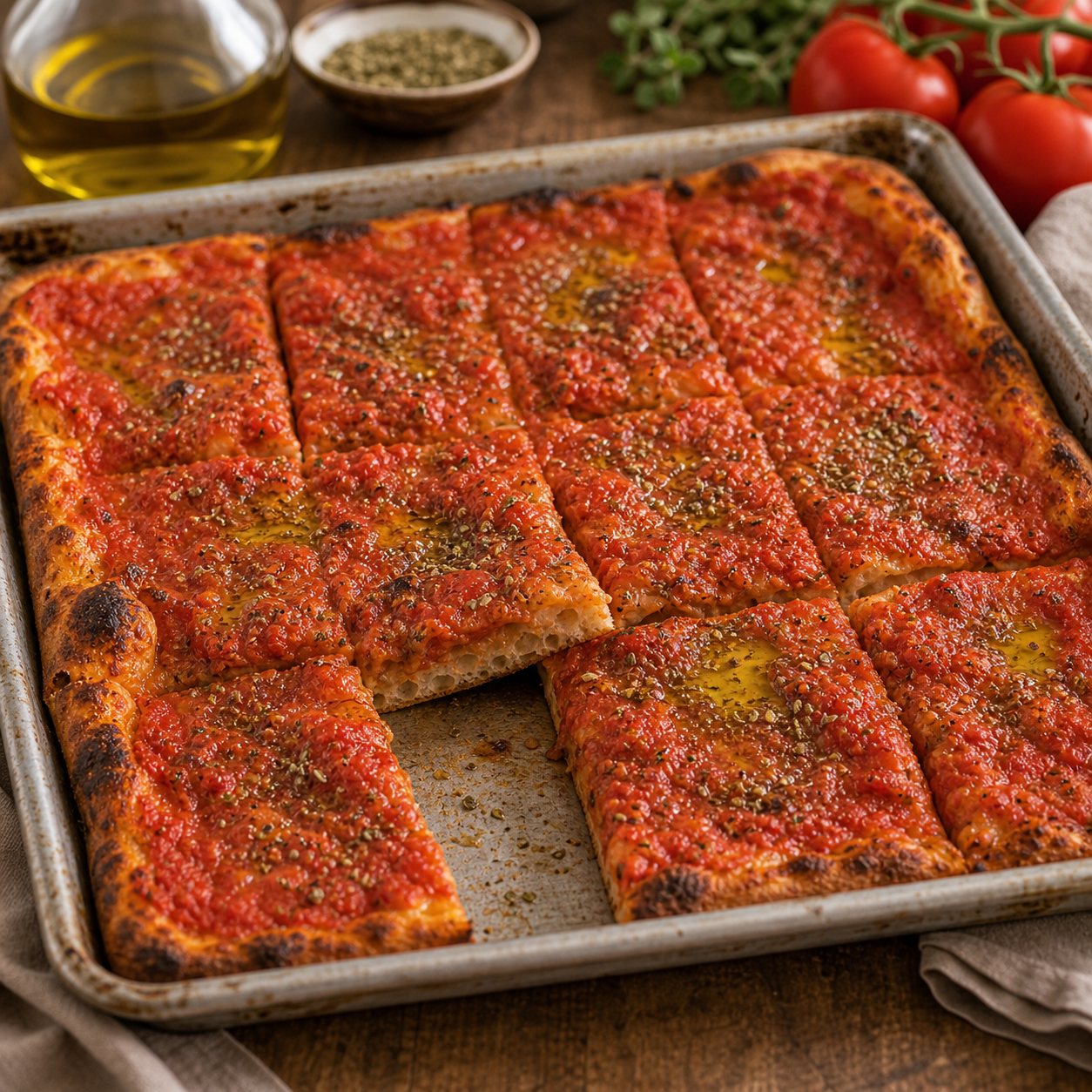
Pizza rossa in teglia
Sheet-pan pizza — tomato, sometimes mozzarella.