Pizza Rossa in Teglia
The Homemade Tray Pizza — Crispy Bottom, Fluffy Inside
Almost forgot this other classic — pizza in teglia my mother used to make us growing up. Sometimes she made it with mozzarella, sometimes without, with oregano or just garlic. And sometimes she prepared it cut into squares for parties. Crispy bottom, fluffy inside, rich tomato flavor. Simple, generous, exactly right.
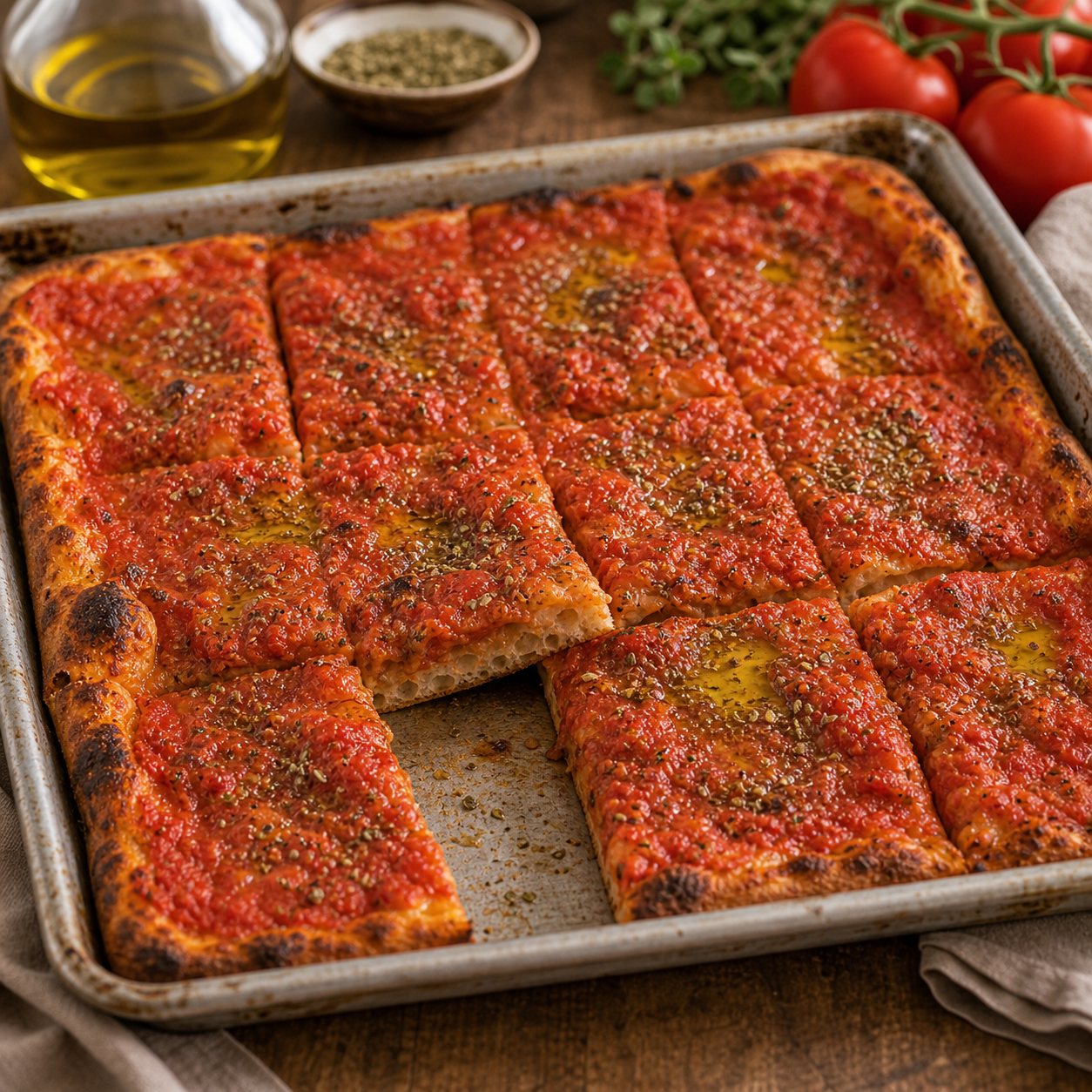
The pizza in teglia — tray pizza, baked in a rectangular pan in a home oven rather than on a stone in a wood-fired oven — is a different preparation from the Neapolitan round pizza, and it was the one that actually appeared in home kitchens. The Neapolitan pizza al piatto, with its thin elastic base and its specific high-heat baking, requires a professional oven temperature that no domestic oven reaches. The pizza in teglia does not: it is designed for the home oven at its highest setting, baked in an oiled metal tray, with a dough that is wetter and more extensible than the round pizza dough and that produces a fluffy, airy interior against a crispy, oil-fried base. This is the pizza of Italian home cooking — the one that can actually be made in a normal kitchen with a normal oven and that produces something genuinely good rather than a disappointing approximation of the restaurant version.
My mother made it in variations depending on the occasion and what was available. The full version with tomato and mozzarella — the one in the infographic — was the most complete. But she also made it without mozzarella: just the seasoned tomato passata spread over the dough, a drizzle of olive oil, dried oregano, sometimes a little garlic rubbed into the surface before the sauce went on. This plain version — pizza rossa in its most essential form — is actually the one that keeps better and that works best cut into squares for parties, because the absence of mozzarella means it doesn't become rubbery when it cools to room temperature.
The recipe
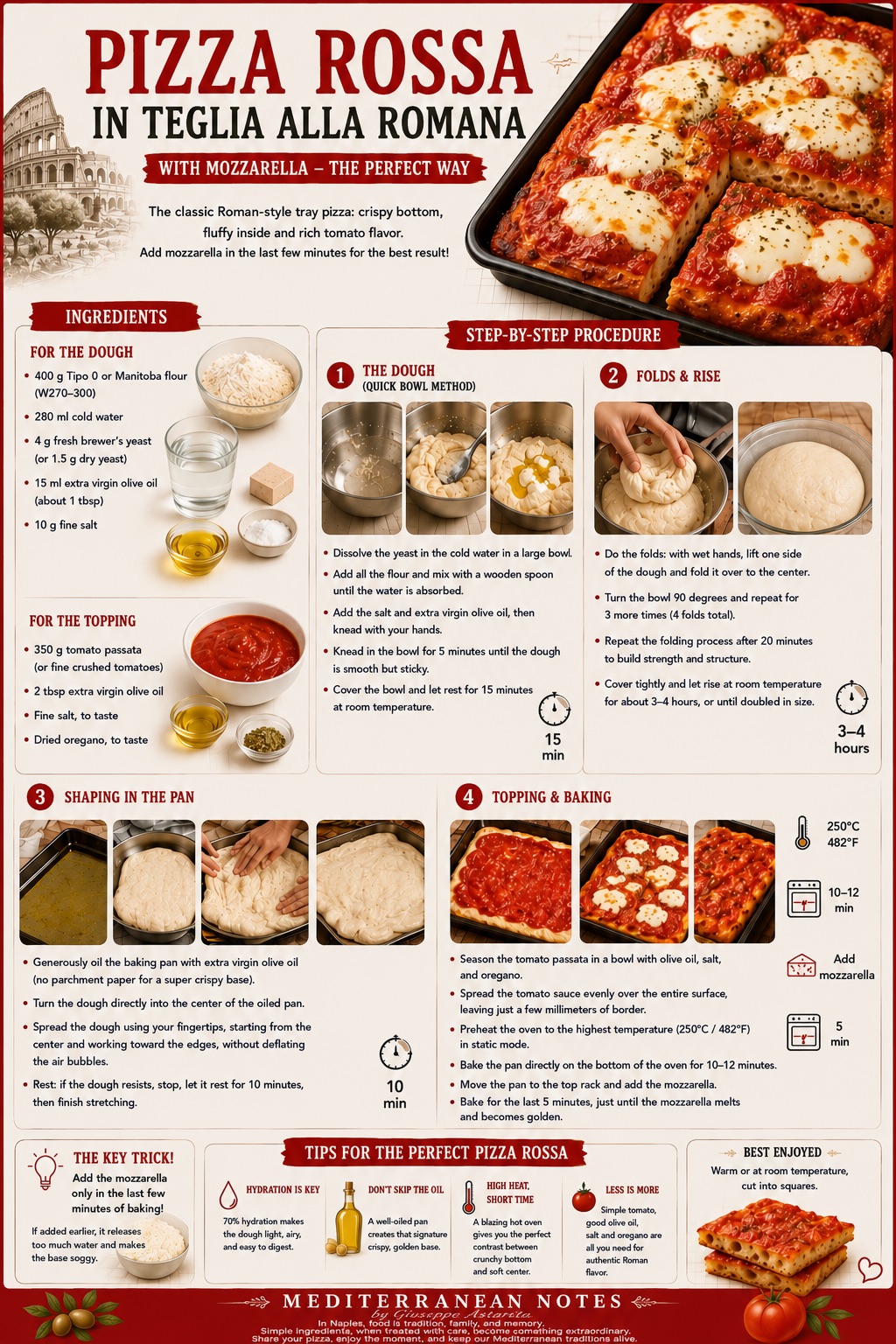
The generous layer of olive oil in the tray serves two purposes that are both structural and flavor-related. During baking, the oil in contact with the bottom of the dough reaches temperatures well above 180°C — the smoke point of most olive oils — and the dough base is essentially shallow-fried rather than baked in the conventional sense. This produces the characteristic crispy, slightly oily, deeply golden base of pizza in teglia that is one of its defining qualities and that cannot be achieved with parchment paper (which insulates the dough from the direct heat) or with insufficient oil. The olive oil also carries flavor compounds from the dough into the base and contributes its own characteristic taste to the crust.
The 70% hydration dough (280 ml water to 400 g flour) is significantly wetter than a standard pizza dough at 60–65% hydration. The additional water produces more steam inside the dough during baking, which creates larger air pockets and a more open, airy crumb structure — the "fluffy inside" that contrasts with the crispy base. Higher hydration doughs are more extensible and less elastic, which is why the dough stretches easily into the tray without springing back once it has rested. The cold water in the dough slows yeast activity during mixing, giving more time for proper hydration of the flour before fermentation begins; the long ambient rise then develops the flavor compounds (organic acids, esters, alcohols) that distinguish a properly fermented pizza dough from one made with too much yeast and too little time.
The pizza in teglia cut into squares for parties is one of those Italian entertaining solutions that works because it requires no plates, no cutlery, no serving equipment beyond the tray itself. You bring the tray to the table, you cut it into squares with a pizza cutter or a sharp knife, and you leave it there. People take pieces with their fingers. The squares at the edges — where the base is crispiest and the crust has caramelized against the side of the tray — are the ones that disappear first. This is invariably true and invariably correct.
Buon appetito — e sempre i quadretti agli angoli per primi.