The Most Typical Pizzas of Naples
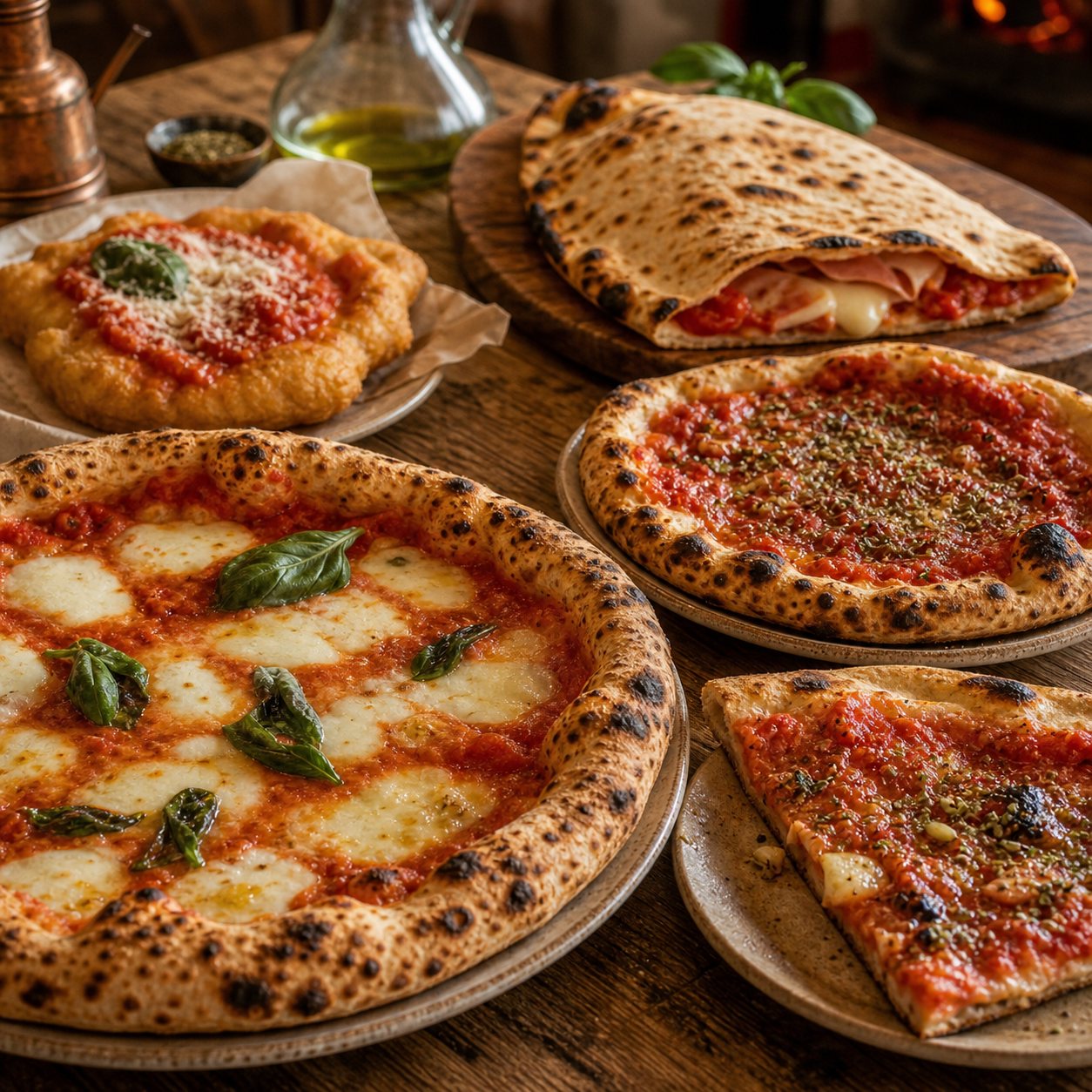
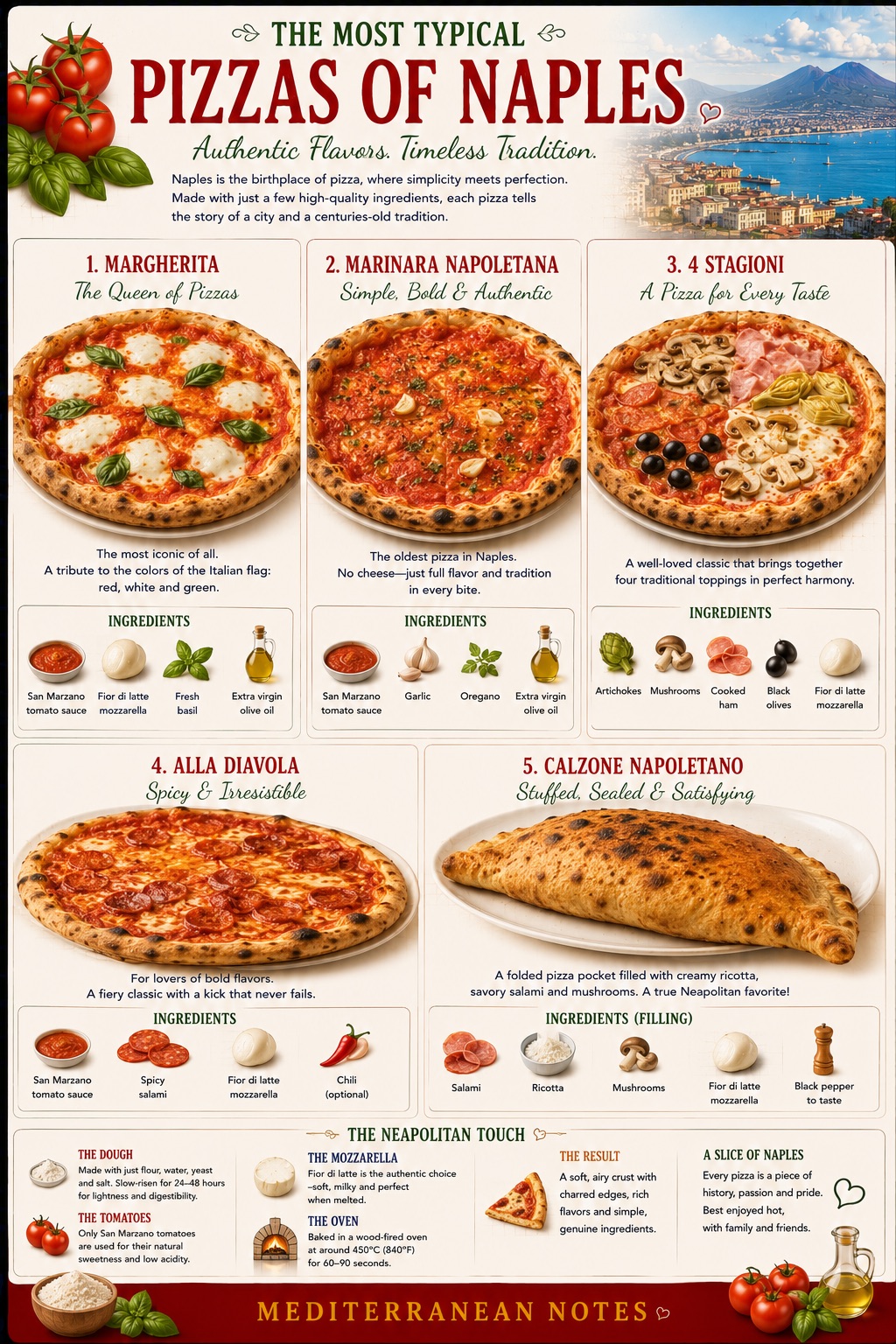
A visual guide to the classic pizzas of Naples: few choices, huge pizzas, blistered crusts, and the old simplicity of Margherita, Marinara, ripieno, and salsiccia e friarielli.
Ingredients
My reference for pizza was the corner pizzeria in our neighborhood in Caserta — a place my father took us on Friday evenings, not the formal sit-down kind but the one with paper tablecloths and almost no choice. The pizza arrived quickly, the crust still blistered at the edges and slightly charred underneath, and it was wider than the plate. That was part of the pleasure: the pizza hanging over the rim, the knife not really useful, the first fold already happening before you had decided where to start. I did not understand at the time that this was exceptional. I thought all pizza was like this. It took me years of living elsewhere to understand what we had.
The old Neapolitan pizzeria was not a gourmet exercise. It was the opposite: dough, tomato, heat, speed, and confidence. The famous model is Da Michele in Naples, remembered because the choice was reduced almost to a principle: Margherita or Marinara. That was not poverty of imagination. It was discipline. If the dough is right, if the oven is right, if the tomato is good, you do not need a long menu.
Pizza is not a Neapolitan invention in the sense that Naples invented bread or fire. What Naples fixed, sometime in the eighteenth century, was the specific form: raised dough, tomato, cheese, wood fire, ninety seconds. The wood-burning oven reaches 450–485°C and does something no home oven can replicate — it chars the underside, inflates the cornicione in a single burst, and sets the crust before the topping has time to overcook. The two original pizzas — Marinara (tomato, garlic, oregano, oil) and Margherita (tomato, fior di latte, basil) — remain the benchmarks. The Marinara is arguably the purer test: no cheese to cover anything, just tomato and fire.
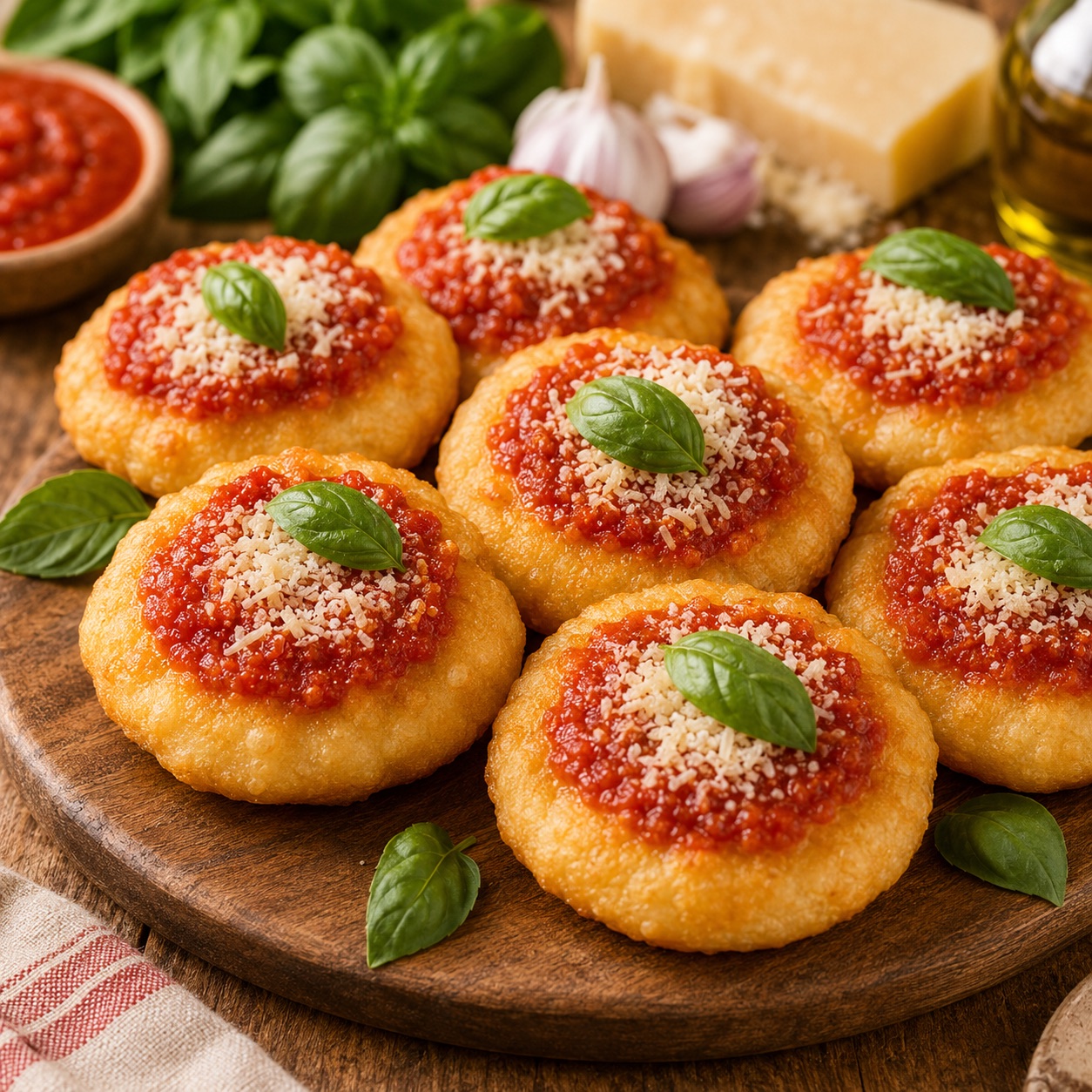
Later came the other familiar choices: the calzone or ripieno, folded and swollen with ricotta and salami; the pizza fritta, born from the same dough and a different economy; and the green, bitter, deeply Campanian pairing of salsiccia e friarielli. That last one is not just a topping. It is one of the great combinations of Naples: pork, bitter greens, garlic, chili, and bread-like dough to hold it all.
In 2017, l'Arte dei Pizzaiuoli Napoletani was inscribed on the UNESCO Intangible Cultural Heritage list. Naples received it with satisfaction rather than surprise. The rest of the world had been making approximations for decades. It was good to have the original named.
The Neapolitan pizza bakes at temperatures between 450 and 485°C for 60 to 90 seconds — conditions that trigger several rapid chemical reactions simultaneously. The underside of the dough, in direct contact with the stone floor of the oven, undergoes the Maillard reaction between amino acids and reducing sugars at extremely high speed, producing the characteristic leopard-spot char: complex aromatic compounds including pyrazines and furans that give Neapolitan crust its distinct slightly bitter, smoky flavor. In the crust itself, steam from the dough's water content expands faster than the dough can set, inflating the cornicione into air pockets before the proteins and starches gelatinize and lock the structure in place — which is why the rim is light and open rather than dense. The tomato and mozzarella receive relatively little heat because the baking time is so short, arriving at the table barely cooked through. A home oven at 250°C takes four to five minutes to bake the same pizza, and during that longer time the tomato reduces and concentrates, the mozzarella fully melts and sometimes pools, and the crust dries rather than chars. The result is not worse — it is simply a different food.