Campanian kitchen · Tradition · Immigration · Identity · For Anna and Carolina
La valigia
Anna, Carolina — for more than twenty years, every time I came back from Italy I brought food in the luggage. Sometimes I checked a bag just for the food. This is the inventory, and the reason behind it, and what I think it means that the cabinet in our kitchen still has four packs of paccheri in it.
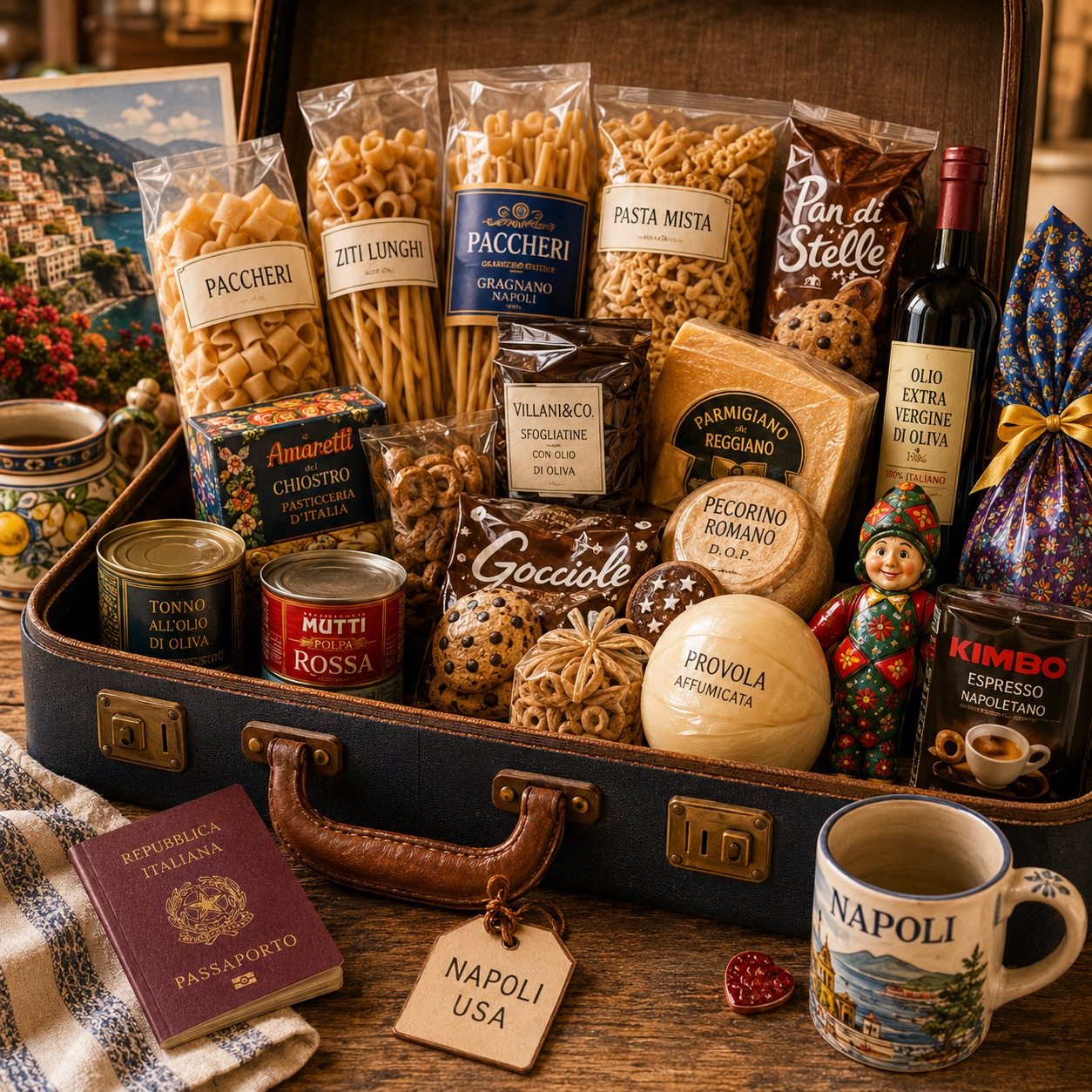
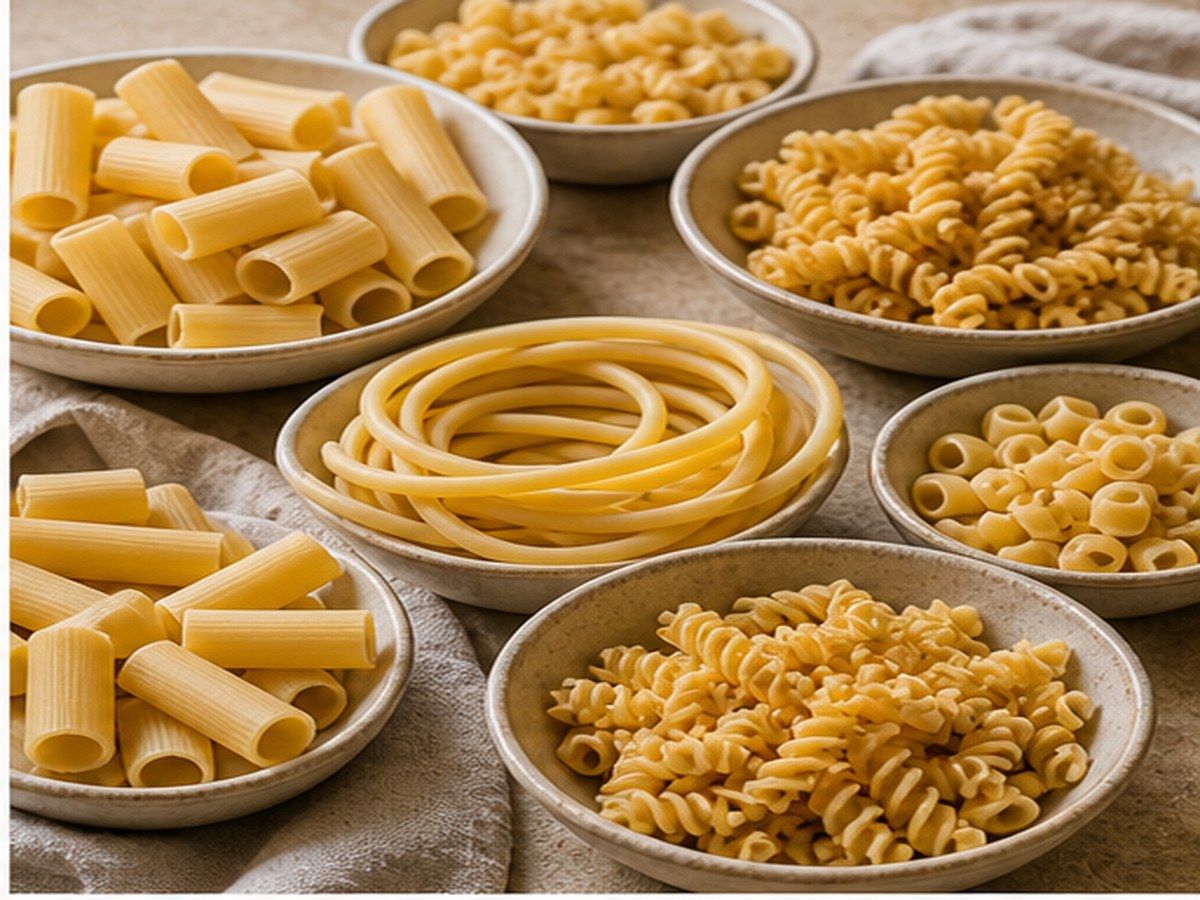
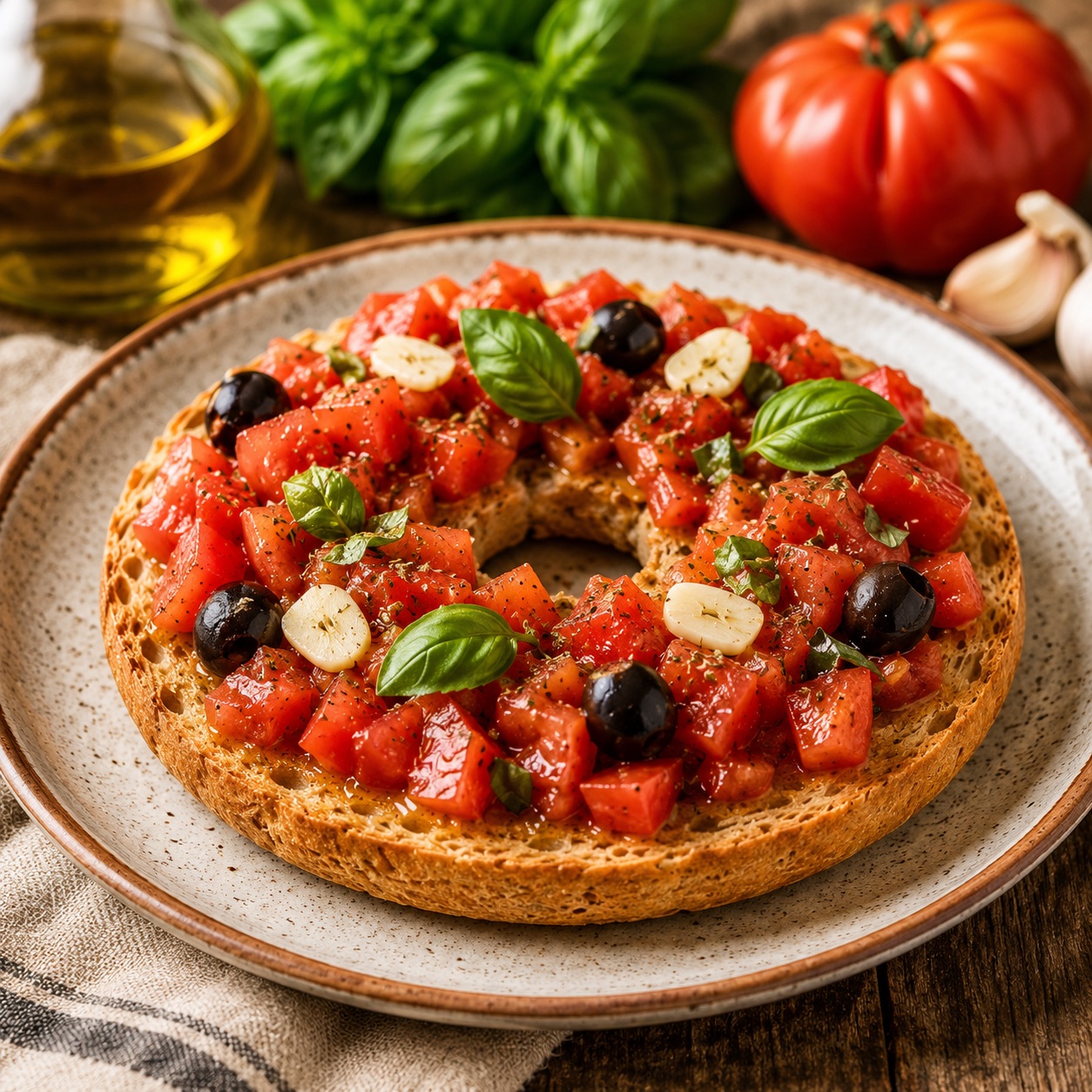
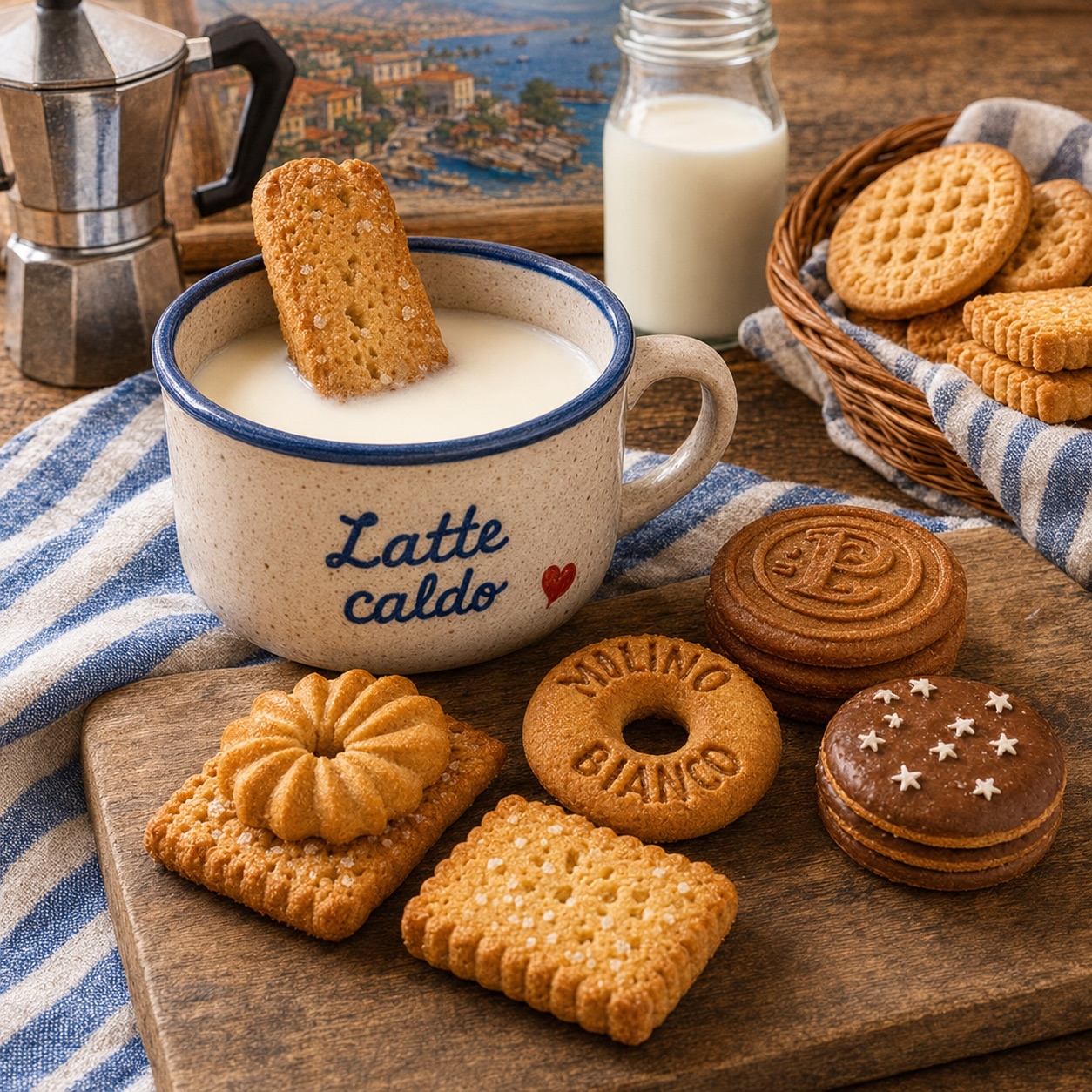
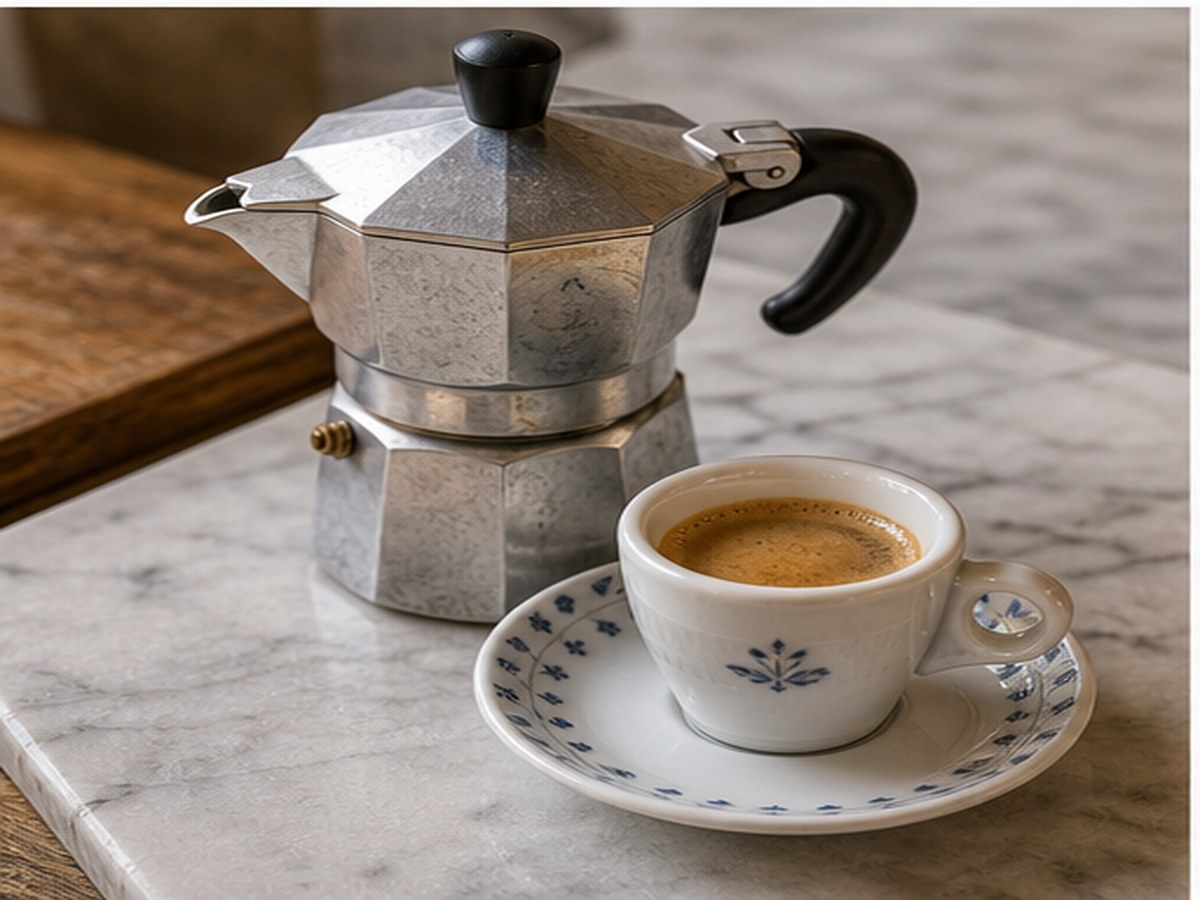
The process begins before I leave Italy. There is a mental list that forms in the last few days — what is running low at home, what you cannot find in the US at a reasonable price, what I have promised myself I would bring back and have not yet brought. The paccheri are always on the list. The freselle. The biscotti, because you both react to a new pack of abbracci with a sincerity that I have never seen directed at any American biscuit. The Parmigiano and the Pecorino. The semolina and the pizza flour. The peperoncini. The caffè. And then the things that require a separate decision — the wine, the olive oil, the torrone — because they are heavy and the luggage has limits and customs declarations have to be made. You learn, over twenty years, how to pack a suitcase with the efficiency of a person who has done this before.
I am not unusual in this. Every Italian who lives abroad does some version of this. The scale varies — I have heard of people from the south who fill a box with cured meats and cheeses and ship it to relatives in Bologna, because the same logic applies inside Italy: you cannot find Campanian mozzarella of the same quality anywhere outside Campania, and if you are a Neapolitan living in Milan or Turin you have cousins who travel and you make arrangements. Tutto il mondo è paese — the whole world is a village — which means the village food problem is universal. Someone from Calabria in New York, someone from Puglia in London, someone from Sicily in Paris: the same suitcase, the same calculation about weight limits, the same satisfaction when the customs officer waves you through.
What changes over time is the inventory. Twenty years ago there was almost nothing Italian in the supermarkets here — not the right Italian, not the specific Italian. Pasta was pasta, meaning imported industrial spaghetti from a brand that had no connection to how pasta is made in Campania. Now there is more — Neapolitan pizzerias have opened across American cities, Italian imports have expanded into specialty stores, and some things I used to carry across the Atlantic are occasionally findable within thirty minutes of where we live. But the prices remain absurd for certain things, and the specific regional items — the pasta mista, the long ziti, the farfalline, the stelline for a brodo, the pastina all'uovo — these are still largely absent. And the mozzarella is still not right. It will never be exactly right this far from the dairy. This is a fact I have accepted and stopped being annoyed by.
Your grandparents brought food too, when they visited. It is what Italian families do when they travel to each other — you do not arrive empty-handed at a kitchen that is missing things. My mother would come with her own quaresimali, which are hard cookies made with almonds and sometimes chocolate, regional to Campania, made in her kitchen and not findable anywhere here. She would bring her homemade bread — which does not survive the journey intact but which arrives as something still worth eating, dense and slightly stale in a way that good bread is when it is a few days old. She brought spices. She brought things I had not asked for but that she decided I needed, which is also part of the tradition.
Anna, Carolina — by the time you are grown, the food aisles here will have more Italian items than they do now. More regional ones, probably. There is a pattern: what starts as specialty import becomes common availability within a generation. Thirty years ago good olive oil was hard to find in the United States; now it is everywhere. The same will happen with other things. I wonder sometimes which specific items will have crossed over by the time you are old enough to do your own grocery shopping — whether the long ziti will be there, whether the pastina all'uovo for a proper brodo will be findable without importing it, whether someone will have finally figured out how to make a fresh mozzarella that is actually fresh. Perhaps. But there will always be something that is not there. There will always be a reason to pack the suitcase.
We also preserve here what we brought back. The melanzane sottolio — the eggplant preserved in olive oil — is a good example: we make it here from summer eggplant, the same way my mother made it in Caserta, and we put it in jars in our kitchen. The tradition does not require the original geography. It requires the intention and the recipe and the people who care enough to do it. That is what this entire blog is — a record of the intention, carried forward in a kitchen in the US, sometimes with ingredients from a suitcase, sometimes with what we can find here, always with the same recipes.
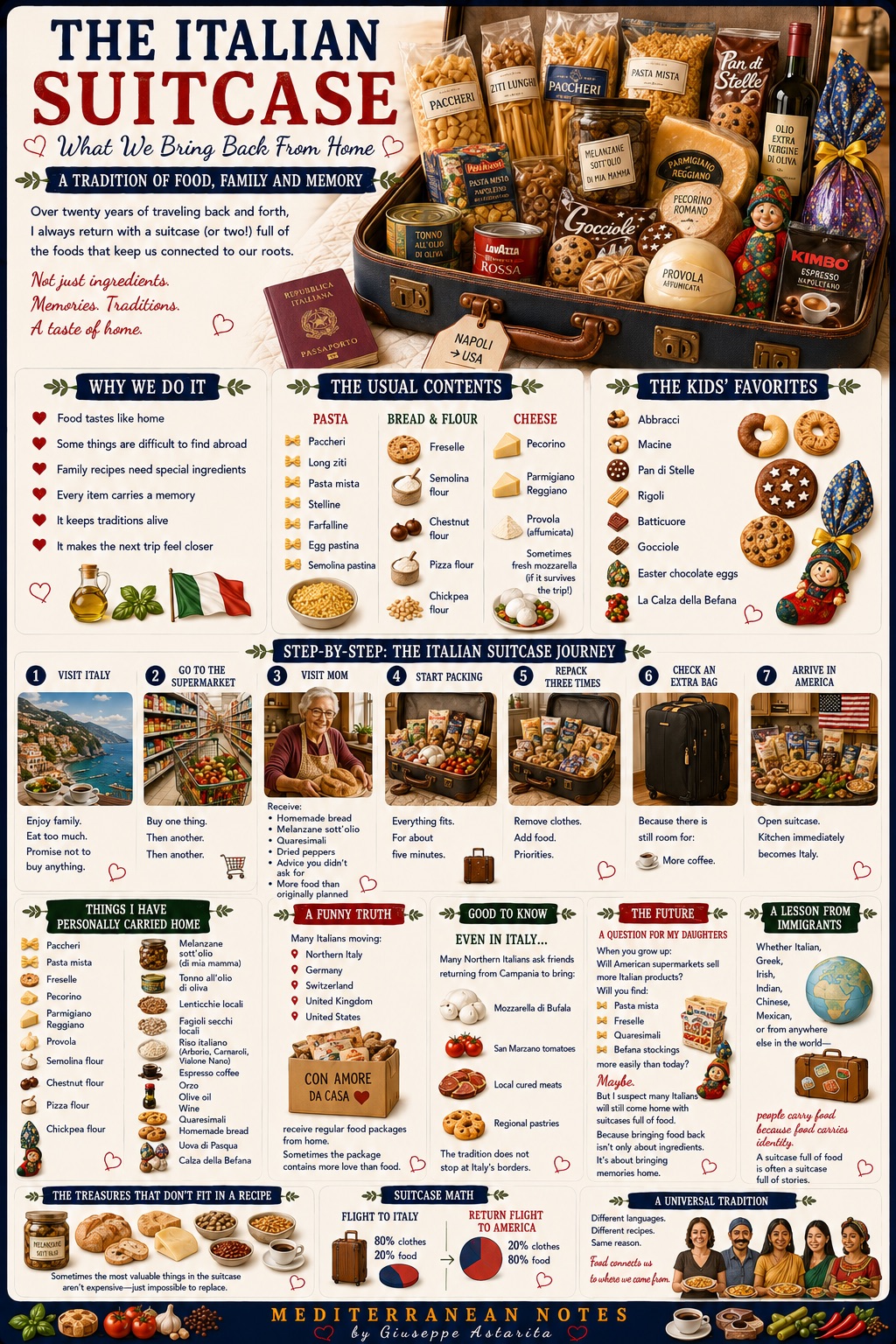
I wonder, Anna and Carolina, how many of these items you will find easily available here by the time you are doing your own cooking. The trajectory is toward more, not less — Italian food is the most recognized and most replicated cuisine in the world, and the American market for authentic regional Italian ingredients has been growing for years. Some things that I carried across the Atlantic as the only way to have them are already findable here now, at a price. But I also know that there will always be something missing — some specific thing that is made in a particular place by a particular person and does not travel well and cannot be replicated elsewhere. My mother's quaresimali. Fresh mozzarella from the dairy near Caserta the morning you buy it. The bread she baked on Thursday that arrived on Sunday still edible but already something else.
Those things do not go in the suitcase. They go in memory, and then in a blog post, and then perhaps one day in a book. Which is also a kind of luggage.
Buon viaggio — e non dimenticare la valigia del cibo.