La Calza della Befana
January 6th — a Christmas Day in itself, the suspense of the stocking
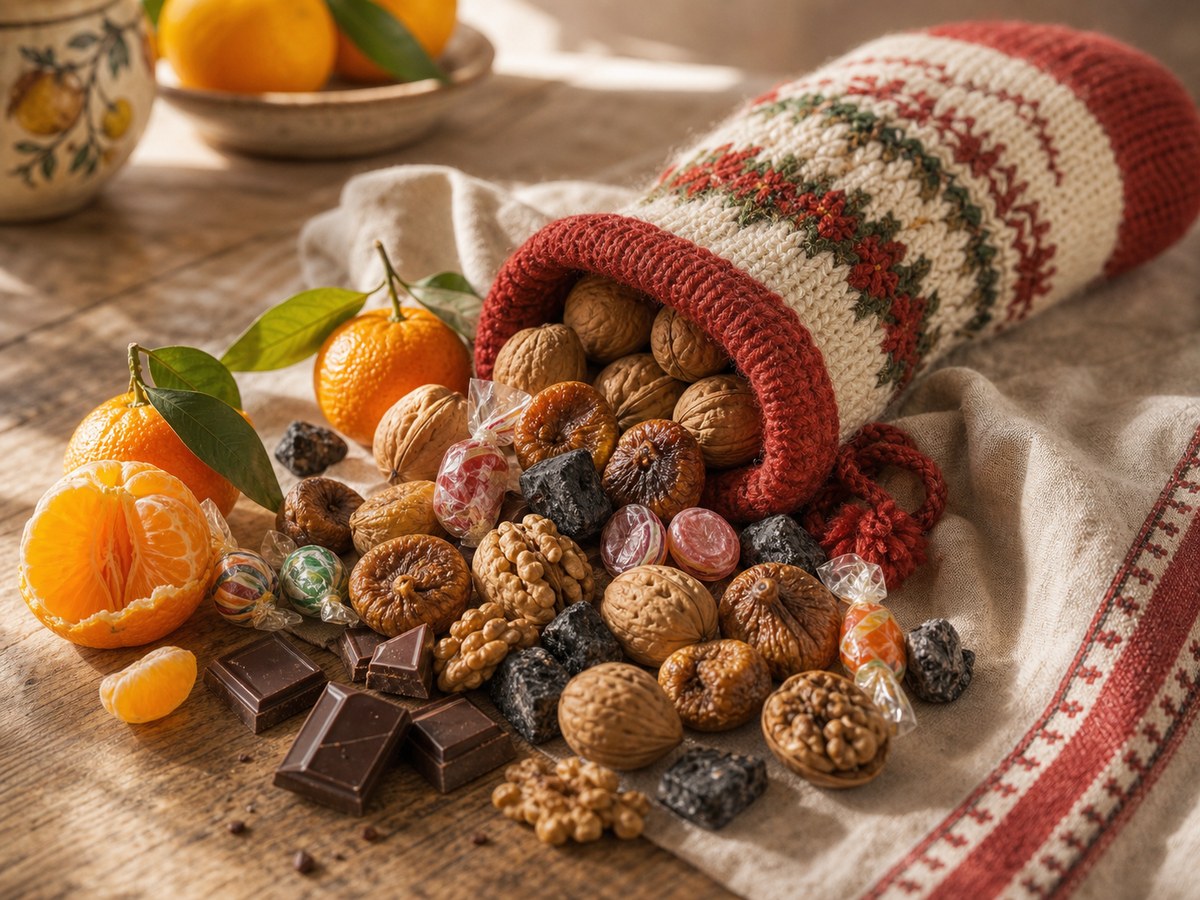
January 6th was a Christmas in itself. In Italy the Epiphany is not an afterthought — it is the conclusion of the whole holiday season, the night that closes Christmas properly and sends it away until the following year. And for children it was, in some ways, more exciting than Christmas Day itself, because La Befana had an element of suspense that Babbo Natale did not quite have. Babbo Natale brought presents, which was predictable and good. La Befana brought the calza — the stocking — and the calza could contain anything from sweets and chocolate and frutta secca and dried figs to, if you had not behaved correctly that year, carbone. The carbone was the verdict.
Waking up on January 6th and running to the fireplace or the window where the calza hung was one of the specific rituals of childhood that stays in memory not because of any particular object received but because of the quality of that moment — the suspense before looking, the assessment of how the year had gone, the calculation of whether the good behavior outweighed the difficult episodes. The calza was always predominantly sweets and candies and chocolates. The carbone, when it appeared, was the sweet kind — sugar pressed and dyed black to look like coal, completely edible, and generally understood by all parties to be part of the theater rather than a genuine punishment. But it was carbone nonetheless, and it carried its symbolic weight.
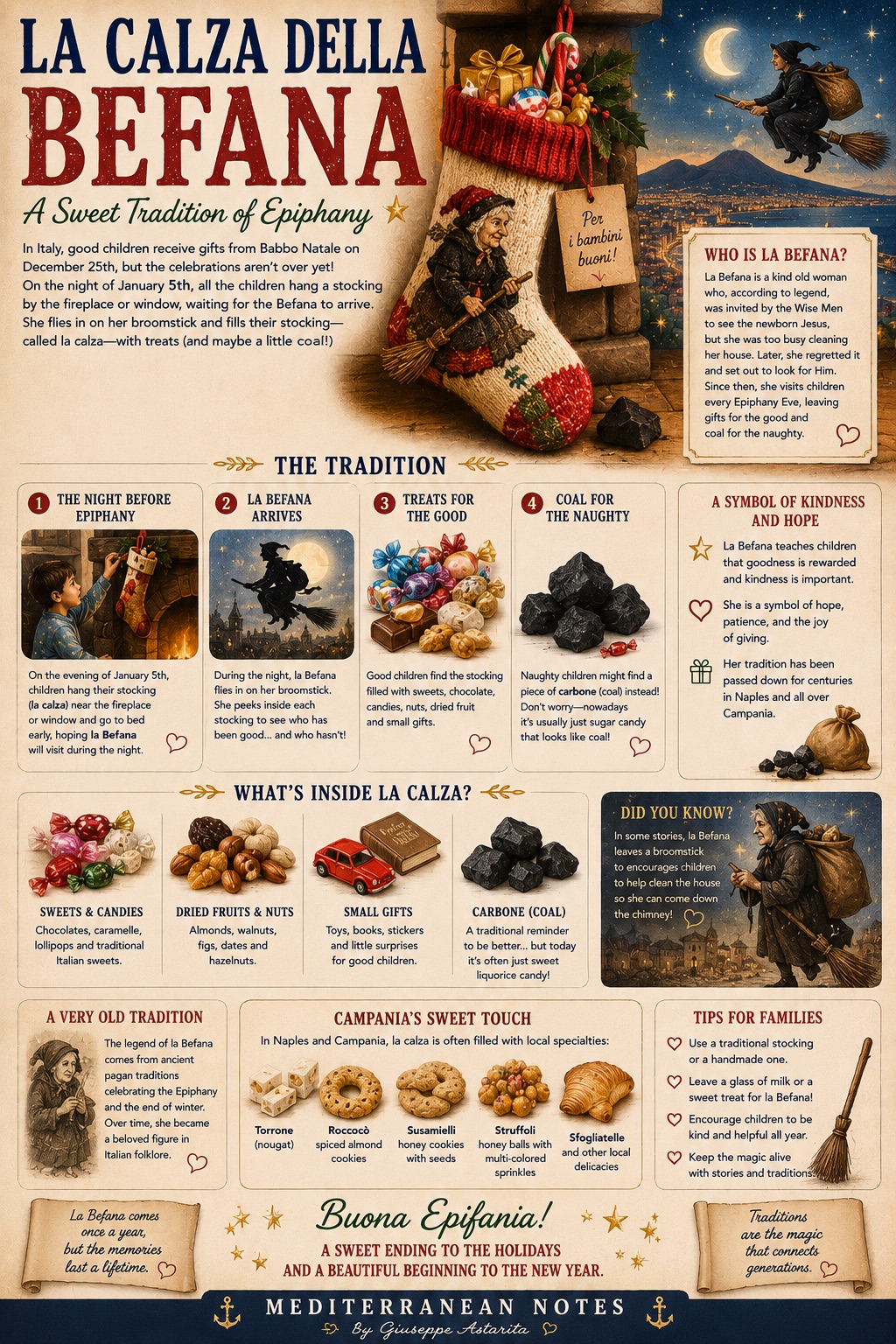
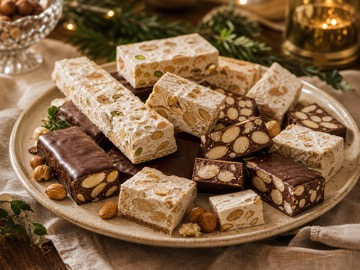
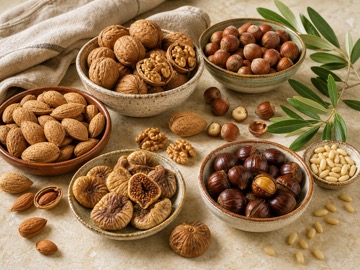
The calza in Campania had a specific composition that was different from generic Italian stockings. Alongside the chocolates and caramels and wrapped candies there were always local specialties: torrone, rococò, susamielli, struffoli if any remained from Christmas, sfogliatelle, and the dried fruits and nuts — the ciociole — that were the staple of the holiday table throughout the season. The Befana's calza was in this sense the last act of the Christmas sweet tradition, the final appearance of all the things that had been on the table since December 8th, gathered together one more time before the decorations came down.
La Befana herself — the old woman who flies through the night on her broomstick, looking into stockings and leaving gifts for the good and coal for the naughty — is one of the oldest figures in Italian popular tradition. The legend connects her to the Magi, the Wise Men who passed through on their way to Bethlehem and invited her to join them; she was too busy cleaning her house and regretted it, and has been searching for the Christ child ever since, leaving gifts at every home along the way. The legend is pre-Christian in origin, connected to ancient midwinter traditions, and was eventually absorbed into the Catholic calendar as the feast of the Epiphany. In Campania she was simply part of the winter, as present as Christmas itself.
The tradition of the calza is very much alive — Anna and Carolina hang theirs on January 5th and wake up on the 6th to find it filled, and the Campanian sweets that go into it are ones I still seek out wherever they can be found. Torrone, susamielli, the dried figs stuffed with almonds. A piece of carbone in sugar for good measure. The theater is worth maintaining. The memory of that January morning runs through it.
Buona Epifania —
tutte le feste porta via, e la calza porta gioia.