Frutta Secca in Campania
Le ciociole — the holiday bowl, the cracking of nuts, the hills of Avellino
Growing up, there was always a large bowl of frutta secca on the table, especially during the big holiday lunches. After the meal, we would open the nuts and crack them and enjoy long conversations. It was never just food — it was part of being together. Le ciociole, in Neapolitan: the classic pastime that is a must at every festive table.
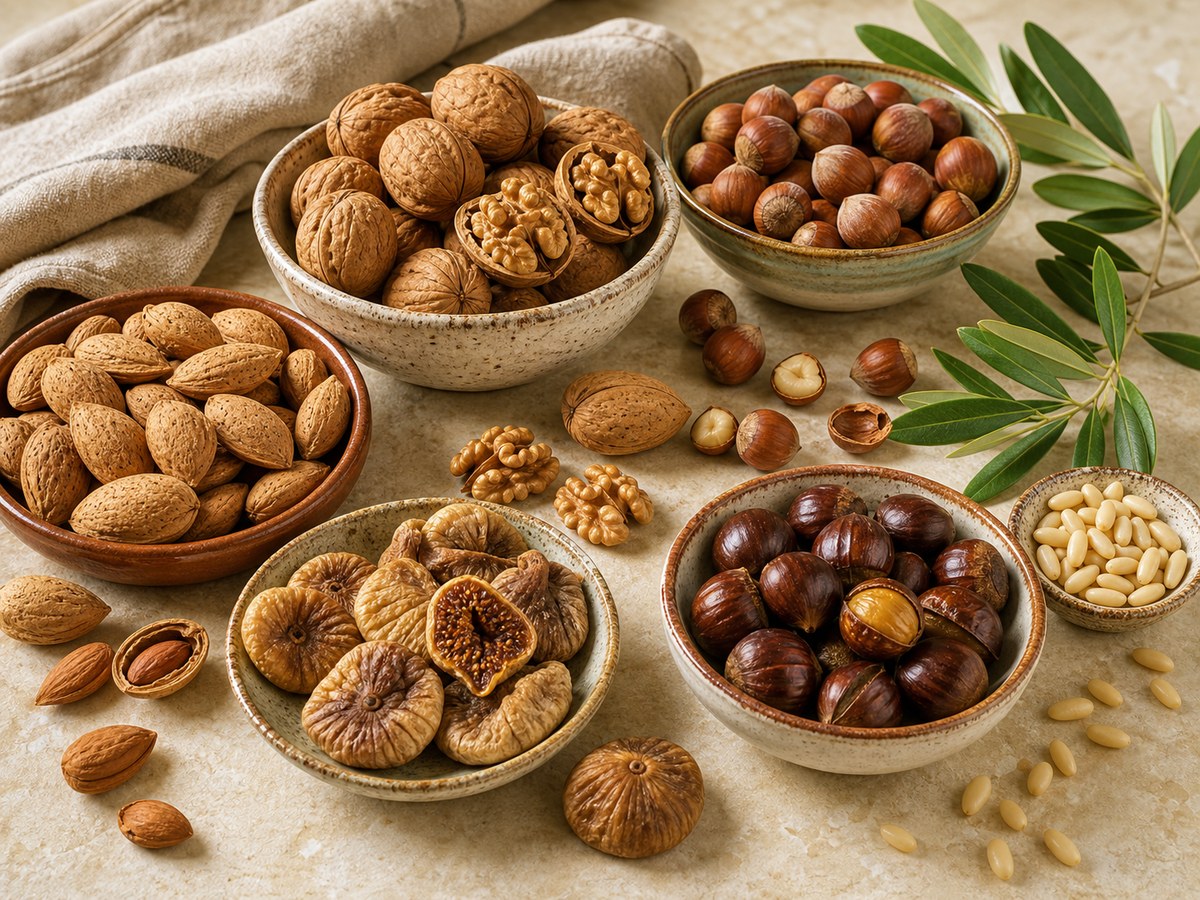
The frutta secca — dried fruit, nuts in their shells, hazelnuts and walnuts and chestnuts and dried figs — occupies a specific place in the Campanian holiday ritual that is different from its role in everyday cooking. In the kitchen it is an ingredient: the hazelnuts in the torrone, the walnuts in the pesto and the mostaccioli, the pine nuts with the raisins in the escarole and the stuffed squid and the capitone agrodolce. But at the table after a big meal, especially at Christmas and Easter, it becomes something else entirely. The bowl arrives, the nutcracker appears, and the conversation continues while hands work at shells and the accumulation of broken walnut husks and hazelnut skins grows at the center of the table. This can last hours. Nobody needs to be anywhere. The nuts are the occasion for staying.
In Neapolitan the dried fruit is called ciociole or o spass — the word spassarsela meaning to enjoy oneself, to pass the time pleasurably. The etymology says everything about the cultural role of the frutta secca: it is not sustenance at this moment, it is occupation and pleasure, the physical act of cracking and peeling that gives the hands something to do while the conversation runs. A bowl of mixed nuts in shells, a bowl of dried figs stuffed with almonds, some torrone on the side — this is the standard holiday table composition in Campania, the one that was on the table at every Christmas and New Year in my family as far back as I can remember.
The walk through the hills of Avellino — the Irpinia, the inland province of Avellino that rises steeply from the coast into a cool, forested interior — is a specific memory of autumn. The castagneti are chestnut forests; the nocelleti are hazelnut groves. Both are literally part of the landscape of this territory, planted over centuries by farmers who understood that the Irpinian climate and soil produce hazelnuts and chestnuts of exceptional quality. Walking through them in October, gathering fruit from the ground, cracking them with a rock or a heel and tasting them fresh: this is a pleasure that connects directly to one of the oldest agricultural traditions in southern Italy. The Irpinia hazelnut is the same nut that goes into the world's most famous chocolate spreads. When you taste it fresh from the shell in the forest where it grew, you understand why.
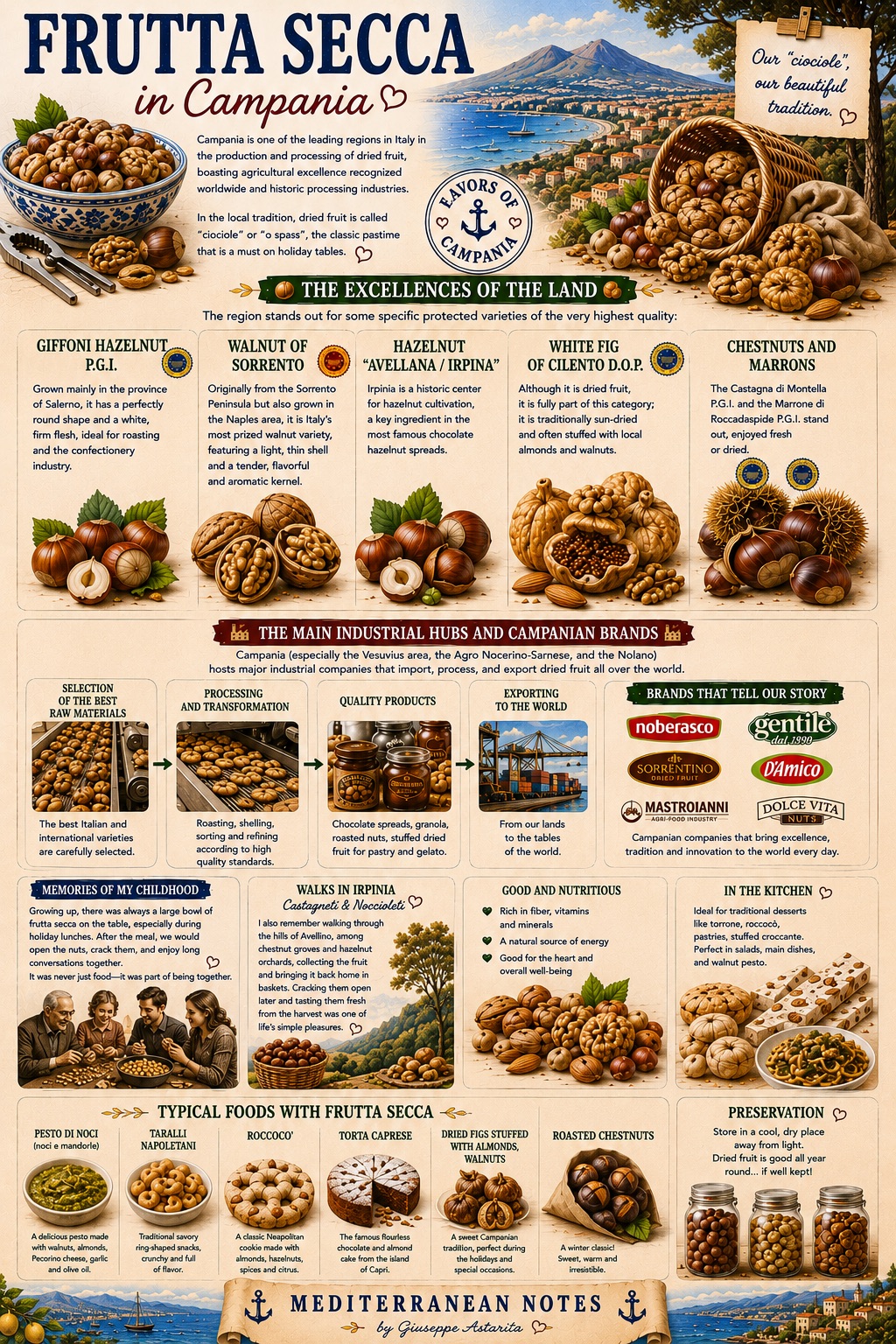
The varieties of Campania
In the kitchen and on the table
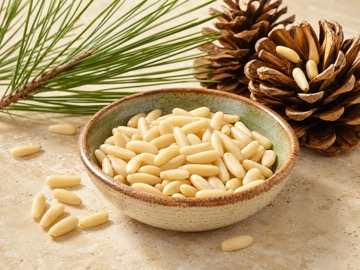
The frutta secca appears throughout the recipes in this collection, most often in the agrodolce combinations that define so much of Campanian cooking — pine nuts with raisins in the scarola, the stuffed squid, the capitone. But the dried nuts and fruits also anchor many of the holiday sweets that were always on the table at Christmas:
- Torrone — the nougat of almonds or hazelnuts in honey and egg white that is the most essential Christmas sweet of the Campanian table. Always present.
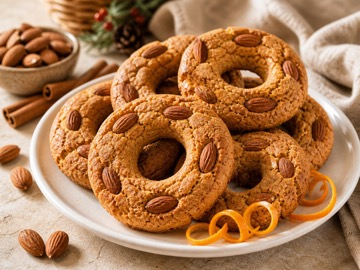
- Rococò napoletani — the almond biscuit from the 1700s, spiced with the pisto napoletano, baked twice until firm. Hazelnuts and almonds.
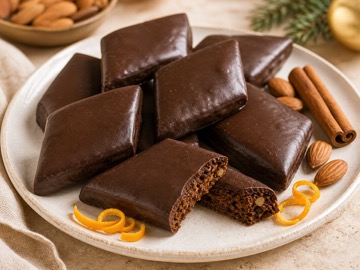
- Mostaccioli napoletani — spiced diamond biscuits with almonds, cocoa, and orange zest, coated in dark chocolate.
- Quaresimali — the Lenten almond biscotti, the double-baked twice-spiced biscuit of the fasting season.
- Torta Caprese — the flourless chocolate and almond cake of Capri. Almonds are its entire structure.
- Castagne del prete — dried chestnuts slowly roasted in the oven until concentrated and sweet, a Campanian specialty that deserves its own post.
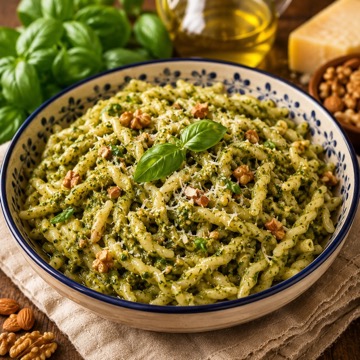
- Pesto di mandorle e noci — the southern walnut and almond pesto, a relative of the trofie pesto di Napoli.
- Castagne arrosto — chestnuts roasted over open fire or in the oven. An autumn classic. Also deserves its own post.
Campania is one of Italy's leading regions in the production and processing of dried fruit — a fact that is not widely known outside Italy but that is reflected in the quality of the local varieties and in the presence of major industrial processing companies in the Vesuvian area, the Agro Nocerino-Sarnese, and the Nolano. Brands like Noberasco, Sorrentino, Gentile, D'Amico, and Mastroianni process and export Campanian hazelnuts, walnuts, and dried figs around the world. The same nuts that were gathered from the ground in the hills of Avellino on an autumn afternoon travel, in processed form, to confectionery industries and home kitchens across Europe and beyond.
The bowl on the holiday table is the starting point of all of this — the most direct, most unprocessed, most honest form in which the frutta secca can be experienced. Shell, crack, taste. The conversation continues. Nobody needs to be anywhere.
Buon appetito —
e buone ciociole, in buona compagnia.