Trofie al Pesto di Napoli
Southern pesto with almonds or walnuts -- robust, fragrant, not Genoese
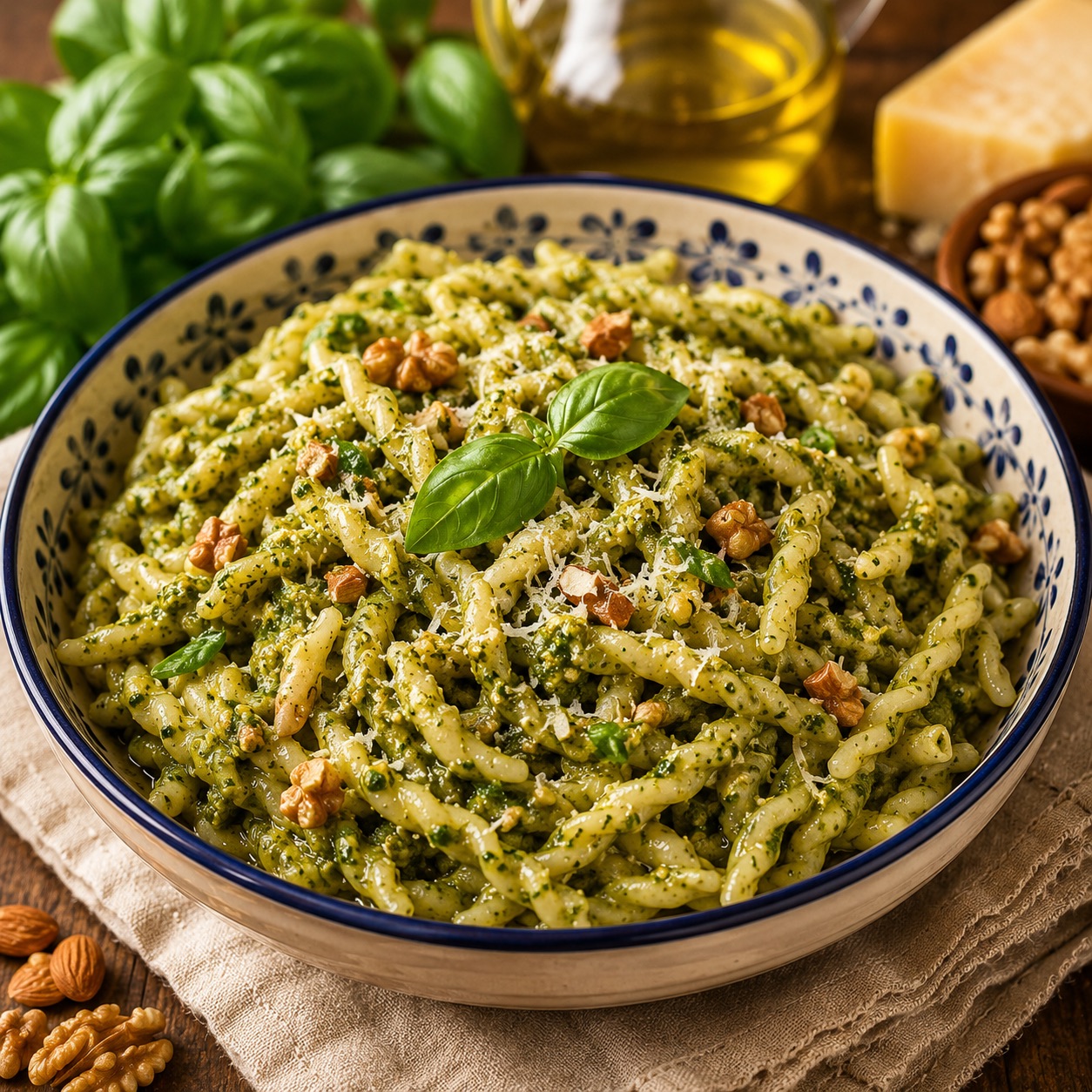
The pesto di Napoli is not the pesto of Genova. This distinction matters because the two are frequently confused by anyone who has encountered the term pesto only through the northern Italian version -- the basil, pine nut, Pecorino, and Parmigiano preparation of Liguria that has become the globally known Italian green sauce. The Neapolitan pesto uses almonds or walnuts rather than pine nuts, Pecorino Romano rather than Ligurian Pecorino Sardo, and produces a result that is more robust, slightly less delicate, and more assertively flavored than the Genoese version. Both are correct for their geography. The Neapolitan version belongs to the Mediterranean hillside tradition of ground nut and herb sauces that predates the codification of the Ligurian pesto by centuries.
The trofie is an excellent vehicle for this sauce because its twisted, slightly irregular shape traps the thick, oil-based pesto in its crevices rather than allowing it to slide off the smooth surface that a long pasta would present. Trofie al pesto di Napoli is a light, fast, entirely satisfying pasta that requires no heat after the initial pasta cooking -- the pesto is made cold, the pasta is tossed with it off the heat or with just a splash of warm pasta water to loosen it to the right consistency. It is a summer pasta, appropriate when the basil is at its most fragrant and the kitchen does not need another hot pan going for longer than necessary.
Pine nuts contain approximately 68% fat, primarily monounsaturated oleic acid, with a mild, slightly sweet flavor and a very soft texture that blends into a particularly smooth emulsion in pesto. Almonds contain approximately 50% fat with a harder texture and a more assertive, slightly bitter flavor from their skin's tannins (blanched almonds are milder). Walnuts contain approximately 65% fat with a higher proportion of polyunsaturated omega-3 fatty acids and a characteristic slightly astringent, complex flavor from their tannin and polyphenol content. The practical effect: almond pesto is firmer, less smooth, and more robust in flavor than pine nut pesto; walnut pesto is the most complex and slightly bitter of the three. Both require more olive oil to reach the same emulsion consistency as pine nut pesto, which is why the Neapolitan version typically uses more oil relative to nuts than the Genoese recipe does.
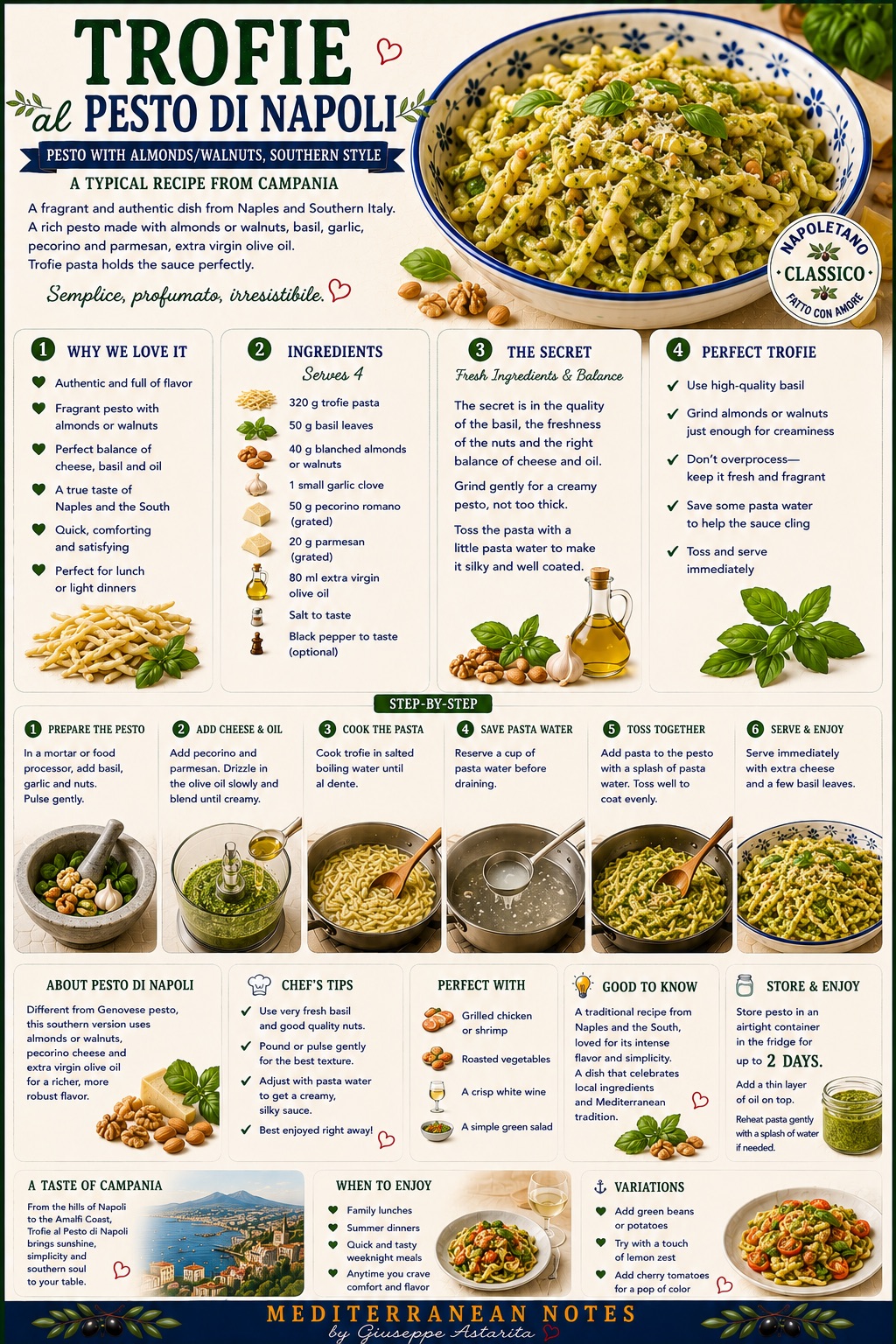
The recipe
Buon appetito.