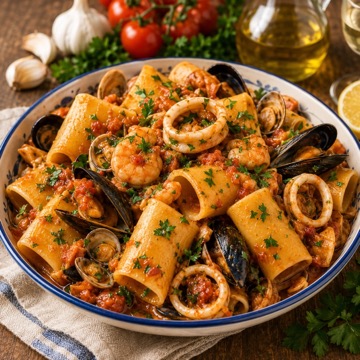
Scialatielli ai Frutti di Mare
The Amalfi Coast signature -- handmade pasta with fresh mixed seafood
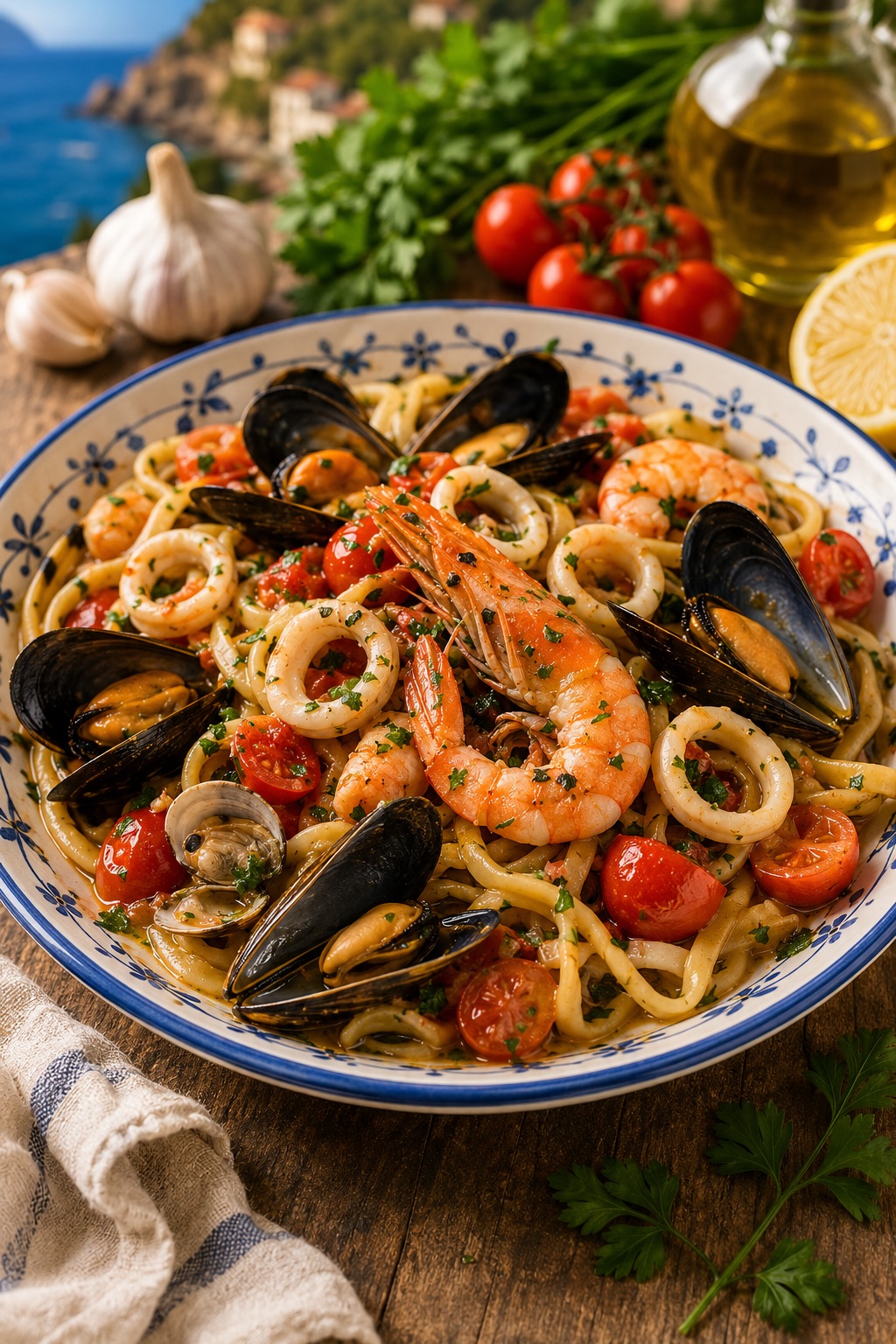
The scialatielli is the pasta of the Amalfi Coast -- thick, slightly irregular, handmade egg noodles that are shorter and wider than tagliatelle and have a rougher surface that holds sauce with particular efficiency. They were created in Amalfi in the 1960s by chef Enrico Cosentino and became the emblematic pasta of the terraced coastline between Salerno and Sorrento, where the fishing boats come in with the morning catch and the lemon trees grow at the edge of cliffs above the sea. The combination with frutti di mare -- the mixed seafood of the day -- is the dish that most defines the coastal identity of southern Campania. Fresh pasta, freshest possible seafood, cherry tomatoes, garlic, white wine, and parsley. Nothing more than this.
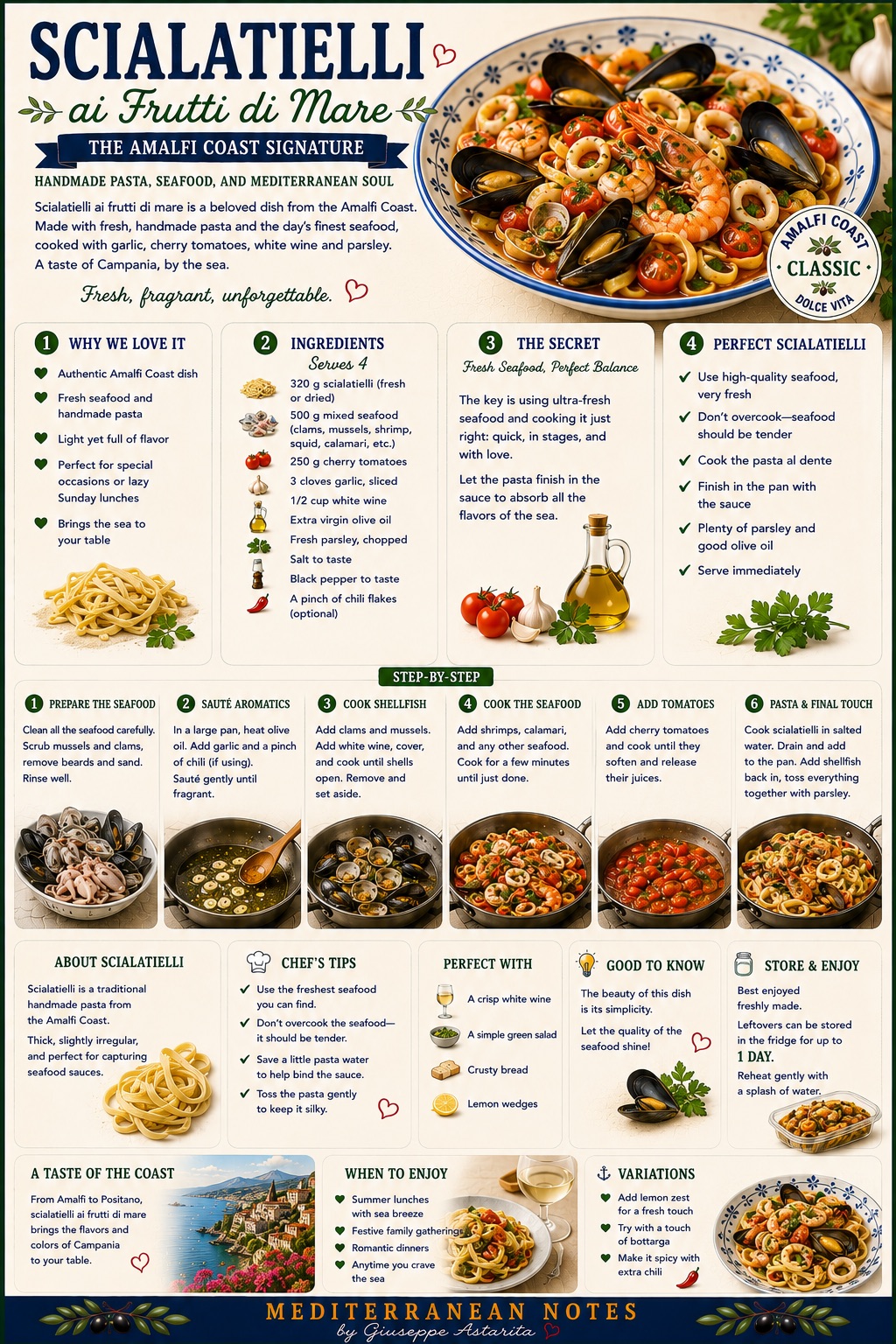
The cooking approach is staged for good reason: different seafood have different cooking times, and a ragù di mare where everything goes in at once produces rubbery shrimp and overcooked calamari alongside perfectly opened mussels. The shellfish -- mussels and clams -- go in first with the white wine and cook covered until they open. They are removed and set aside. The shrimp and calamari go in next for two to three minutes. The cherry tomatoes go in and soften. The pasta finishes in the sauce. Only at the final toss do the mussels and clams return. This sequence ensures that every element arrives at the plate at the correct state.
The rough, slightly irregular surface of handmade scialatielli is not accidental -- it is the result of the rolling technique and the semolina content of the dough, which produces a surface with micro-irregularities that mechanically trap sauce components and resist the smooth sliding of sauce off the pasta surface. Commercial pasta extruded through Teflon dies produces a smooth surface; pasta extruded through bronze dies or rolled by hand produces the rougher surface that Italian pasta makers have always preferred for sauce adhesion. The starch on the scialatielli surface, partially hydrated during cooking, forms a slightly tacky layer that additionally bonds with the olive oil and seafood cooking liquid to create a stable coating. Finishing the pasta in the sauce for one to two minutes allows this bonding to occur actively, with the pasta continuously absorbing sauce as the starch continues to hydrate.
The recipe
Buon appetito.