Gamberoni al Limone
Large shrimp in lemon and garlic sauce -- the Amalfi Coast in a pan
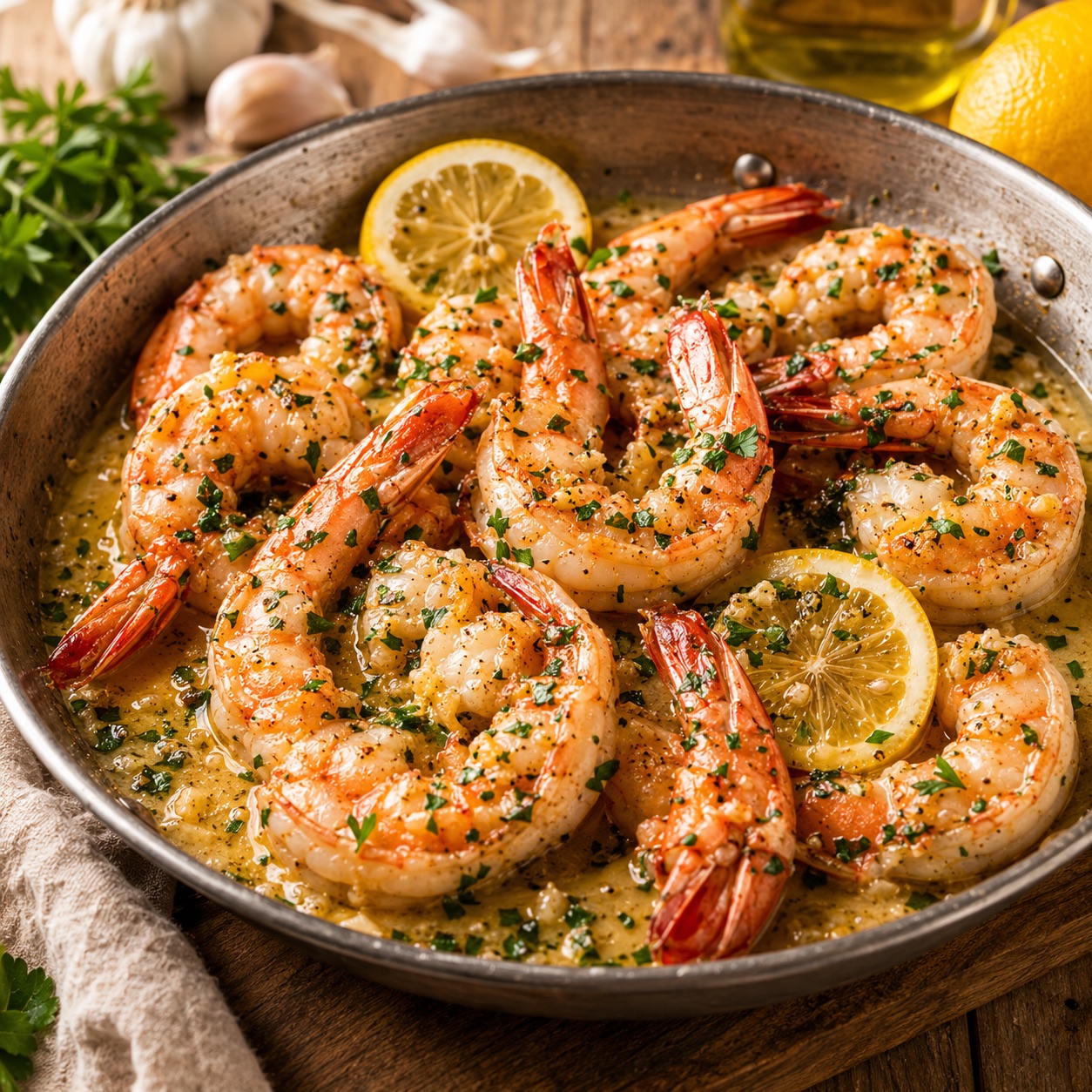
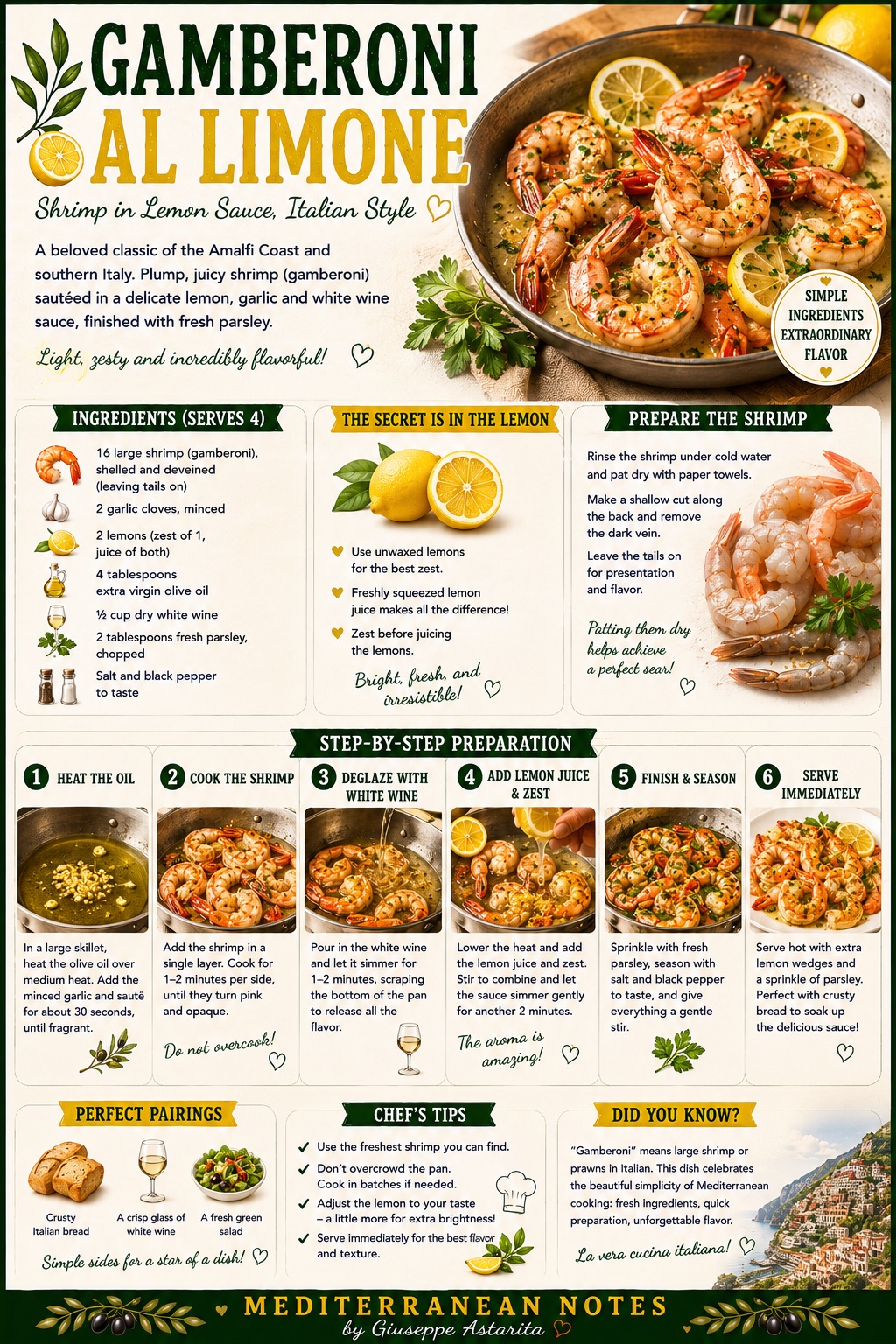
The gamberoni al limone is the preparation that most clearly expresses the Amalfi Coast's relationship with its two most abundant ingredients: large shrimp from the Tyrrhenian Sea and the sfusato amalfitano lemon, the elongated, thick-rinded, intensely aromatic variety that grows on the terraced hillsides above Positano and Ravello and that produces a zest and a juice of exceptional quality. The dish is prepared quickly -- large shrimp seared in olive oil with garlic, deglazed with white wine, finished with lemon juice and zest -- and the speed is not a shortcut but a requirement. Large shrimp deteriorate in quality with every minute of excess cooking, and the lemon's volatile aromatic compounds begin to lose their freshness the moment heat is applied to them. The best version of this dish is made fast and eaten immediately.
The shrimp should be genuinely large -- what the Italian market calls gamberoni, as opposed to the smaller gamberi used for pasta. They are cooked shell-on or shell-off depending on preference; shell-on produces more flavor in the pan juices as the shells contribute their own aromatics to the sauce during searing, but shell-off is easier to eat. In either case, the key step is patting them completely dry before they go into the pan: wet shrimp steam rather than sear, and the seared surface is what produces the flavor compounds that make the sauce worth having. One to two minutes per side at medium-high heat, the moment they turn pink throughout -- no more.
Lemon zest contains the essential oil of the lemon -- primarily limonene and linalool -- concentrated in the oil glands of the yellow outer peel. These compounds are highly volatile (they evaporate readily at cooking temperatures) and lipophilic (they dissolve into fat rather than water). Adding zest to a hot pan causes rapid evaporation of the aromatic compounds into the air rather than into the dish. This is why zest is added off the heat or at the very last moment -- to preserve its aroma in the food rather than losing it to the kitchen. Lemon juice, by contrast, contains primarily citric acid and water-soluble compounds that are not volatile at cooking temperatures; adding it to the pan while still on low heat allows it to reduce slightly and combine with the pan juices without losing its contribution. The combination of cooked juice (acid, body) and raw zest (aromatic freshness) produces a more complex lemon flavor than either alone.
The recipe
Serves 4 as a second course or starter. The entire preparation takes 15 minutes once the shrimp are prepared. Have everything ready before you start cooking -- this dish does not wait.
Buon appetito.