Campanian kitchen · Fish · Salt cod · Naples · Lent · Street food · Three preparations
Il Baccalà
Lesso, alla Napoletana, and Fritto — my mother's fish, made for us
On fish nights at home, my father ate something else — usually puttanesca, which he tolerated because it had no fish in it. My mother made the baccalà for the rest of us, and she made it in several ways depending on what the occasion called for. Three of them are here.
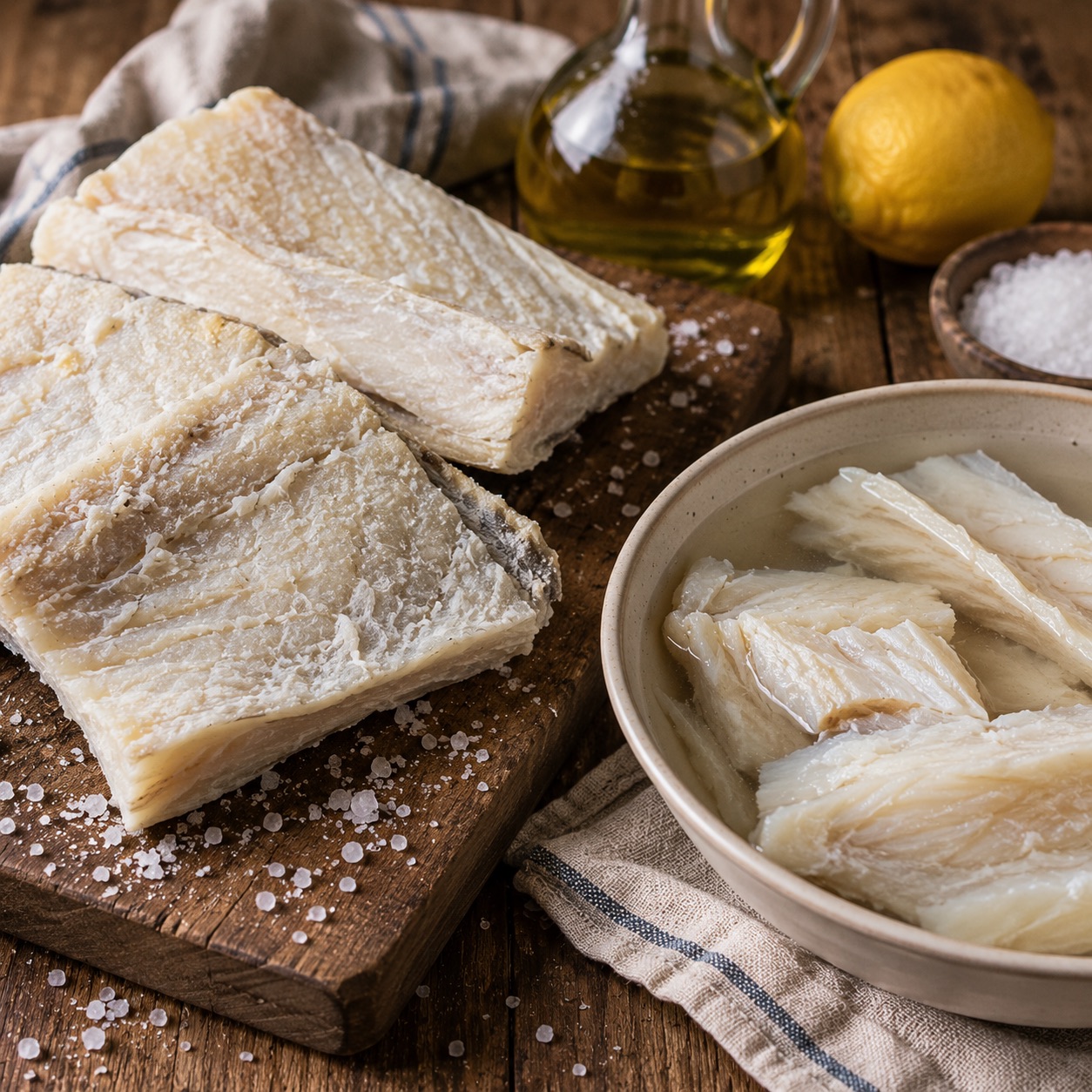
Baccalà is salt cod — Atlantic cod caught, heavily salted, and dried until it is stiff and white and almost unrecognizable as something that was once a fish. It keeps for months, which was the point. For centuries before refrigeration, salt cod was one of the main ways that people far from the sea, or far from reliable fresh catch, could eat fish at all. In Naples and across Campania, it became something more than a preservation strategy. It became a tradition with its own recipes, its own logic, its own occasions. Lent, Christmas Eve, Fridays — baccalà was the fish of specific times, of specific tables.
The paradox of baccalà is that it starts as something almost inedible and becomes, after two to three days of soaking in cold water changed regularly, a fish with a texture and flavor that fresh cod does not quite have. The salting and drying process changes the protein structure in ways that produce a firmer, more layered flesh that holds together through cooking rather than breaking apart. This is why it fries beautifully, why it survives long simmering in tomato sauce without disintegrating, and why the lesso version — simply poached — can be dressed and eaten at room temperature the next day with no loss of quality. Fresh cod cannot do all of these things with the same results.
My mother made it often, starting the soaking two days before she planned to cook it. The fish came out of the salt package stiff as a board. By the time she was done with it, it had softened into something entirely different. The water changed at least twice a day. She did not rush this part. I do not think it is possible to rush it.
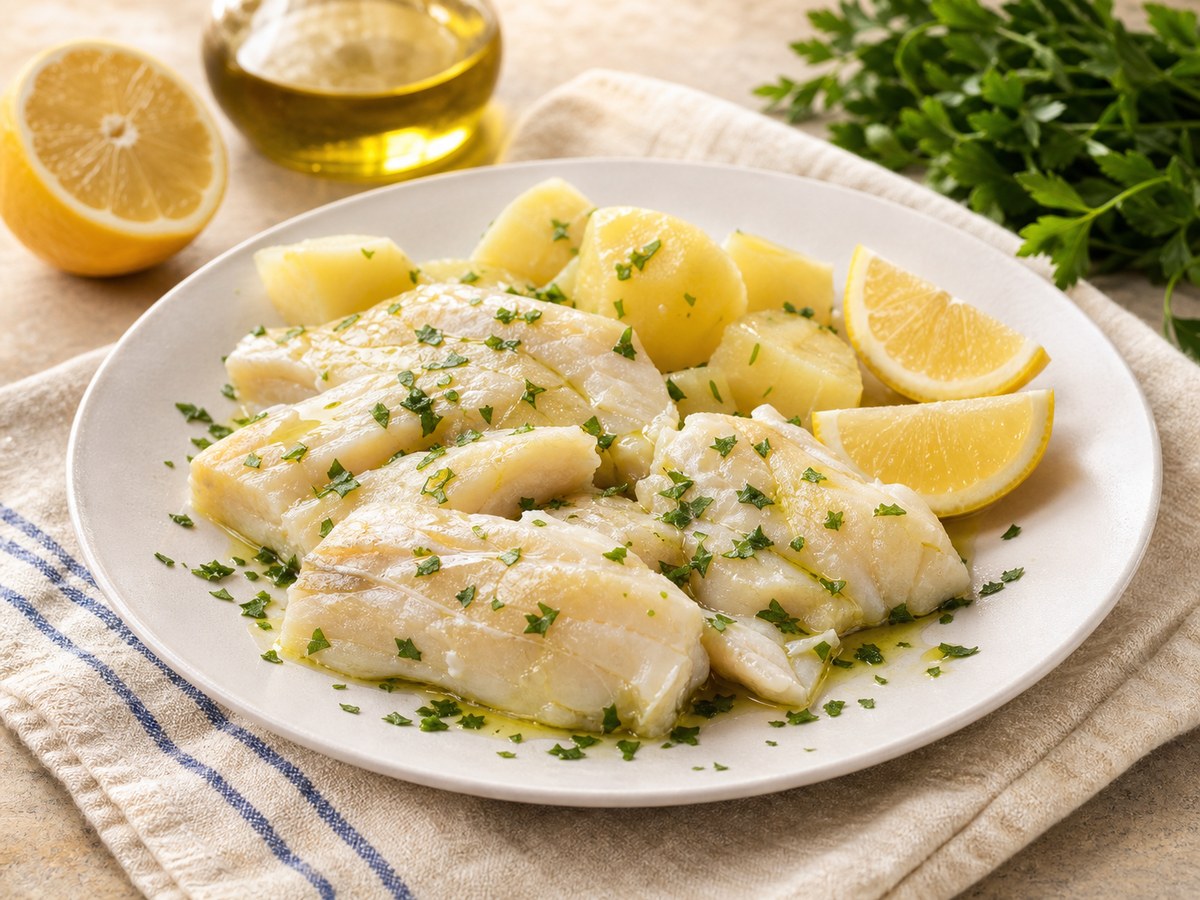
Of the preparations she made, the lesso was the one I preferred. It is the simplest — the fish poached briefly in unsalted water, cleaned of skin and bones, then dressed generously with extra virgin olive oil and lemon. That is essentially the whole dish. Its quality depends almost entirely on the quality of the soaking and the quality of the oil. With a good Campanian olive oil and a proper lemon — not the pale things from the supermarket but something that actually smells like a lemon tree — the dressed baccalà becomes one of those dishes where you keep going back because you cannot quite explain why something so plain is so satisfying. I can explain part of it now, with what I know about the science, but not all of it. Some of it is the olive oil. Some of it is the lemon. Some of it is something harder to locate.
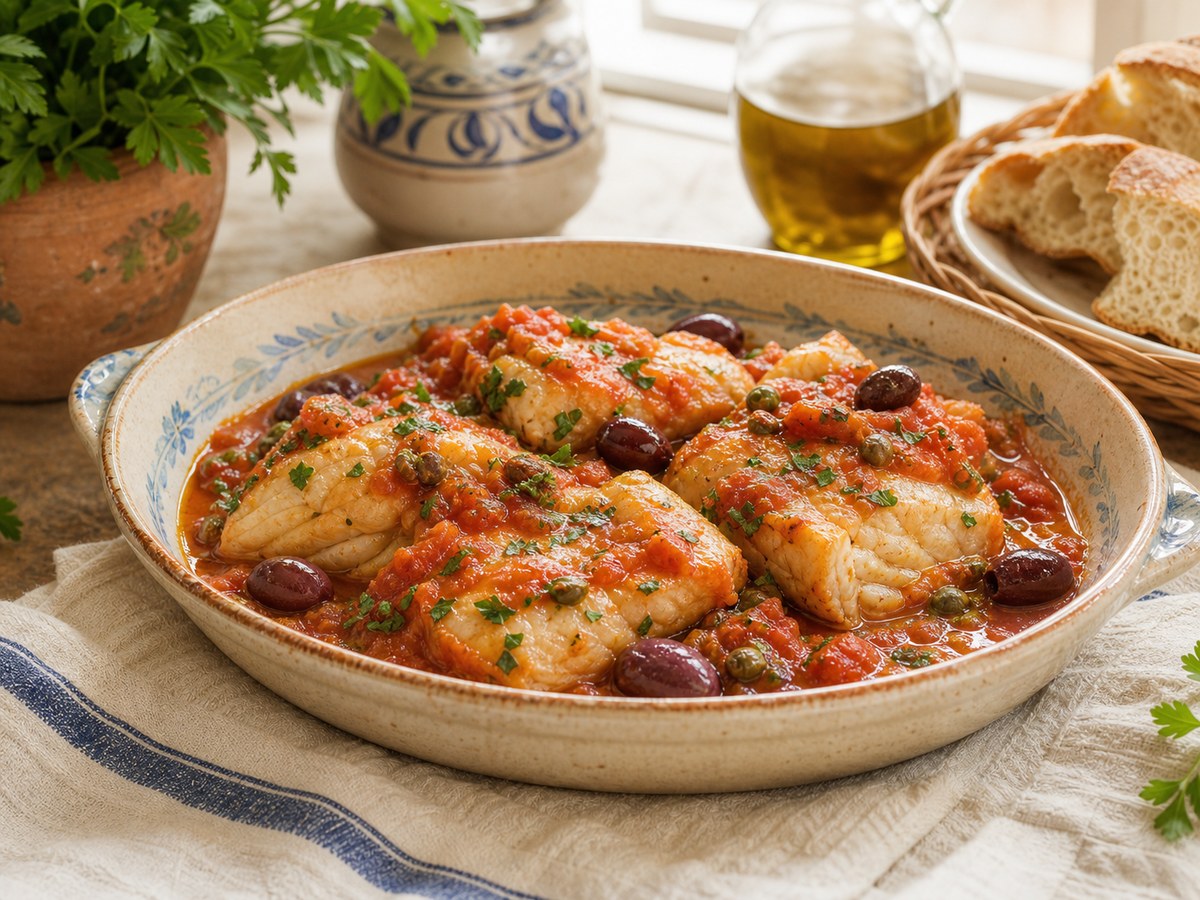
The alla napoletana version is the more elaborate preparation — the fish floured and fried until golden and crisp, then set to simmer briefly in a tomato sauce built with Gaeta olives, capers, and a little chili. The frying step matters. It creates a crust that the sauce cannot penetrate fully, so you get two textures in every bite: the soft, saline interior of the fish and the slightly firm exterior that has absorbed the tomato without surrendering to it. The sauce itself — concentrated, briny from the olives and capers, bright from the tomatoes — is one of the great pasta sauces of the Neapolitan repertoire in its own right. Eaten the next day, when the fish has had time to sit in it overnight, it is better than on the day it was made.
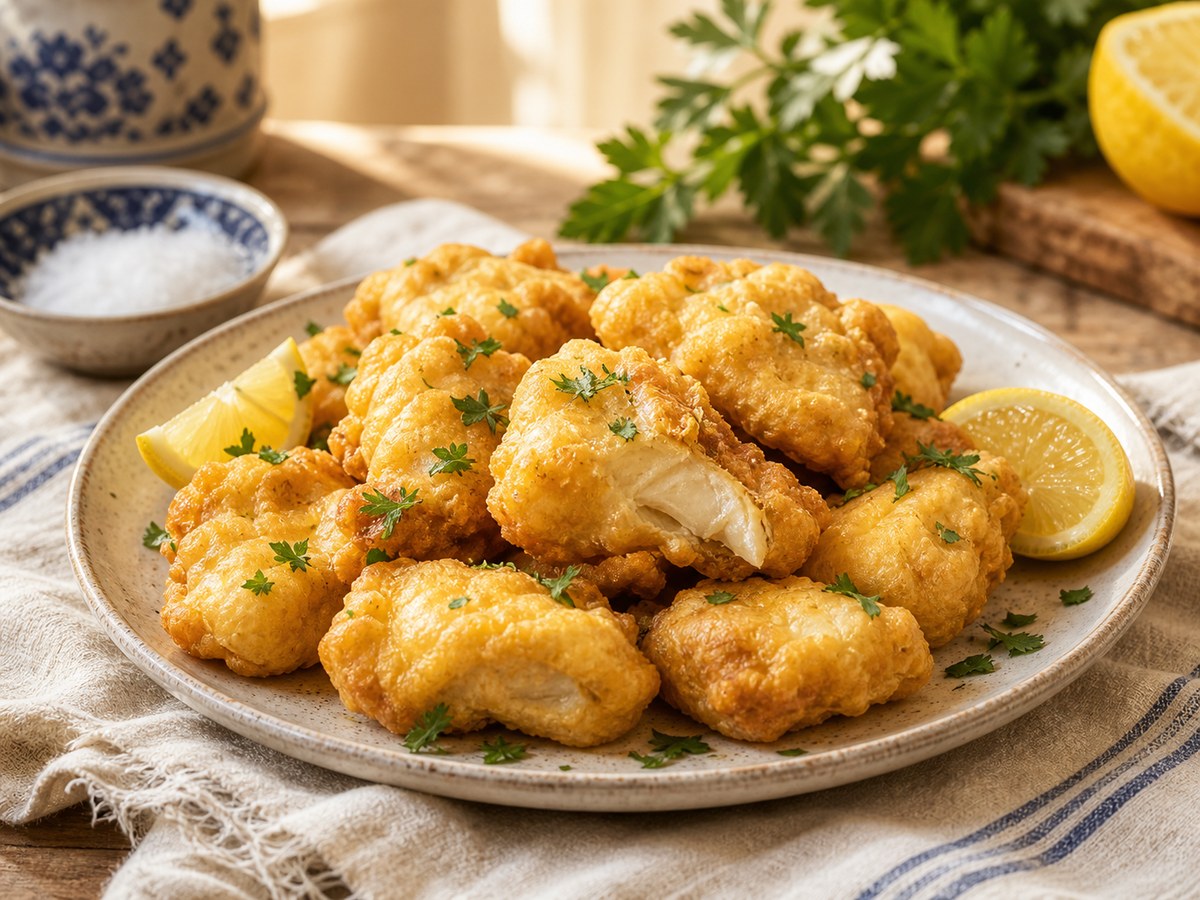
The third preparation is the purest version of frying: baccalà fritto, bite-sized pieces dusted in flour or dipped in a light batter and dropped into very hot oil. No sauce, no accompaniment — just the fish and the crust. In Naples this is also street food. During the Christmas season especially, you find it sold in paper cones at the friggitorie, the small fry shops that exist in every neighborhood, and eaten standing up. The version my mother made at home was simpler than the battered street version — flour only, no egg, no water — but the effect was the same: the outside crisped instantly, the inside stayed moist, and the whole thing was gone before it had time to cool.
The transformation of fresh cod into baccalà is a matter of protein chemistry. When fish is heavily salted and dried, osmosis draws most of the water out of the muscle tissue, and the proteins — primarily myosin and actin — partially denature and cross-link, forming a denser, more stable structure than fresh fish has. This is not simply dehydration: the changed protein matrix means that when baccalà is rehydrated through soaking, it does not return to exactly what it was. The flesh becomes firmer and more cohesive, with a slightly different texture and a more concentrated flavor even after desalting.
The Maillard reaction during frying — the browning of the flour coating and the outer layer of fish — creates a crust of new flavor compounds, including hundreds of aromatic molecules that are not present in plain poached fish. This is why the alla napoletana preparation has a depth that the lesso does not: the frying step adds a layer of flavor before the tomato sauce ever enters. In the lesso version, the science works differently — the brief poaching preserves the delicate saline character of the fish, and the olive oil and lemon dress it without masking it. The citric acid in the lemon modulates the perception of saltiness, making the fish taste balanced rather than aggressively saline even after thorough soaking.
Cod is also one of the leanest white fish, which is part of why it responds so well to generous dressing with olive oil. The fat in the oil fills the role that the fish's own fat would play in a fattier species — it coats and carries the other flavors, and provides the mouthfeel that makes the dish feel complete rather than austere.
The soaking — the part you cannot skip
All three preparations start from the same place, and that place is patience. My mother began the soaking two days before she planned to cook. She did not negotiate on this. The fish comes out of the package stiff and white and aggressively salty — closer to a board than a fish. You need time and cold water to bring it back.
Three preparations
Buon baccalà — e che il remojo sia lungo abbastanza.