Baccalà lesso
Poached briefly in unsalted water, cleaned of skin and bones, dressed with a generous pour of extra-virgin olive oil and lemon. Three ingredients after the fish. The preparation that shows the baccalà most honestly.
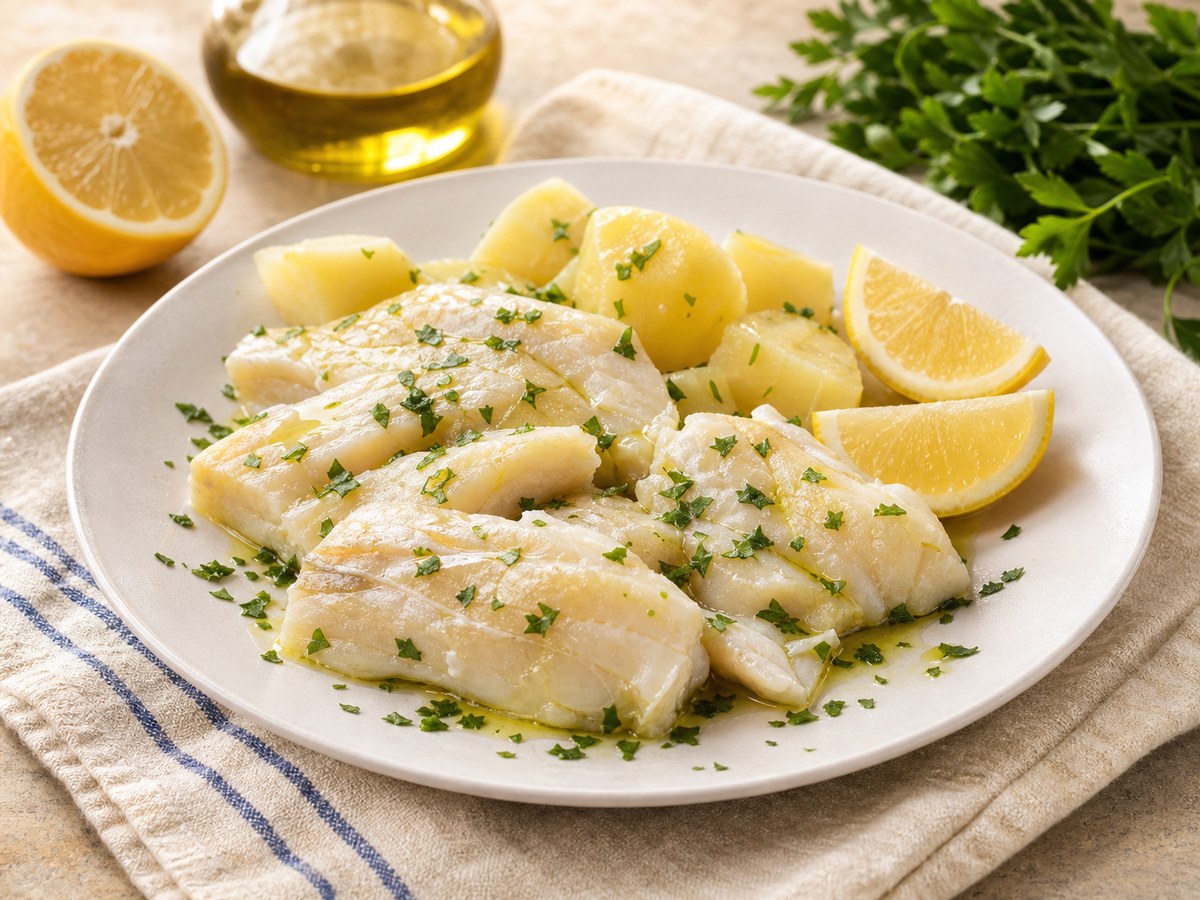
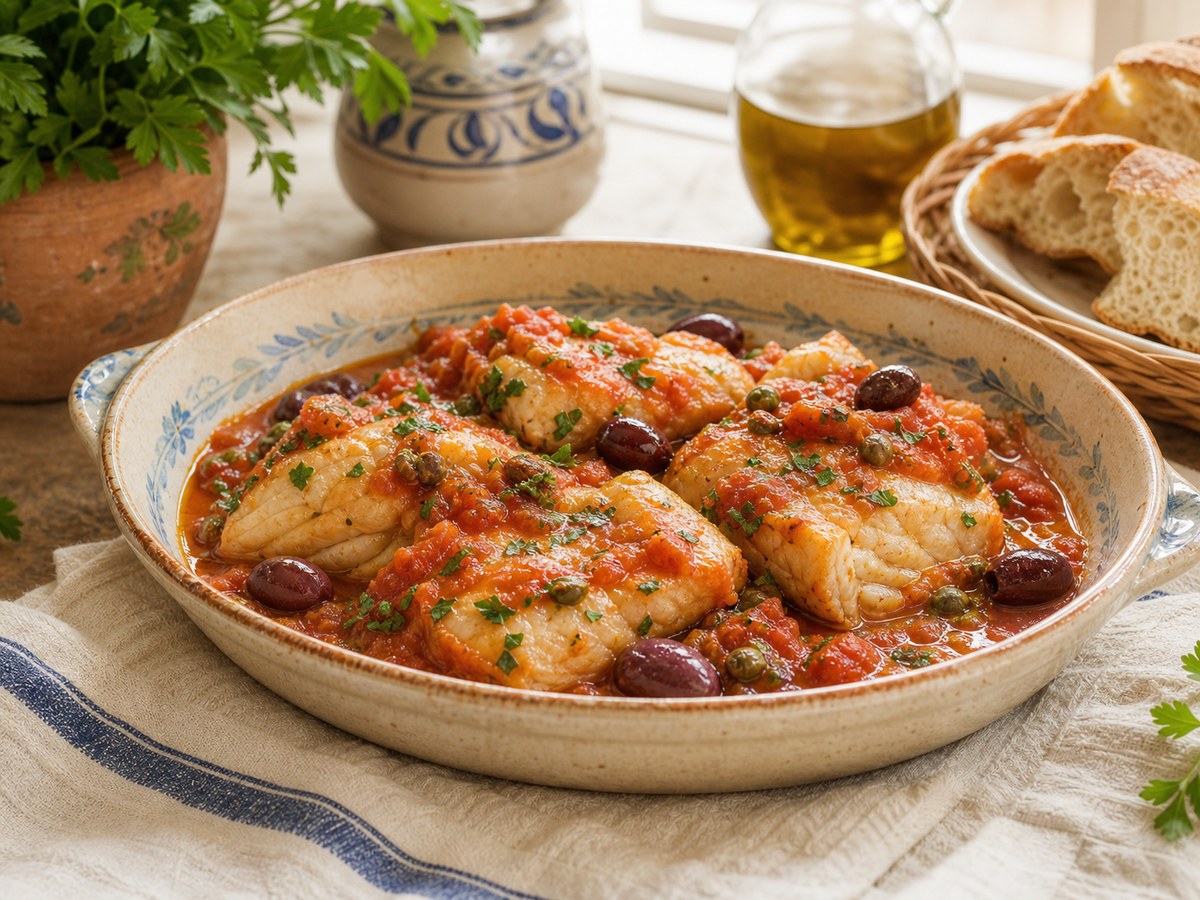
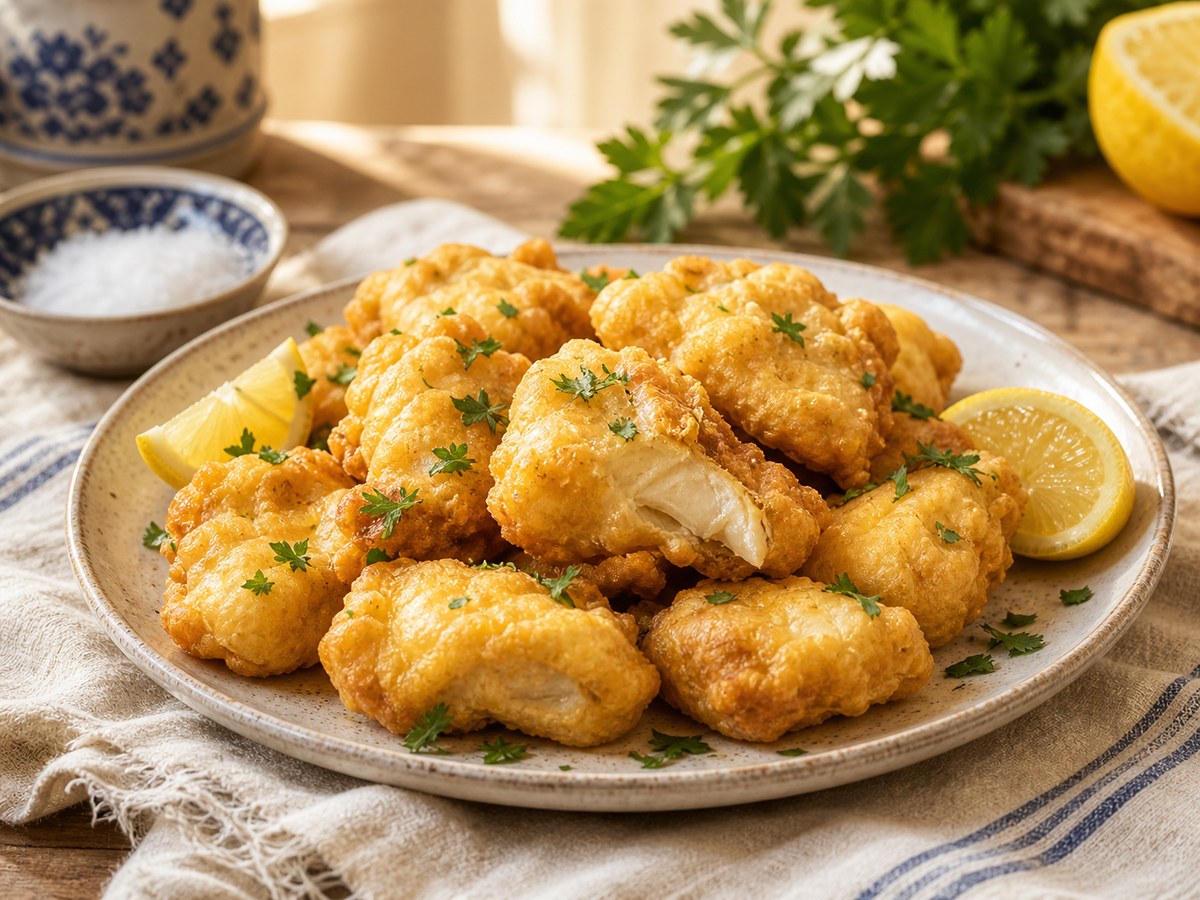
On fish nights at home, my father ate puttanesca. This was his position, stated once and never revisited. My mother made the baccalà for the rest of us, and she made it in three ways: lesso, alla napoletana, and fritto. Of the three, the lesso was the one I preferred — and this surprised people when I said it, because it is the plainest of the three, the most austere, the one with the fewest components. But this is why it works. The salted, dried, and reconstituted cod has a flavor and texture that fresh cod does not have — something more layered, more mineral, with a distinctive saline sweetness after the long soaking. Covering that with a complex sauce means losing the point. The olive oil and lemon don't add to the fish; they reveal it.
The soaking takes two days. Change the water at least twice a day. My mother did not rush this step and neither should you. By the end of two days, the fish should taste pleasantly saline — not aggressive, not flat. If it still tastes very salty, soak for another half day. The cooking after this is ten minutes and straightforward: cold water, bring to just below a simmer, the fish in, ten minutes, out. No salt in the water. The fish carries enough.
The quality of the olive oil matters more here than in almost any other recipe I know. There is nothing else to hide behind. A good Campanian oil — fruity, slightly peppery, with some bitterness — and a lemon that actually smells like a lemon tree: these are the dish. The fish is the vehicle for them. I do not think this can be made well with mediocre oil.
What salting does to cod — and why the lesso preparation preserves the result
The curing process — heavy salting followed by drying — fundamentally changes the structure of cod muscle. Salt draws water out through osmosis, concentrating the proteins. As the fish dries, some proteins denature and reform in a restructured matrix that is denser and more cohesive than fresh cod. When the fish is rehydrated through soaking, water re-enters this restructured tissue but cannot fully restore the original arrangement — the result is a flesh with a distinct layered texture and a flavor that is more concentrated than fresh fish. During brief poaching, the proteins denature gently without forcing moisture out rapidly, which is what keeps the lesso moist rather than dry. The citric acid in lemon juice modulates the perception of residual saltiness through pH effects on taste receptor sensitivity, making the fish taste balanced rather than aggressively saline. The olive oil provides fat-soluble carriers for the aromatic compounds in the lemon zest and the fish's own volatile esters, distributing them evenly across the palate. This is why the combination works: each element is doing specific work that the others cannot do.
Recipe — serves 4
Start the soaking 48 hours before you plan to cook. The recipe below assumes the baccalà is already fully desalted and ready to cook. All three baccalà preparations share the same soaking — if you are making baccalà, soak enough for two or three preparations at once.
Ingredients
Method
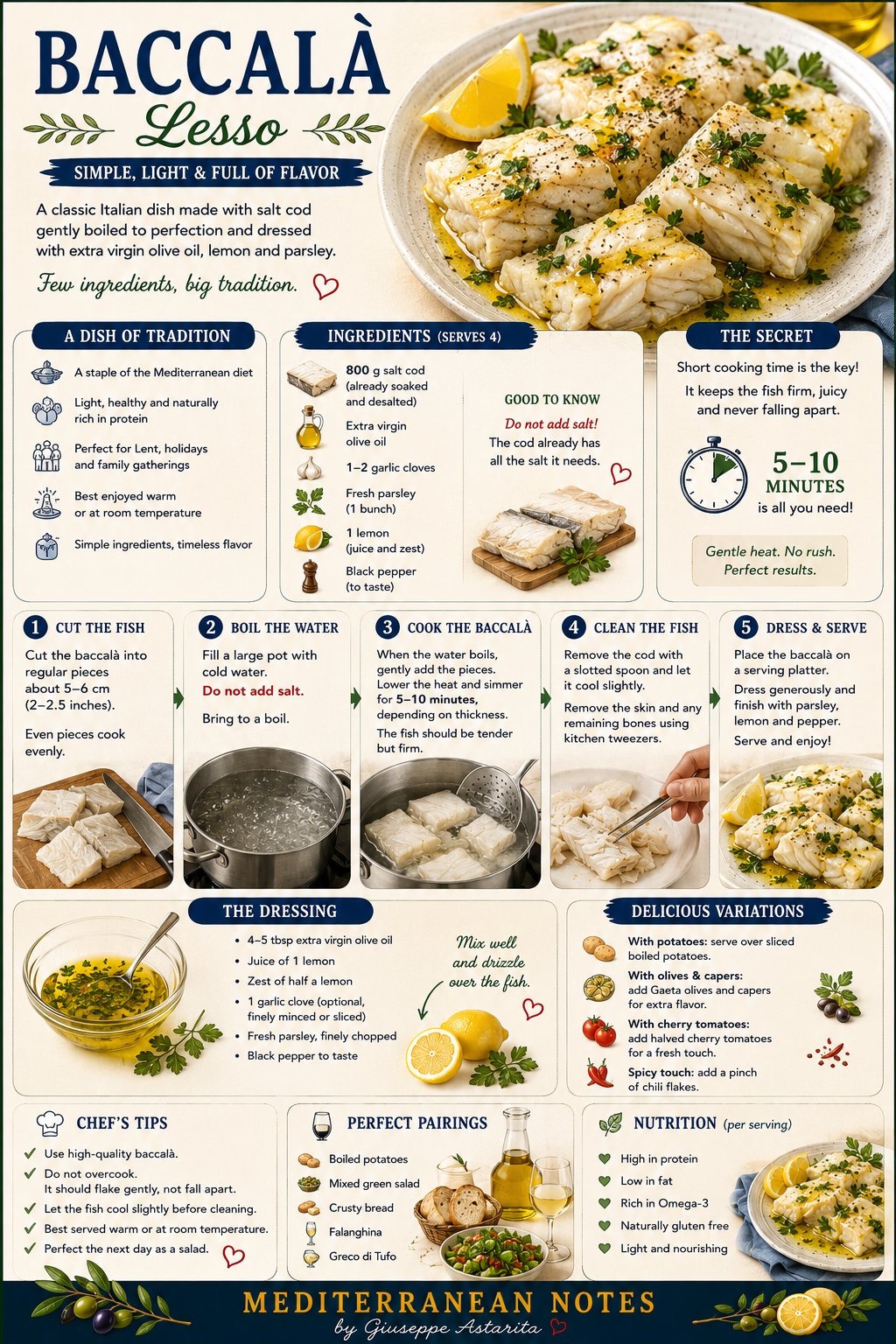
Test the desalting. Before cooking, taste a small piece of the soaked fish raw. It should taste pleasantly saline — like well-seasoned food, not like the sea. If it is still too salty, soak for another 6–12 hours with a final water change.
Poach the fish. Place the baccalà pieces in a wide pan. Cover with cold water. Bring slowly to just below a simmer — the water should tremble but not boil. Poach gently for 10 minutes. Do not boil: aggressive boiling makes the fish tough and breaks it apart.
No salt in the water. The fish still carries salt from the cure even after soaking.
Remove and clean. Lift the fish from the water with a slotted spoon. Let it rest 2 minutes — just cool enough to handle. Remove and discard the skin and any pin bones. Separate the fish into large flakes or leave in pieces depending on preference.
Dress and serve. Arrange the fish on a platter or in bowls. Pour the olive oil generously over it while still warm — the fish absorbs it better warm than cold. Squeeze the lemon over the top. Scatter the chopped parsley and grind black pepper over all. Serve immediately, or let it cool to room temperature and serve as a salad. It is also good cold the next day.
Warm fish absorbs the olive oil into its texture. Cold fish only has oil on its surface. Dress while warm even if you plan to serve it later.
The other preparations
Semplice come dev'essere — e l'olio deve essere buono.