Quaresimali
Lenten almond biscotti — crunchy, aromatic, made to last
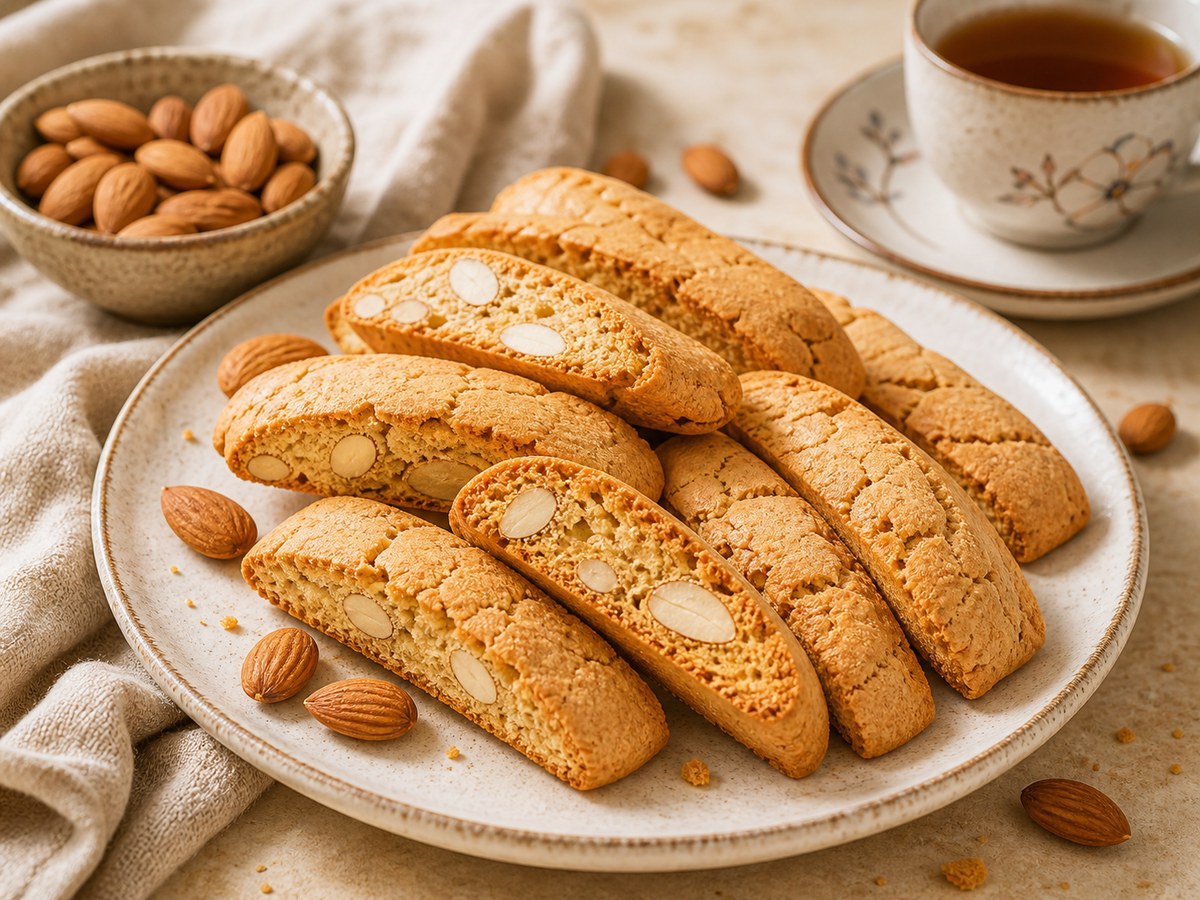
The quaresimali are the biscotti of Lent — the forty days before Easter during which the Italian Catholic tradition called for abstinence from meat and, in the stricter historical interpretation, from dairy and eggs. The quaresimali were developed to satisfy the need for something sweet and substantial that could be made within these constraints: the classic version uses minimal butter or no butter at all, no milk, and just enough egg to bind the dough. What they have in abundance is almonds — whole, toasted, and distributed through a spiced dough that bakes twice in the traditional biscotto method, first as a log and then as slices. The result is very crunchy, very aromatic, and capable of keeping for three weeks in an airtight tin, which is part of the point: Lent lasts forty days and you do not want to bake every week.
The cinnamon is the dominant aromatic and should be present in quantity. This is not a delicate spice cookie — the cinnamon should announce itself in the smell before you taste it, and the flavor should persist through the crunch of the almond and the honey sweetness that binds the dough. The double bake is essential: the first bake sets the structure of the log; the second bake, after slicing, dries the interior fully and produces the characteristic brittleness that makes a biscotto last and that makes it ideal for dipping into coffee or into the Tuscan sweet wine vin santo. A biscotto that has not been fully dried in the second bake will soften within days rather than keeping for weeks.
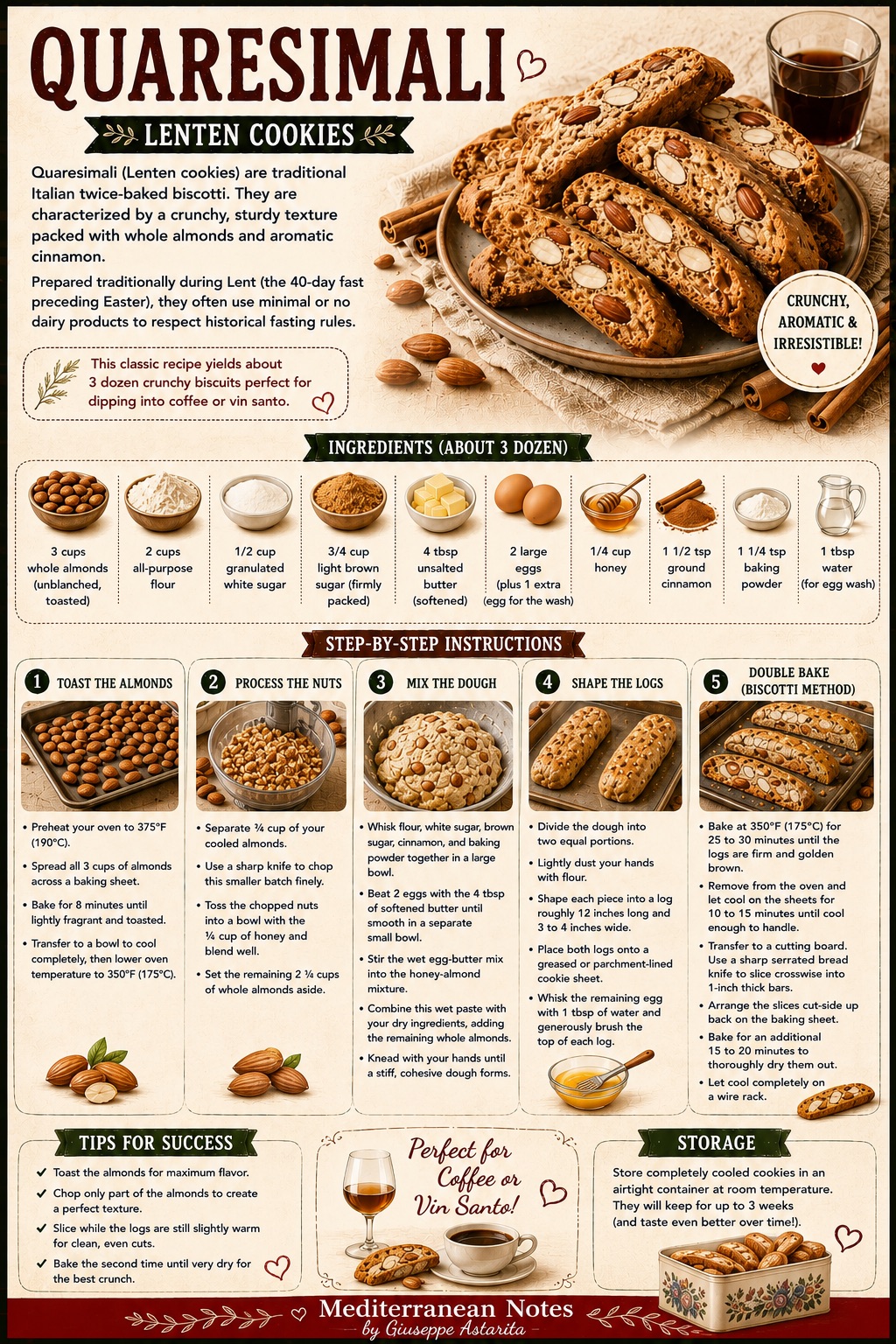
The first bake of the log cooks the dough through and sets the starch and protein structure. The second bake, applied to the sliced surfaces, dehydrates the interior of each slice through evaporation. Stale biscotti soften because residual moisture migrates from the interior to the surface over time; a fully dehydrated biscotto has almost no moisture to migrate and therefore maintains its crunch for weeks at room temperature in an airtight container. This is why the second bake must be thorough — 15 to 20 minutes at 175°C until the slices feel completely dry and light. Under-dried biscotti will soften within days.
Cinnamon contains cinnamaldehyde as its primary aromatic compound, which binds to protein receptors in the mouth and nose to produce its characteristic warm, sweet-spicy sensation. Cinnamaldehyde also has documented antimicrobial properties — it inhibits the growth of certain molds and bacteria in food — which is part of the reason heavily spiced biscotti have always kept well in warm Mediterranean climates. The toasted almonds contribute tocopherols (vitamin E compounds) that act as natural antioxidants, slowing the oxidation of the almond fats and preventing rancidity over the storage period.
The recipe
Makes about 3 dozen. Store completely cooled in an airtight tin at room temperature — they improve over the first week as the flavors settle and deepen.
Buon appetito — e buona Quaresima.