CoursesBasicsFirst CoursesSecond CoursesSides & VegetablesSoupsSaucesEggs & FrittatePizza & BreadBreakfastSnacksStreet FoodDesserts
DietVegetarianVegan
SeasonSpringSummerAutumnWinter
MainSeafoodMeatEggs
MoreCulture & TraditionsGlossaryAbout

Know Your Dough
Guida agli impasti — pasta, pizza, and pastry

Six base doughs cover most of what an Italian kitchen produces: fresh pasta, pizza, brisée, frolla, sfoglia, and choux. Same few ingredients — flour, fat, water, eggs — different ratios, different handling, completely different results.
Know Your Dough — the six base doughs

Almost everything on this blog that starts as a dough starts as one of the six below. Learn what separates them — which ones have yeast, which are built on cold butter, which are cooked twice — and half the recipe pages here become variations on something you already understand.

Three threads run through everything on this page. The flour: semola rimacinata and Tipo 00 are different animals — hard durum semola brings protein, chew, and a golden color, and wants only water; soft 00 wants eggs or fat and gentle handling. The fat: butter builds the northern pastries, but strutto is the southern secret — it laminates the sfogliatella into a hundred crisp layers and turns a plain bread dough into the plush crumb of casatiello. The water: hydration decides destiny, from a pasta cresciuta batter loose enough to drop from a spoon, to a babà dough enriched until its open crumb can drink rum syrup without collapsing.
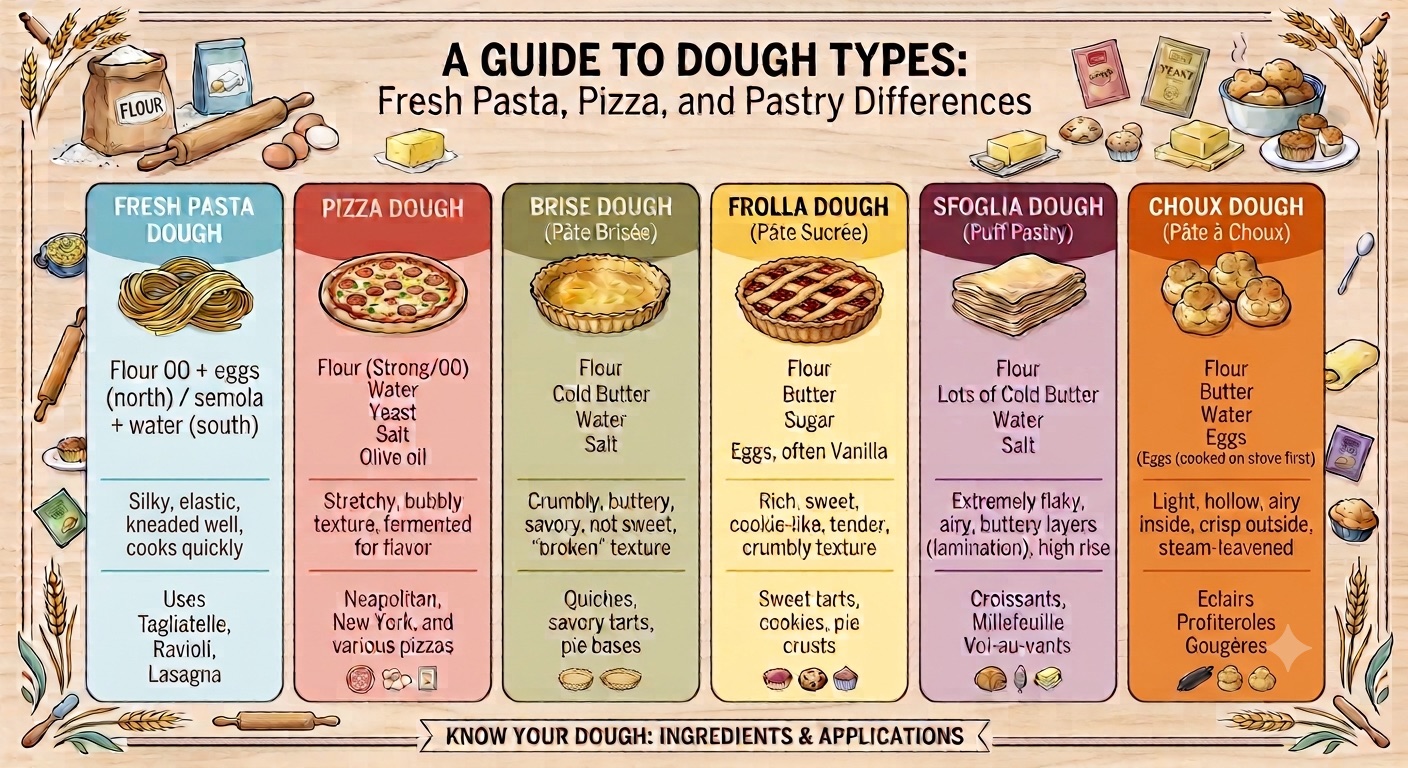
A guide to dough types — fresh pasta, pizza, brisée, frolla, sfoglia, choux
Six doughs, side by side — ingredients, texture, and what each one becomes. Click to enlarge.

The six, and where to find them here

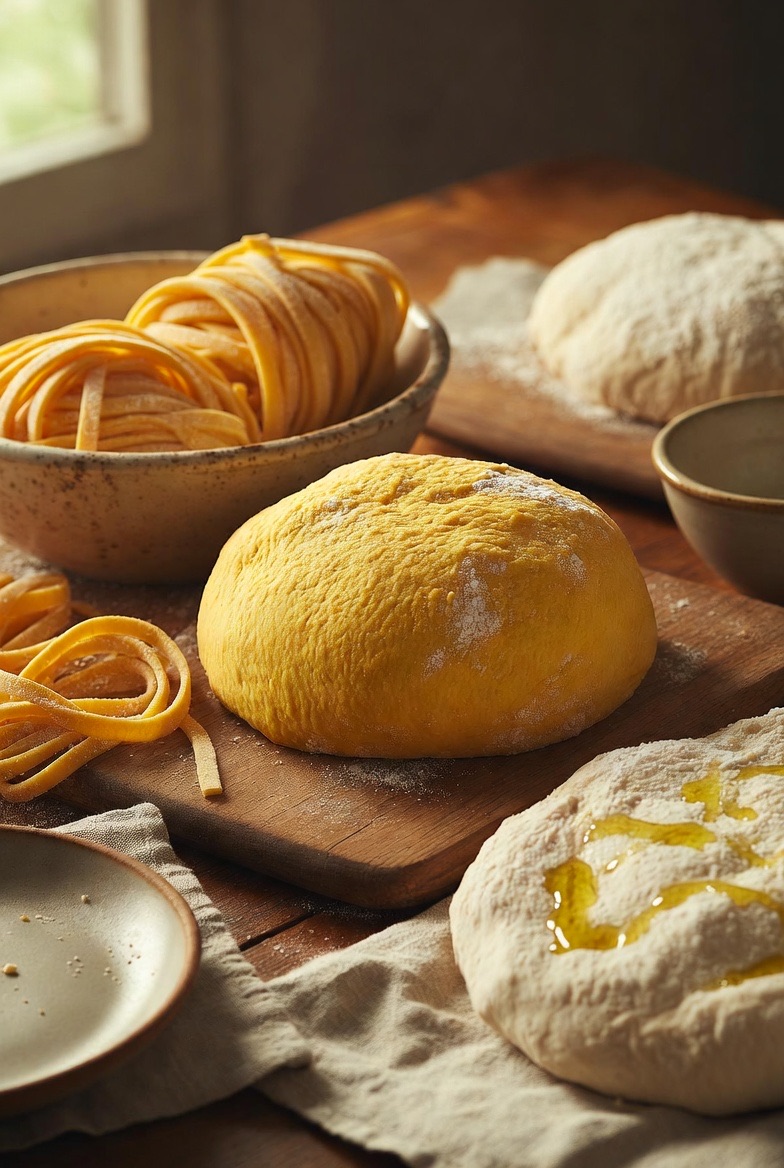
Fresh pasta dough
Flour and eggs, kneaded silky. Tagliatelle, ravioli, lasagna. See how to make fresh pasta.
Pizza dough
Flour, water, yeast, salt, oil — and time. The only leavened dough of the six. See impasto per pizza.
Pasta brisée
Flour, cold butter, water, salt — crumbly and savory, never sweet. The neutral cousin of frolla. See pasta brisée, and its two tarts: zucchine e ricotta and carciofi e ricotta.
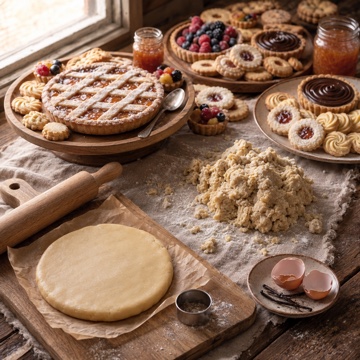
Pasta frolla
Butter, sugar, eggs — rich and cookie-like. Crostata, pizza rustica, pastiera. See pasta frolla.
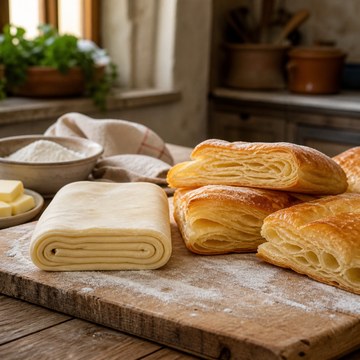
Pasta sfoglia
Flour and a lot of cold butter, laminated into layers. Parigina, rustico, vol-au-vents. See pasta sfoglia.
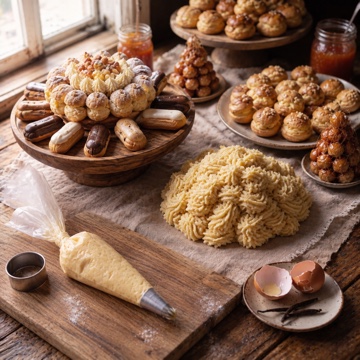
Pasta bignè (choux)
Cooked on the stove before it ever sees the oven — steam does the leavening. Profiteroles, zeppole. See pasta bignè.

Mezza sfoglia — the shortcut worth knowing

Between sfoglia and brisée sits pasta mezza sfoglia — "half puff pastry." Classic sfoglia uses butter and flour in a 1:1 ratio; mezza sfoglia halves the butter (1:2 — say, 200 g butter to 400 g flour). Fewer folds, shorter rests in the fridge, and in the oven it puffs less but keeps an excellent crisp, flaky bite.

It's the ideal base when you want structure without a dramatic rise: torte salate, quiches, tartellette, crostate that need a sturdy flaky shell, and the pâté-style rosticceria pieces of southern street food. Neither sweet nor savory on its own, it takes any filling.


What the chart leaves out — the Neapolitan doughs

The six above are the international canon. A Campanian kitchen adds a few of its own that don't fit neatly in the chart:
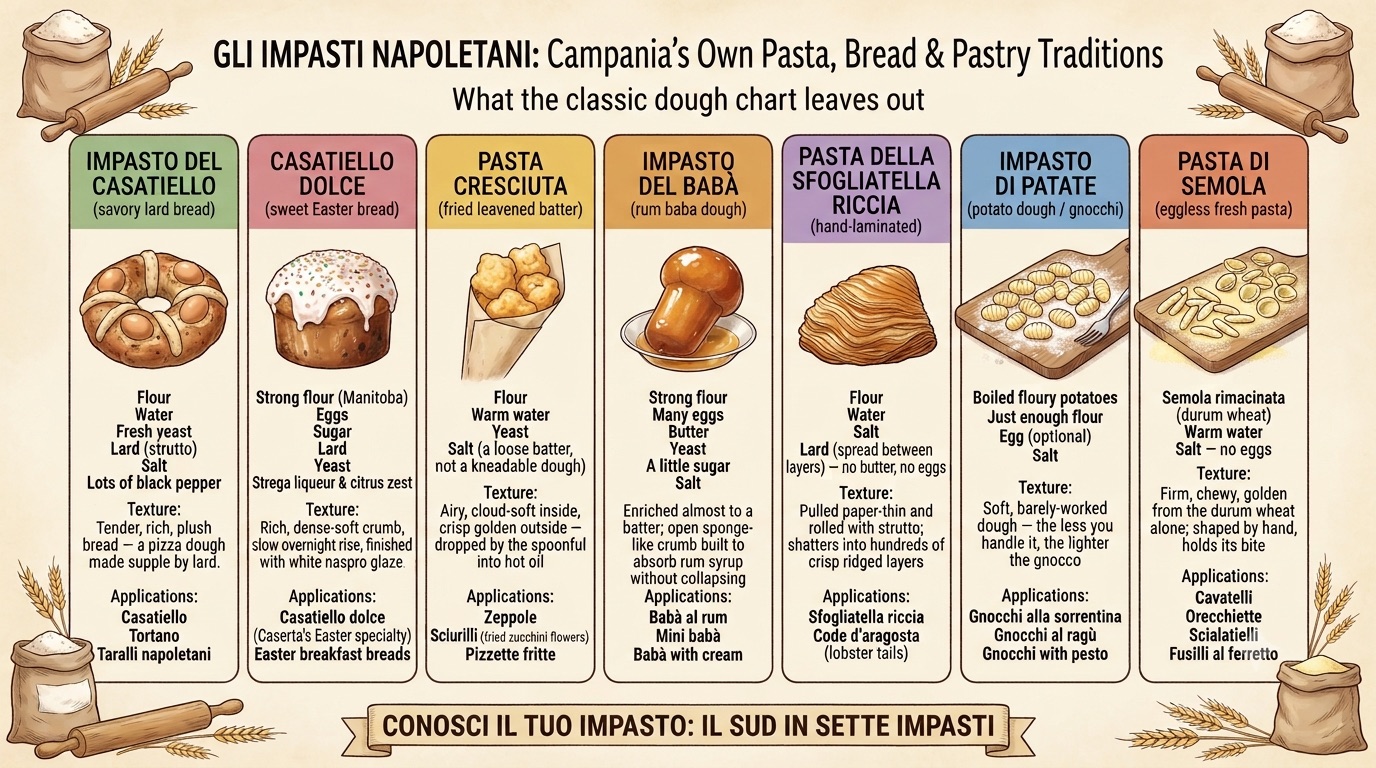
Gli impasti napoletani — casatiello, casatiello dolce, pasta cresciuta, babà, sfogliatella riccia, gnocchi, pasta di semola
Gli impasti napoletani — the south in seven doughs. Click to enlarge.
Pasta cresciuta
A loose, yeasted batter — fried by the spoonful, never baked. Zeppole, sciurilli. See pasta cresciuta.
Casatiello salato & tortano dough
Pizza dough plus strutto and black pepper — richer, tender, unmistakably Neapolitan. Tortano, casatiello, taralli. See tortano e casatiello.
Casatiello dolce dough
The sweet Easter twin, and a Caserta specialty — a strong-flour dough enriched with eggs, sugar, lard, Strega, and citrus, then glazed with naspro. Between bread and babà. See casatiello dolce.
Potato dough
Boiled potatoes and just enough flour — the gnocchi principle: handle less, get lighter. See how to make gnocchi.
Leavened potato dough
The eighth family the chart misses: potato dough given yeast and fried — half gnocco, half zeppola. See zeppoline di patate.
Eggless semolina pasta
The southern tradition the chart forgets: semolina and water, no eggs — cavatelli, orecchiette, scialatielli territory. See orecchiette con cime di rapa and scialatielli ai frutti di mare.
Babà dough
A yeasted dough enriched with eggs and butter until it's nearly a batter — built to drink rum syrup without collapsing. See babà napoletano.
Sfogliatella riccia dough
Flour and water pulled paper-thin and rolled with strutto — lamination by hand, older and leaner than French sfoglia. See sfogliatella riccia o frolla.

Know the dough, and the recipe is half done.
The dough pages
Impasto per pizza
Impasto per Pizza
The plain yeasted dough, start to finish.
Pasta sfoglia
Pasta Sfoglia
Laminated layers — the most demanding of the six.
Pasta frolla
Pasta Frolla
The sweet shortcrust behind crostata and pastiera.
Pasta bignè
Pasta Bignè
Choux — cooked twice, leavened by steam.