Pasta Cresciuta
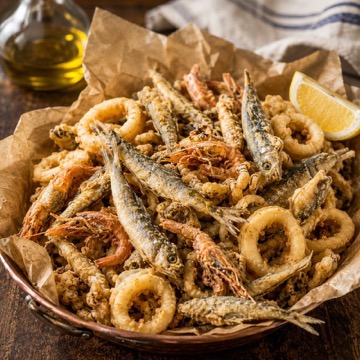
Leavened batter fried by the spoonful. Plain with salt, filled with anchovies, rolled into pizzette. My mother announced it the same way every time she made it, and the announcement was its own event.
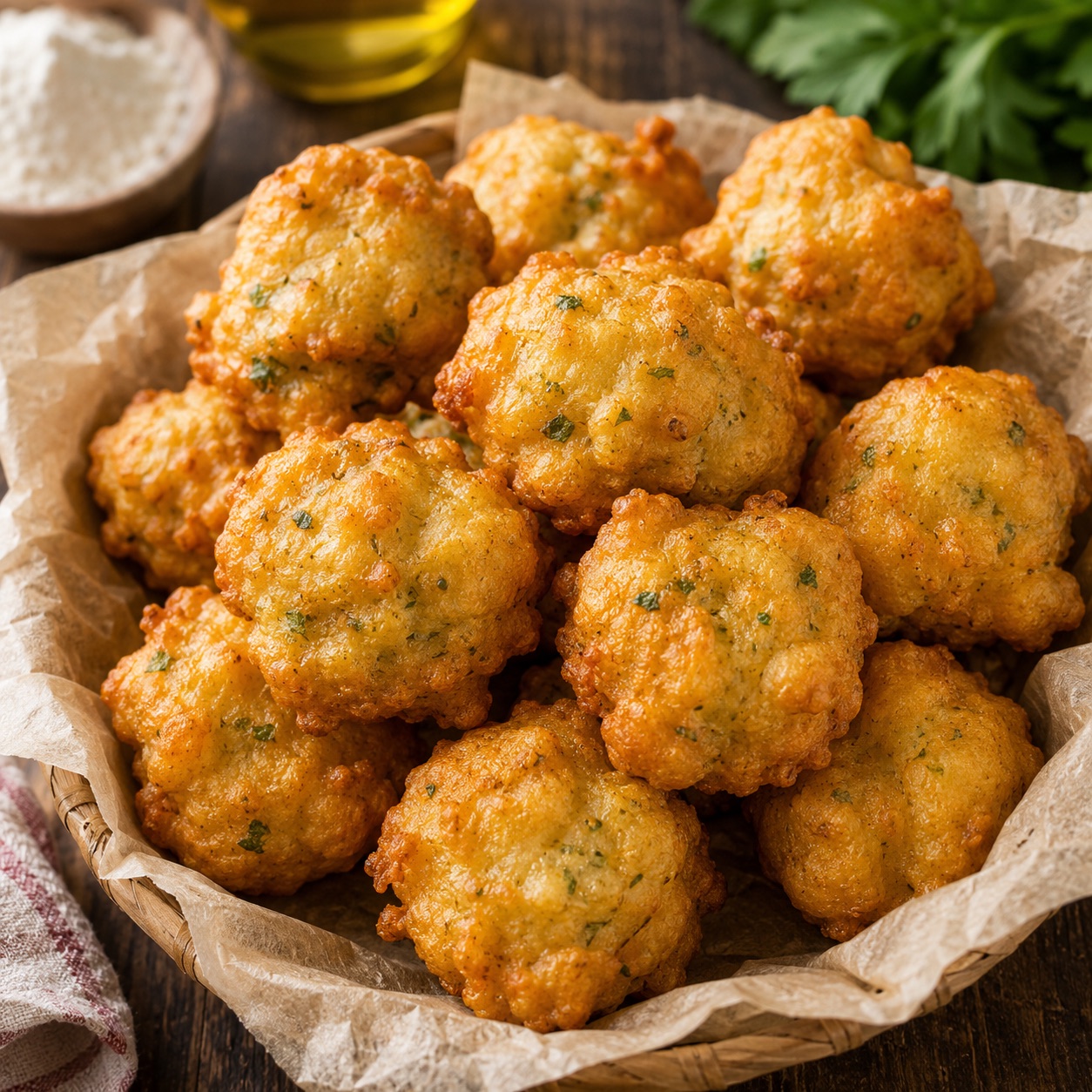
"Ho fatto la pasta cresciuta." She said it from the kitchen, always with a particular tone — not quite announcing dinner, not quite issuing a warning, something in between. The words meant: come now, they are hot, there will not be more once these are gone. Pasta cresciuta does not wait and does not reheat. Its moment is when it comes out of the oil, and if you miss that moment, you have missed the dish.
The batter is the simplest thing in the Neapolitan kitchen: flour, water, yeast, salt. Mixed until smooth, left to rise until it doubles and becomes airy and slightly bubbling. Then dropped by spoonfuls into hot oil, where it puffs and expands and turns gold in a few minutes. The name says exactly what it is — pasta cresciuta means grown dough, risen dough, dough that has become more than it was. It is one of the oldest preparations in Neapolitan street food and home cooking, and it survives unchanged because there is nothing to improve.
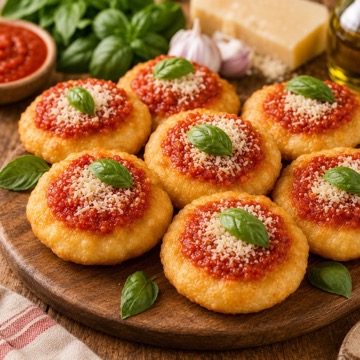
At our house in Caserta, pasta cresciuta appeared in two modes. The plain version — just the batter, dropped in and fried, salted immediately after — was the antipasto before a fish dinner, or the thing that appeared on the table while other things were being prepared. The filled version came out at parties and sometimes on weekday evenings when she wanted to make something more complete without much additional effort: a piece of anchovy in oil pressed into the center of the raw batter before it was dropped into the oil, or a cube of provola that melted inside the crust. She also made pizzette fritte from the same dough — slightly flattened discs fried first, then topped with tomato, provola, and a leaf of basil. Same batter, different occasion.
She preferred the oven for almost everything — more practical, she said, less watching required, same result. Pasta cresciuta was one of the dishes where this was not possible. It requires oil and it requires attention: you drop the batter in spoonfuls, you watch it puff, you turn it once, you drain it on paper and salt it and serve it immediately. There is no oven version. My mother accepted this without complaint and simply watched the oil more carefully than she watched anything else she cooked.
The same batter, stretched slightly thinner and rolled into small discs, becomes the base for pizzette fritte. Filled with ripieno — ricotta, salame, cured meats, smoked provola — and sealed and fried, it becomes the calzone fritto of Neapolitan street food. The batter is genuinely a foundation, not just a recipe: it is the logic beneath half the Neapolitan fried food tradition.
Why the rise matters — and why the batter is different from bread dough
Pasta cresciuta batter has a hydration of roughly 90–100% (water to flour by weight), far higher than a bread dough, which typically runs 60–70%. At this hydration level, the gluten network that forms during mixing is loose and extensible rather than tight and elastic. This is intentional: you want a structure that can expand rapidly with steam and CO₂ during frying, creating large internal air pockets — the hollow, airy interior that distinguishes a well-made fritter from a dense one.
The yeast produces CO₂ during the rise, which is trapped in the batter as small bubbles. When the cold batter hits hot oil, two things happen simultaneously: the surface sets quickly from the heat (creating the crust), and the interior expands from the steam released by the water in the batter plus the CO₂ already present. The result is a crust that seals around an expanded, light interior — the characteristic pasta cresciuta texture.
The high hydration also means the gluten develops passively during the rise, without kneading — which is why the batter can be made with minimal mixing. This is the key technical distinction between pasta cresciuta batter and bread dough: the latter requires active kneading to build a tight gluten network, while the former relies on time and water to develop enough structure to hold the rise without collapsing in the oil.
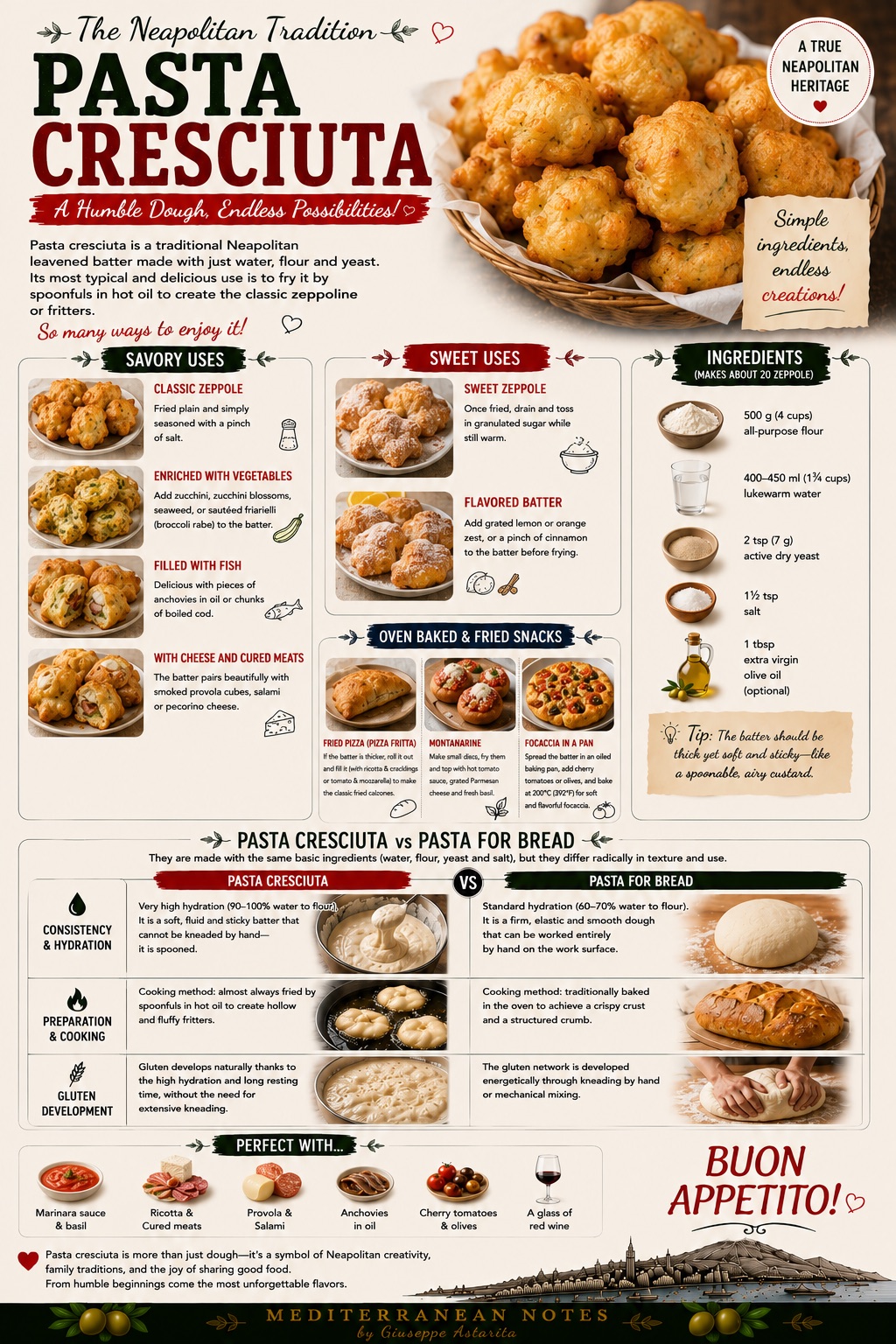
Tap to enlarge — Pasta cresciuta: batter, variations, and the full range of uses
What you can make from one batch
Dropped by spoonful into hot oil, fried until golden, drained and salted immediately. Nothing added. Eaten standing in the kitchen.
Press an anchovy fillet or a cube of provola into the raw batter just before dropping it in the oil. The filling is enclosed by the puff of the crust.
Fold thin-sliced zucchini, zucchini blossoms, or briefly sautéed friarielli directly into the batter before frying. The vegetable softens inside the crust.
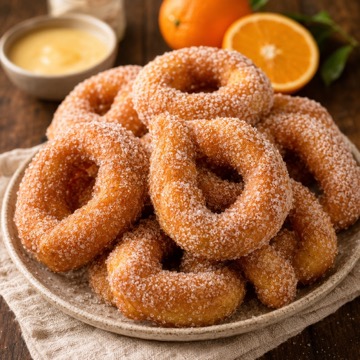
Toss the fried fritters in granulated sugar while still hot. Add grated lemon or orange zest to the batter — the same principle as the zeppoline di patate, without the potato.
Flatten small portions of the risen batter into discs, fry, then top with tomato passata, provola, and basil. The Neapolitan fried pizza in miniature.
Roll out into a larger disc, fill with ricotta, salame, and smoked provola, seal the edges, and fry. Same dough logic, entirely different occasion.
Recipe — Pasta Cresciuta (Base Batter)
Makes about 20 fritters · Active time 15 min + 1–2 hr rise
- 500 g all-purpose flour
- 400–450 ml lukewarm water the batter should be thick but pourable
- 7 g active dry yeast dissolved in a little of the warm water
- 1½ tsp salt
- 1 tbsp extra virgin olive oil optional — adds flavor, not structure
- Neutral oil for frying sunflower oil, 1 liter minimum
- Coarse salt for finishing immediately after frying
I have been making pasta cresciuta for Anna and Carolina since they were old enough for fried things, which in this house is early. They do not call it by name yet — it is just "the fried ones" — but they know the sound of the oil and they appear in the kitchen on their own when they hear it. The announcement has passed from my mother to the oil itself. That seems right.