Pizza Fritta e Montanara
Two fried institutions of Naples — the stuffed pizza fritta and the little montanara. Never my personal favourites, and that changes nothing about their greatness.
Honesty first: I was never a big fan of the fried pizzas — if fried dough was happening, I wanted my mother's pizzette fritte at home, small and plain or with a spoonful of sauce. But a blog about Naples that skipped the pizza fritta would be lying about the city. These are two of its most beloved institutions, the perfume of half the vicoli, and the dish that fed Naples through its hardest years — when ovens were scarce after the war, oil was cheaper than wood, and the friggitorie kept the city in pizza.
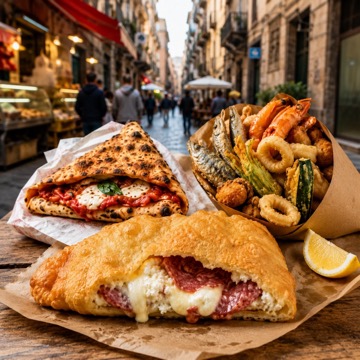
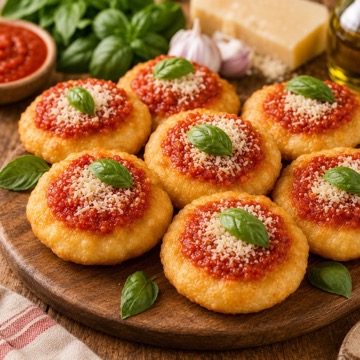
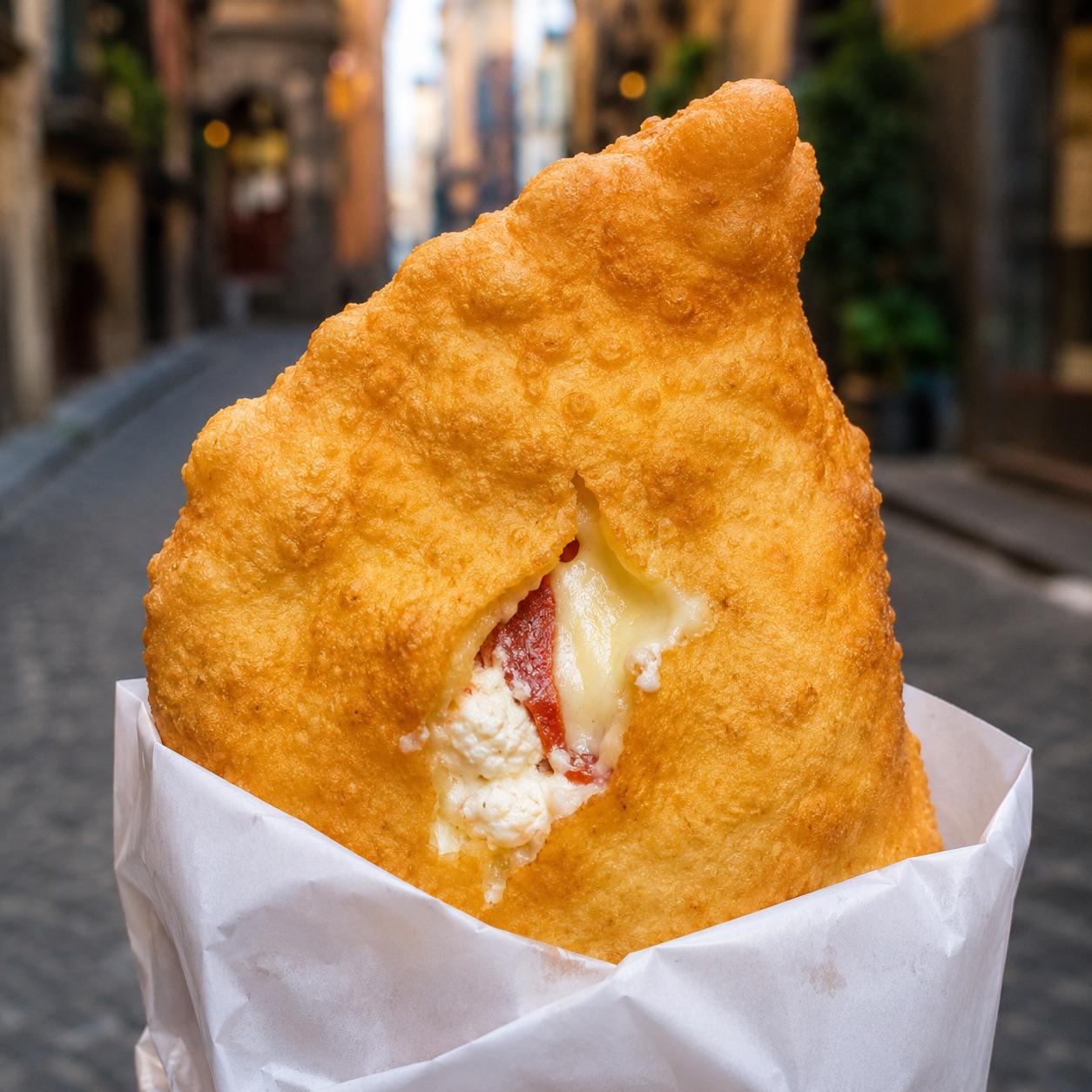
There are two of them, and they are different animals. The pizza fritta ripiena is a meal: a large disc of dough folded over a filling and deep-fried until golden and blistered — crisp outside, soft within, the inside creamy and molten. The classic filling is ricotta with cicoli — ciccioli, the pressed pork cracklings — often with provola and salami. That pairing of fresh, creamy ricotta against the savory, rich crunch of the cicoli is one of the oldest marriages of the Neapolitan kitchen: the mild and the intense, the dairy and the pig, each making the other make sense. The montanara is the small one — born in the hills, the monti, around the city: a thick little disc fried until puffed, then topped like a pizza with tomato sauce, grated cheese, and a basil leaf. Fried first, dressed after — a pizza in reverse.
Why frying makes a different pizza
In a 450°C oven, the dough's surface dehydrates into a crisp, charred crust. In 175°C oil, the surface seals instantly while steam inflates the crumb from within — the result is a blistered golden shell over an interior that stays moist and bready, closer to a savory doughnut than to baked pizza. The filling of a pizza fritta is effectively steamed inside its own sealed pocket, which is why the ricotta turns molten and creamy rather than baked and set.
The two methods, from the infographic
Pizza fritta ripiena: stretch the dough into a large disc; spread ricotta, salami or cooked ham, provola, and cicoli over one half; fold and seal the edges well; deep-fry in hot oil until golden and crisp; serve hot, while the filling is still flowing.
Montanara: shape small thick discs with a rim; fry until puffed and golden; top with hot tomato sauce, grated cheese, a basil leaf, and a drizzle of olive oil. Eat standing, in two bites, like the hill people it was named for.
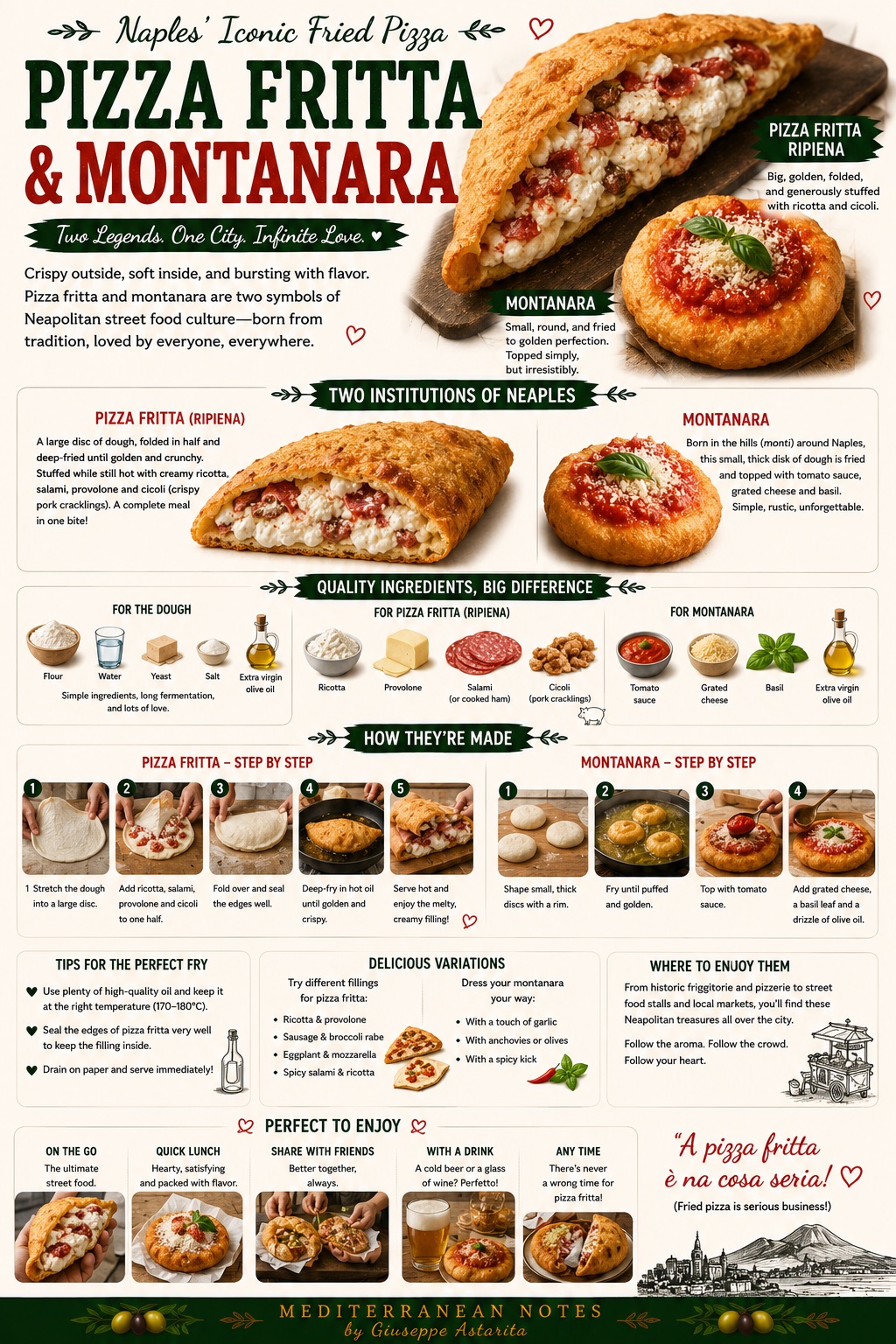
Tap to enlarge — Pizza fritta e montanara: the two institutions, step by step
Variations are part of the institution — sausage and friarielli inside the fritta, eggplant and mozzarella, spicy salami and ricotta; the montanara dressed with anchovies, or garlic, or a spicy kick. Mine, when it happens, is the smallest montanara on the tray, eaten out of respect — and the respect is genuine. The rest of the street canon is here.