Pasta Frolla
Italian Shortcrust Pastry
Flour, cold butter, sugar, an egg, a pinch of salt. It shows up across this blog under different names — the base of a crostata, the shell of a pizza rustica, the crust folded around chestnut flour in a castagnaccio — and it is always, underneath, the same dough made the same way.
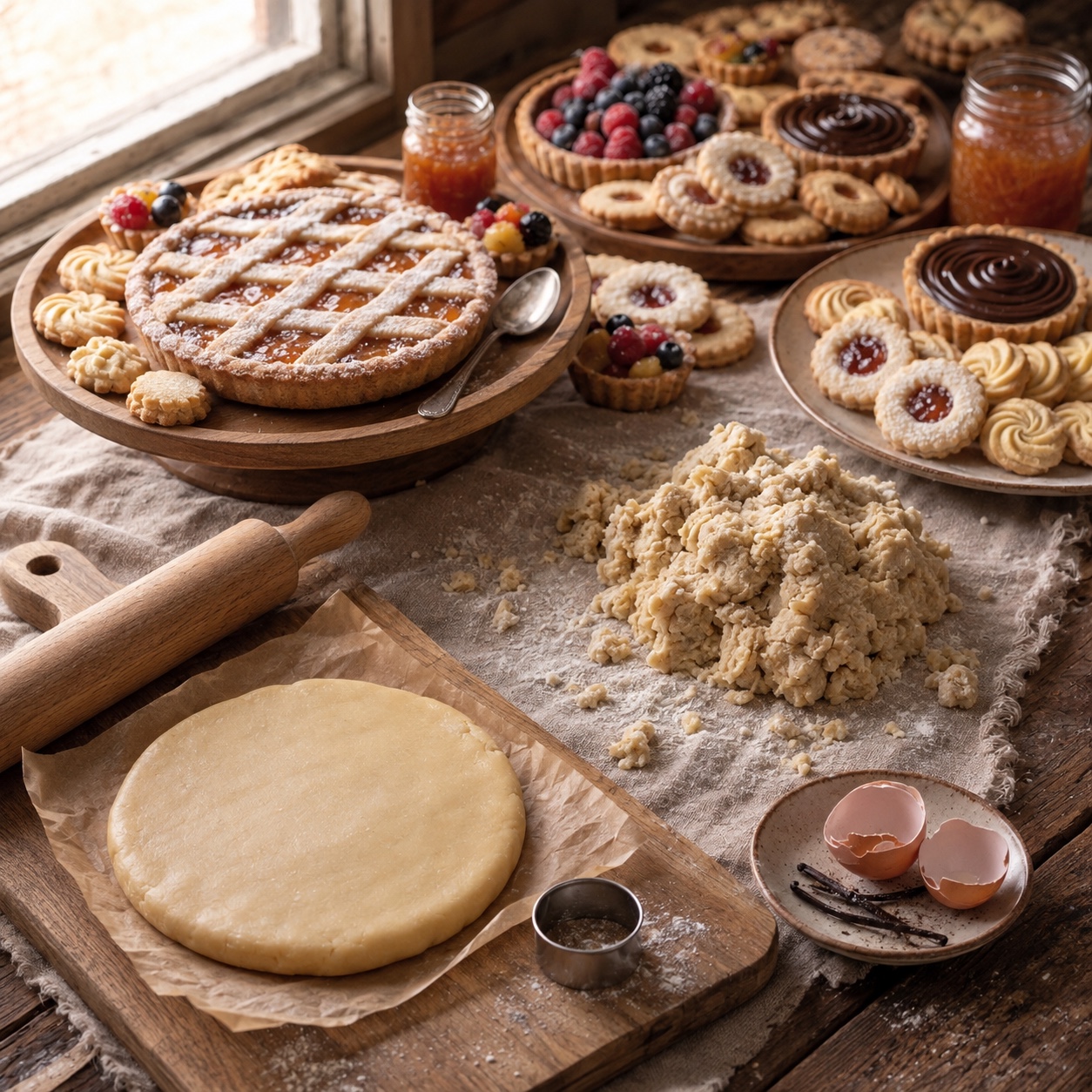
I kept writing this dough out in full on recipe after recipe — a slightly different ratio of butter to flour each time, the same method described in slightly different words — until it became clear it deserved its own page. Pasta frolla is the shortcrust pastry of the Italian kitchen: the base of nearly every crostata, the shell of savory pies like pizza rustica, and a component tucked inside things you would not expect, like the pastry wrapped around the chestnut filling in castagnaccio napoletano. Once you can make it without thinking, a whole category of desserts and savory bakes opens up.
There are two versions, distinguished only by how much sugar goes in. The sweet version — more sugar, sometimes vanilla or citrus zest — is for crostate, tarts, and dessert shells. The semi-dolce version — half the sugar or less — is for savory pies like pizza rustica, where a faint sweetness in the crust is meant to contrast with a salty ricotta-and-salami filling, not compete with it. Everything else about the method is identical.
The dough has one real enemy: heat, and the gluten that forms when heat and handling combine with too much mixing. Cold butter, a light hand, and a short rest in the fridge are what keep a frolla crumbly rather than tough. It is one of the few pastries where doing less is doing it correctly.
Shortcrust pastry gets its characteristic crumbly texture — its "shortness" — from fat coating flour particles and physically interrupting the gluten network before it can form. When cold butter is worked into flour until sandy, each little pocket of fat surrounds a cluster of flour, and later, when the small amount of liquid (the egg) is added, that liquid can only hydrate limited pockets of flour rather than the whole mass — so much less gluten develops than in a bread or pasta dough. This is why the technique insists on cold butter and quick handling: warm butter melts into the flour rather than staying as discrete pieces, and it loses its ability to block gluten formation, leaving you with a tougher, less flaky result.
The rest in the refrigerator serves two purposes: it lets any gluten that did form relax, so the dough does not fight back and shrink when rolled or baked, and it re-solidifies the butter, which is what gives the baked crust its characteristic short, sandy break rather than a dense, biscuity one. Skipping the rest is the most common reason a home-baked frolla comes out tougher than a bakery's.
There are two ways to start a frolla, and the choice is not taste — it is engineering. Sabbiatura (this page's method): cold butter rubbed into the flour first, until sandy, before sugar and egg arrive. The fat waterproofs the flour before any liquid can reach it, so almost no gluten forms — you get the crumbliest, sandiest, most fragile frolla, and the sturdiest against moisture. Choose it whenever the shell must stay crisp under a wet filling: crostata di marmellata, fruit tarts, pastiera, anything blind-baked.
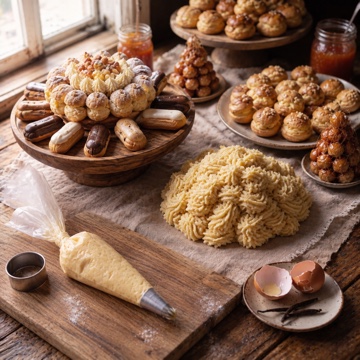
Metodo cremato (the other school): soft butter creamed with the sugar first, then the eggs, with the flour folded in last. The result is a more homogeneous, plastic dough — slightly less sandy, but far more workable. It rolls thin without cracking, bends into lattice strips without snapping, holds cut and stamped shapes, and in its softest version (frolla montata) it can even be piped. Choose it when the dough has to do something: thin-rolled biscotti, decorated tops, intricate lattices.
A caution on the word "creaming": there are two of them. American-style creaming beats butter and sugar until pale and fluffy — deliberately whipping in air that expands in the oven, which is what gives American cookies their lift and spread. The Italian metodo cremato works butter and sugar only until amalgamated, smooth but not aerated, because a tart shell should not puff. The bridge between the two is frolla montata — properly whipped until soft enough to pipe, the canestrelli and Viennese-swirl family. Beat time is the dial: no air for a shell, full air for a cookie.
One line to remember: sabbiatura for structure under a moist filling, creaming for workability and shaping. When in doubt for a classic crostata, sabbiatura.
The recipe
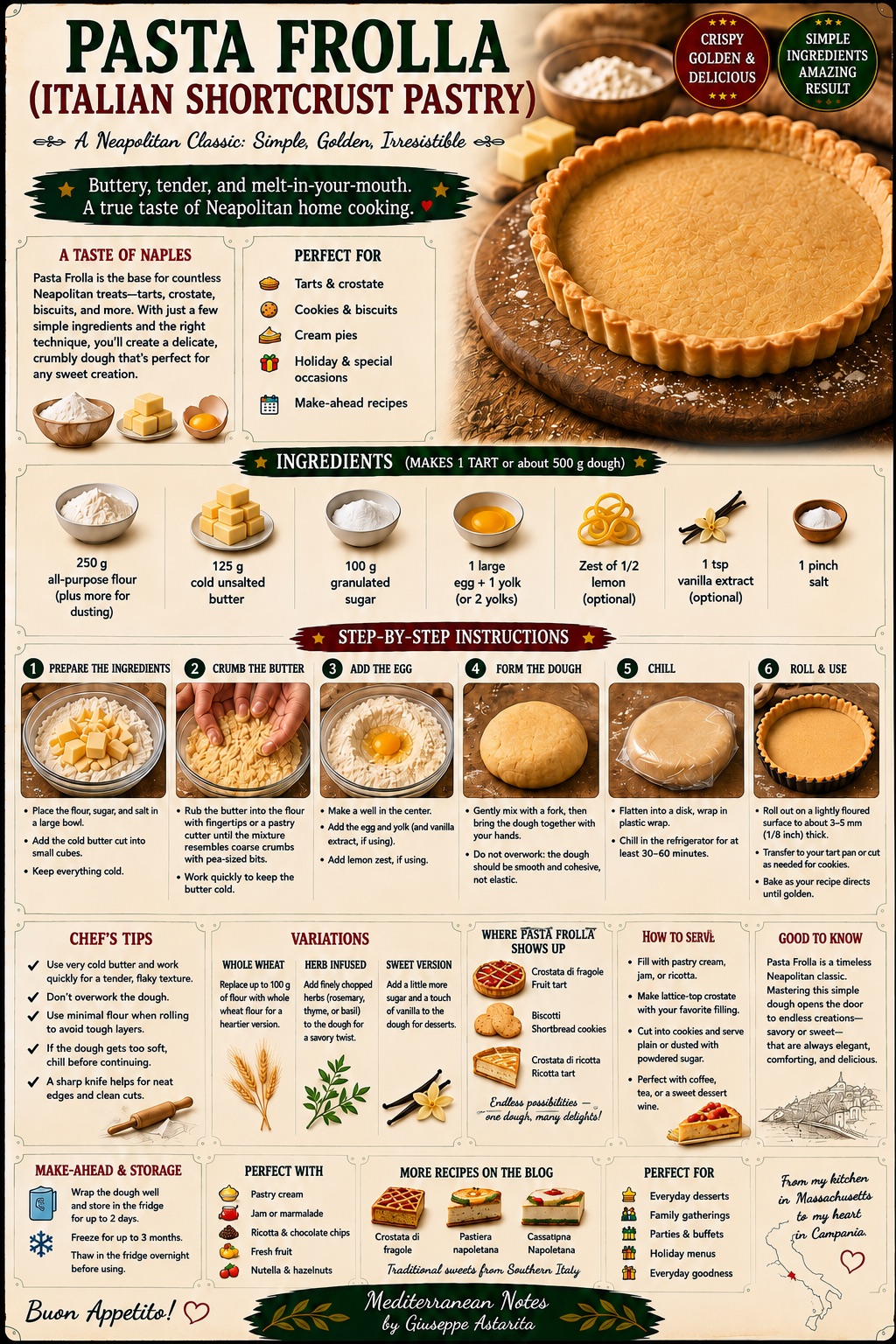
Makes enough for one 24–26 cm tart shell, or a pizza rustica. For the savory/semi-dolce version, cut the sugar to 60 g or less.
Where it shows up on this blog
Una pasta, mille dolci.