Pasta Bignè
Italian Choux Pastry
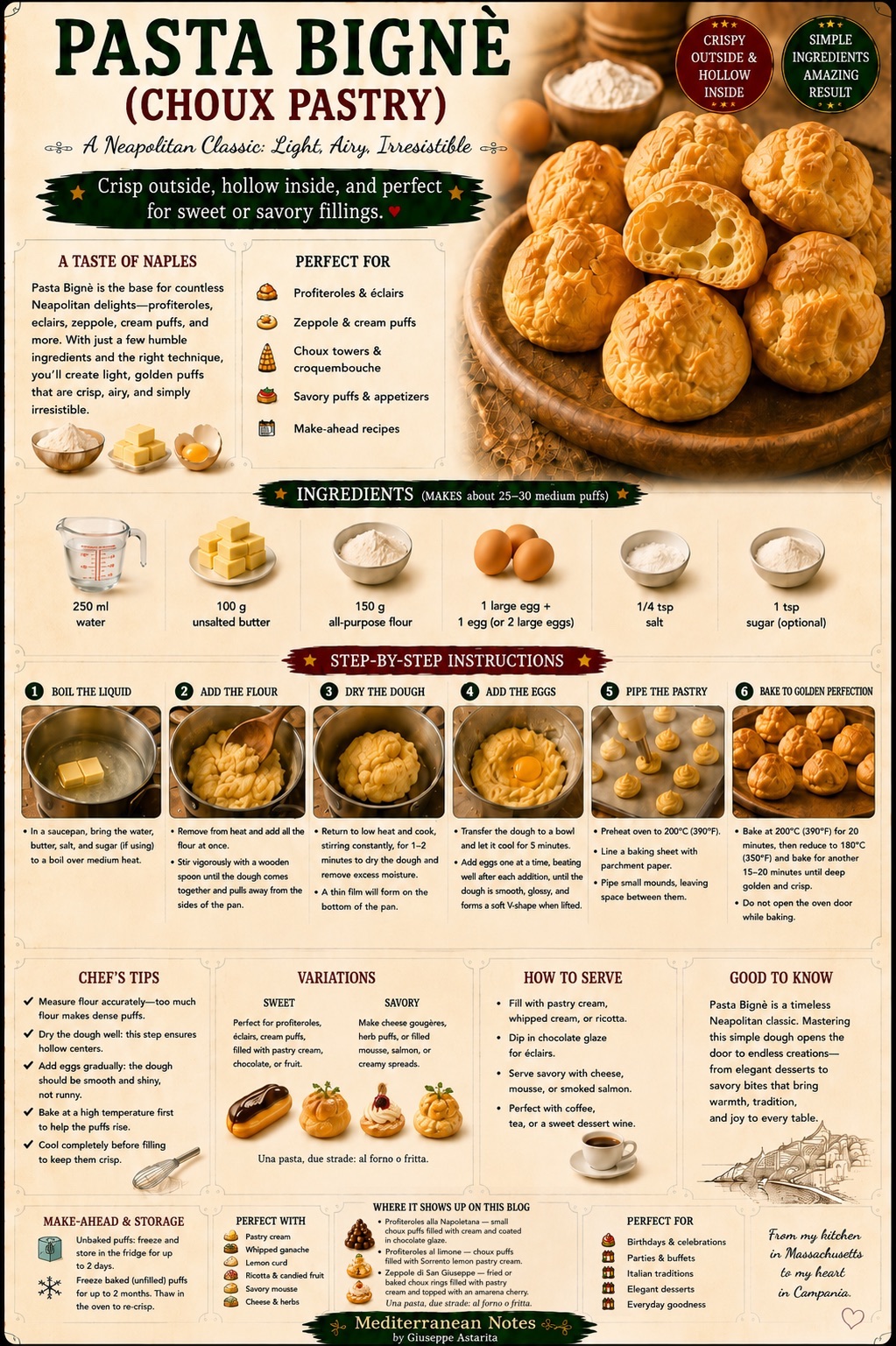
Water, butter, flour, eggs. Cooked briefly on the stove, then piped and baked until it puffs into a hollow shell. It looks like a technical, almost French thing to make at home, and it takes about ten minutes of actual work once you know the rhythm of it.
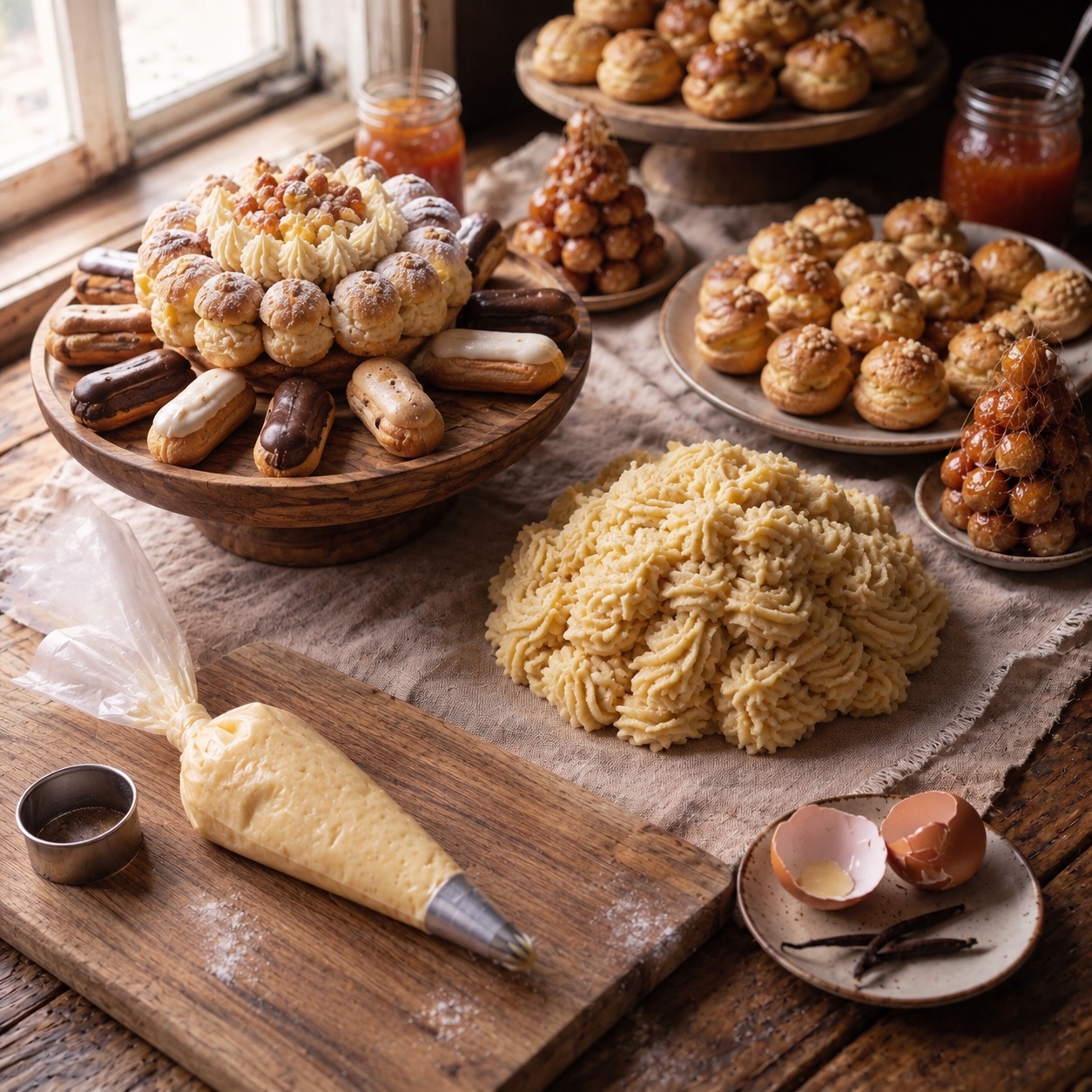
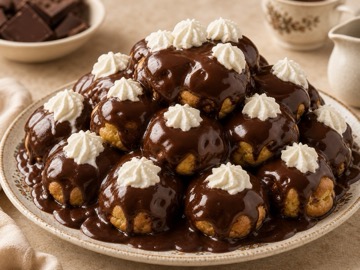
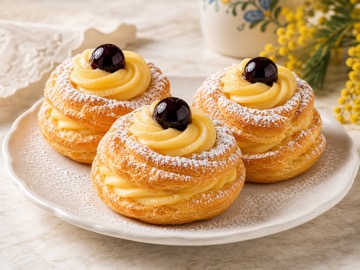
Pasta bignè is choux pastry by its French name filtered through Neapolitan pastry shops, and it is the base of two desserts on this blog that could not look more different from each other: the chocolate-glazed profiteroles piled into a pyramid, and the fried, cream-filled rings of zeppole di San Giuseppe, made every year for Father's Day. Same dough, same ratio, same method — one baked into small round shells, the other piped into rings and either baked or fried.
Unlike pasta frolla, this dough is cooked twice: once briefly on the stove to form the base paste, and once in the oven (or the fryer) to puff it into a hollow shell. The stovetop stage does the real work — it gelatinizes the starch in the flour and cooks off enough moisture that the dough can absorb a large quantity of egg without turning into scrambled eggs and batter. Everything that follows depends on getting that first stage right.
The eggs are what make it choux and not just a roux. Beaten in one at a time, off the heat, they hydrate the cooked starch further and introduce the steam that will puff the shells in the oven — as the shell bakes, the water in the dough turns to steam, the eggs' proteins set around that expanding steam, and the inside stays hollow. This is also why you never open the oven door in the first fifteen minutes: a draft of cool air drops the temperature just enough to collapse the shells before the protein structure has set.
The stovetop stage does two things at once. Boiling the water and butter together, then adding flour, gelatinizes the starch — the granules absorb water and swell, which is what gives the base paste its thick, cohesive texture even before any egg is added. Continuing to cook and stir for another minute or two drives off excess moisture, visible as a thin film forming on the bottom of the pan. This matters because the dough needs to absorb a relatively large volume of egg in the next step without becoming too wet to hold its shape — a dough that skips this drying stage will need fewer eggs and will produce flatter, less puffed shells.
In the oven, the water remaining in the dough turns to steam and expands rapidly, pushing the dough outward from the inside. The proteins in the egg and gluten in the flour, denatured and set by the heat, form a rigid shell around that expanding pocket of steam before it can escape — this is what leaves the shells hollow rather than solid, and why they are piped small: a larger mound has a longer path for steam to escape before the shell sets, and is more likely to collapse or stay gummy in the center.
The recipe
Makes about 20 small profiterole shells, or enough for one ring of zeppole. Scale up proportionally for a larger batch — the ratio (roughly 1 : 0.8 : 1 water : butter : flour, plus 3 eggs) stays the same.
Where it shows up on this blog
Una pasta, due strade: al forno o fritta.