Profiteroles alla Crema di Limone
The lemon profiteroles my mother described by text, decades later, in three lines — dipped solo fuori, zest grated over the top, and my father waiting at the end of a Sunday lunch.
I had to text my mother to check this one. I remembered the chocolate profiteroles of our Sundays, but I also remembered — vaguely, the way you remember a taste before you remember a fact — that there had been another version. She replied by text, in the shorthand of someone describing a dish she has made a hundred times: she used to make them alla crema di limone. And these, I now think, were actually my father's favorite.
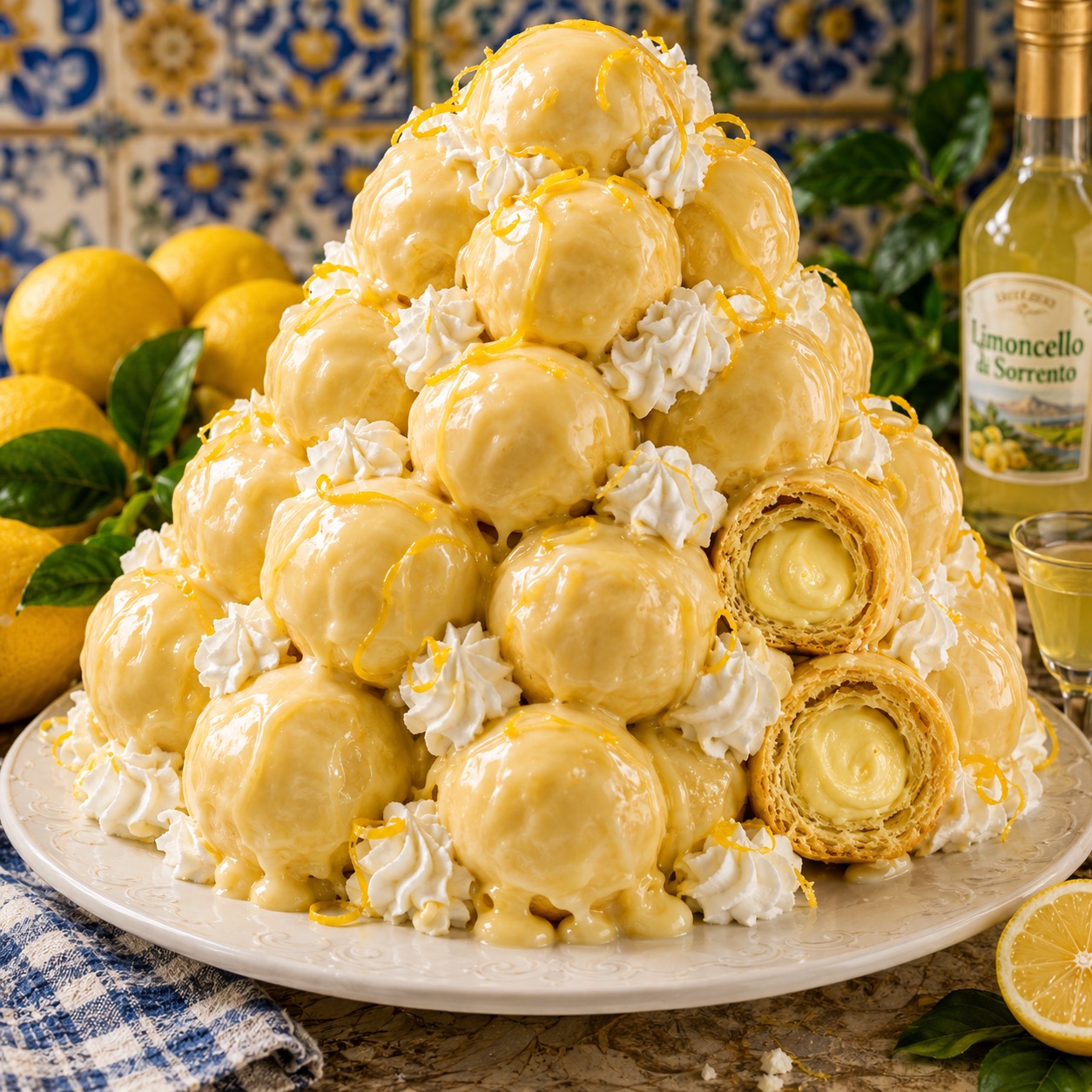
Her text deserves to be quoted, because it is the whole recipe in three lines: "Solo fuori — l'immergevo nella crema, poi l'impiattavo, e poi anche sopra una bella grattata di limone alla fine." Cream on the outside only — she dipped each puff in the lemon cream, plated them, and finished with a generous grating of lemon zest over the top. Were they filled? "Sì, diventavano morbidissime — la crema era semi dura e avvolgeva il profiterol." They turned impossibly soft, and the cream — semi-firm, not pourable — wrapped itself around each one. That last detail is the dish: a lemon cream thick enough to coat and hold, going slightly soft into the pastry overnight.
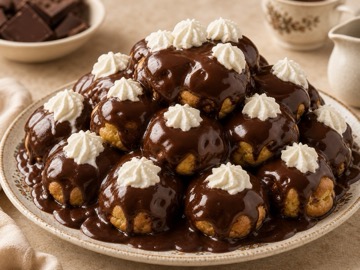
This is why I keep saying that food is memory. A dish I had not eaten in decades survived intact in a text message, in the imperfect tense — l'immergevo, "I used to dip them" — the grammar of repeated ritual. These appeared at Sunday lunch, sometimes, after a full multi-course meal: the pasta, the secondo, the contorni, the fruit — and then, when reasonable people would have surrendered, the lemon pyramid. The chocolate version was the famous one; the lemon version was the one my father waited for.
As pastry, it is the Southern Italian answer to the French original: the same choux puffs, but the chocolate replaced by an intensely fragrant lemon pastry cream — Sorrento lemons, zest in the milk, juice at the end — lightened with whipped cream and a measure of limoncello for the glaze. Lemon in every layer: in the filling, in the coating, and grated fresh over the finished pyramid. Lighter and brighter than the chocolate version, which is exactly what you want after a meal with four acts already behind it.
Worth being precise about the two words here, since they get used loosely: a bignè is a single ball of baked choux pastry — one puff, which can be filled with anything from pastry cream to whipped cream to a savory filling, and often eaten on its own with nothing more than a dusting of powdered sugar. Profiteroles specifically means several bignè filled and then coated or dipped — usually in chocolate, here in lemon cream — and arranged together, typically piled into the pyramid this dish is known for. One bignè isn't a profiterole; profiteroles are what a group of them become once they're filled, coated, and stacked.
The morbidissime texture is controlled moisture migration: water moves from the high-moisture pastry cream into the dry choux shell until the two equilibrate — the same physics that ruins a cannolo left filled too long, here recruited on purpose. The cornstarch matters twice: it sets the cream's viscosity (the semi dura coating that clings instead of dripping) and its amylose network keeps the cream stable as it surrenders water to the pastry. And the final grating of zest is not decoration — limonene and citral, the lemon's volatile aroma compounds, evaporate within hours, so the zest added at the end is the only zest you can still smell at the table.
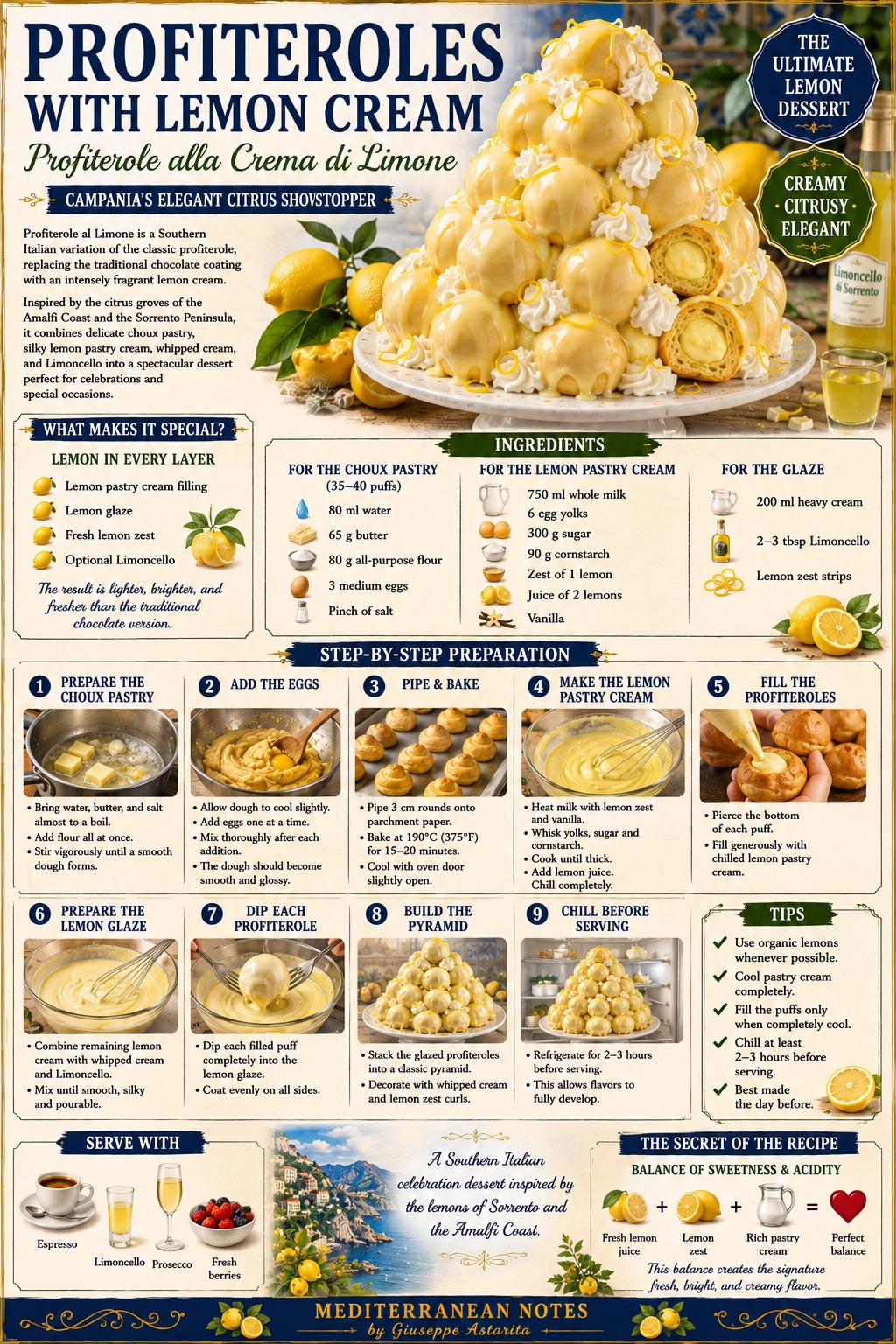
Profiteroles with Lemon Cream — choux, lemon pastry cream, the dip-and-zest finish, step by step.
The Recipe
Makes 35–40 puffs · best made the day before
- For the choux: 80 ml water · 65 g butter · 80 g flour · 3 medium eggs · pinch of salt
- For the lemon pastry cream: 750 ml whole milk · 6 egg yolks · 300 g sugar
- 90 g cornstarch · zest of 1 lemon · juice of 2 lemons · vanilla
- For the glaze: 200 ml heavy cream · 2–3 tbsp limoncello
- Fresh lemon zest, grated over the top at the end — non-negotiable