Pasta Brisée
Flour, cold butter, water, salt — mixed quickly and left alone. No sugar, no lamination, no eggs. The plainest of the base doughs on this blog, and for exactly that reason, the right one for a savory tart that needs to stay out of the way of its filling.
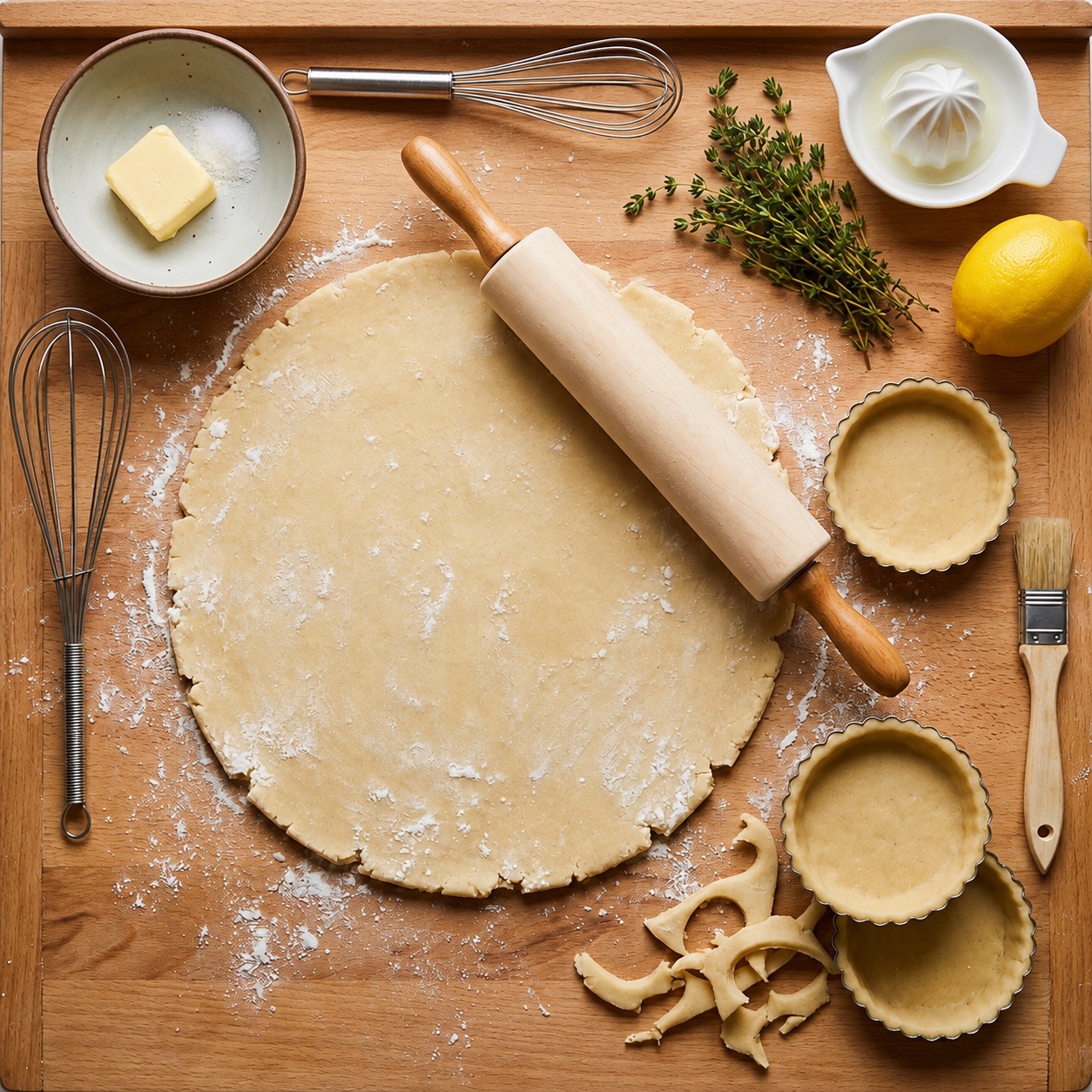
Brisée shares its ingredient list almost exactly with pasta sfoglia — flour, butter, water — and almost nothing about how those ingredients are handled. Sfoglia is folded and rolled again and again to build dozens of buttery layers; brisée is brought together fast, into a single compact mass, and rested. There is no lamination, no rise to speak of, no flakiness in the French pastry sense — only a short, sandy, crumbly bite that holds its shape under a wet filling.
It is also the one dough among the six base doughs on this blog with no sugar at all — not even the small pinch that softens pasta frolla's semi-dolce version for pizza rustica. Brisée is built to be neutral, so it disappears behind whatever it holds: ricotta and vegetables, a savory custard, anything closer to a quiche than a dessert.
Shortcrust doughs get their crumbly "shortness" the same way frolla does: cold fat coats flour particles and blocks gluten from forming a strong network. Brisée pushes that principle further than frolla by leaving out sugar and eggs entirely — with no sugar to tenderize and no egg to bind, the dough relies purely on butter and a little water, worked minimally, to hold together. The result bakes into a firm, crumbly, savory shell rather than a rich cookie-like one.
Cold butter and a short rest matter here exactly as they do for frolla: warm butter melts into the flour instead of staying in discrete pieces, losing its ability to block gluten, and skipping the fridge rest is the most common reason a home-made brisée shrinks or turns tough in the oven.
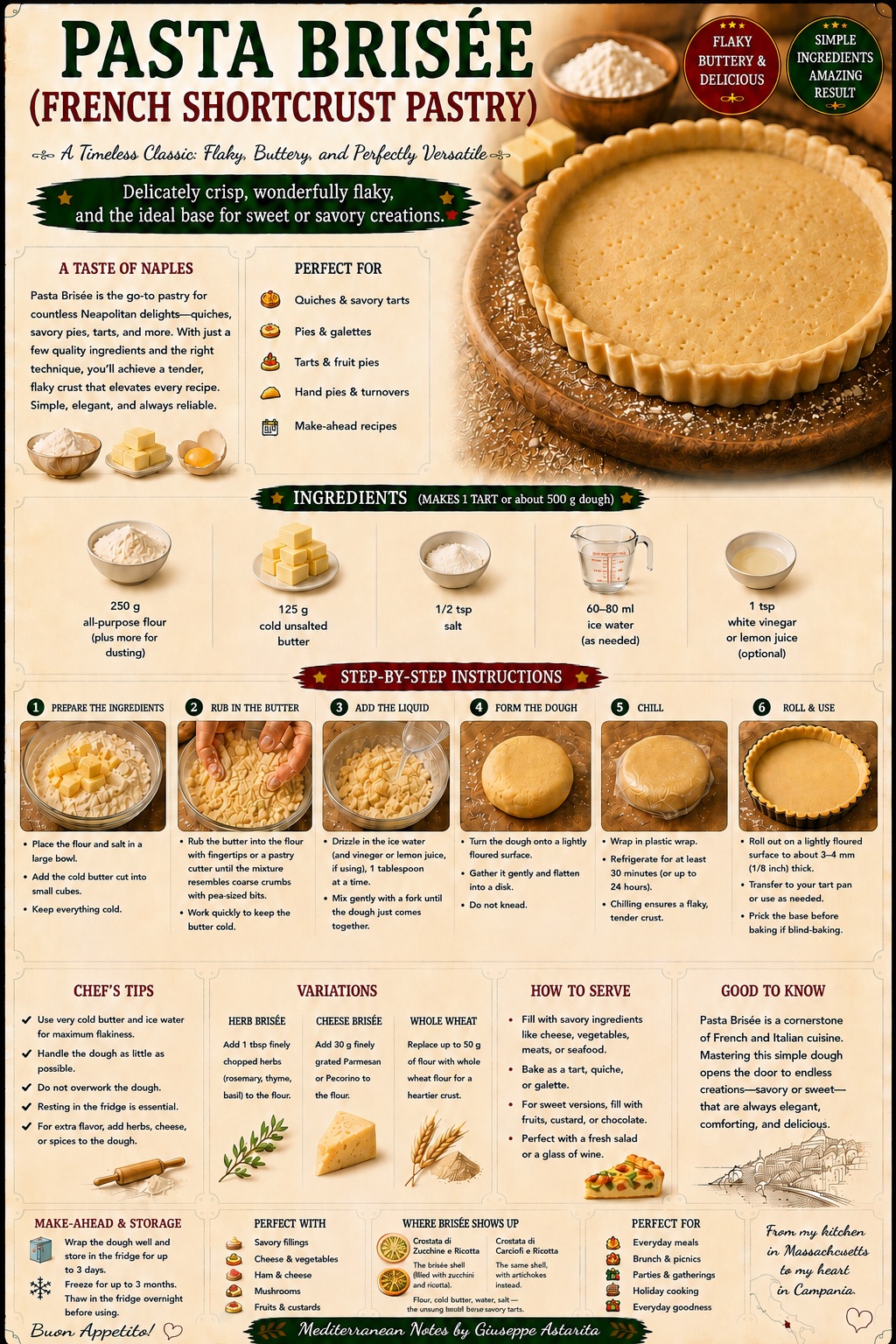
The recipe
Makes enough for one 24–26 cm tart shell.
Related
Buon appetito.