What We Ate in Caserta, a Few Generations Back
Ask my mother what she ate as a child and the answers come slowly, then all at once — a broth with three vegetables and a lid, beans cooked all afternoon, two grandparents' kitchens under the same roof that agreed on almost nothing. Go back one more generation and the list gets stranger still: no carbonara, no butter, lard instead of olive oil, and organ meats that don't appear on any menu today. This is Part One of a pair — Part Two, what my father ate as a kid, covers his side of the same city.
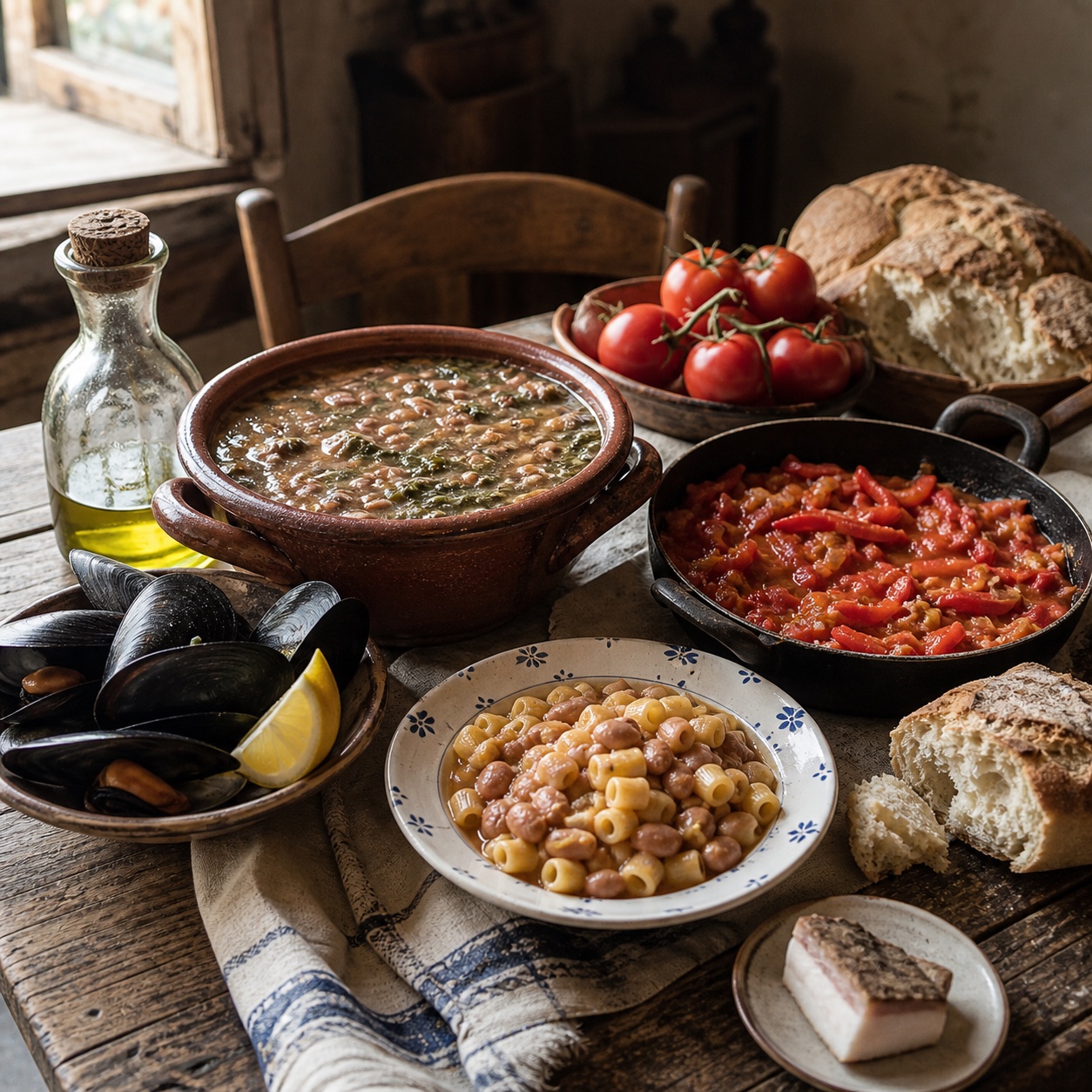
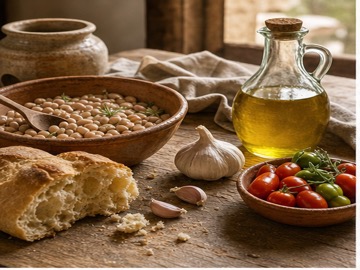
My mother grew up in Caserta in a house where her mother's family and her father's family both cooked, and the two sides agreed on almost nothing about how to do it. At her mother's side, pasta came with vegetables — a minestrone of greens, fresh peas cooked down slowly until the whole thing turned into a proper pasta dish, finished with Pecorino. There were always beans, cooked for hours with hot water ladled in gradually rather than dumped in all at once, salted only near the end. Sometimes the beans became riso e fagioli instead of staying beans alone — rice stirred in once they were tender, until it was thick enough to eat with a fork.
The oven never entered into any of it. That kitchen didn't use one — everything happened on the stovetop, in pots, with time doing the work that heat from above does in other households.
The dish my mother remembers most clearly from her own early childhood is smaller than any of these — she calls it "la carotina," though it has nothing to do with carrots. Onion, a little more onion, oil, salt, and tomato, boiled together and then passed through a sieve until what remained was a simple broth. A lid went on. Pastina went into the broth to cook. That was the whole dish, and she was making it herself at six or seven years old — one of the first things she remembers cooking on her own. On the side, peppers cooked in oil with salt, sometimes eaten straight from the pan tucked into bread.
Her father's side of the family — my grandfather Mario — moved faster and simpler: una cucina molto più veloce, she says, a much quicker kitchen. Cotenna, the skin of the pig, cooked in a pan with parsley and rolled into involtini. Fish, when there was fish: sole cooked simply in a pan. Mussels, often — impepata di cozze turns up again and again in what she remembers eating at home. Cuore di bue, ox heart, was just food, not a special-occasion cut but something that showed up like any other — and liver, too, the same way; see fegato in padella, still on the table decades later.
One dish belongs to a different generation entirely, and is worth separating out clearly: the genovese made with ground meat instead of the classic whole cuts is my own father's — not Mario's, not something from my mother's childhood at all, but a shortcut he brought to the table a generation later, one my mother's side had never heard of before. Two different men, two different kitchens, easy to blur together if you're not careful about which generation you're standing in. For the fuller picture of how my parents' own two households cooked differently once they married, see every family has the real recipe.
Before this generation, further back
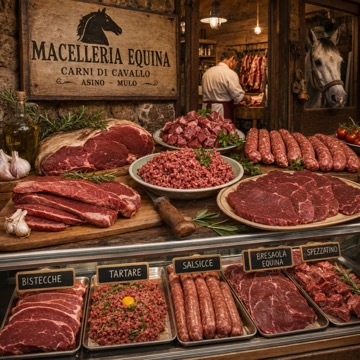
Push the clock back further — not my mother's childhood but the generations before it — and the list of what a Campanian table looked like stops resembling anything on this blog. No carbonara; that dish, in the form everyone recognizes today, is a twentieth-century invention, not a peasant tradition at all. Testa di capretto — the head of the kid goat, not just the roasted legs and shoulder that show up in capretto al forno con patate today. Fegato, liver. Piede di musso — mule's foot. Sanguinaccio and other preparations built on interiora, organ meats, at a time when nothing on an animal went to waste because nothing could afford to.
Butter essentially didn't exist in that kitchen. Olive oil, when it was used for cooking at all, was a different product than what fills a bottle today — in the 1700s, much of the olive oil produced in Campania was olio lampante, oil pressed for burning in lamps, not for eating. What went into the pan more often was sugna — rendered pork lard — the fat that a poor household actually had access to, since a pig, unlike an olive harvest sold mostly for lighting fuel, belonged entirely to the family that raised it.
Some of what filled in the gaps between real meals barely counts as recipes at all: pane e cipolla cruda, bread with raw onion, eaten as its own meal rather than a side note. Pane nel vino — bread soaked in wine, a way of making both stretch further and of turning bread that had gone stale into something that could still be eaten with pleasure rather than mere function. Neither one asks for a method. Both were dinner, on the nights dinner needed to be nothing more than that.
One more war memory, folded into a pasta name
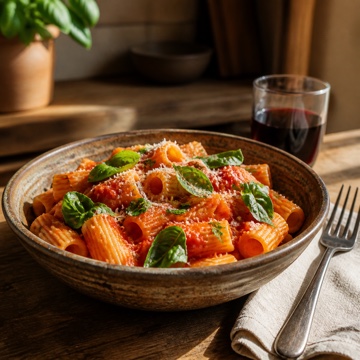
Not every memory in this family traces back to a kitchen. My grandfather spent time interned in the Aegean during the war, and it was there that he made a friendship with a fellow soldier from Naples that lasted the rest of both their lives — brothers by circumstance rather than blood. The dish he came to call by a soldier's name afterward, pasta dei soldati — mezzi paccheri, tomato, basil — carries that story in it now, whether or not it's exactly what he ate as a young man far from home.
None of this is nostalgia for hardship. It's just the honest record of what came before the table we actually eat at now.