'Mpepata di Cozze
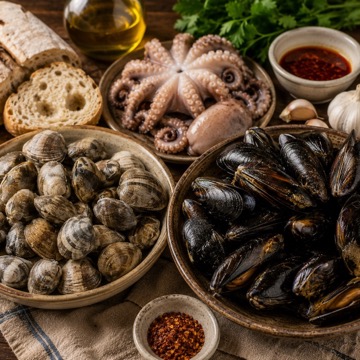
Mussels, garlic, black pepper, parsley, bread to soak the liquid. A dish that earned its own dialect name by being exactly one thing and nothing else.
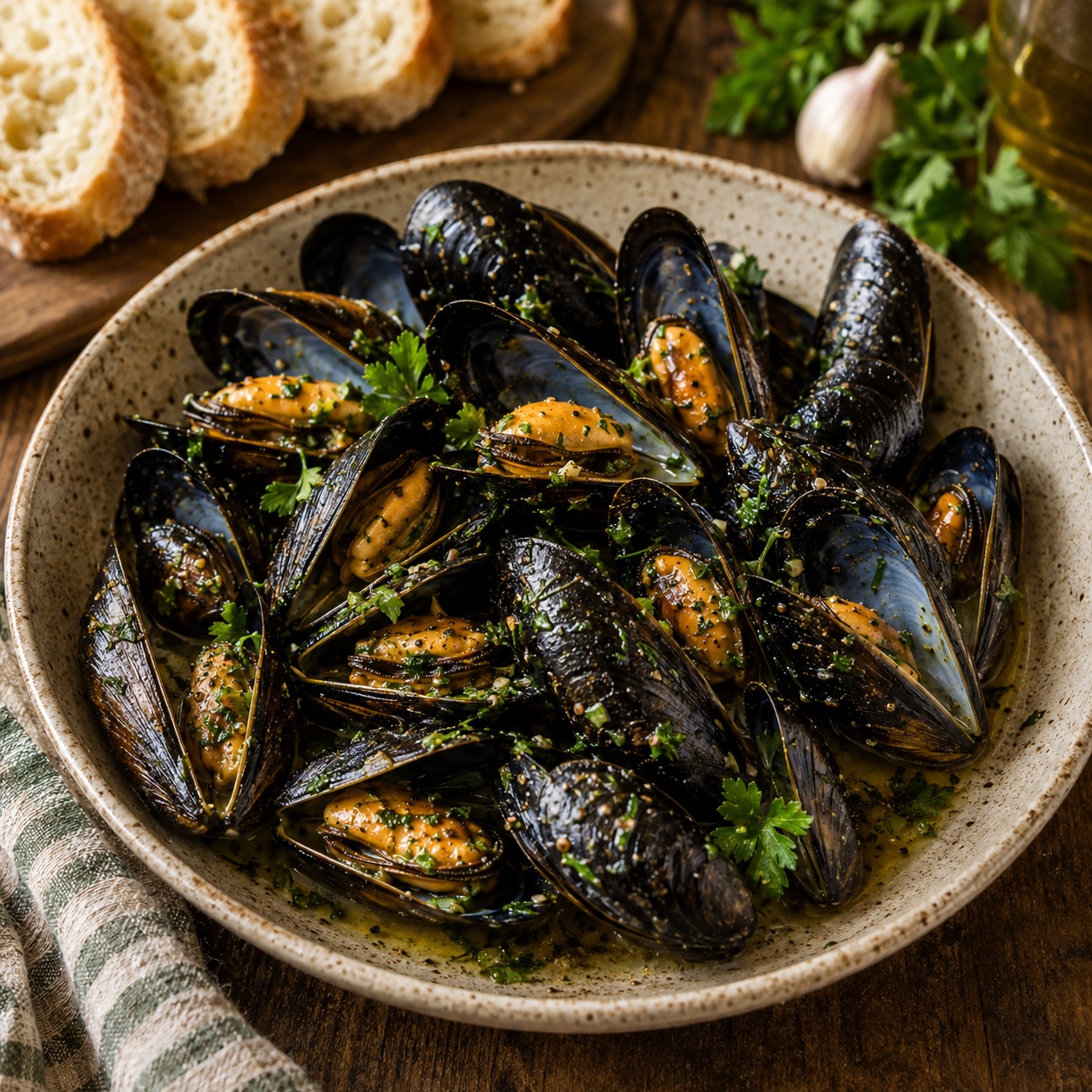
Going out for a fish dinner in Naples means certain things will happen in a certain order. There will be bread on the table before anything is decided. There will be a discussion about whether to start with raw seafood or cooked. If cooked, there will almost certainly be mussels — either zuppa di cozze, the tomato version, or the 'mpepata, the dry-cooked version with black pepper and nothing else except what the mussels release themselves. In our family, when we went out for fish, the 'mpepata was always on the table.
The Neapolitan dialect name says everything about what the dish is. Impepata — from pepe, pepper — means that pepper is not a garnish or an afterthought but the actual point. The mussels open in their own steam, releasing their liquid into the pan with the garlic and olive oil, and then you add the pepper so generously that it seems excessive until you taste the result: the salt from the sea, the sweet flesh of the mussel, the sharpness of the pepper, the garlic barely in the background. It is a combination that requires nothing added and admits nothing removed without becoming a different dish.
My mother preferred vongole and lupini over cozze when given the choice, and she was consistent about this — the lupini especially, which have a more pronounced, mineral flavor that she thought was superior. My father, who avoided fish in general, found ways to not be involved in this part of the meal, which meant that when we ordered the 'mpepata at a restaurant, it arrived primarily for the rest of us and was treated accordingly: the pan in the middle of the table, bread brought immediately, everyone reaching with the shells as scooping tools for the broth.
He was not wrong about the risk, exactly. Mussels, clams, and lupini are filter feeders — they draw water through their bodies continuously to extract nutrients, and in doing so they concentrate whatever the water contains, including bacteria and viruses if the water quality is poor. The risk is real, and in Naples it has always been real enough that where you eat shellfish matters. The restaurants near the sea in summer, the market stalls, the informal vendors — all of them were subjects of my father's ongoing risk assessment. He did not eat them himself, but he narrated the dangers with authority and consistency, and the horror stories never changed his family's ordering habits by a single dish.
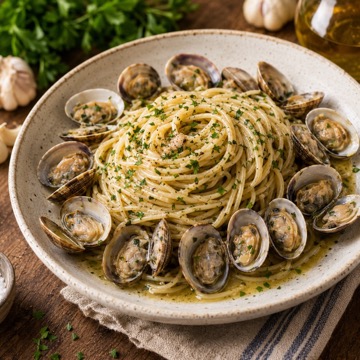
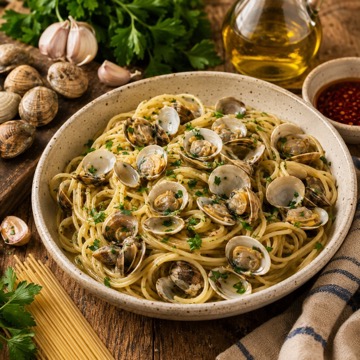
At home, we made the dish with vongole or lupini more often than with cozze, which was my mother's preference. But the 'mpepata di cozze had a place in the home kitchen too, because mussels are the easiest bivalve to find fresh year-round, and the dish is genuinely fast — fifteen minutes from cleaned mussels to the table. The technique is nearly identical whether you use vongole, lupini, or cozze: high heat, garlic in oil, shellfish in, lid on, wait for everything to open, pepper and parsley at the end, bread on the side. The differences are in flavor, texture, and size. The cozze are larger and meatier, their broth darker and more intensely marine. The vongole are smaller and more delicate. The lupini are somewhere between.
Filter feeders and food safety
Bivalves — mussels, clams, oysters — feed by pumping seawater through their gills and filtering out organic matter. An adult mussel can filter 20–50 liters of seawater per day. This efficiency is also a concentration mechanism: anything dissolved in the seawater, including bacterial pathogens like Vibrio species, norovirus, and hepatitis A virus, can accumulate in the mussel's tissues at levels many times higher than in the surrounding water.
Regulatory frameworks for shellfish harvesting in Europe (EC 854/2004) designate harvesting areas by water quality, with Class A areas permitting direct sale, Class B requiring purification, and Class C requiring prolonged relaying. The risk associated with shellfish from unregulated or poorly monitored sources is therefore not hypothetical — it reflects a genuine concentration mechanism in the biology of the animal.
Cooking does not eliminate all risk: many shellfish-associated pathogens are heat-sensitive, but rapid high-heat cooking (as in the 'mpepata method) may not fully penetrate the center of larger mussels. The practical guidance — buy from reputable sources, cook thoroughly, eat immediately — reflects both the science and the accumulated practical experience of coastal communities that have been eating these animals for millennia.
The piperine in black pepper (the alkaloid responsible for its pungency) is fat-soluble and heat-stable, which is why grinding pepper into the hot broth at the end of cooking distributes it effectively through the liquid without degrading the aromatic compounds that give freshly ground pepper its character.
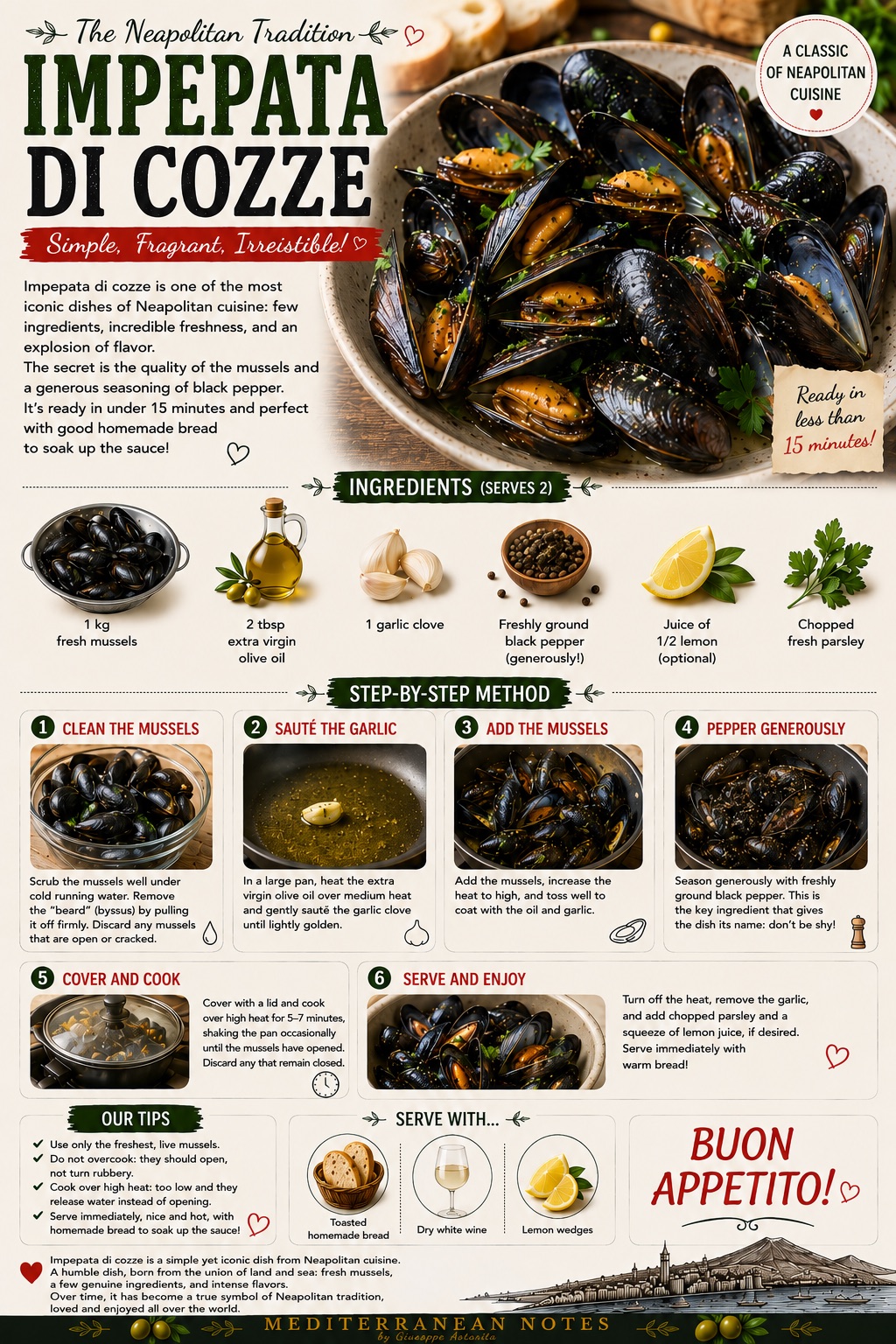
Tap to enlarge — 'Mpepata di cozze: ingredienti, metodo, consigli
Recipe — 'Mpepata di Cozze
Serves 2 as a main, 4 as a starter · Ready in 15 minutes
- 1 kg fresh mussels the freshest available, scrubbed clean
- 2 tbsp extra virgin olive oil
- 1 garlic clove whole or lightly crushed
- Freshly ground black pepper generously — more than seems right
- Juice of ½ lemon optional, added at the end
- A handful of fresh parsley coarsely chopped
- Good bread for the broth — this is not optional
The variation with vongole or lupini follows the exact same method, with the adjustment that vongole cook more quickly — check at 3–4 minutes — and do not need degassing the beard. Lupini, which are smaller still, open in 2–3 minutes. In all cases the broth is different: lighter with lupini, saltier and more mineral with vongole, darker and fuller with cozze. My mother would say the lupini were better. She was probably right, and we ordered the cozze anyway at the restaurant because they came in a bigger bowl and the bread lasted longer.
My father's horror stories are still out there. The restaurant has changed, the friends have changed, the outcomes remain spectacular. He was not wrong to tell them. We were not wrong to keep ordering.