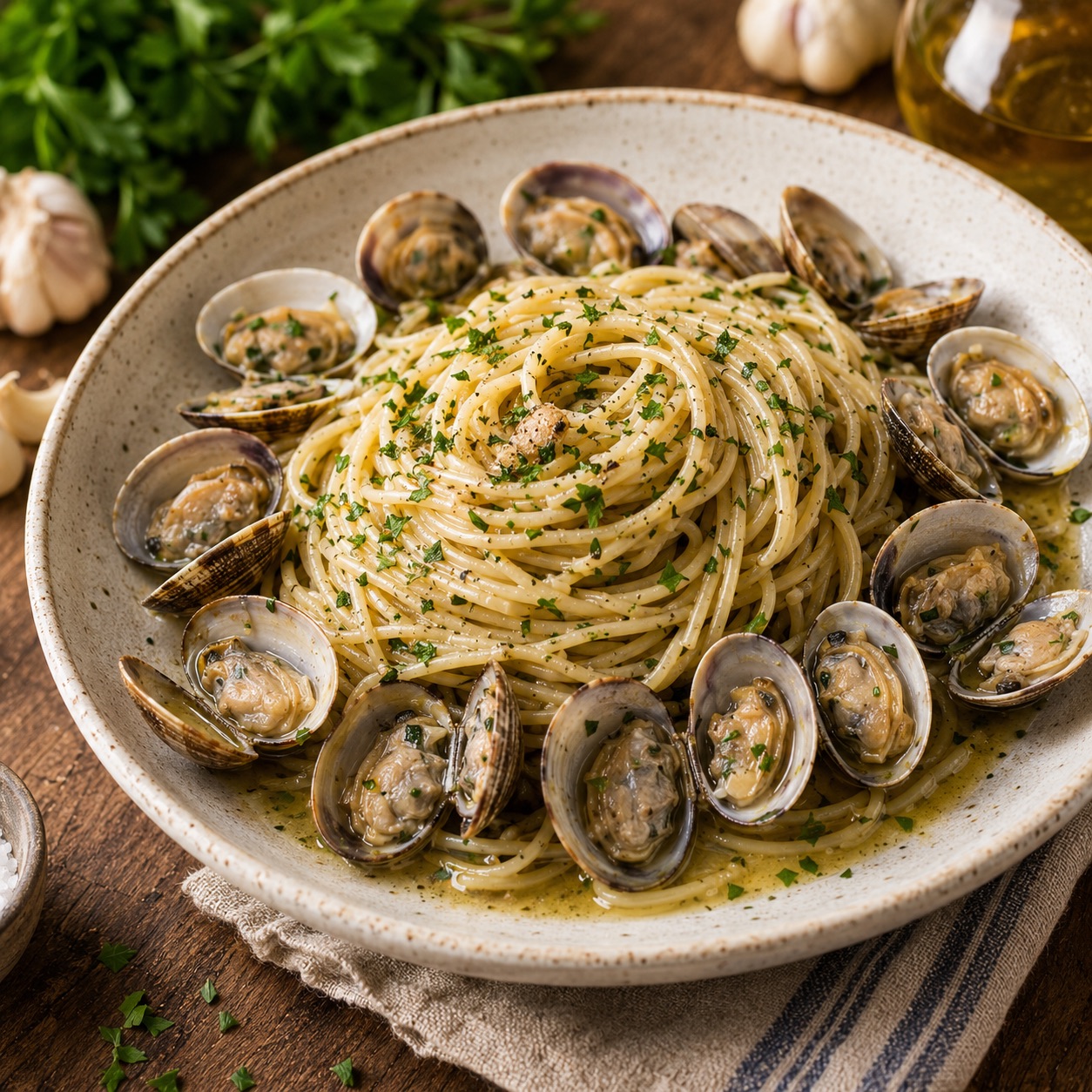
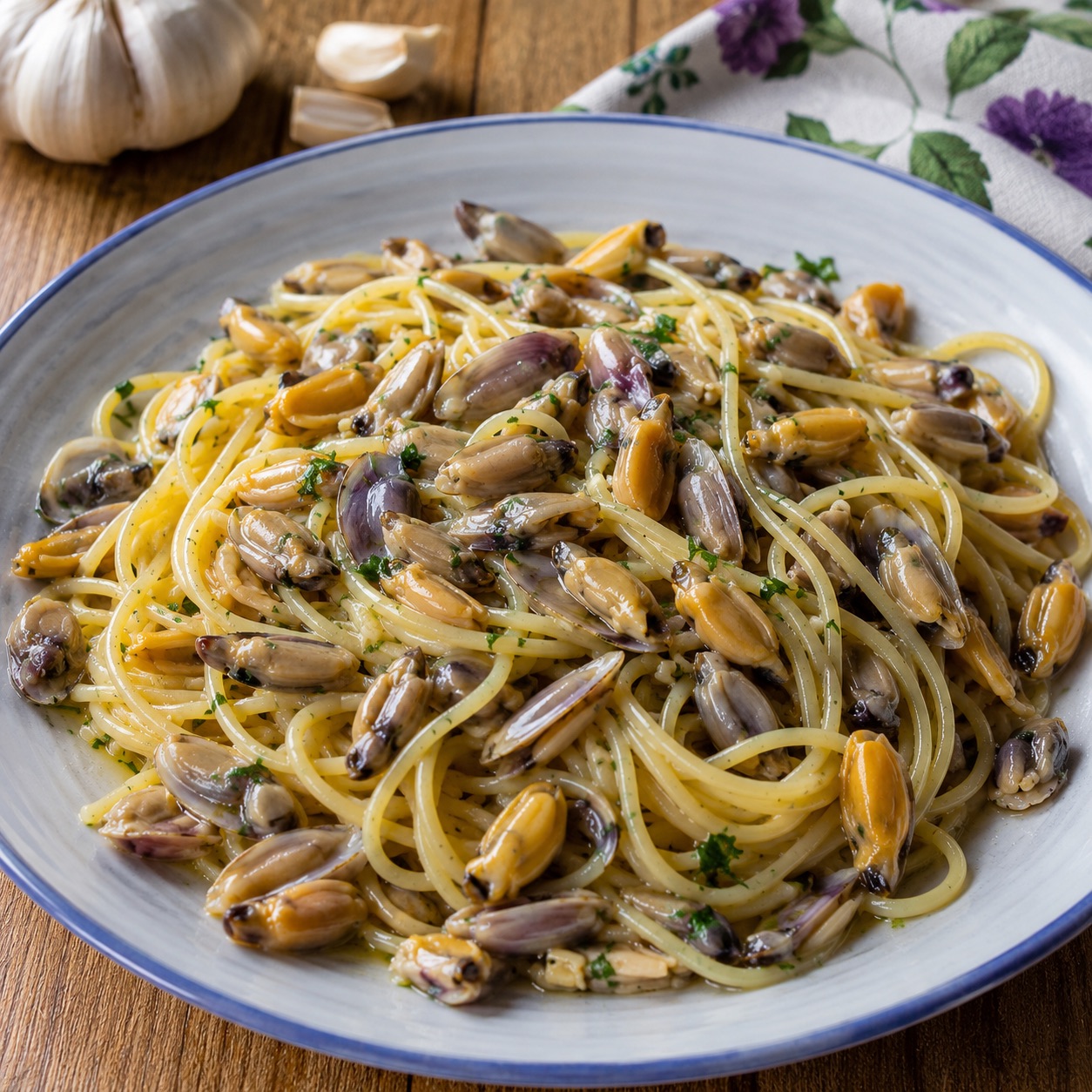
Spaghetti ai lupini
The clam my mother chose instead of vongole — not because vongole were unavailable, but because lupini were less expensive and, honestly, more intensely flavored. Small, oval, wild-caught, impossible to farm. The everyday clam pasta of the Campanian table. Always in bianco.
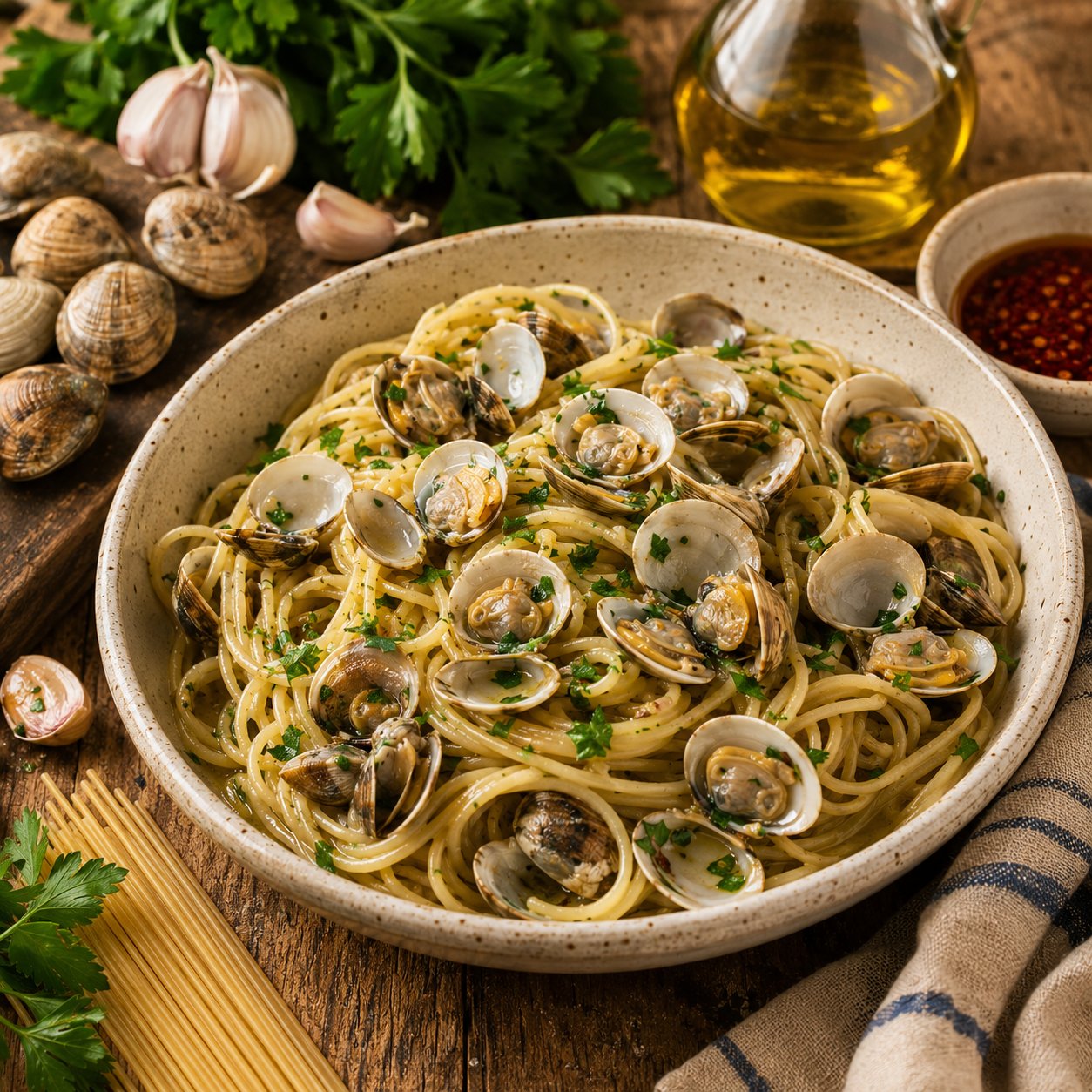
My mother did not buy vongole veraci every time she made clam pasta. The veraci were for Christmas Eve, for the cenone della Vigilia, for the nights when the occasion justified the expense. For ordinary Tuesdays and Fridays and the quick weeknight dinners when there was fresh seafood at the market and the appetite wanted something light and of the sea — she bought lupini. They were cheaper. They were always available. And she said, consistently, that the flavor was better.
I understood what she meant only later, when I started paying attention to why things taste the way they do. Lupini are smaller than vongole veraci — oval, slightly elongated, lighter in shell color — but the ratio of guazzetto to meat is high, and the guazzetto they release when opened over heat is concentrated and intensely marine in a way that comes through in the pasta with unusual force. You can make a good spaghetti ai lupini with less than you would need of vongole veraci to achieve the same depth of flavor. The smaller size also means they open faster, the liquid pours quickly, and the whole dish is on the table in under thirty minutes.
The one thing she always did that I have come to understand as essential: she removed the clams the moment they opened and reduced the guazzetto alone for two minutes before returning them at the very end. With small clams, the meat overcooks almost instantly — thirty seconds past the opening point and they become tough and unpleasant. Pulling them out and finishing the sauce without them, then returning them only in the final toss with the pasta, keeps them tender. This is the technique the dish requires, and it is different from the way you handle larger vongole veraci.
Why lupini cannot be farmed — and why that matters for flavor
Unlike vongole veraci (Ruditapes decussatus), which are farmed extensively in lagoons and coastal beds throughout the Mediterranean, lupini (Dosinia exoleta and related species) require specific wild seabed conditions — particular substrate compositions, water chemistry, and sediment texture — that cannot be replicated in aquaculture. They are wild-harvested throughout the Mediterranean, with seasonal restrictions typically excluding April and September to protect spawning periods. As filter feeders, their flavor is a direct function of the specific water they inhabit: the phytoplankton communities, dissolved minerals, and organic matter they have been filtering over their entire life cycle are concentrated in their tissue. Wild animals feeding from a natural and varied seabed accumulate a more complex aromatic profile than farmed animals raised in controlled conditions on standardized feed. This is the chemical explanation for what my mother noticed empirically: the guazzetto from wild lupini contains a wider and more concentrated range of volatile aromatic compounds — aldehydes, ketones, sulfur-containing molecules derived from phytoplankton metabolism — than the liquid from farmed clams. The small size of lupini means a higher surface-area-to-volume ratio of meat, which increases the relative release of these compounds into the cooking liquid. You are tasting a wild, specific, uncontrolled sea. That is what comes through in the pasta.
The three Campanian clam pastas
The finest. Larger, ridged shell, sweet and full-flavored. For Christmas Eve, New Year's Eve, the long summer lunches by the sea. The one everyone means when they say vongole.
Lupini this recipe
Smaller, wild-only, unfarmable. More intense flavor per gram. The everyday version — the one my mother chose most often, not as a substitute but as a preference.
The smallest — thumbnail-sized, gathered by hand from sandy beaches. Intensely concentrated flavor. A pasta made with telline from the beach you collected them from is its own experience.
The recipe — in bianco · serves 4
Ingredients
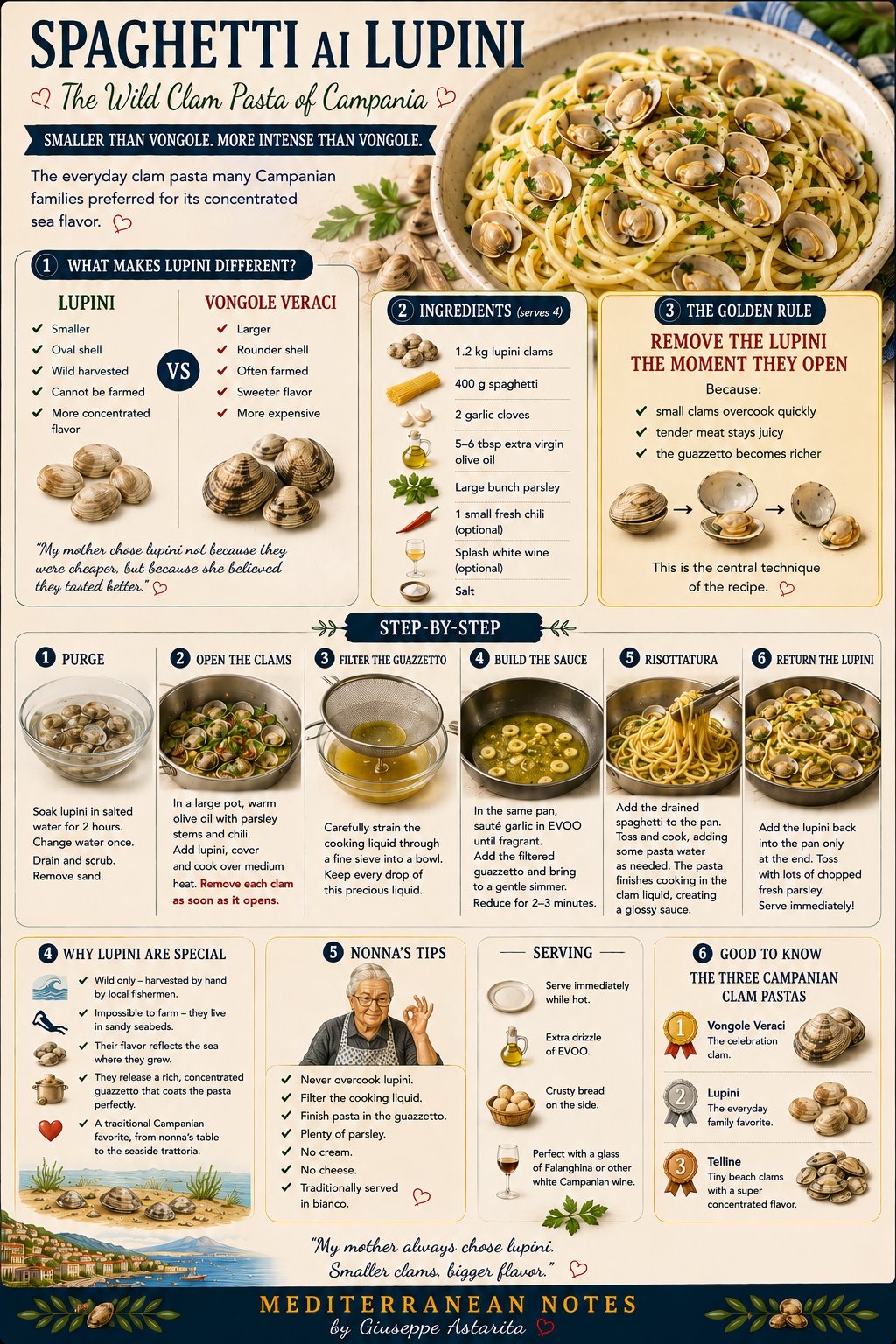
Method
Purge the lupini — start 2 hours before. Tap each clam on the sink; discard any that do not close. Soak in cold water with coarse salt (30 g per litre) for at least 2 hours in a cool place. They will expel sand. Rinse thoroughly before cooking.
Sand in the pasta is the failure condition. With lupini, which are wild and tend to carry more sediment than farmed clams, do not rush this step. Two hours minimum; overnight in the refrigerator is better.
Open the lupini — fast, and watch them. In a large wide pan, heat 2 tbsp olive oil over high heat. Add the parsley stems and the chili. Add the lupini, cover immediately, and shake the pan. They will open in 1–2 minutes — faster than larger clams. As each one opens, remove it immediately with a slotted spoon or tongs. Work quickly. Do not let them sit in the heat once open.
This is not the step to walk away from. Stand over the pan and pull them out one by one or in small groups the moment the shells part. A lupino that has been on heat for thirty seconds past opening is already overcooked.
Filter the guazzetto. Pour the cooking liquid through a fine-mesh sieve lined with cheesecloth or a clean kitchen towel. Reserve every drop. This is the soul of the dish. Discard the parsley stems and chili from the pan.
Build the base and reduce. In the same pan, heat the remaining olive oil over low heat. Add the crushed garlic and let it infuse until golden — do not brown it. Remove the garlic. Add the wine if using and let it evaporate for 1 minute. Pour in the filtered guazzetto. Simmer over medium heat for 2–3 minutes to concentrate slightly. The liquid should taste intensely of the sea — not salty, but marine and deep. Turn off the heat and wait for the pasta.
The risottatura. Cook the spaghetti in lightly salted water (the guazzetto is already salty — go light on the pasta water) until about two minutes short of done. Drain and transfer directly into the pan with the guazzetto. Turn the heat to high. Toss constantly, adding pasta water a ladle at a time if needed, until the pasta finishes cooking in the clam liquid and the sauce becomes glossy and lightly creamy from the starch. This takes 2–3 minutes.
The pasta absorbs the guazzetto as it finishes cooking. This is why the dish tastes of the sea at every bite, not just where a clam happens to sit. Do not skip the risottatura step.
Return the lupini and finish. In the last 30 seconds, add all the lupini back to the pan — shelled and whole, or all in shell, as you prefer. Toss once. Add a generous handful of chopped fresh parsley. Remove from heat immediately. The clams only need to warm through, not cook further.
If you shelled some and left others whole: the shelled clams distribute through the pasta so every forkful has flavor; the whole ones look right on the plate and let guests open them at the table. Both together is the right approach.
Plate and serve immediately. Twirl into a nest with tongs. Arrange any whole clams on top. A drizzle of raw extra-virgin olive oil over each plate. Eat while hot. No Parmigiano — ever, with any clam pasta. No delay between pan and table.
My mother made this on ordinary evenings, not on feast days. It was Tuesday pasta, Friday pasta — the kind of thing she put together in less than half an hour when the market had lupini and the afternoon had been long. The speed was part of its character: the clams opened fast, the guazzetto was ready in minutes, the pasta finished in the pan and came to the table while still moving. We ate it without ceremony, which is the right way to eat a dish that takes less time to make than it takes to set a formal table.
She never added tomato. Sometimes she considered cherry tomatoes — she even added a few, occasionally, when there were very ripe ones on the counter — but she said they suppressed the real flavor of the clams, and she was right. The whole point of lupini is the guazzetto: the wild, mineral, concentrated liquid the clams release in the pan. Tomato adds sweetness and acidity that sit on top of that flavor and partially replace it. In bianco, nothing competes. The sea comes through undiluted.
In bianco, sempre — e con i lupini, ancora di più.