Riso e Fagioli
Bean and rice soup, the old way
Beans simmered slowly, topped up with hot water a little at a time rather than drowned all at once, salted late, and finished with rice stirred in at the end. The way it was cooked in my grandmother's family kitchen in Caserta, a generation before mine.
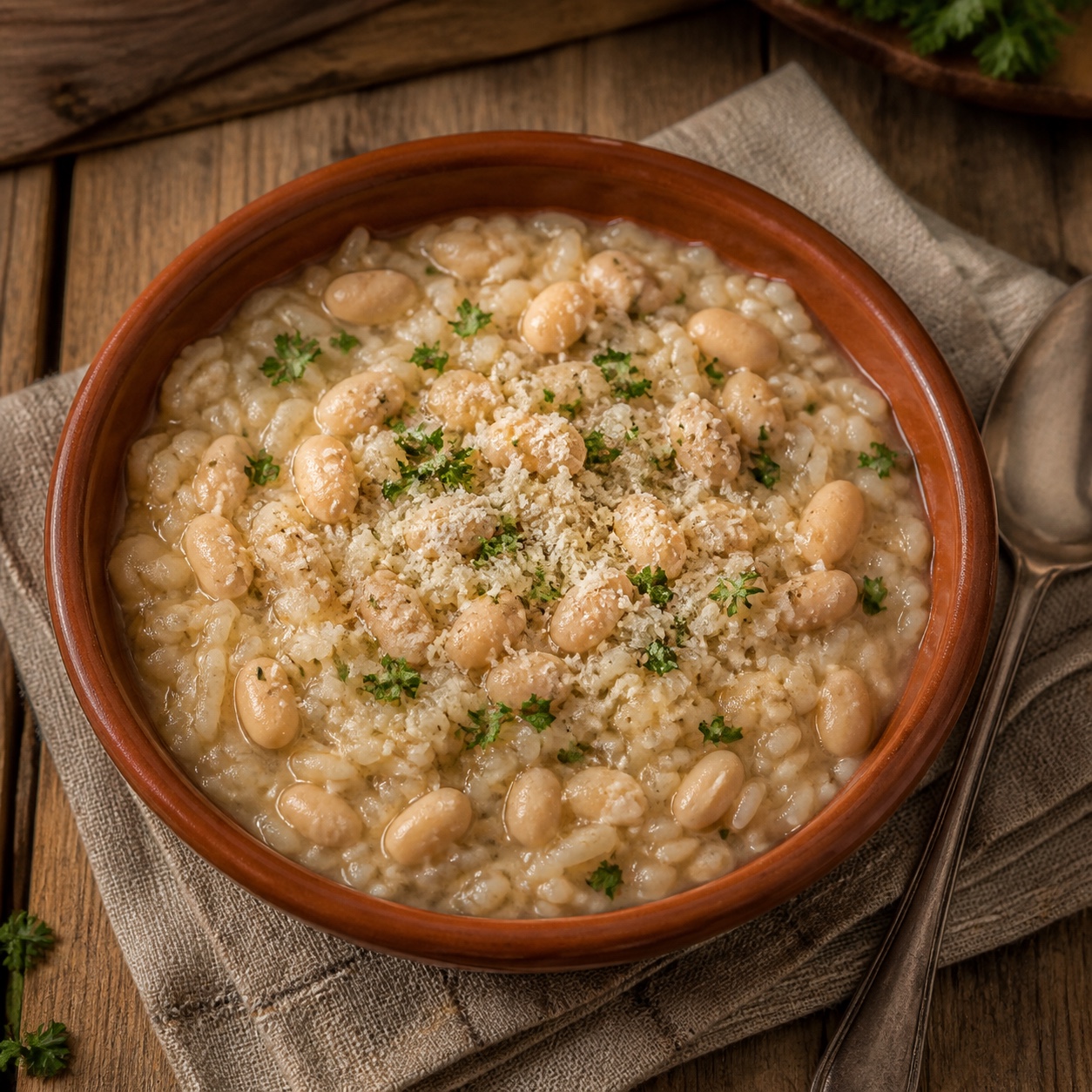
My mother remembers two very different kitchens from her own childhood in Caserta — her mother's family and her father's family cooked differently under the same roof of memory. At her mother's side, pasta came with vegetables: minestrone-style greens, fresh peas cooked down until the whole thing became a proper pasta dish, finished with Pecorino. And there were beans — fagioli, fagioli, fagioli, she says, meaning simply that there were always beans, and they were always good.
The method itself is a technique from before pressure cookers made this kind of thing automatic. A pot of beans went on the stove with a pot of hot water sitting beside it, and every so often more hot water was ladled in as the beans cooked down — never all the water at once, added gradually instead so the beans never stopped at a gentle simmer. Salt went in late. Once the beans were tender, rice went in with them, and what came out was a thick, comforting dish, not quite a soup, not quite a risotto. No oven touched any of it — that kitchen didn't use one.
Hot water added a little at a time, not all at once — the beans never stopped simmering, and salt went in only near the end.
The recipe
For four, as a first course or a light meal on its own.
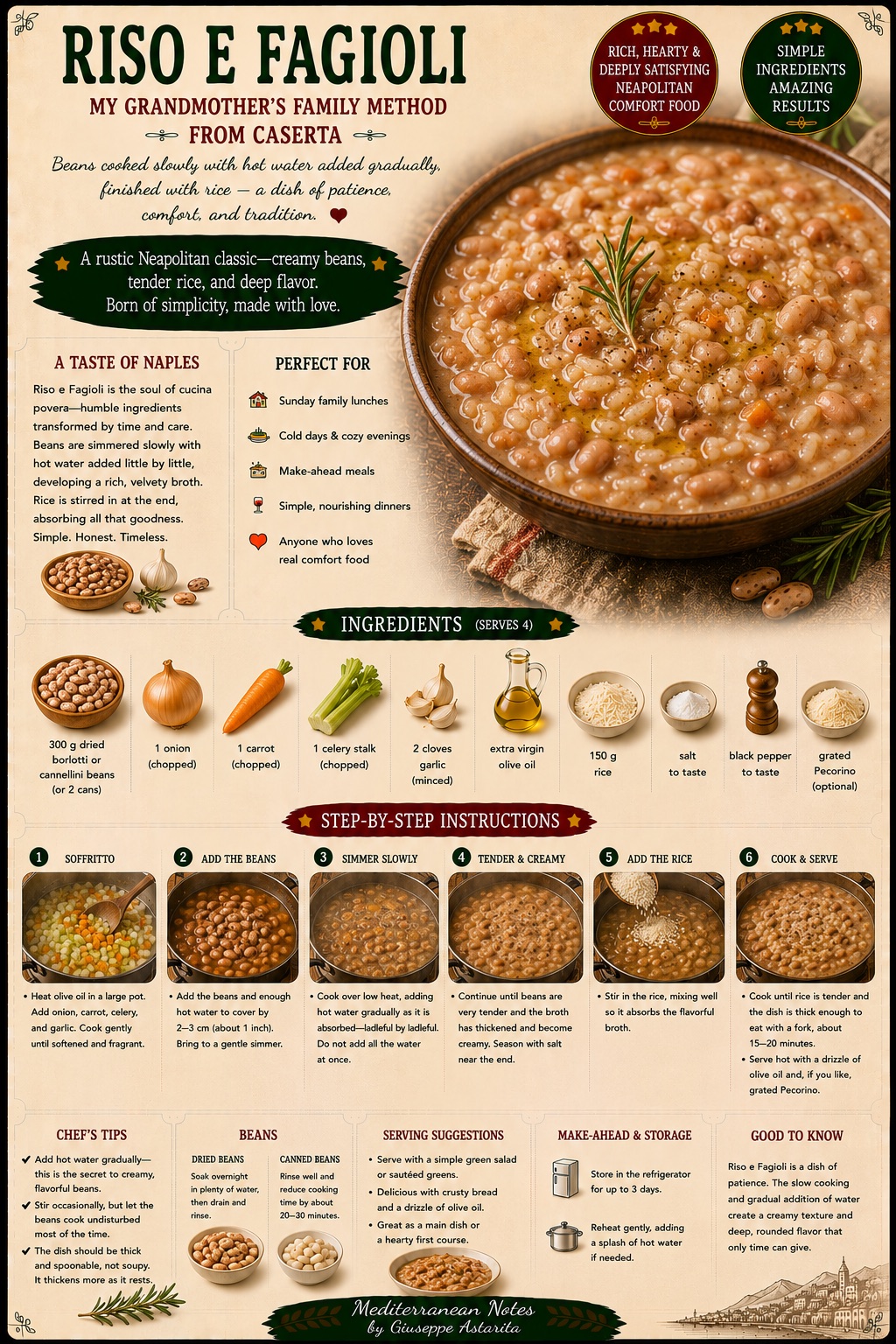
Riso e Fagioli — my grandmother's family method from Caserta. Click to enlarge.
300 g, dried (or 2 cans)Borlotti or cannellini beans
1Onion, finely chopped
1Carrot, diced
1 stalkCelery, chopped
2 clovesGarlic
Extra virgin olive oilTo finish
150 gRice (a short or medium grain)
To tasteSalt and black pepper
To tasteGrated Pecorino, optional
1
If using dried beans, soak overnight and drain. Have a separate pot of water kept hot on the stove alongside the beans.
2
In a heavy pot, soften the onion, carrot, celery, and garlic in olive oil. Add the beans and enough hot water to cover generously.
3
Simmer gently, uncovered or partly covered, adding more hot water from the reserved pot whenever the level drops — a little at a time, keeping the beans always just covered and always at a bare simmer. This will take 1–2 hours for dried beans, less for canned.
4
Salt only once the beans are nearly tender, not before — salting too early toughens the skins.
5
Once the beans are fully tender, stir in the rice and enough hot water to cook it through, about 15–18 minutes, stirring occasionally so it doesn't stick.
Finish with a drizzle of raw olive oil, black pepper, and Pecorino if using. It should be thick enough to eat with a fork, not a soup you'd drink from a cup.
Related
Pasta e Fagioli
The pasta version of the same beans, a family staple in its own right. See
the full recipe.
Cucina Povera
The philosophy behind a dish built from beans, water, and time. See
the full essay.
Buon appetito.