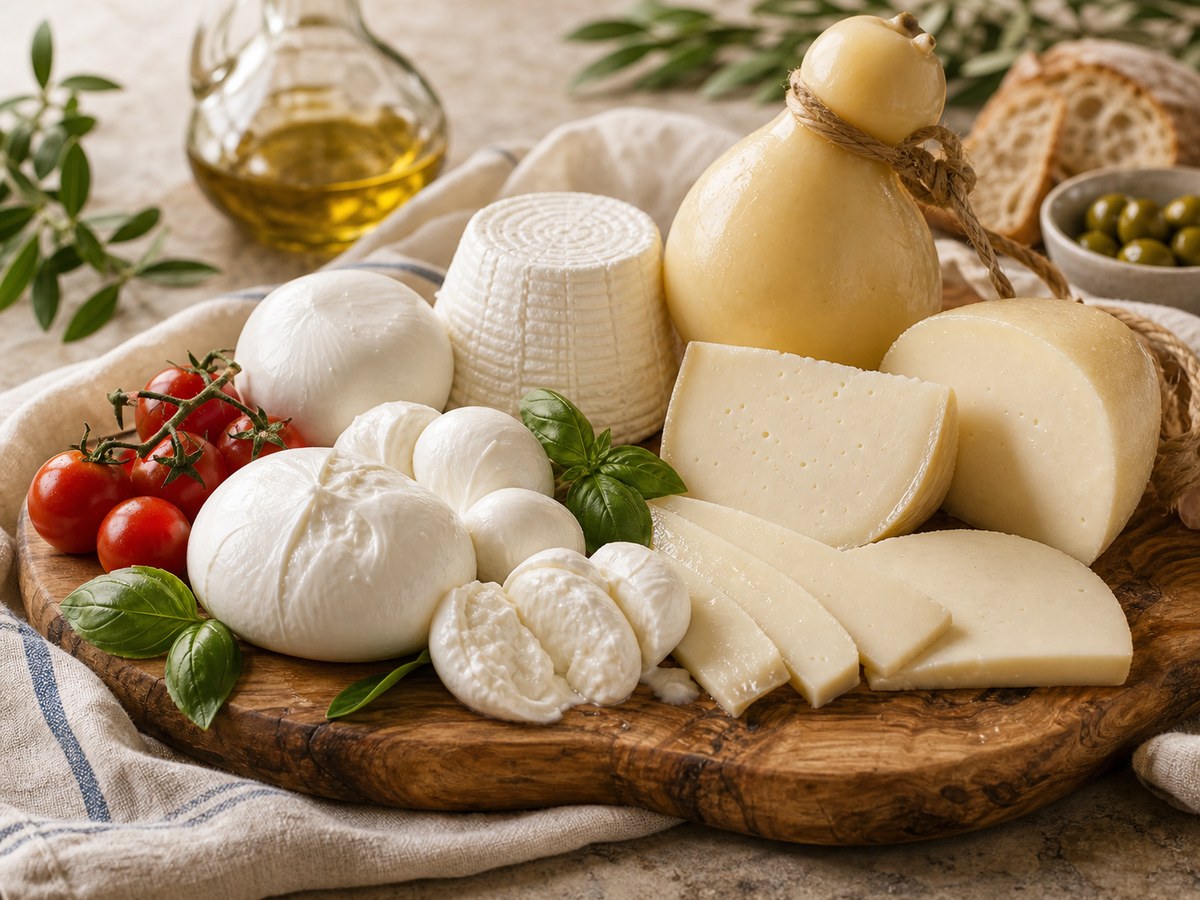
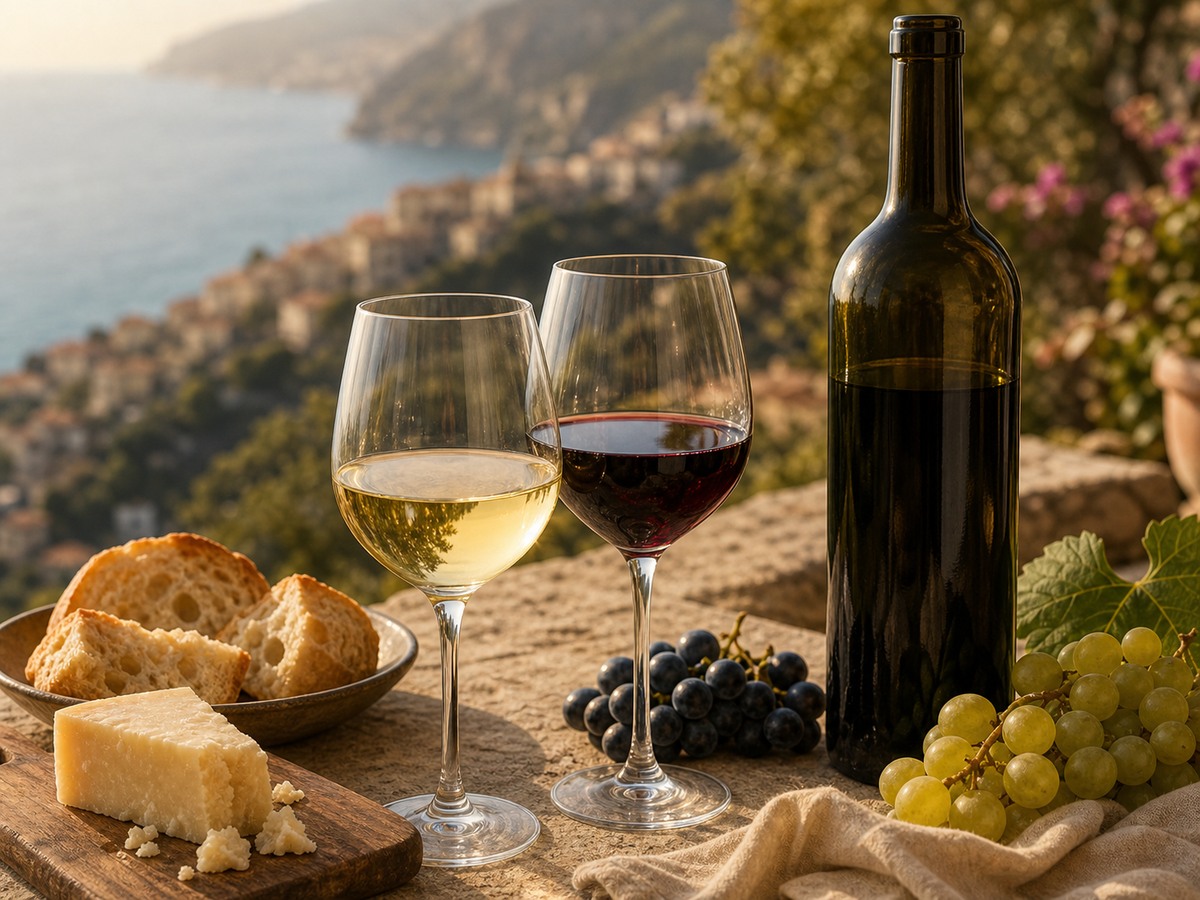
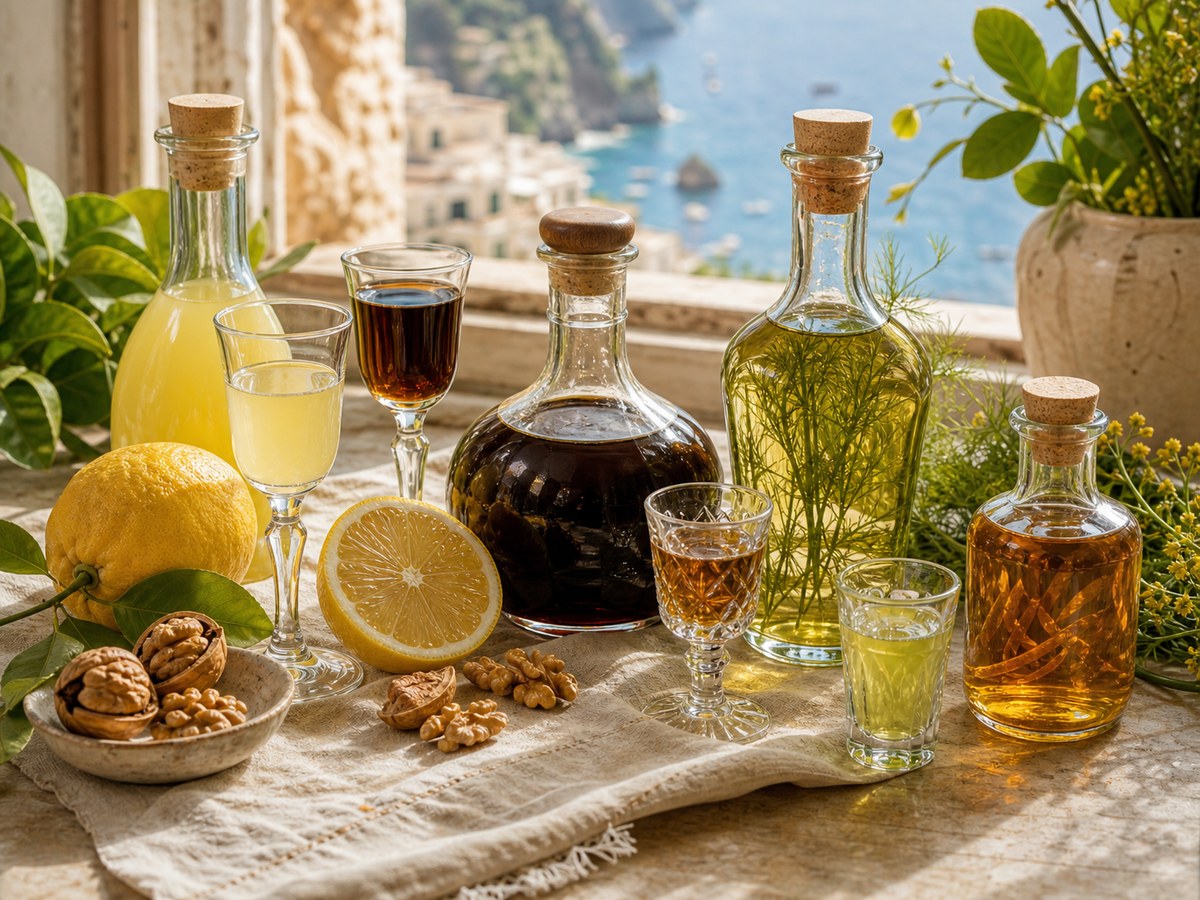
La Pasticceria Napoletana
Sweet Traditions from the Heart of Naples
Every Sunday, Neapolitans go to the pasticceria and bring home a little box of joy — il vassoio delle paste, the tray of little pastries. A cardboard tray wrapped in paper, tied with string like a present. You open it and find all these little pastries — each one a bite of amazing taste and delicacy. The perfect ending to a rich Sunday meal. And then, of course, the liquore to digest it.
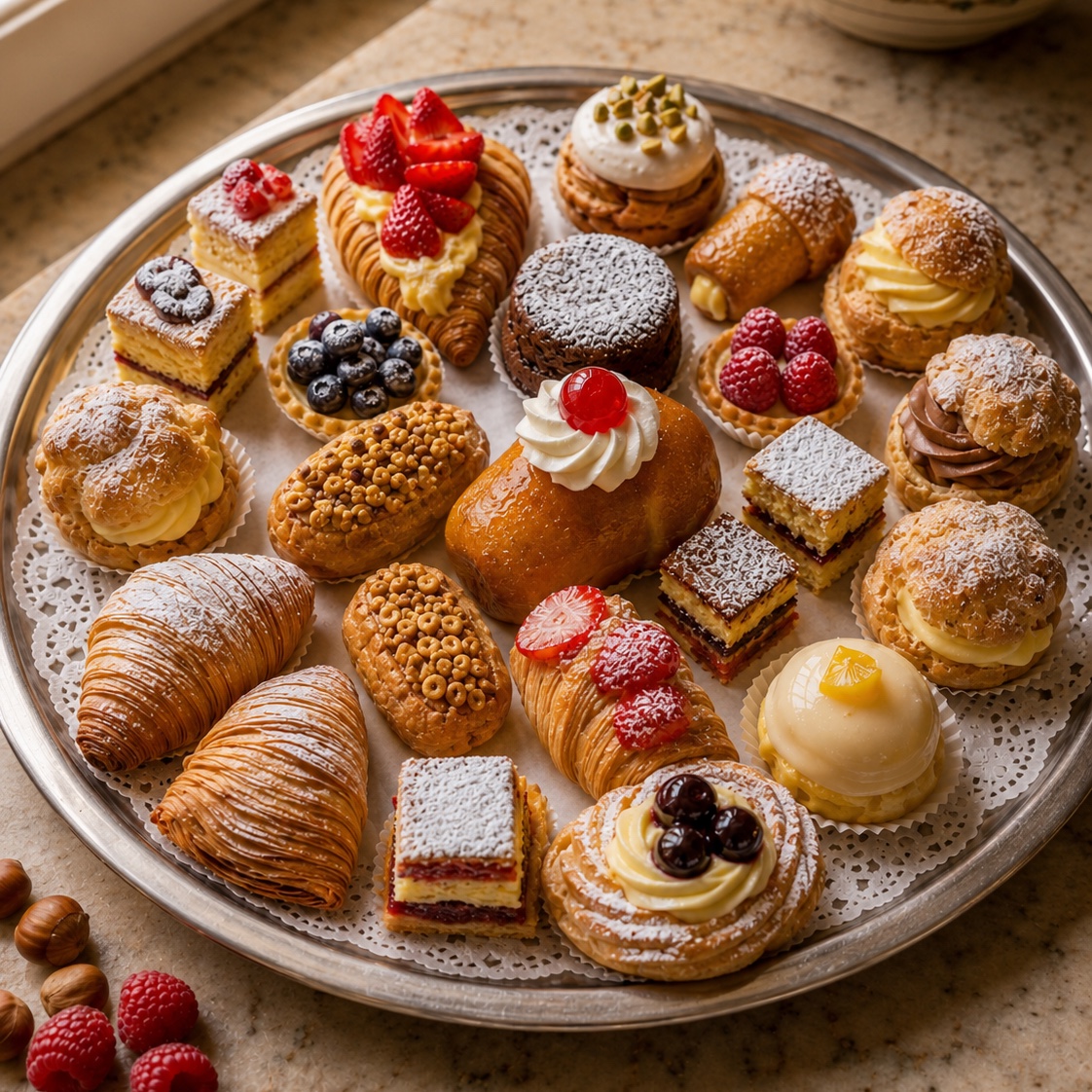
The Sunday pasticceria visit was a ritual with a specific sequence. Someone — usually whoever went to buy the newspaper in the morning — stopped at the pasticceria on the way back or made a separate trip before lunch. Inside, there was the long glass counter: a display case running the length of the shop, filled with the paste dolci arranged in rows, each one small and precise and different from the next. You chose: a sfogliatella riccia, two babà, some profiteroles, a ministeriale, a couple of zuppette, a deliziosa — always, that one was my favorite — maybe a coda d'aragosta if they had it. The person behind the counter assembled the selection on the cardboard tray, layering the pieces with tissue paper between, and then wrapped the whole tray in the shop's paper and tied it with the string — the ribbon-like string that you pulled and it wrapped around the tray and was knotted on top. Like a present.
You carried it home. You placed it on the table. At the end of the meal you opened it. The unwrapping at the table — the knot untied, the paper folded back, the tray revealed with all its contents — was a small ceremony that nobody announced but everyone attended to. Then the choosing again: which piece first, whether to share the babà, whether there was enough sfogliatella for everyone.
In Caserta this played out the same way in every household, with one detail that varied family to family: which pasticceria you actually went to. Each family had its own — the one whose babà or sfogliatella were simply better than anyone else's, an opinion held with total conviction and never really argued, since everyone's own shop was obviously the right one. My father's answer to "which one is best" was never in question either, though for him it was less about the shop and more about the piece: cassatina napoletana, without competition, every single time.
The Neapolitan pasticceria is one of the richest pastry traditions in Italy — and arguably in Europe — and its richness is not accidental. Naples was, for centuries, the capital of the Kingdom of the Two Sicilies and before that a city shaped by successive occupations and cultural influences: Arab, Norman, French Angevin, Spanish Aragonese, Bourbon. Each of these brought culinary techniques, ingredients, and confectionery traditions that the Neapolitan kitchen absorbed and transformed. The Arab influence brought sugar, citrus, almond paste, and the technique of combining sweet and savory that appears in the pastiera. The Spanish brought chocolate and vanilla. The French court brought the refined pastry techniques of the grande pâtisserie — choux pastry, cream-filled pastries, layered cakes — which Neapolitan pasticceri adapted into their own idiom. The convent tradition added centuries of recipes developed by cloistered nuns who had time and skill and a theological comfort with sugar.
In a typical pasticceria you find a long glass display case full of little paste dolci to choose from. Each one small — two or three bites at most. Each one technically distinct from the next: different dough, different filling, different technique. The variety in a single tray from a good Neapolitan pasticceria represents the cumulative result of centuries of culinary influence compressed into a cardboard tray tied with string.
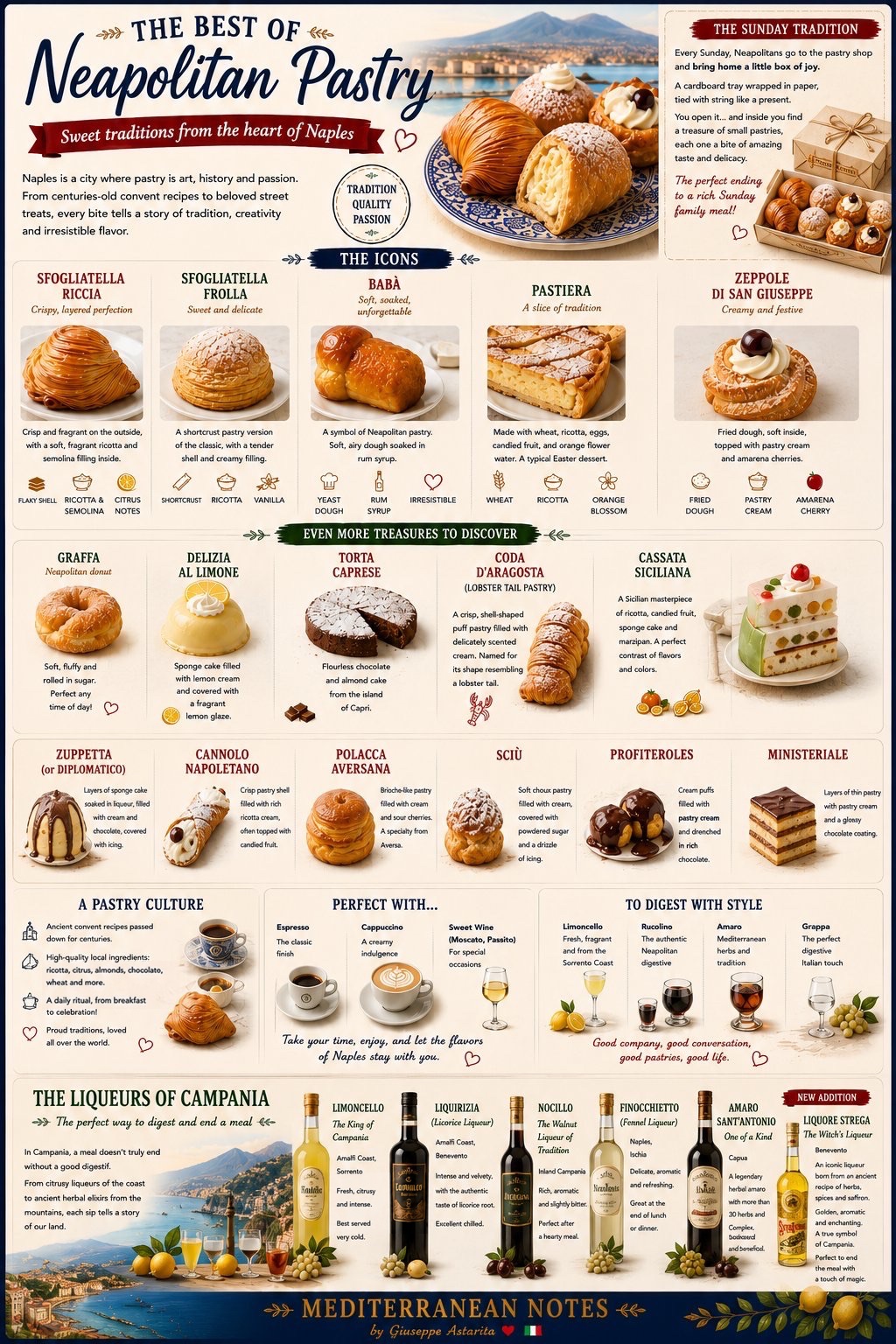
La pasticceria napoletana — dolci tradizioni dal cuore di Napoli. Click to enlarge.
The iconic pastries — what to look for in the tray
Sfogliatella Riccia
Crispy, layered perfection
The most technically demanding of Neapolitan pastries — hundreds of paper-thin layers of dough formed into a shell shape, filled with ricotta, semolina, candied citrus, and cinnamon. Crisp and shattering on the outside, soft and fragrant inside. The definitive icon of the pasticceria. Named for the nuns of the Santa Rosa convent on the Amalfi coast who invented it in the 17th century.
Origin: Amalfi Coast / 17th century convent tradition — see the
full post
Sfogliatella Frolla
Sweet and delicate
The same filling as the riccia — ricotta, semolina, candied citrus — but encased in a shortcrust pastry shell rather than the layered dough. Softer, more yielding, easier to eat without debris. The version preferred by those who find the riccia too dramatic. Both are correct.
Companion to the riccia — same filling, different casing. See the
full post
Babà al Rum
Soft, soaked, unforgettable
A yeast dough cake soaked — thoroughly, generously, without reservation — in rum syrup. Brought to Naples by the Bourbon court from France (originally a Polish invention), it was adopted so completely that it is now the most Neapolitan of pastries. The correct babà is saturated to its center; a dry babà is a failed babà.
Polish → French → Bourbon court → Naples. Fully Neapolitan. See the
full post
Pastiera Napoletana
A slice of tradition — Easter only
The Easter tart — ricotta, cooked wheat, eggs, candied citrus, and orange flower water in a shortcrust pastry case. Made at home for Easter and also available at the pasticceria during the season. Already described in its own post in this collection. Its presence in the Sunday tray is seasonal: Easter and the weeks around it.
Coda d'Aragosta
The lobster tail pastry
A crisp shell of sfogliatella-style layered pastry shaped like a lobster tail, filled with a delicately scented pastry cream or ricotta cream. Larger than most paste dolci — one of the more substantial choices in the tray. Named for its shape, which is exactly what it suggests.
Neapolitan variation on the sfogliatella tradition
Zuppetta / Diplomatico
Soaked layers
Layers of sponge cake soaked in liqueur, filled with cream and chocolate, covered with icing. Related to the trifle tradition but Neapolitan in character — richer, more soaked, more generous with the liqueur. The kind of pastry that arrives in the tray and is slightly damp to the touch, which is exactly right.
French influence through the Bourbon court. See the
full post
Profiteroles
Cream puffs in chocolate
Choux pastry balls filled with pastry cream and drenched in warm chocolate glaze. Technically French (the pâte à choux technique), completely assimilated into the Neapolitan repertoire. Individual pieces in the tray or assembled into a tower for celebrations. The chocolate shell sets as it cools.
French choux technique, Neapolitan assembly. See the
full post
Ministeriale
Layers and chocolate
Thin layers of pastry with cream filling and a glossy chocolate exterior. One of the more elegant of the paste dolci — rectangular, neat, chocolate-dark on top. The name's origin is disputed; the pastry's quality, in a good pasticceria, is not.
Classic Neapolitan pasticceria repertoire
Cassatina Napoletana
A single slice of celebration
A miniature cassata: pan di spagna glazed in smooth white icing, filled with sweetened ricotta and chocolate chips, a candied cherry on top. My father's favorite in the tray, without competition.
Deliziosa Napoletana
Hazelnut, quietly overlooked
Two thin disks of pasta frolla around a hazelnut cream lightened with pastry cream, the exposed edge rolled in toasted hazelnuts, the top buried in powdered sugar. Never gets the name recognition of sfogliatella or babà, but it's in the tray as reliably as either.
Cestino con Fragoline di Bosco
The mignon fruit tart
A small crisp pasta frolla tartlet, crema pasticcera, and a dome of fragrant wild strawberries — the same shell-and-cream logic as a full crostata di fragole, built tiny instead. One of my favorites in the tray.
A few tray regulars don't have their own recipe here yet — worth naming honestly rather than skipping: cannolicchio napoletano, a smaller, denser-shelled cousin of the Sicilian cannolo filled with sweetened ricotta or crema pasticcera, and capresina, a single-serving torta caprese baked directly in its own small paper cup.
"Mignon" isn't Italian at all — it's French for small, dainty, and the tray's whole miniature format traces back to eighteenth-century France and the petit four, "little oven," sweets built to close out an aristocratic meal in the cooling residual heat left after the main baking was done. What Italians once called a "cabaret" — an old-fashioned word now, rarely used — was exactly this assorted box, bought to share with the whole family after Sunday lunch.
Why Neapolitan pastry is the richest in Italy — the historical layers
The unusual complexity and variety of the Neapolitan pastry tradition reflects the city's position as a major Mediterranean capital under successive ruling cultures. The Arab presence in Sicily and southern Italy from the 9th to 11th centuries introduced refined sugar production, citrus cultivation, almond cultivation and almond paste, and flavor combinations (citrus with dairy, nuts with honey, rose water and orange flower water as aromatics) that remain central to Neapolitan and Sicilian confectionery. The Norman and then Angevin courts brought northern European dairy and egg techniques. The Spanish Aragonese period (15th–17th centuries) introduced chocolate and vanilla from the New World, which entered the Neapolitan pastry kitchen immediately and permanently.
The French Bourbon dynasty (1734–1861), which ruled the Kingdom of Naples and the Two Sicilies, had the most direct influence on the refined pasticceria tradition. The Bourbon court brought French pastry chefs to Naples, introducing pâte à choux (the basis for profiteroles and bignè), advanced cream preparations, and the culture of the pâtisserie as an institution. Neapolitan pasticceri adapted these techniques to local ingredients — the ricotta of the Campanian water buffalo tradition, the citrus of the Sorrentine peninsula, the wheat of the Campanian plain — and produced a synthesis that is distinctly their own. The babà, invented in Poland and refined in France, arrived in Naples with the Bourbons and is now so thoroughly Neapolitan that most Neapolitans are surprised to learn it is not originally from there. The convent tradition — nuns across Campania producing pastries as a source of income for their communities — added centuries of accumulated recipes that have no equivalent in other Italian regions. The result of all of this is the long glass counter of the pasticceria napoletana on a Sunday morning.
And then the liquore — to digest it properly
A Campanian meal does not truly end without a digestivo. This is stated not as preference but as structural fact: the heavy Sunday lunch — primo, secondo, contorno, insalata, pastries — requires assistance, and the liquori of Campania provide it in the specific form of bitter, aromatic, or citrus-based spirits that stimulate bile production, support gastric emptying, and signal to the body that the meal is concluded. The science of this is the same as the end-of-meal salad discussed in the insalate verdi post — bitter compounds activate digestive processes — but the liquore achieves it more emphatically and with the addition of alcohol, which has its own gastric effects.
Limoncello
The king of Campania
Lemon zest infused in neutral spirit, sweetened with sugar syrup. From the Amalfi coast and Sorrento. Served very cold, almost frozen. Fresh, citrusy, intensely lemony. The most famous Campanian liquore internationally. See the
full recipe.
Rucolino
The authentic digestivo
Made from wild arugula (rucola selvatica) — the same plant foraged from the Caserta hills described in the insalate verdi post. Slightly bitter, slightly peppery, very green. The most distinctly Neapolitan of the digestivi. See
liquori di Campania.
Nocillo
Walnut liqueur of tradition
Made from green walnuts harvested on the Feast of San Giovanni (June 24th, when the walnuts are still unripe). Rich, slightly bitter, dark brown. Best after a heavy meal. The walnut must be green — the tradition of the harvest date is not decorative. See
liquori di Campania.
Finocchietto
Fennel liqueur
Made from wild fennel — aromatic, slightly sweet, gently digestive. From the Cilento and rural Campania. Less internationally known than limoncello but deeply rooted in the domestic digestivo tradition. See
liquori di Campania.
Amaro Santantonio
One of a kind — Capua
A legendary herbal amaro from Capua with more than 30 herbs, spices, and saffron. Complex, balsamic, beneficial. The kind of amaro that tastes medicinal in the best sense — something that feels like it is doing something. See
liquori di Campania.
Liquore Strega
The witch's liqueur — Benevento
Made from 70 herbs and spices, saffron-yellow in color, with a complex flavor that is simultaneously herbal, sweet, and slightly medicinal. From Benevento in the Campanian hinterland. Golden, aromatic, a true symbol of Campania. See
liquori di Campania.
The Sunday meal ended with the pastries and the liquore in the same way that it began with the pasta and the ragù — not by accident but by a structure that had been developed over generations and that made physiological sense even when nobody was thinking about it in those terms. The meal was a long arc from the first course to the digestivo, and the pastries from the cardboard tray were the penultimate act. The liquore was the last. Good company, good conversation, good pastries, good life. The infographic's closing line is entirely correct.
Buona domenica — e il vassoio aperto sul tavolo.