I Liquori di Campania
Tradition, Flavor and Well-Being in Every Sip
In Italy, a meal doesn't truly end without a good digestivo. Before the meal and after it, always a coffee. Typical of each Italian region, we had local favorites — from the citrusy limoncello of the Amalfi coast to the wild rocket rucolino of Naples, to the ancient Liquore Strega of Benevento. Each sip tells a story of the land.
The Italian meal has a precise arc. It begins with the caffè — espresso before, to prepare the palate — or sometimes with a small aperitivo. It proceeds through the courses. It ends with the digestivo: a small glass of something bitter, aromatic, citrusy, or herbal, sipped slowly, that signals to the body and to the table that the meal is finished. Then, after the digestivo, another coffee — the final espresso that closes the whole sequence. This is not a custom that requires explanation within Italy; it is simply how meals end. The digestivo is physiologically sensible (bitter compounds stimulate bile and support digestion), culturally embedded (passed from generation to generation as the correct conclusion), and — not incidentally — very pleasant. Each region of Italy has its own. Campania has several.
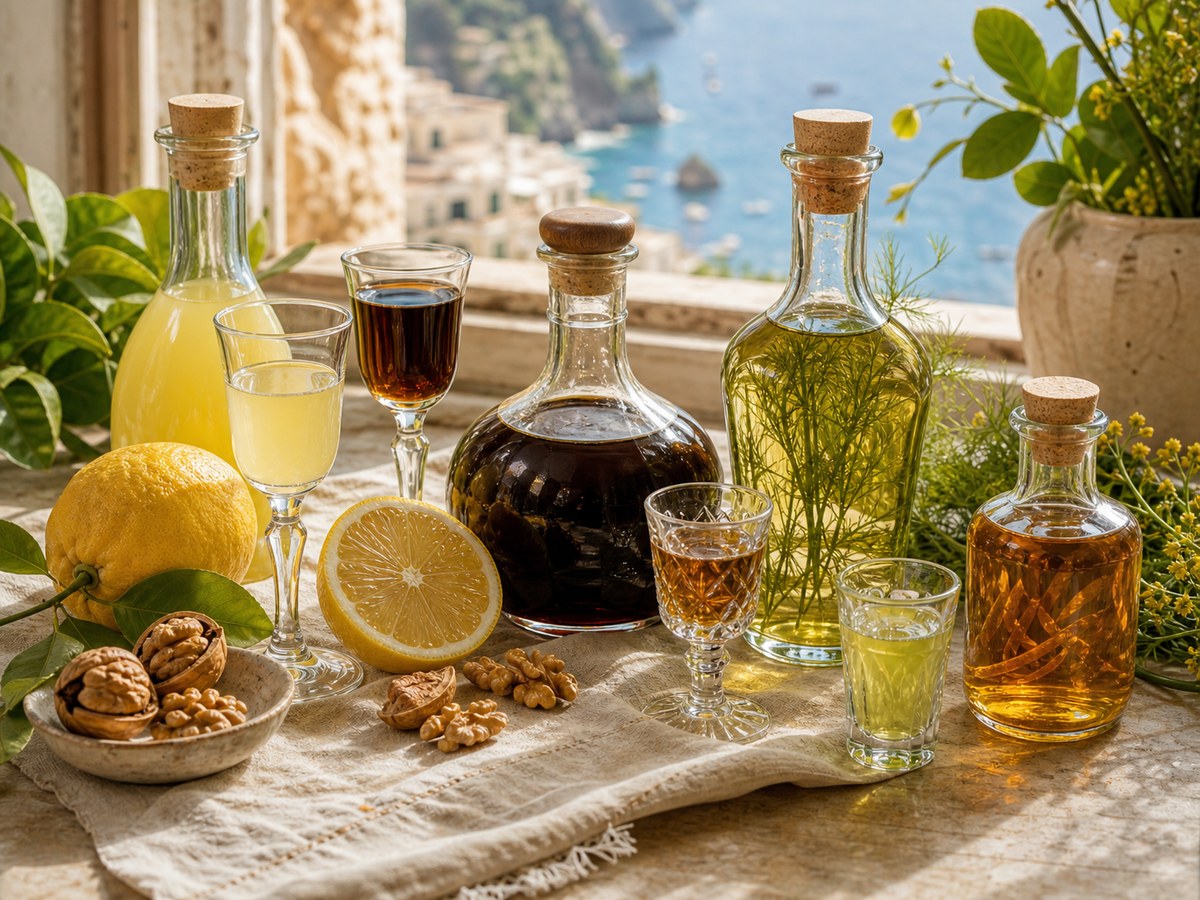
The liquori of Campania span the full range of digestivo styles. The citrus liqueurs of the coast — limoncello from the Amalfi peninsula and Sorrento, crema di limoni from the same area — are cold, bright, and immediately refreshing, the fat-dissolving acidity of the lemon working alongside the alcohol to cut through the richness of the meal. The bitter herbal liqueurs of the interior — genziana from the Apennine mountains, amaro Santantonio from Capua — are slower and more complex, their bitter compounds doing the actual digestive work over ten or fifteen minutes of sipping. The Liquore Strega from Benevento, made from 70 herbs and spices and colored gold by saffron, is something between the two: aromatic and sweet and herbal simultaneously, a liquore that tastes like the synthesis of all the others.
The rucolino deserves special attention in this collection because it connects two posts. The wild arugula (rucola selvatica) that my parents foraged from the hills around Caserta — described in the insalate verdi post as landscape knowledge disappearing faster than recipe knowledge — is the same plant that becomes rucolino: infused in alcohol and sweetened, the characteristic peppery bitterness of the wild leaf transformed into a dark, herbaceous liquore that tastes precisely of that plant, which tastes precisely of those hills.
Before and after the big meals, always a coffee. The espresso before lunch sets up the palate and signals the beginning of something substantial. The espresso after the digestivo closes the whole arc. This sequencing — espresso at the start, digestivo near the end, espresso to close — is not negotiable in the Italian understanding of how a serious meal concludes. It is structure, not ceremony.
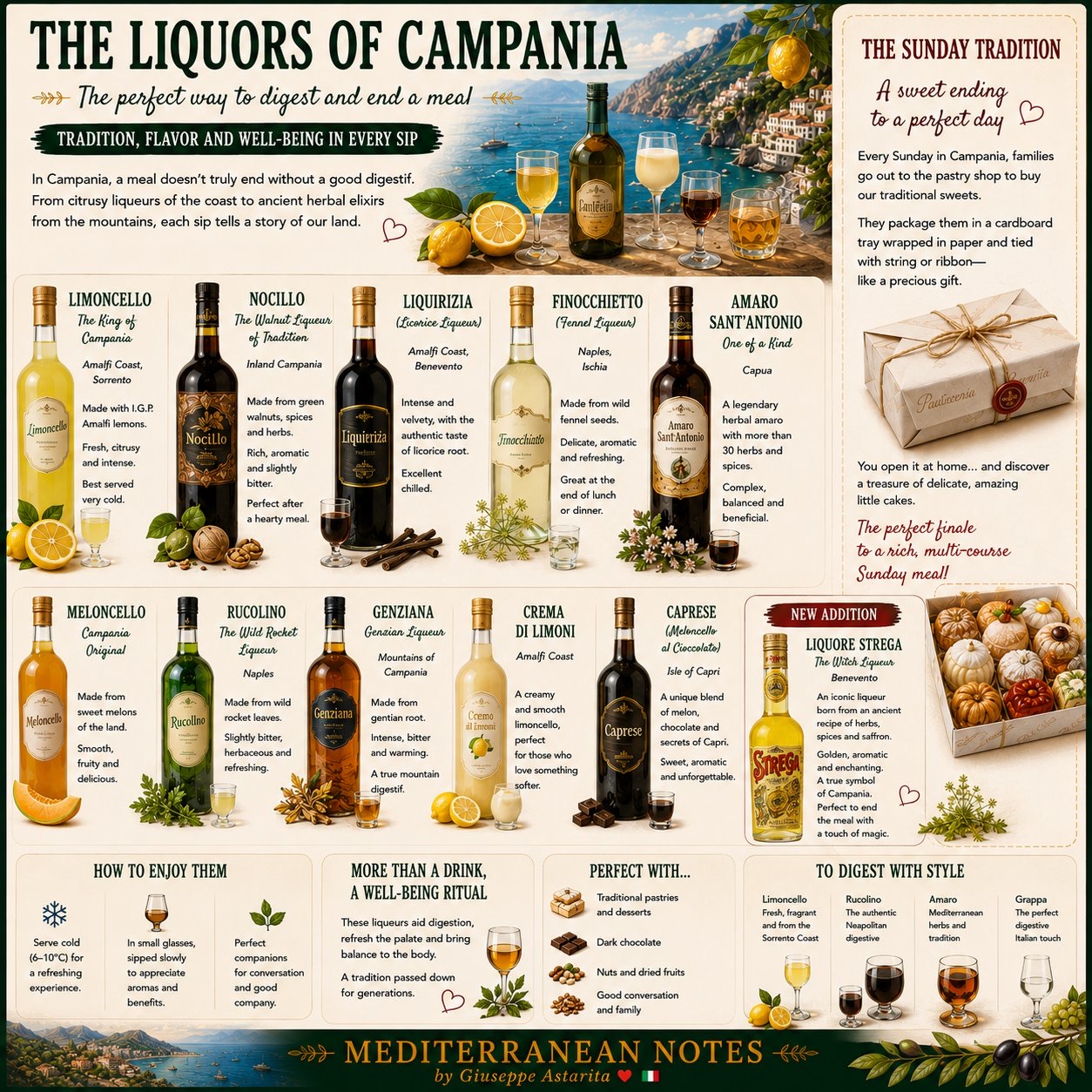
I liquori di Campania — tradizione, sapore e benessere in ogni sorso. Click to enlarge.
The liquori — a complete guide
Limoncello
The king of Campania
Amalfi Coast, Sorrento — I.G.P. Amalfi lemons
Lemon zest from IGP Amalfi or Sorrento lemons infused in pure neutral spirit, sweetened with sugar syrup. Fresh, citrusy, intensely lemony. Served very cold — 6 to 10°C, almost frozen. The most internationally recognized Campanian liquore and the one most likely to be on every Italian table after a summer meal. The quality varies enormously: a limoncello made from IGP Sorrento lemons at home tastes nothing like the mass-produced bottles.
Liquore Strega iconic
The Witch's Liqueur
Benevento — born from an ancient recipe of herbs, spices and saffron
Made from a secret blend of 70 herbs and spices, colored golden-yellow by saffron, with a complex flavor that is simultaneously sweet, herbal, and slightly medicinal. From Benevento in the Campanian interior — the city historically associated with witchcraft, which gives the liquore its name and its mythology. A true symbol of Campania. The Strega Alberti distillery has been producing it since 1860. Perfect to end the meal with a touch of magic.
Nocillo
The walnut liqueur of tradition
Inland Campania
Made from green walnuts harvested on the Feast of San Giovanni (June 24th, when the walnuts are still unripe and their essential oils are at peak). Rich, aromatic, slightly bitter, dark brown. The harvest date is not ceremonial — unripe walnuts at that exact stage have the specific compounds required. Best after a hearty meal. Excellent chilled.
Rucolino
The wild rocket liqueur
Naples — made from wild rucola selvatica leaves
Made from wild arugula leaves infused in alcohol — the same rucola selvatica that my parents foraged from the hills around Caserta, described in the insalate verdi post. Slightly bitter, peppery, herbaceous and refreshing. The authentic Neapolitan digestivo — less known internationally than limoncello but deeply rooted in the local tradition. Tastes precisely of where it comes from.
Limoncello Crema / Crema di Limoni
Smooth and creamy
Amalfi Coast
A creamier, smoother version of limoncello made with milk or cream in addition to lemon and spirit. Less sharp than the standard limoncello, with a rounder texture. Perfect for those who find the bite of regular limoncello too intense. Served cold but not as frozen as the standard version.
Liquirizia (Licorice Liqueur)
Intense and velvety
Amalfi Coast, Benevento
Made from licorice root — intense, dark, velvety. The authentic taste of licorice root, which is far more complex than any candy version. Excellent chilled. A specific taste that divides opinion cleanly: those who love it find nothing else comparable. From the Calabrian and southern Italian licorice cultivation tradition.
Finocchietto
Wild fennel liqueur
Naples, Ischia — from wild fennel seeds
Made from wild fennel seeds — delicate, aromatic, refreshing. Less assertive than the other digestivi. Great at the end of lunch or dinner as a gentler alternative to the heavier amari. The fennel's natural digestive properties (carminative, anti-spasmodic) make it well suited to its role.
Genziana
The mountain digestivo
Mountains of Campania — from gentian root
Made from gentian root, found in the Apennine highlands of Campania. Intense, bitter, and warming — a true alpine-style amaro. The bitterness of gentian is among the most potent in the plant kingdom and the most effective digestive stimulant. A mountain liquore that knows what it is doing.
Amaro Santantonio
One of a kind
Capua — legendary herbal amaro
More than 30 herbs and spices including saffron. Complex, balanced, balsamic, and genuinely beneficial in the sense that the bitter compounds do real digestive work. From Capua in the Caserta province — a local pride that deserves wider recognition. The kind of amaro that tastes medicinal as a compliment.
Meloncello + Caprese
The sweeter alternatives
Campania; Isle of Capri
Meloncello is made from the sweet melons of the Campanian land — smooth, fruity, delicious. The Caprese liquore from the Isle of Capri combines melon, chocolate, and the secrets of Capri into something sweet, aromatic, and uniquely island. Both are gentler choices for those who prefer the sweeter end of the digestivo spectrum.
How to enjoy them
Serve cold
6–10°C for citrus liqueurs. Store bottles in the freezer. The cold temperature preserves the aromatics and produces the refreshing, almost icy quality that makes a good limoncello what it is.
Small glasses, sipped slowly
A digestivo is not a drink — it is a conclusion. 30–50 ml in a small glass, sipped slowly over 10–15 minutes. This is the time needed for the bitter compounds to do their digestive work and for the conversation to settle into the end of the meal.
Good company required
The digestivo is a social act as much as a physiological one. It marks the moment when the meal is done and the conversation continues. Rushed or drunk alone, it loses most of its meaning. Sipped slowly with people who have just shared a meal — this is what it is for.
Why bitter liqueurs aid digestion — the physiology of the digestivo
The digestive effect of bitter herbal liqueurs — amari, genziana, rucolino, nocillo — is not folk belief. Bitter compounds (primarily sesquiterpene lactones, iridoids, and alkaloids depending on the plant) activate bitter taste receptors (TAS2R family) on the tongue and in the upper gastrointestinal tract. This activation triggers a cascade: increased salivary amylase production, stimulation of gastric acid secretion, increased bile release from the gallbladder, and enhanced gastric motility — the coordinated muscle contractions that move food through the digestive system. The net effect after a heavy meal is that fat emulsification is improved (bile), protein digestion is supported (gastric acid), and gastric emptying is accelerated (motility). This is the mechanism behind the centuries-old European tradition of the post-prandial bitter digestivo.
The alcohol content (typically 30–40% ABV) has its own effect: it acts as a solvent for the fat-soluble bitter compounds, increasing their bioavailability, and in small quantities may relax the lower esophageal sphincter and reduce the sensation of fullness. The combined effect of bitter compounds and moderate alcohol consumed in small quantities after a large meal produces a genuine, measurable improvement in digestive comfort — which is why the tradition developed and why it persists. The citrus liqueurs (limoncello) work through a different mechanism: citric acid and the volatile compounds of lemon zest stimulate digestive secretions through the sour and aromatic receptor pathways rather than the bitter ones, producing a lighter but still effective digestive effect. The tradition got this right across centuries without the receptor biology.
Each region of Italy has its own liquori, and the Campanian selection is one of the richest — which reflects both the agricultural diversity of the region (citrus on the coast, wild herbs in the mountains, fennel in the fields, walnuts in the interior) and the long tradition of liquore production tied to monastic and artisanal knowledge. The Liquore Strega from Benevento, produced since 1860, is perhaps the most historically continuous of them: a liquore whose exact recipe has remained unchanged for over 160 years, made from plants gathered from across the Mediterranean. It tastes of that continuity. A good digestivo always does.
Salute — tradizione, sapore e benessere in ogni sorso.