Le Creme della Pasticceria Napoletana
A guide to the creams behind every Neapolitan pastry
Every filled pastry on this blog — babà, sfogliatella, zeppole, pastiera, and the whole pan di spagna family — comes down to one of a small set of creams. Naples makes them denser and richer than the textbook versions, built to hold a piped "riccio" without collapsing. Here is what separates them, and which cake on this blog uses which.
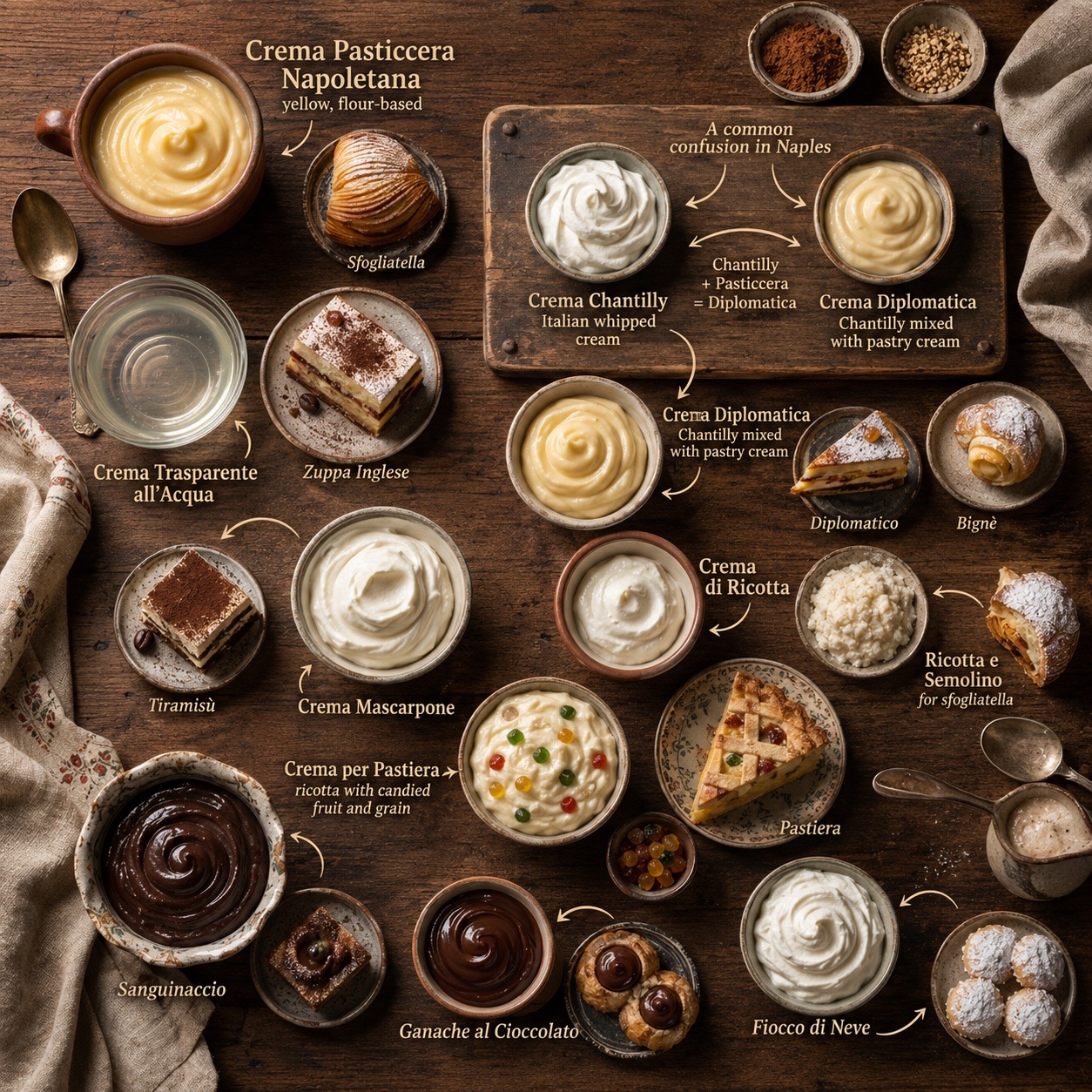
A Neapolitan pasticceria window is really just a handful of creams, dressed differently. Once you know the difference between crema pasticcera and crema diplomatica, or between real chantilly and the "chantilly" that half of Naples uses to mean something else entirely, the whole tray stops being a mystery.
The two pastry creams
Crema Pasticcera alla Napoletana
The real Neapolitan version is thickened with flour alone, not cornstarch — denser, sweeter, sturdy enough to crown a zeppola without sagging. Many home versions (including
zeppole di San Giuseppe on this blog) use cornstarch instead, which is lighter but less traditional. The base for babà, zeppole, and bignè fillings.
Crema Trasparente all'Acqua
Water instead of milk, cooked with sugar, starch, and egg yolks into an ultra-glossy, almost transparent glaze — more decoration than filling. This is the shine you see brushed over babà and zeppole in a pasticceria window. My mother made her own home version rarely — water and freshly squeezed lemon juice in place of milk, for a cream with a much stronger, more assertive lemon flavor than the usual zest-in-milk version. She used it as an actual filling, not just a glaze, on
zeppole and on
crostata di fragole.
The ricotta creams
Ricotta — historically sheep's or buffalo milk — is as central to Neapolitan pastry as flour itself.
Crema di Ricotta
Ricotta beaten with sugar, cinnamon, vanilla, and chocolate chips or candied fruit. The filling in
sfogliatella frolla and the base for Poppella's fiocco di neve.
Crema di Semolino e Ricotta
A "polentino" of water and semolina, cooled, then worked with ricotta, sugar, egg, cinnamon, and candied orange. Specifically the filling inside
sfogliatella riccia — the layered, hand-shaped version, not frolla.
Crema per Pastiera
Sieved ricotta and sugar bound with cooked wheat, orange zest, and lard or butter — many households soften it further with a portion of crema pasticcera folded through. The heart of
pastiera napoletana.
Crema del Fiocco di Neve
The cloud made famous by Pasticceria Poppella: a milk-and-honey base cream, folded with finely sieved ricotta and whipped cream. Airier and more delicate than any of the other ricotta creams here.
Chantilly vs. diplomatica — the confusion, settled
The two are not the same cream
Crema chantilly, correctly, is just whipped cream — fresh cream beaten with vanilla and powdered sugar, nothing else. In Naples it's used to garnish fruit, top a cake, or lighten a babà.
Crema diplomatica is crema pasticcera folded together with whipped cream — a real hybrid, softer and lighter than pastry cream alone but far richer than plain whipped cream. This is the filling inside the giant bignè, code d'aragosta, sliced babà, and most "chantilly-filled" cakes on a Neapolitan tray.
The confusion is not a mistake unique to this blog — plenty of Neapolitan pasticcerie label diplomatica as "chantilly" too, and on this blog,
scazzetta del cardinale and
torta di pan di spagna con chantilly e fragole both use true diplomatica under a name that says chantilly.
Torta mimosa uses the same diplomatica and calls it correctly.
The rest of the repertoire
Crema al Cioccolato / Ganache
Chocolate melted into hot cream — thin as a glaze, whipped as a filling. The chocolate cream inside
teste di moro on this blog.
Crema al Mascarpone
Mascarpone beaten with egg yolks and sugar — no cooking, no cream folded in. Not a Neapolitan invention at all, but the cream behind
tiramisù, which appears often enough on Campanian tables to earn its place here.
Crema al Burro e Nocciola
Butter beaten with hazelnut paste, lightened by folding in a portion of plain crema pasticcera — richer than a straight buttercream, less sweet than it sounds. The filling inside
deliziosa napoletana, the round frolla-and-hazelnut pastry that shows up on the Sunday tray without ever getting the name recognition of sfogliatella or babà.
Know these creams, and the whole pastry tray makes sense.