Sides & Vegetables · Spring · Campanian Tradition
Il Carciofo a Napoli
The most important vegetable of the Campanian spring — its varieties, its history, and the many things my mother did with it.
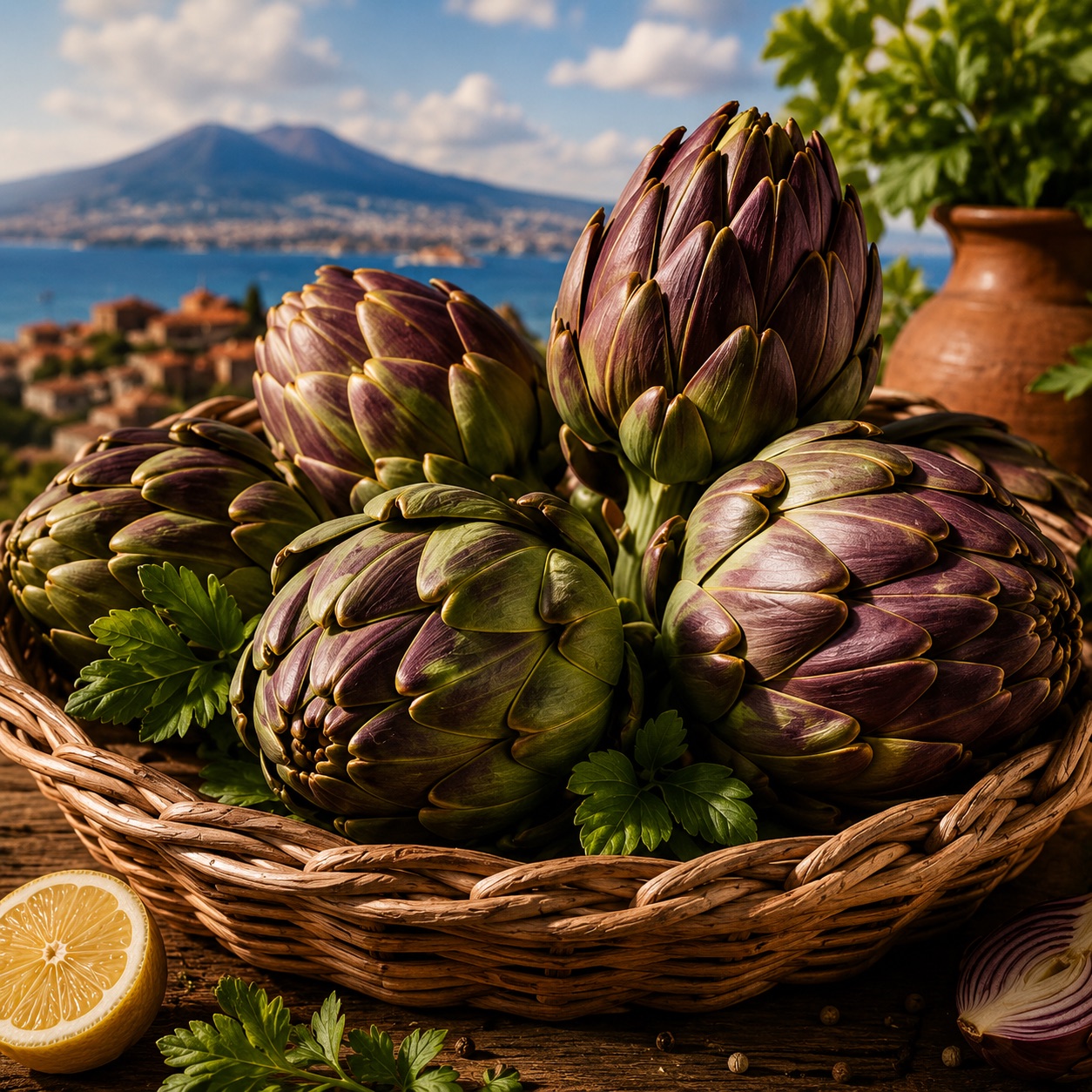
From February to May, artichokes are everywhere in Campania. At the market stalls they arrive in crates, still attached to their stems, the violet-tipped leaves closed tight. My mother bought them by the armful. There was always a bowl of water and lemon on the counter — the preparation bowl into which each trimmed artichoke went immediately to prevent browning. She worked quickly, standing at the sink, and while she worked she said things about artichokes. I carciofi contengono tanto ferro. Artichokes have lots of iron. Fanno bene. They're good for you. She said it every spring, as though the mineral content were part of the cleaning ritual itself.
In Neapolitan cooking, the artichoke is more than an ingredient — it is a seasonal event. The Carciofo Violetto di Schito, grown between Pompei and Castellammare di Stabia in volcanic Vesuvian soil, is the variety that defines the local tradition: no spines, tender inner leaves, a mild flavour that becomes genuinely sweet when braised slowly. But artichokes also appear from the Carciofo di Paestum (grown in the Sele plain near Paestum), the Mammarella of Acerra, and dozens of other local micro-varieties, each cultivated in a specific microclimate and used in ways specific to that place.
This post is a guide to the artichoke preparations that appear on this site — the different things my mother did with the same ingredient, depending on the day, what was available, and who was asking. My father asked for the alla romana. The fried ones appeared when there was time. The frittata was a weekday dinner. The stewed version was the most reliable of all.
The varieties of Campania
Carciofo Violetto di Schito
Pompei · Castellammare di Stabia
No spines. Tender, pale inner leaves. Grown in volcanic soil that gives it an unusually high mineral content and a sweet, delicate flavour. The Campanian artichoke par excellence — used in stewed, fried, and frittata preparations.
Carciofo di Paestum
IGP · Sele Plain · Salerno
Round and nearly spineless, with a violet exterior and a more pronounced mineral flavour from the alluvial plain soil. Slightly larger than the Schito variety. Excellent for braising whole.
Carciofo Mammarella
Acerra · Naples Province
Large, round, grown in the fertile plains north of Naples. Known for its size and for being one of the most popular varieties at Neapolitan markets. The name derives from the shape, thought to resemble a breast (mammella).
Romanesco (for alla giudia)
Roman Countryside
The globe artichoke of Rome — large, round, thornless, with a shape that makes it ideal for the carciofi alla romana and alla giudia. Not grown in Campania but available at Naples markets in spring and known to Neapolitan cooks.
The preparations — a seasonal map
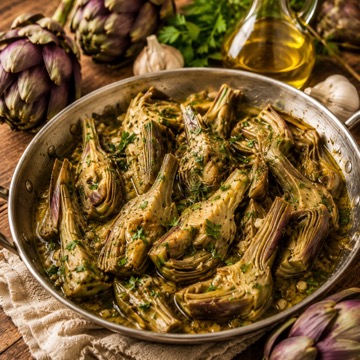
Carciofi Stufati alla Napoletana
Braised · Spring · The reliable one
Quartered artichokes braised with garlic, parsley, and white wine until completely tender. The most common weekday preparation — simple, adaptable, served warm or at room temperature. Full post →
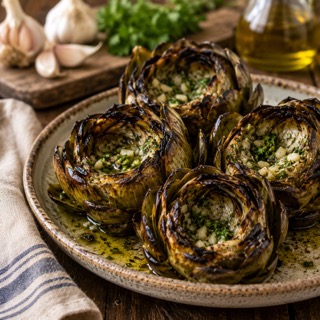
Carciofi Arrostiti sulla Brace
Contorno · Spring · Street food & home cooking
Whole artichokes stuffed with garlic, parsley and olive oil, placed directly on the coals and cooked under a damp cloth. Still sold at street stalls around Easter in Caserta and Naples. Full post →
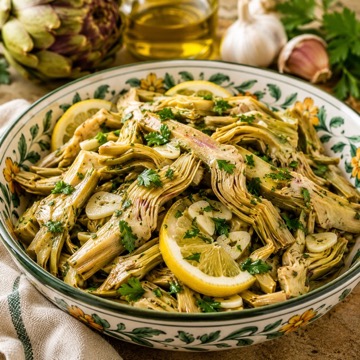
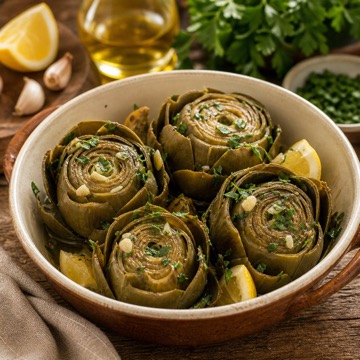
Insalata di Carciofi alla Napoletana
Contorno · Spring · Dressed warm
Artichokes cooked until tender but still firm, then dressed while warm with garlic, olive oil, parsley, and lemon. A side dish where the artichoke stays itself. Full post →
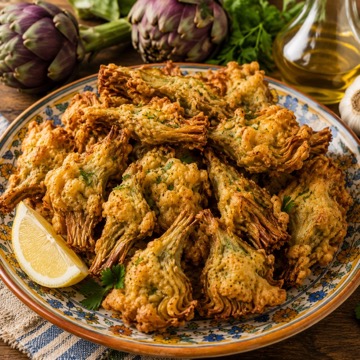
Carciofi Indorati e Fritti
Golden fried · Spring · The celebratory one
Artichoke wedges coated in egg and Pecorino, fried raw until golden outside and tender inside. Indorato means gilded. My mother made these and they were delicious — I didn't appreciate them enough at the time. Full post →
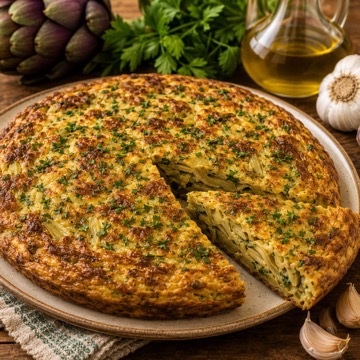
Frittata di Carciofi
Frittata · Spring · The weeknight one
Artichokes braised until tender, then folded into beaten eggs with Pecorino Romano. A classic spring secondo — my mother made it regularly during the season. Full post →
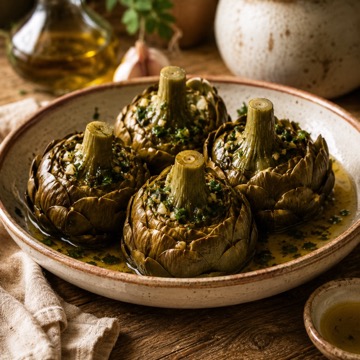
Carciofi alla Romana
Braised whole · Spring · Dad's favourite
Whole artichokes stuffed with garlic, parsley, and mentuccia, then slow-braised upside-down in olive oil and water. A Roman recipe that my father requested — not traditional in Naples, but always on our table. Full post →
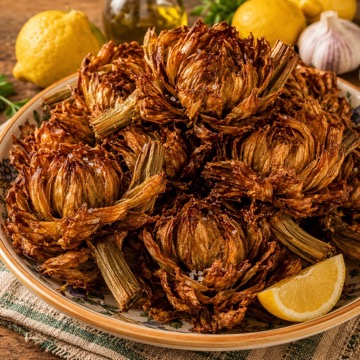
Carciofi alla Giudia
Double-fried · Spring · The Roman classic
Whole artichokes double-fried without coating until they open like crispy bronze flowers. A Jewish Roman tradition from the 16th century — no batter, no egg, nothing but artichoke, olive oil, and salt. Full post →
Pasta e Carciofi
Primo · Spring · The complete meal
Spring artichokes braised and folded into pasta — the first course that makes the artichoke the whole point of the dish. Full post →
Carciofi in Pentola a Pressione
Contorno · Spring · Weeknight preparation
Stuffed artichokes with potatoes cooked in five minutes under pressure — the broth they release becomes a dipping sauce for each petal. A weeknight ritual when speed matters and the result must not suffer. Full post →
She said two things, every spring: artichokes have lots of iron, and they're good for you. Both are accurate. Artichokes contain about 1.3 mg of iron per 100 g — among the highest for vegetables, comparable to spinach. For reference, the daily recommended intake for adults is 8–18 mg, so a serving of artichokes contributes meaningfully.
The second claim covers more ground. Artichokes contain cynarin, a compound found almost nowhere else in food, which stimulates bile production and supports fat digestion. They are also rich in inulin (a prebiotic fibre that supports gut bacteria), chlorogenic acid (an antioxidant), and the polyphenol silymarin, which has been studied for its liver-protective properties. None of this was known to my mother. She simply observed — over decades — that eating artichokes in spring felt like something the body wanted. She was right, though the mechanism she would not have named.
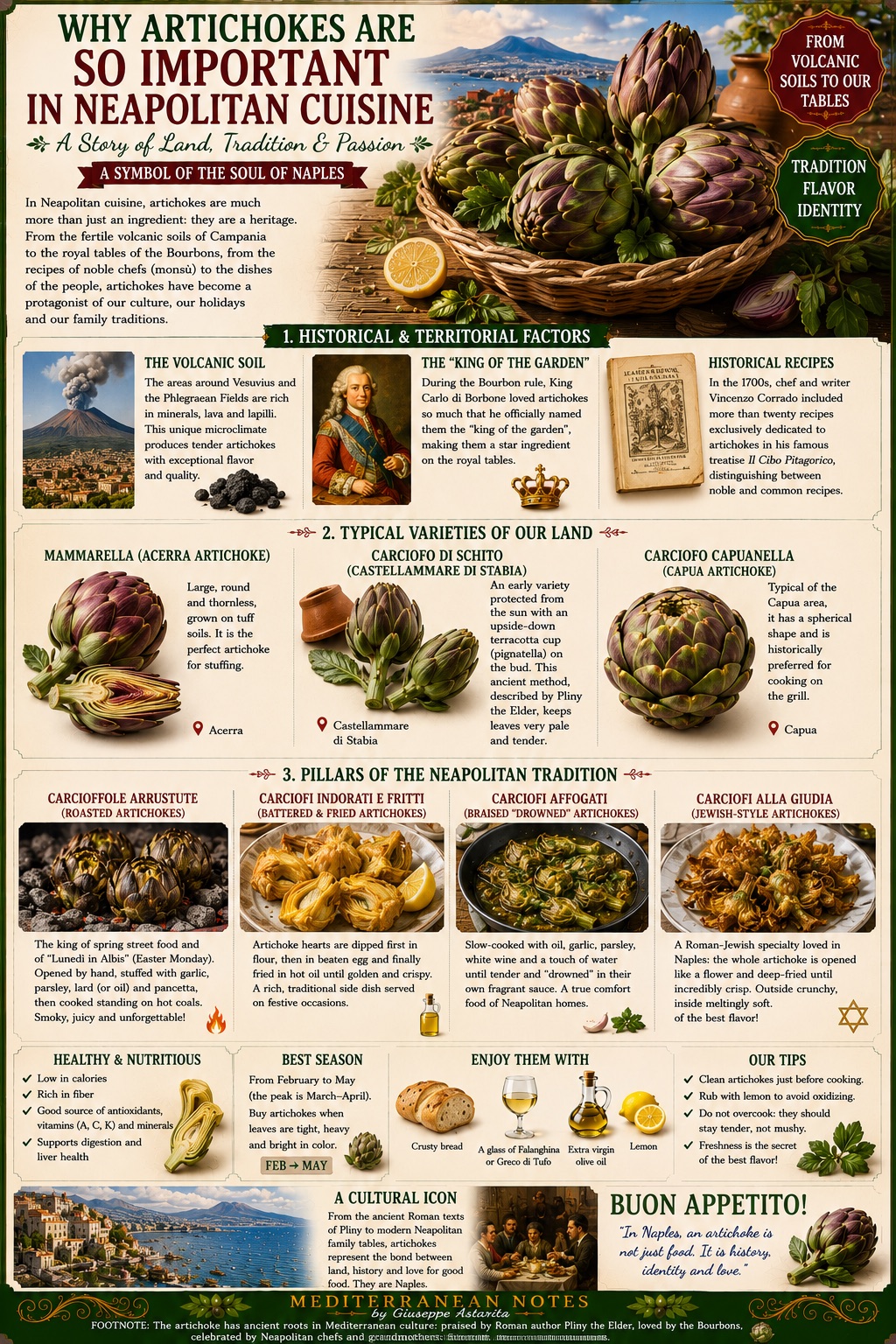
Tap to enlarge — Il carciofo a Napoli: varietà, tradizioni, preparazioni
The season is short — from February to May, with the peak in March and April. Outside that window you can buy artichokes, but they are not the same artichokes, and the dishes are not quite the same dishes. My mother knew this. She bought them while they were there, cleaned them with her bowl of lemon water, and made all of these things in sequence over those few weeks. It felt endless at the time. It was not.