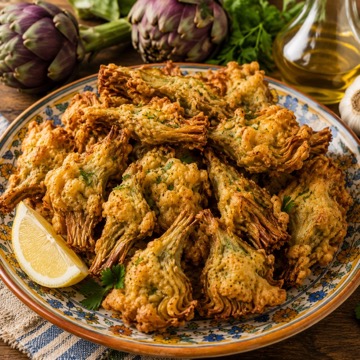
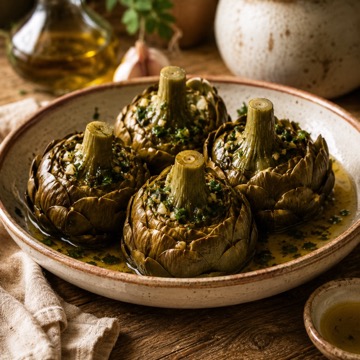
Sides & Vegetables · Spring · Vegetarian
Carciofi Stufati alla Napoletana
Violet artichokes from Schito, braised slowly with garlic, parsley and a splash of white wine. The spring contorno that my mother always said was full of iron — and she was right.
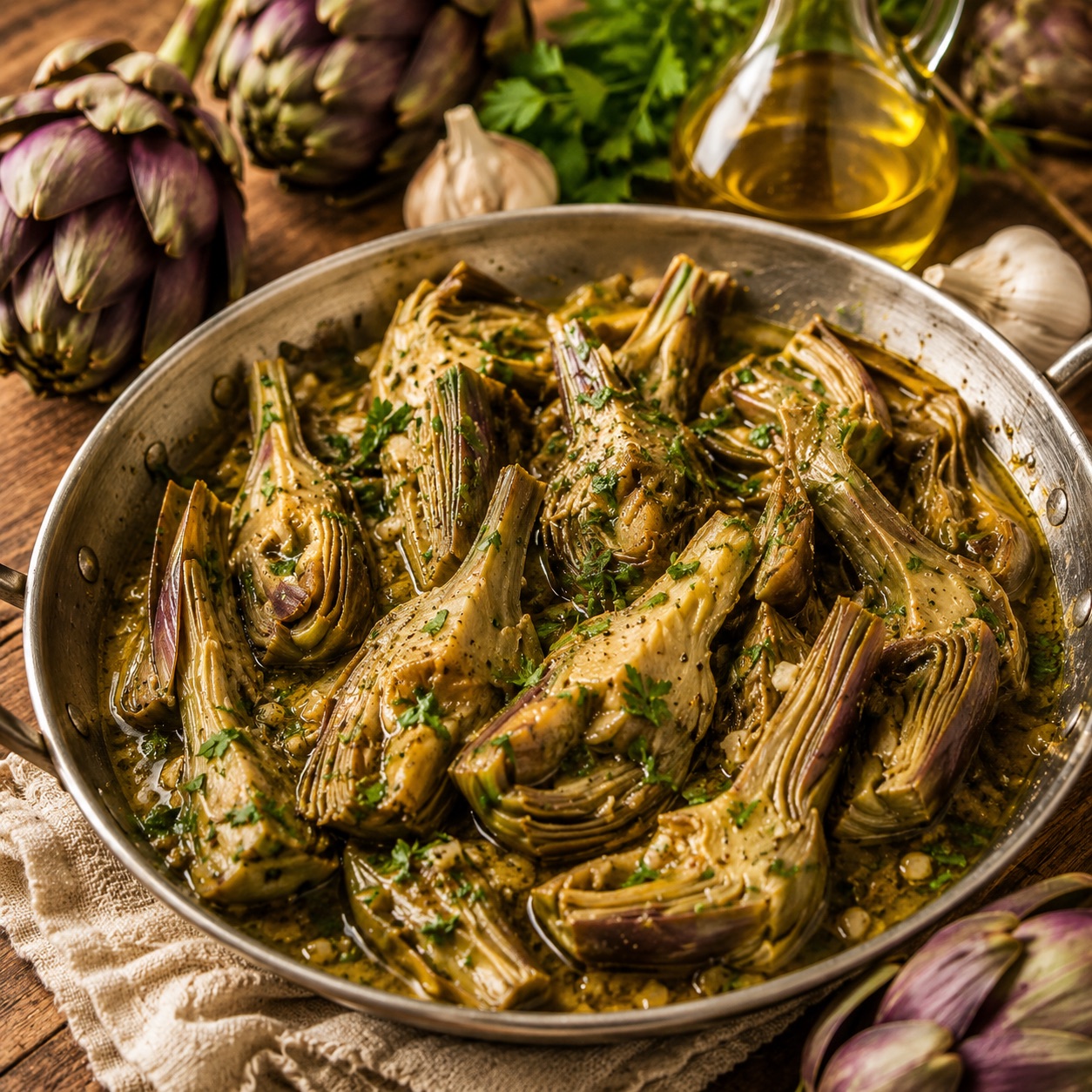
Every spring, in our kitchen in Caserta, there was a bowl of water and lemon on the counter. Inside it, slowly filling up: artichokes. My mother would stand at the sink and work through them one by one — removing the outer leaves, trimming the tops, quartering, dropping immediately into the lemon water before the cut surfaces could darken. I carciofi contengono tanto ferro, she would say each time, as though the mineral content were part of the cleaning ritual itself. Artichokes have lots of iron. They're good for you.
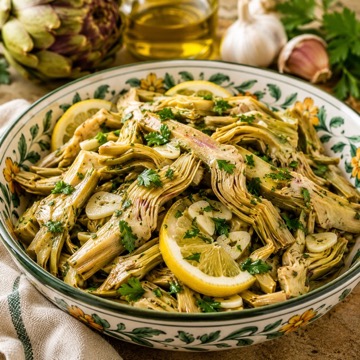
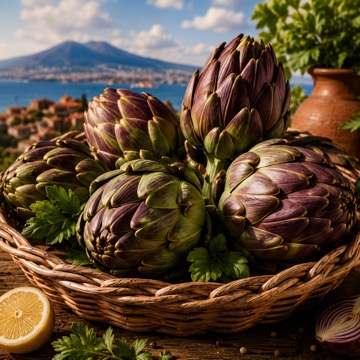
The stewed version — in umido, or stufati — was the one that appeared most often. A simple braise: olive oil, garlic, parsley, a good splash of white wine, a little water, the lid on, low heat until tender. In Campania, the artichoke used for this is the Carciofo Violetto di Schito — a variety grown between Pompei and Castellammare di Stabia, in the volcanic soil of the Vesuvian plains. No spines. Soft, tender leaves. A flavour that is delicate rather than assertive. When braised slowly, it becomes something that seems to concentrate the mineral richness of the soil it grew in.
This dish appears in spring only — February through May, with the peak in March and April. You don't make carciofi stufati in August. The season is part of what the dish is. When the artichokes are gone from the market, the dish is gone too. This makes the spring weeks when they appear feel like a brief permission — a month or two to eat the thing that doesn't exist the rest of the year.
The dish is served as a contorno — alongside a main course, or as a starter course in its own right. A glass of white wine alongside is traditional, and not coincidental: the cynarin in artichokes stimulates bile production, which primes the digestive system to handle fats. The wine and the artichoke work together in this sense, though Campanian cooks arrived at that pairing by taste rather than biochemistry.
Yes, and the story goes further. Artichokes contain about 1.3 mg of iron per 100 g — among the highest for vegetables, comparable to spinach and lentils. For context, the daily recommended intake for adults is 8–18 mg, so a generous portion of artichokes makes a real contribution. The iron in plant foods is non-haem iron, which is less readily absorbed than iron from meat — but pairing it with vitamin C (a squeeze of lemon in the cooking water, or alongside the dish) significantly improves absorption.
Artichokes also contain cynarin, a compound found almost nowhere else in food. Cynarin stimulates the production of bile by the liver and gallbladder, which aids in the digestion of fats and gives the liver a workout it generally welcomes. This is the biochemical reason behind the traditional practice of drinking a glass of white wine with artichokes, or a digestivo (like Cynar, which is named after the artichoke's botanical name Cynara scolymus) after the meal. The Carciofo Violetto di Schito, grown in volcanic Vesuvian soil, is particularly rich in potassium, calcium and magnesium — the volcanic minerals absorbed through the roots. My mother sensed this without knowing the mechanism: she just knew artichokes were worth the effort of cleaning.
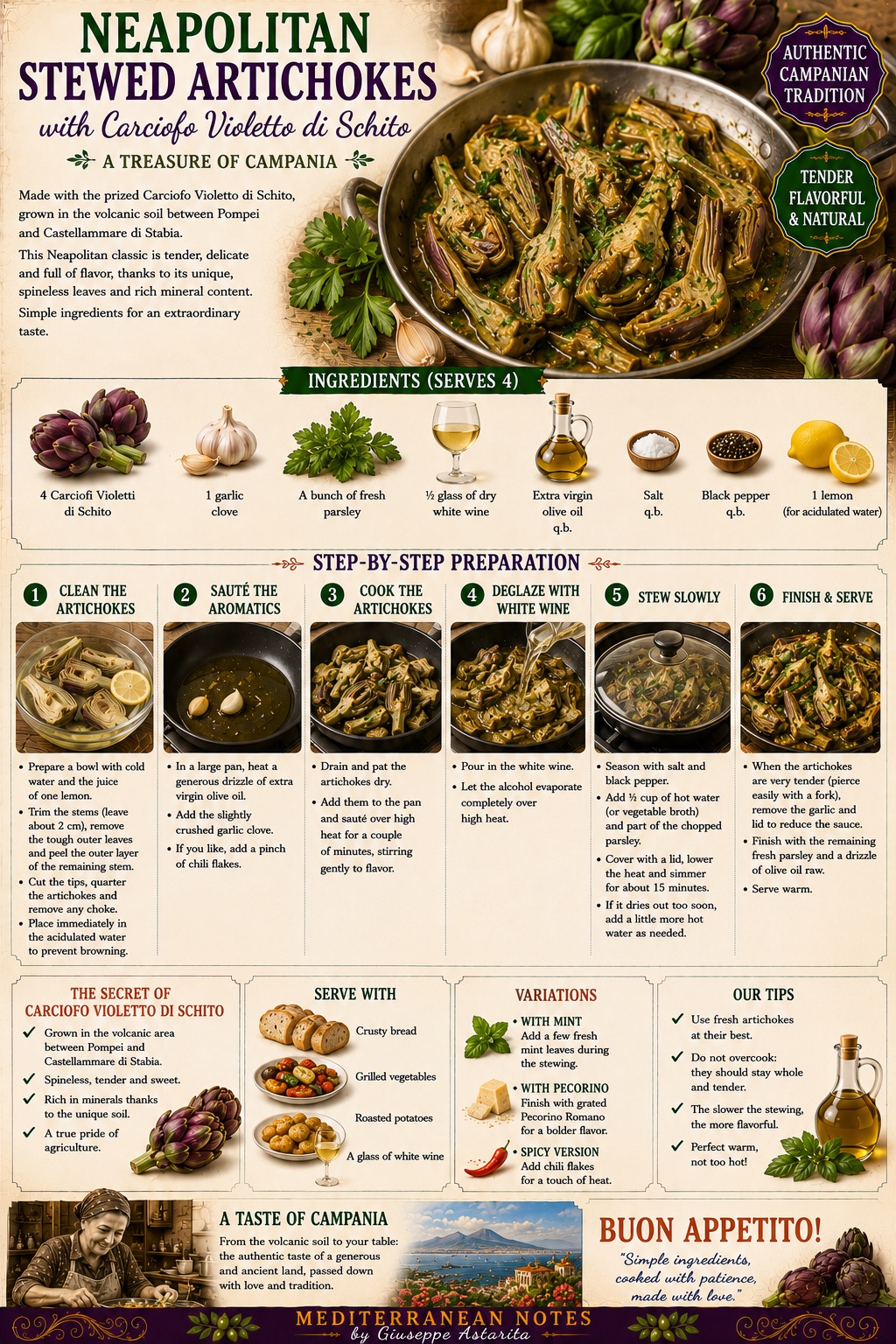
Tap to enlarge — Carciofi stufati: ingredienti, metodo, consigli
Recipe — Carciofi Stufati alla Napoletana
Serves 4 · Ready in 45 minutes
- 4 Carciofi Violetti di Schito or any tender, spineless artichokes
- 1 lemon for acidulated water
- 1 garlic clove finely sliced
- A bunch of fresh parsley stems and leaves, finely chopped
- ½ glass of dry white wine
- Extra virgin olive oil generous
- Salt and black pepper to taste
- A little water as needed during braising
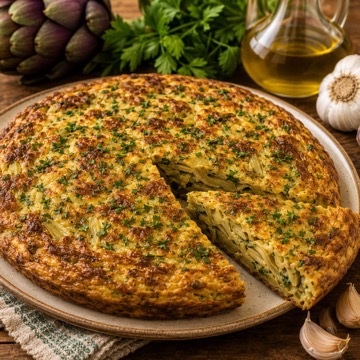
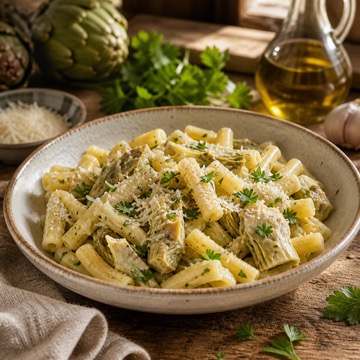
Carciofi stufati are a spring ritual in Campania, tied entirely to the season of the Carciofo Violetto di Schito. The same artichokes, cleaned with the same bowl of lemon water, go into the frittata di carciofi, into pasta e carciofi, and into this braise. My mother moved between all three, depending on what the evening called for. The cleaning ritual was the same each time. So was the announcement about the iron.