Pasta con Carciofi
Quick, aromatic, two versions — the artichoke is the point
The artichoke is the most demanding vegetable of the spring kitchen — stained fingers, a bowl of lemon water, patience with the outer leaves before you reach anything worth cooking. My mother cleaned them at the kitchen table without hurrying, which is the correct speed. What you find at the centre is worth it.
In Campania the artichoke season runs from late winter through spring, and the arrival of the first good heads at the market is a specific event — not dramatic, but noticed. My mother pulled the outer leaves back one by one until the pale interior appeared, dropping each cleaned heart immediately into cold water with lemon so it would not darken while she worked on the next one. The stems went in too, peeled down to the white core. Nothing was wasted. She did it without hurrying, which is the correct speed for artichokes.
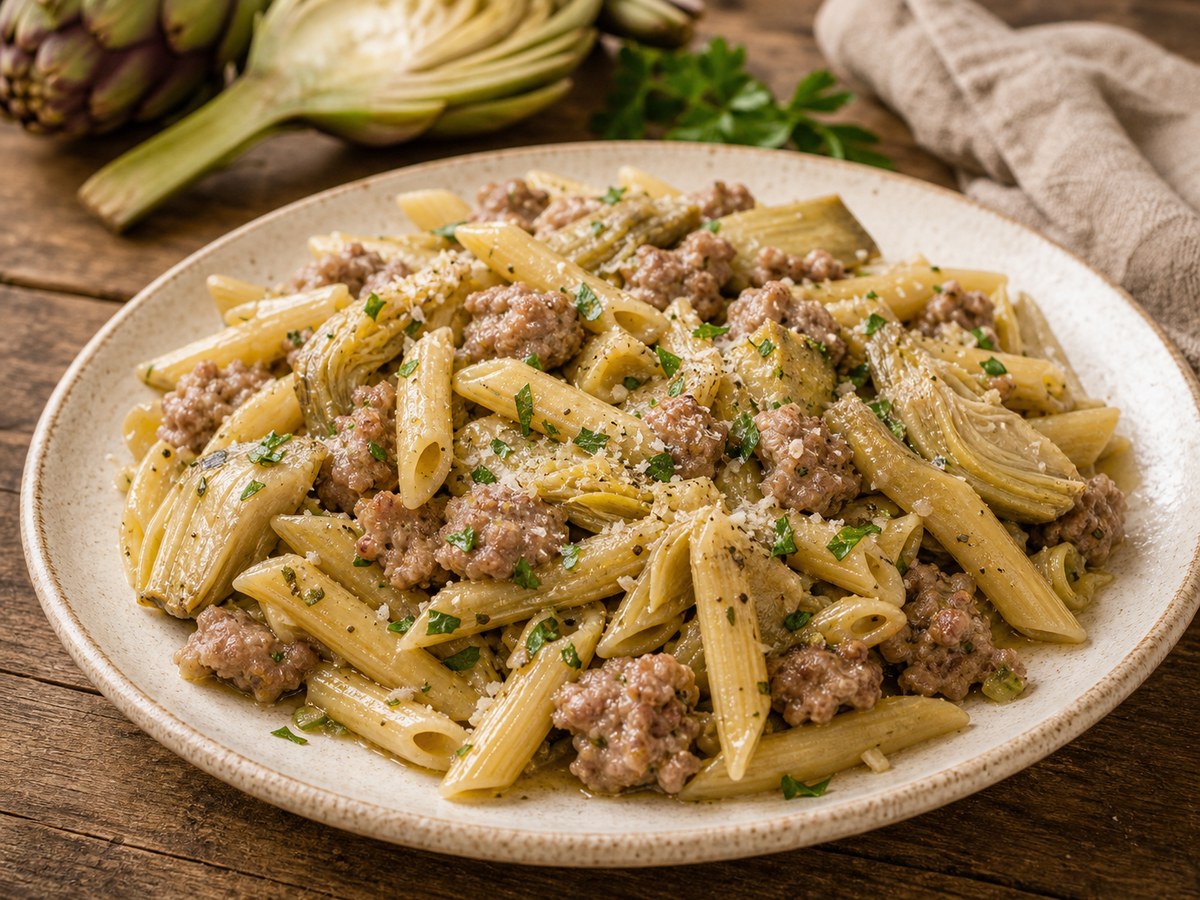
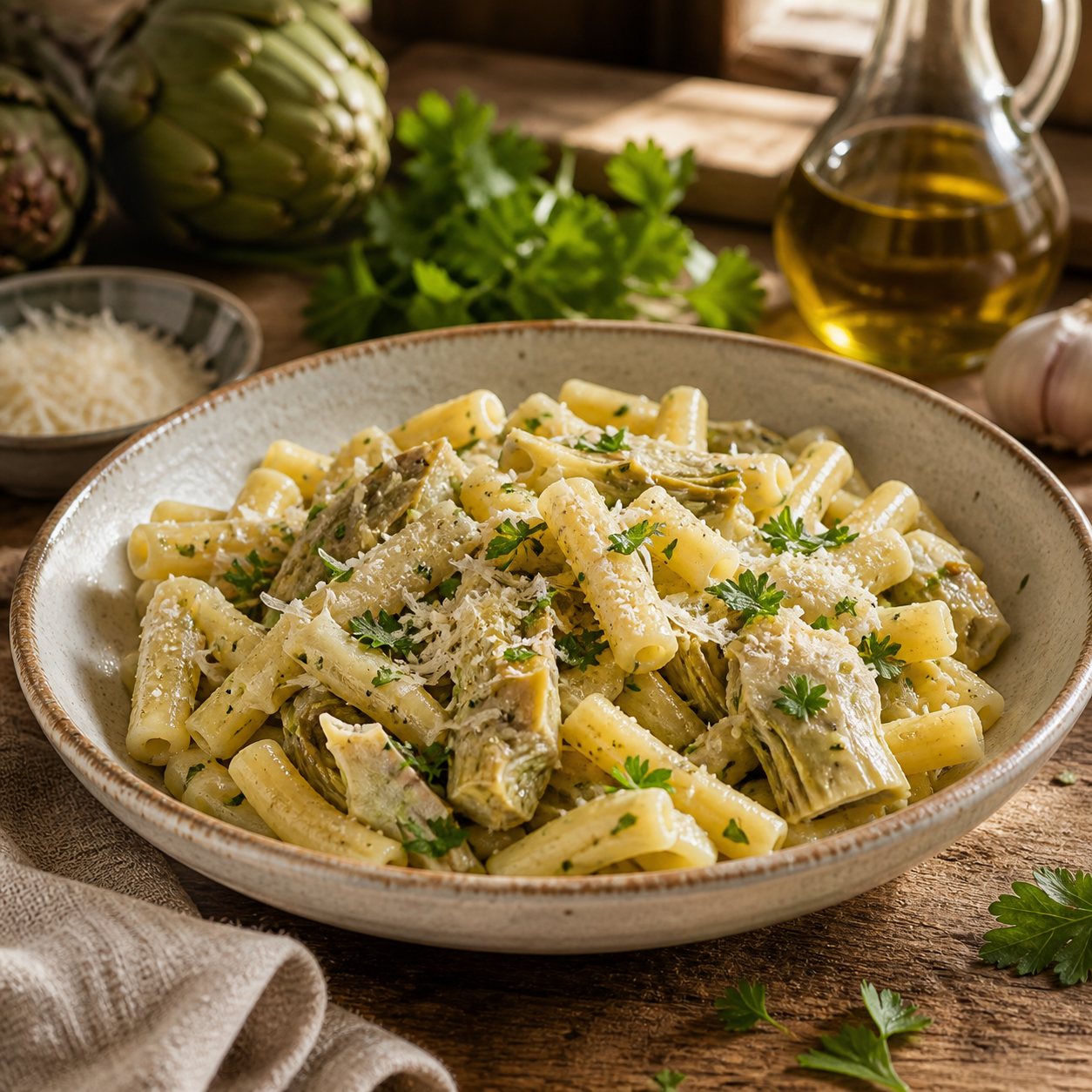
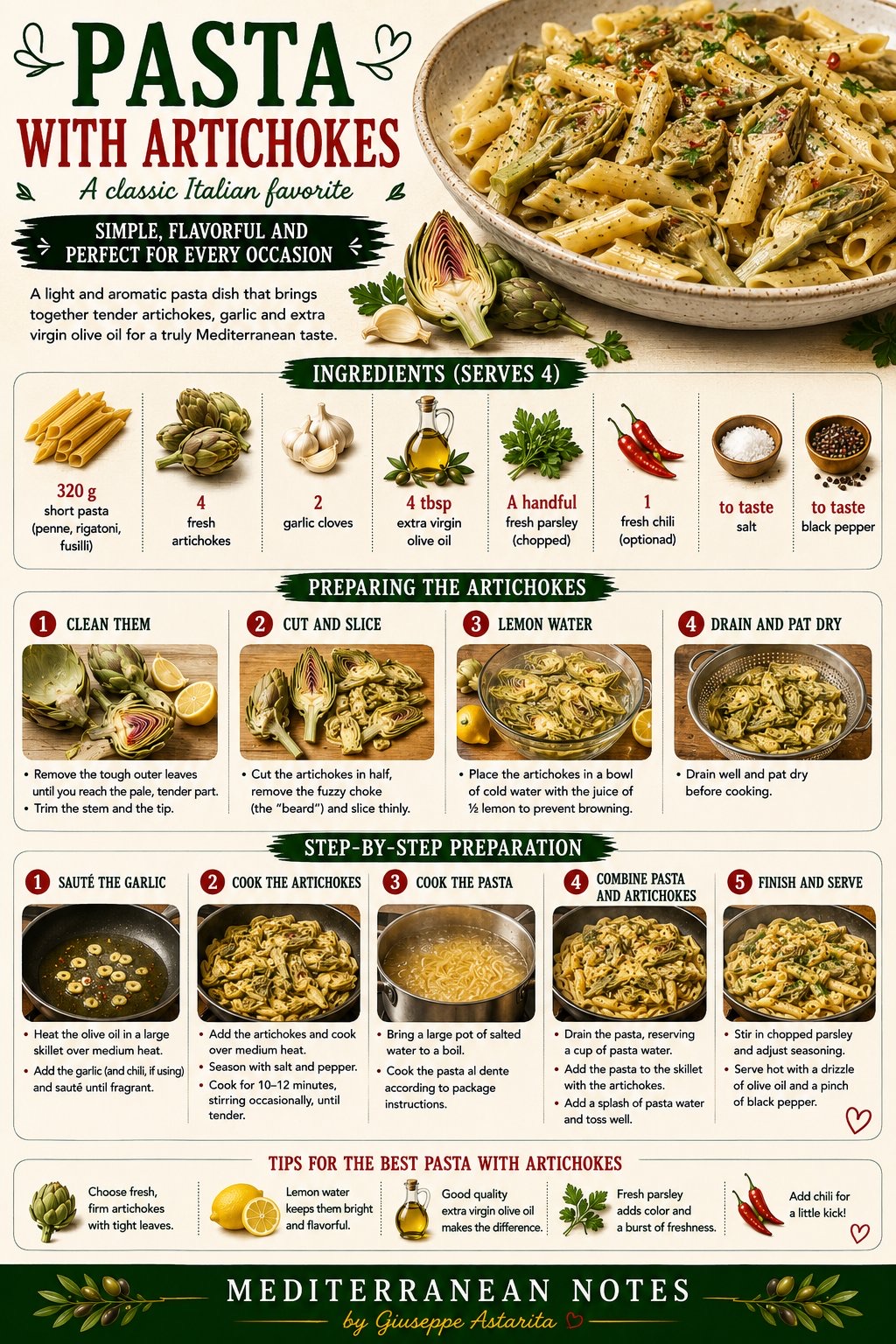
The pasta version is the faster of the two artichoke preparations. The sliced hearts go into a pan with garlic and olive oil, deglaze with white wine, finish with parsley. A short ridged pasta like penne or rigatoni catches the thin artichoke slices in its grooves and each bite contains both. In the simpler version that is everything — the artichoke's flavor, slightly bitter, slightly sweet, with a mineral quality that stays on the palate, carried through the dish without anything competing with it. In the richer version, a little cooked ham and a splash of cream join at the end. My mother made both, depending on what was in the house and whether she wanted something lighter or more substantial.
The choice of pasta shape matters here more than it does in most recipes. The artichoke is sliced thin and cooks into something soft and yielding — it needs a pasta that can hold it, not one that lets it slide away. Penne rigate, rigatoni, fusilli: any of these work. The ridges and curves trap the sliced artichoke and the olive oil emulsion together. Spaghetti is possible but less effective — the artichoke tends to collect at the bottom of the bowl rather than distributing itself through the dish.
The artichoke's flavor is the thing that cannot be compromised. It should not be buried under the ham or the cream in the richer version. Those additions are supporting elements. The fresh mint variation — parsley replaced with mint — is worth noting as a particularly good combination in the simple version: fresher and more fragrant, the mint's cool note playing against the mineral warmth of the artichoke in a way that is distinctly spring. I did not always find it traditional in my mother's kitchen but it is correct.
The lemon water used during preparation lowers the pH around the cut artichoke, which slows the action of polyphenol oxidase — the enzyme responsible for the rapid browning of exposed artichoke flesh. This is not merely aesthetic: the browning compounds are produced by the oxidation of the same phenolic acids — cynarin, chlorogenic acid — that give the artichoke its distinctive liver-supporting and cholesterol-modulating properties. Keeping the artichoke pale in lemon water preserves more of these compounds for consumption. Cynarin is also responsible for the peculiar palate effect of artichoke: it temporarily inhibits the sweet taste receptors on the tongue, so that anything consumed immediately after tastes sweeter than it actually is. This is why a glass of water tastes slightly sweet after eating artichoke — the cynarin resets when the water dilutes it, and the receptors fire. It is also why the mineral quality of the artichoke lingers: the phenolic compounds bind briefly to proteins on the tongue's surface in the same way tannins in wine do.
The pasta water emulsion technique — tossing the pasta in the artichoke pan with a splash of starchy cooking water — creates a light sauce without cream in the simple version. The starch released by the pasta during boiling acts as an emulsifier, binding the olive oil and artichoke cooking liquid into a cohesive coating that clings to the pasta rather than pooling. This is the same mechanism that produces the sauce in aglio e olio and vongole. In the cream version the mechanism is different — the cream's fat and protein provide their own emulsification — but the pasta water step still matters for the texture of the final dish.
The recipe
Serves 4. Penne, rigatoni, or fusilli — ridged short pasta. The simple version is vegetarian; the richer version adds cooked ham and cream. Both start from the same cleaned artichoke. The preparation is the same; only the last few minutes differ.
The artichoke pairs with a dry, structured white wine — its mineral sweetness needs something lean and cold to reset the palate between bites. Falanghina is the Campanian choice. Vermentino works equally well. Avoid anything oaked or heavily aromatic — the artichoke is already doing something complex with the palate and does not need competition from the glass.
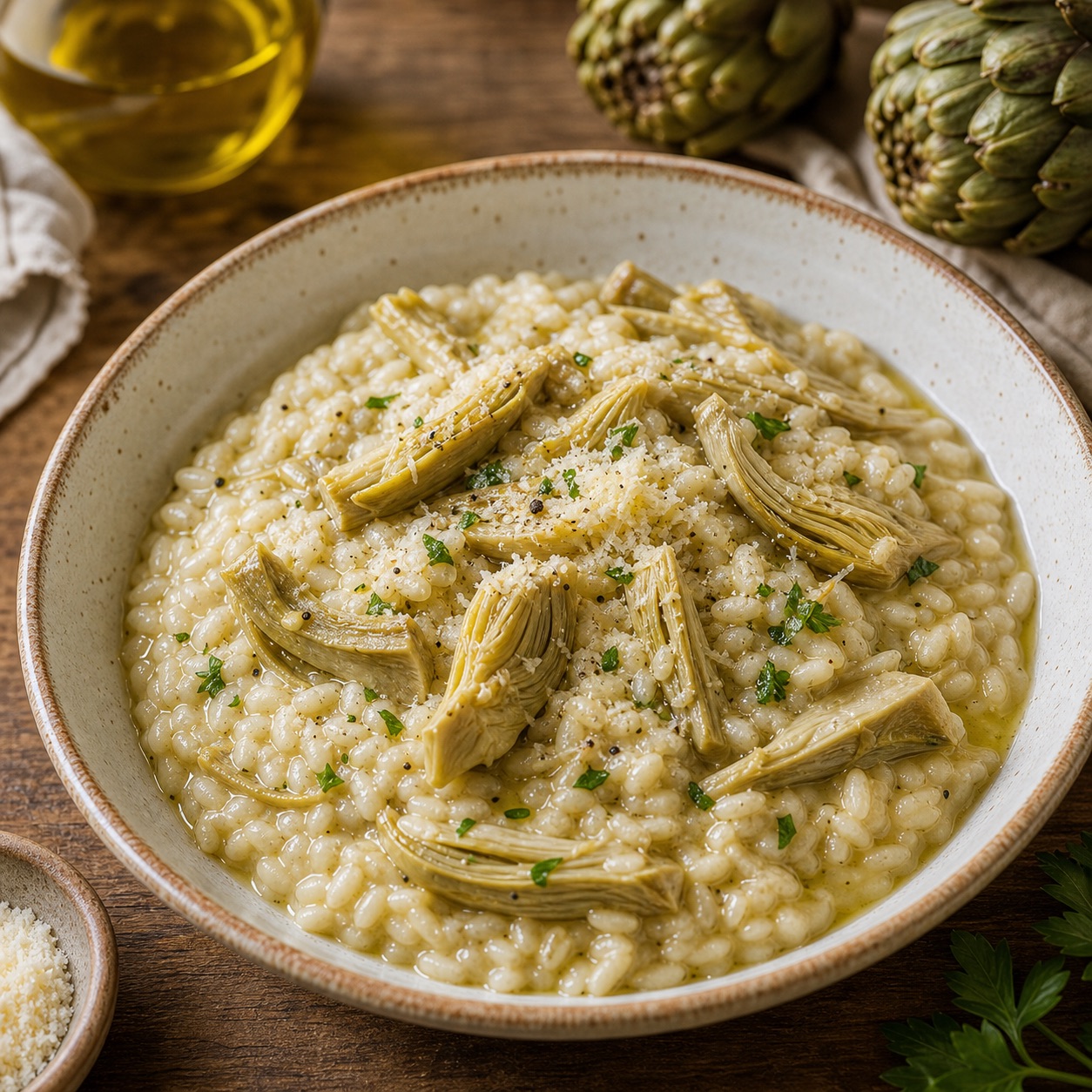
If you want the slower, more immersive version of the same artichoke — half blended into a cream that enters the rice from within — the risotto ai carciofi is the companion post. Both start from the same cleaned heart. The pasta is for when you have twenty minutes. The risotto is for when you have forty and want something that fills the kitchen with the smell of artichoke for the better part of an hour.
Buon appetito — e non dimenticate il limone.