Penne con salsiccia e carciofi: my mother's two-pan method
Artichokes cooked slowly in a covered pan with garlic and parsley until completely tender. Sausage crumbled — not sliced, not left whole, crumbled — and browned separately in its own pan. Then combined with the penne and lots of Parmigiano. My mother made this often, for ordinary dinners and for parties, where it was sometimes served at room temperature on a platter. The crumbles are important. Without them it is a different dish.
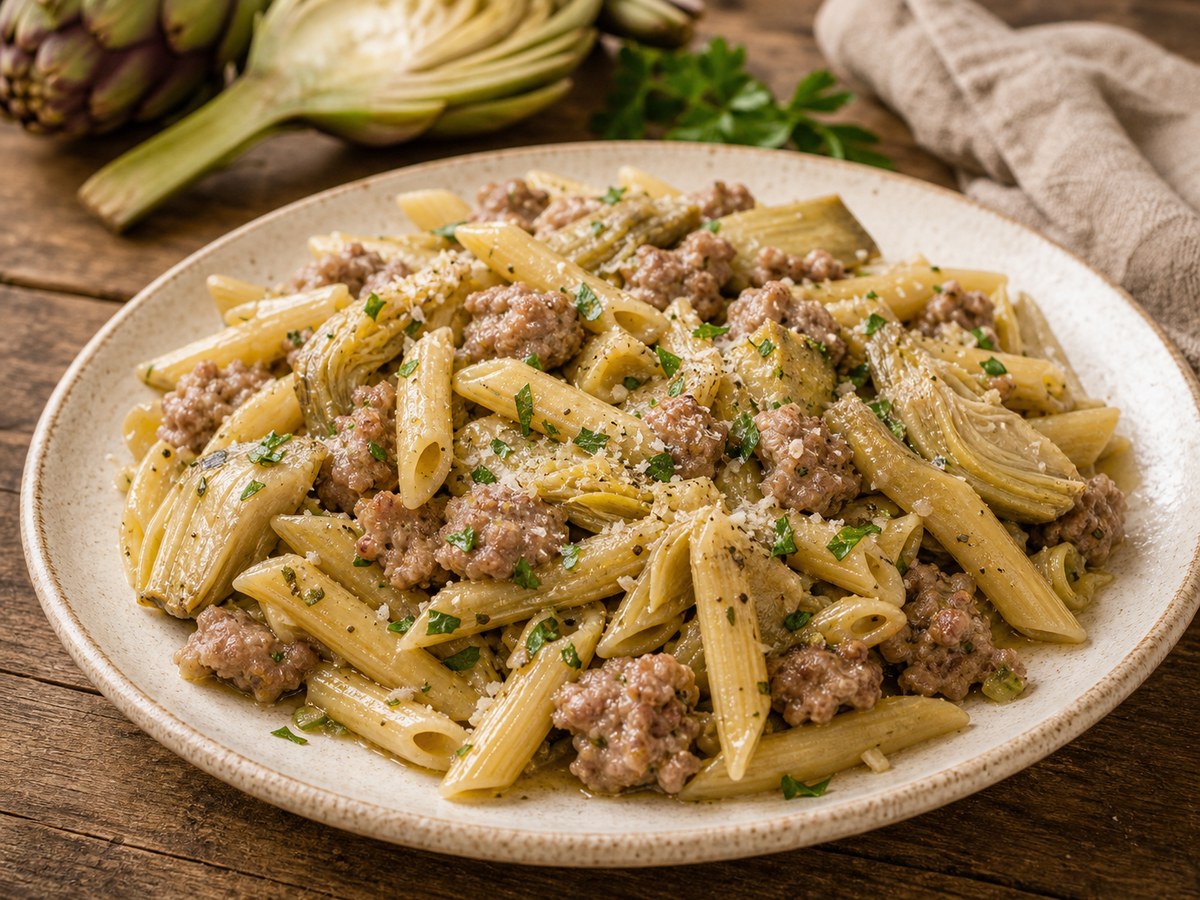
The combination of sausage and artichoke is one of those pairings that works because of contrast: the sausage is rich, fatty, savory, slightly spiced; the artichoke is lean, slightly bitter, mineral, with a sweetness that develops during slow cooking. Each makes the other more distinct. The sausage fat provides what the artichoke does not have; the artichoke's bitterness cuts through what the sausage provides in excess. This is not a calculated balance — it is simply what happens when you put these two ingredients in the same bowl, which is why the pairing appears throughout the Italian kitchen in various forms and always works.
My mother's specific technique was the detail that made her version. Two pans, not one. The artichokes went into the first pan — cleaned, thinly sliced, dropped into lemon water to prevent browning, then drained and cooked in olive oil with a garlic clove and fresh parsley, covered with a lid so the steam helped them soften without drying out, with a splash of hot water added if needed. Covered and patient — the same principle as the artichoke and potato preparation and the artichoke pasta and risotto. Meanwhile the sausage went into the second pan. The casing removed, the meat crumbled by hand into small irregular pieces — not sliced into rounds, not left in large chunks — and browned over high heat until the fat rendered and the surface of each small piece developed color. The crumbling is the point: it distributes the sausage through every bite of the pasta rather than concentrating it in occasional large pieces, and the smaller surface area browns more completely, producing more Maillard flavor per gram of meat.
The party version — served cool on a platter — is worth noting because it represents a different category of Italian entertaining food from what most people outside Italy expect. The American party pasta is usually a hot baked dish kept warm in a chafing dish. The Italian party pasta is often served at room temperature, deliberately: the flavors have had time to consolidate, the pasta has absorbed the sauce, the components have settled into each other. This dish works particularly well in that form because the sausage fat that is liquid when hot becomes semi-solid at room temperature and coats the pasta in a way that keeps it from drying out, and the artichoke retains its texture and flavor well as it cools. Add the Parmigiano while the pasta is still warm so it melts into the dish, then let everything come to room temperature. The result is a pasta that tastes composed and deliberate rather than assembled.
Why artichokes and sausage cook differently — and why they need separate pans
The two-pan technique my mother used reflects a genuine understanding of how these two ingredients cook differently and require different heat and time. Artichokes require low-to-medium heat over an extended period — 10–15 minutes covered — to soften their fibrous cell walls without browning. High heat would char the surface before the interior is tender. The lid traps steam, creating a moist environment that conducts heat more efficiently than dry air and prevents the artichoke from drying out before it is cooked through. Sausage requires the opposite: high heat, no lid, no moisture, so the surface water evaporates rapidly and the temperature at the meat surface rises above 140°C, where Maillard reactions between reducing sugars and amino acids produce the hundreds of aromatic compounds that define browned meat flavor. Cooking both ingredients together in one pan would require a compromise temperature that produces neither the correct artichoke texture nor the correct sausage browning. The separate pans are not an aesthetic choice but a technical one — and the crumbling of the sausage is similarly technical: small irregular pieces have a higher surface-area-to-volume ratio than slices or whole pieces, meaning more of the meat is exposed to the pan surface, more Maillard browning occurs per gram of sausage, and more of the rendered fat is released into the pan where it becomes the cooking medium for the second stage. The Parmigiano added off the heat with pasta cooking water creates a classic fat-starch-protein emulsion — the same mantecatura mechanism described in the risotto and pasta posts — producing the creamy coating that ties the artichoke and sausage flavors together. Nutritionally, this combination provides complete protein from the pork sausage, the artichoke's inulin and cynarin, folate, and fat-soluble carotenoids whose absorption is enhanced by the rendered sausage fat and olive oil present in the dish. The artichoke's prebiotic fiber (inulin) supports gut microbiome diversity, and cynarin has documented effects on bile acid production and cholesterol metabolism — the same properties discussed in the artichoke pasta and risotto post.
The recipe — the two-pan method
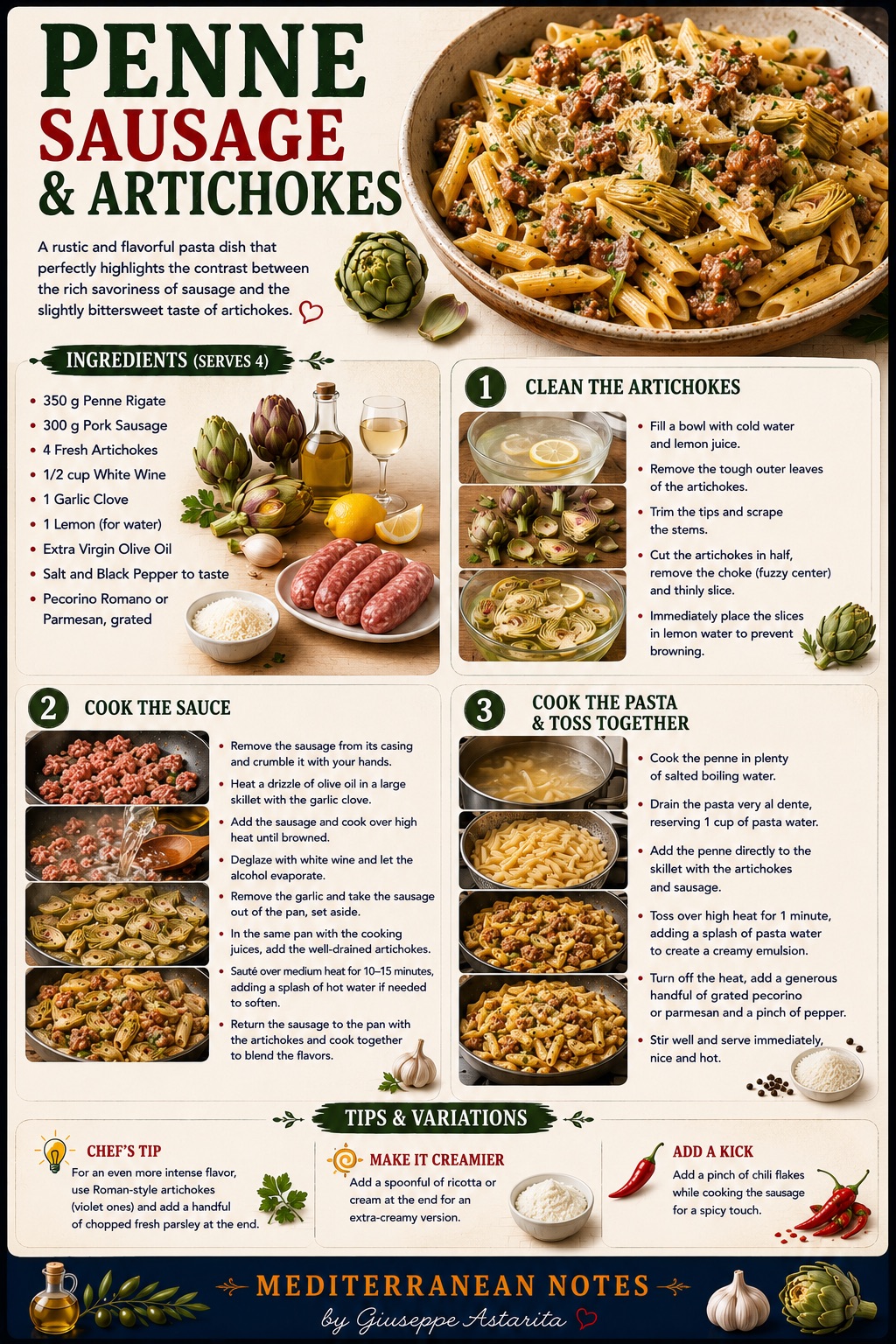
Two pans simultaneously. The artichokes covered and patient in the first, the sausage crumbled and browned in the second. Combined at the end. Serves 4.
Ingredients
Method
Clean the artichokes. Fill a large bowl with cold water and lemon juice. Remove the tough outer leaves of each artichoke down to the pale tender heart. Trim the stem and scrape the inner choke. Slice thinly and drop immediately into the lemon water. This prevents browning and keeps them bright until you are ready to cook.
Pan one — the artichokes, covered and patient. Drain and dry the artichoke slices. In a wide pan, warm a generous drizzle of olive oil over medium heat. Add the garlic clove and let it become golden. Add the artichokes and half the chopped parsley, season with salt and pepper. Cover with a lid and cook over medium-low heat for 10–15 minutes until completely tender, adding a splash of hot water if they start to catch. Remove the garlic. The artichokes should be soft and fragrant, not browned.
The lid is essential — it traps steam that cooks the artichoke from all sides without drying it out. Do not rush this step or raise the heat.
Pan two — the sausage crumbles. While the artichokes cook, remove the sausage from its casing and crumble the meat by hand into small, irregular pieces — not uniform, not too small, not too large. About the size of a large chickpea. Heat a drizzle of olive oil in a separate pan over high heat. Add the sausage crumbles and cook without stirring for the first minute to let the surface brown. Then stir and continue cooking until golden all over and the fat has rendered. Deglaze with the white wine and let it evaporate completely.
The crumbling is the technique — small irregular pieces maximize browned surface area and distribute the sausage through every forkful of pasta. Sliced rounds or whole pieces would not produce the same result.
Combine and finish. Add the browned sausage crumbles to the artichoke pan — or combine both in the larger pan — and stir gently to mix the flavors. Cook together briefly for 2–3 minutes.
Toss with the pasta. Cook the penne in well-salted boiling water until very al dente, reserving a cup of pasta water. Add the pasta directly to the pan with the artichoke and sausage mixture. Toss over high heat for 1 minute, adding splashes of pasta water to create a light emulsion. Turn off the heat. Add a very generous amount of freshly grated Parmigiano and the remaining parsley. Toss again. Serve immediately — or let cool to room temperature for the party version.
For the party version: add the Parmigiano while still warm so it melts into the dish, then let cool completely before serving on a platter. The sausage fat at room temperature coats the pasta and prevents it drying out. It tastes composed and deliberate rather than assembled at the last minute.
Variations
Con la ricotta — creamier
Add a spoonful of fresh ricotta off the heat alongside the Parmigiano for a creamier, slightly lighter version. The ricotta softens the sausage's richness and adds dairy freshness against the artichoke's bitterness. Good warm or at room temperature.
Con il peperoncino
Add a pinch of chili flakes when browning the sausage. The heat against the artichoke's bitterness and the sausage's fat is a natural Campanian combination. Use fresh chili for a cleaner warmth, dried flakes for a more pervasive background heat.
Con carciofi surgelati
Outside the artichoke season — late winter through May — frozen artichoke hearts work reasonably well. They require less preparation and less cooking time but lack the mineral freshness of the fresh artichoke. A valid year-round adaptation of a seasonal dish.
Con Pecorino invece di Parmigiano
Replace the Parmigiano with Pecorino Romano for a sharper, saltier, more aggressively flavored finish. The Pecorino's sharpness works particularly well against the sausage fat and the artichoke's bitterness — a slightly more rustic version of the same dish.
This is a spring pasta — the artichokes are at their best in the season when they are fresh and the bitter mineral quality that makes them work against the sausage is most fully present. It is also one of the most versatile pasta dishes in this collection: good hot, good warm, good at room temperature for a party, good the next day from the refrigerator with a drizzle of raw olive oil to loosen it. My mother understood this and used it accordingly. The two-pan technique takes a few more minutes than the single-pan version but produces a noticeably better result — each component cooked correctly to its own ideal rather than both cooked to a compromise.
Buon appetito — e tanti carciofi.