I Carciofi a Napoli · Spring · Vegetarian
Carciofi alla Romana
Whole artichokes stuffed with garlic, parsley and wild mint, then slow-braised upside-down in olive oil and water. My father's favourite — not traditional in Naples, but always on our table.
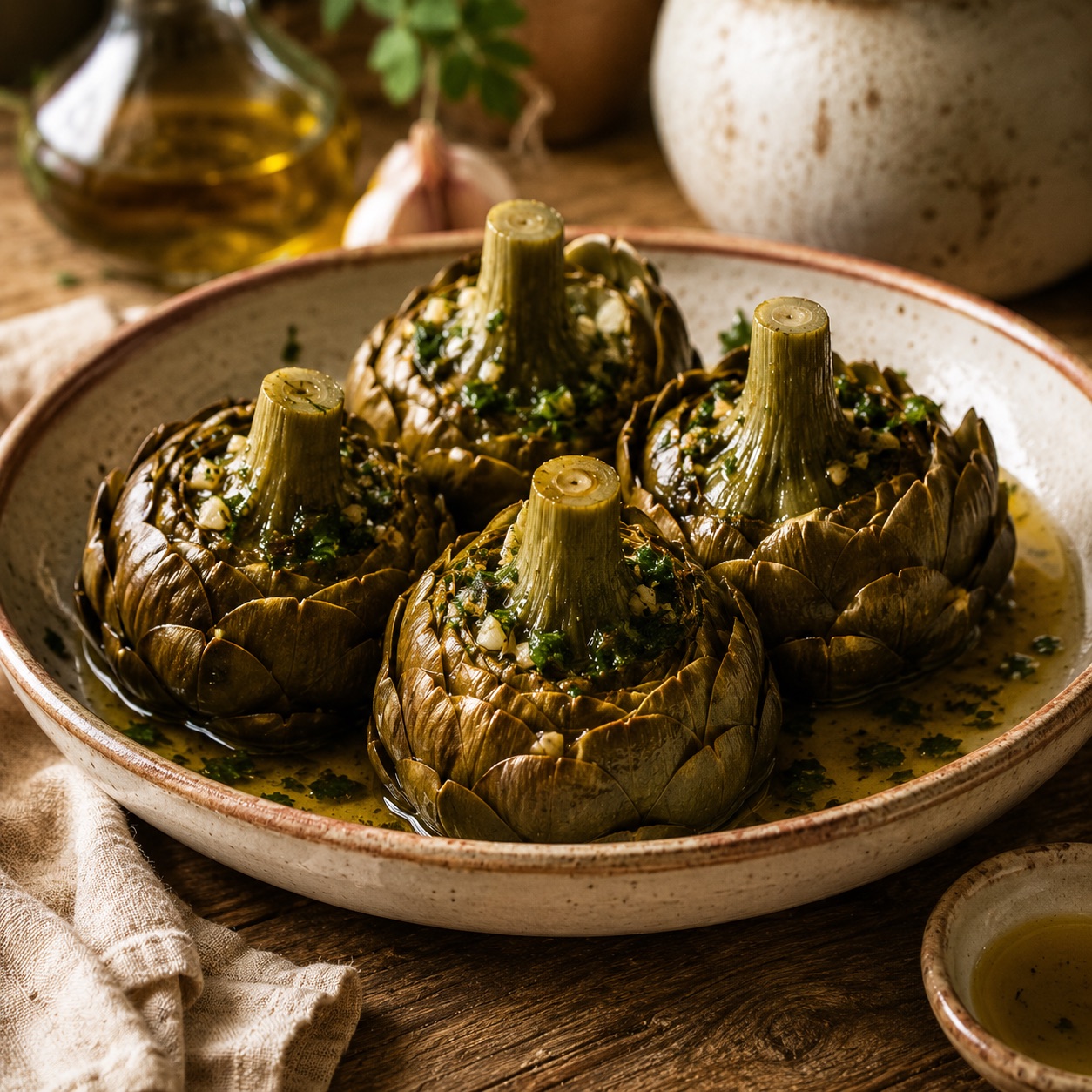
My father had a favourite. Among all the artichoke preparations my mother made — the stewed, the fried, the folded into frittata — the carciofi alla romana was the one he asked for. It is a Roman dish, strictly speaking: the Romanesco variety of artichoke braised whole, stuffed with garlic and mentuccia (the Roman wild mint), cooked upside-down in olive oil and water until the leaves become tender enough to strip with your teeth. My father was from Campania, not Rome. But he had his preferences.
My mother made it for him at his request. This was itself significant: she did not often follow requests precisely, preferring to adjust according to what was available and what seemed right. But for this dish she made an exception. The artichokes went in whole, stem-up in the pot, stuffed between the leaves with the garlic-parsley-mint mixture, and cooked slowly. When they came out of the pot they were completely tender, with the braising liquid concentrated into something that clung to each leaf.
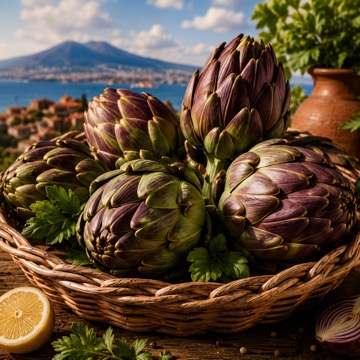
The variety matters: carciofi alla romana traditionally use the Romanesco artichoke — large, round, violet-shaded, nearly spineless. In Campania, the Carciofo Violetto di Schito is a close enough substitute for this purpose. What you want is a globe-shaped artichoke with enough room between the leaves to tuck the stuffing in and a heart tender enough to eat completely through after braising.
Mentuccia (Clinopodium nepeta, also called calamintha or calamint) is a small wild herb common in central Italy. It belongs to the mint family but has a completely different flavour profile: lighter, less aggressive than peppermint or spearmint, with a more delicate anise-like undertone and none of the menthol intensity of commercial mint. The flavour compounds are primarily pulegone and nepetalactone (the same compound that attracts cats to catnip) rather than menthol.
The reason it pairs so well with artichokes is that its gentle bitterness and herbal quality complement rather than overwhelm the artichoke's own flavour. Peppermint or spearmint would dominate the dish entirely — their high menthol content is too assertive. If mentuccia is unavailable, flat-leaf parsley alone works well; a small amount of fresh oregano can approximate something of the herbal quality without the menthol problem. Roman cooks are strict about this. My mother made do with what she had.
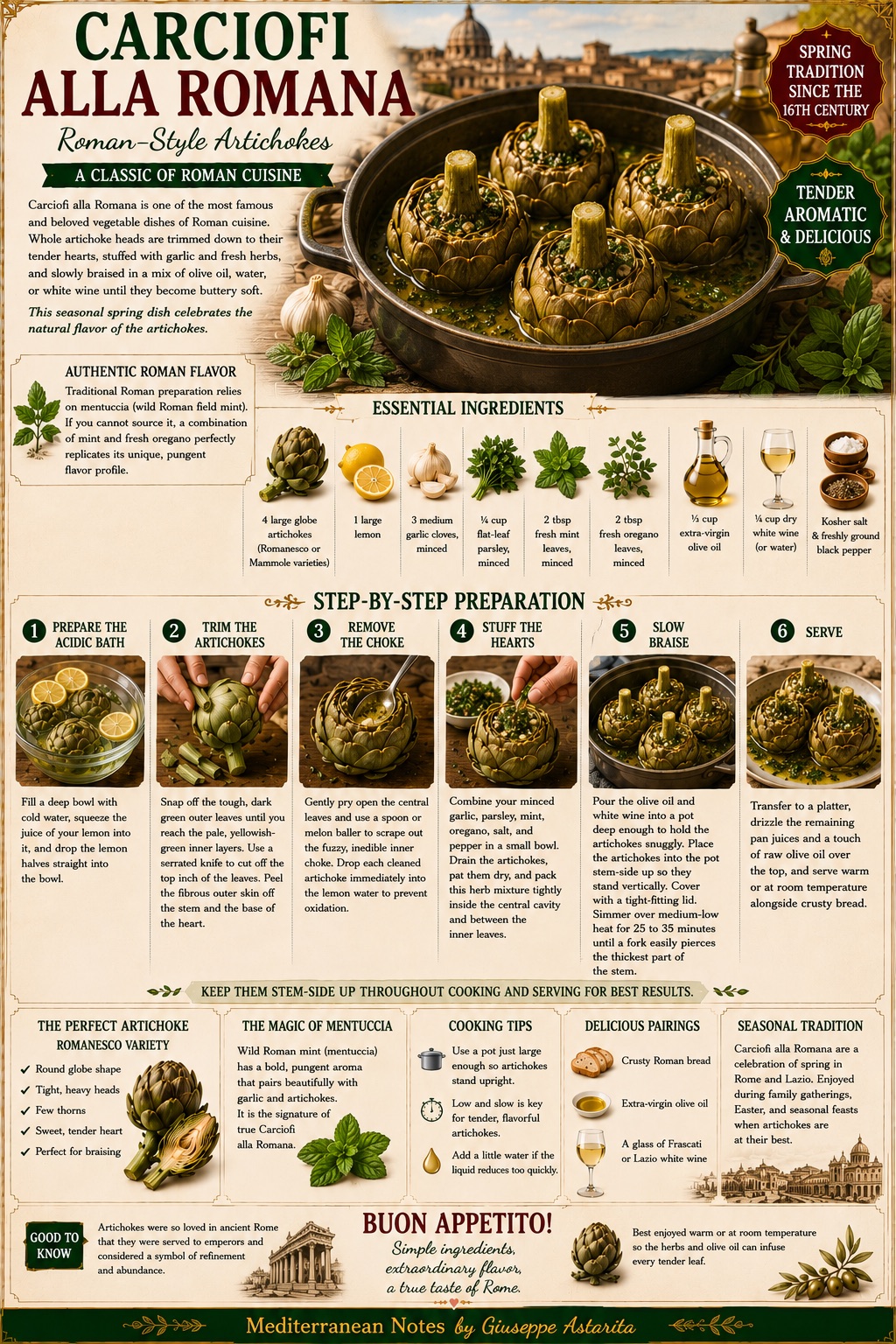
Tap to enlarge — Carciofi alla romana: ingredienti, metodo, tradizione
Recipe — Carciofi alla Romana
Serves 4 · Ready in 50 minutes
- 4 large globe artichokes Romanesco, or Carciofo Violetto di Schito
- 1 large lemon for acidulated water
- 1 large garlic clove per artichoke (4 total), minced
- A generous bunch of flat-leaf parsley finely chopped
- Fresh mentuccia (wild mint) or 1 tbsp fresh oregano as substitute, finely chopped
- 2 tbsp extra virgin olive oil per artichoke, plus more for cooking
- ½ cup dry white wine or water for braising
- Kosher salt and black pepper to taste
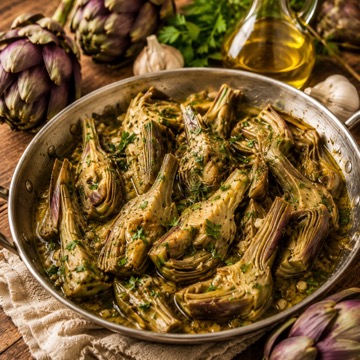
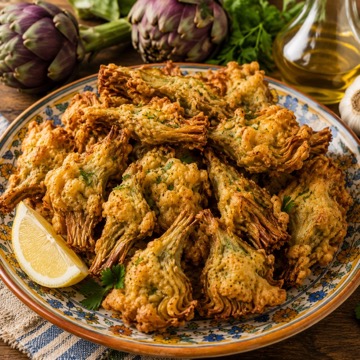
Carciofi alla romana are eaten slowly — pulling leaf by leaf, dragging each through the remaining oil at the plate, then eating the heart and the tender stem at the end. My father ate them this way. The dish was made for him, repeatedly, because he asked for it and because my mother knew how to make things that mattered. The carciofi stufati and the carciofi indorati e fritti were the Neapolitan versions. This one was his.