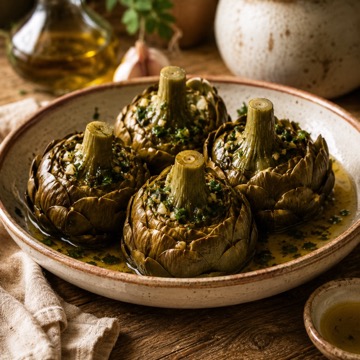
I Carciofi a Napoli · Spring · Vegetarian
Carciofi Indorati e Fritti
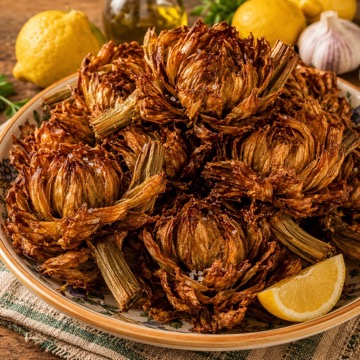
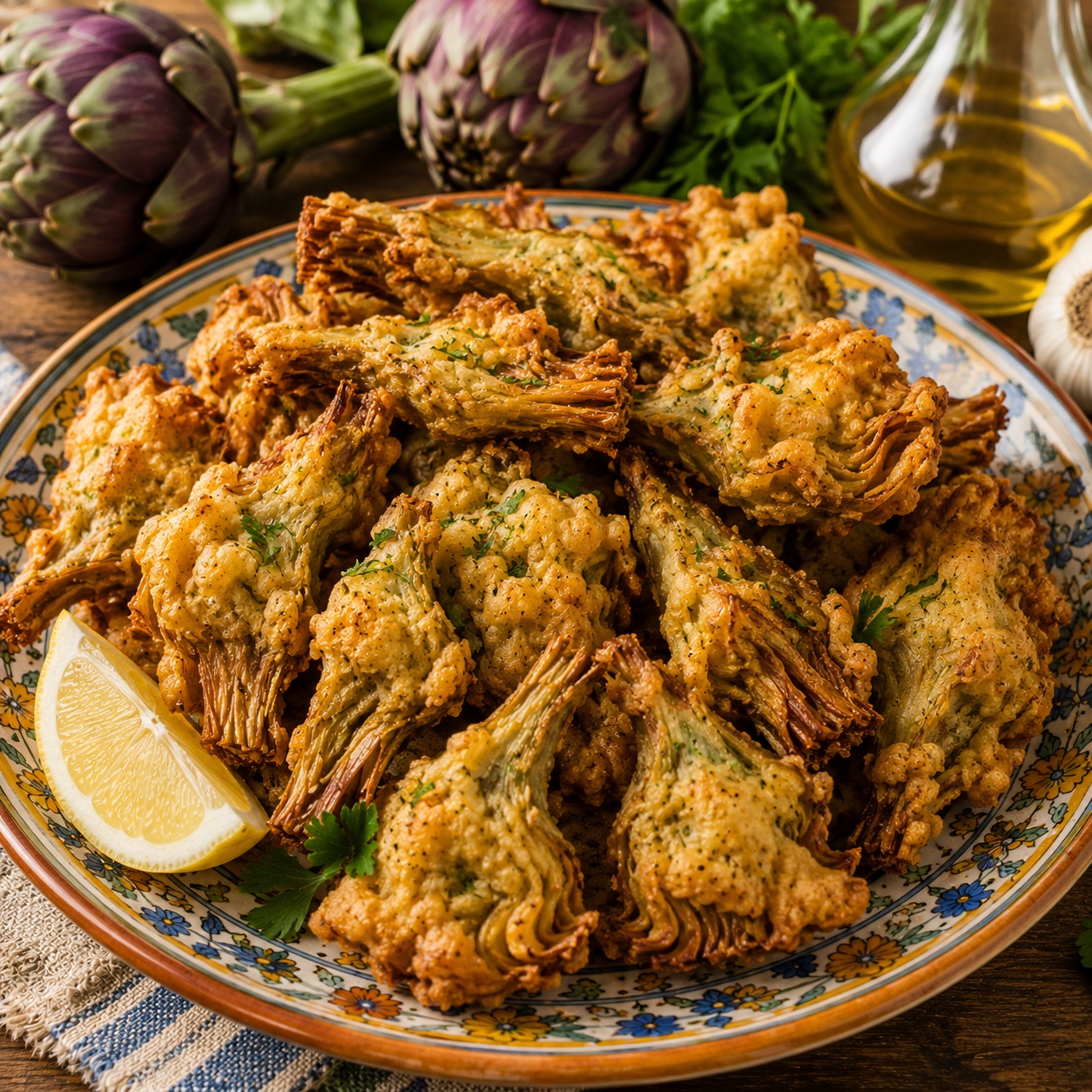
Violet artichokes dipped in beaten egg with Pecorino, dusted with flour, and fried raw — golden outside, tender inside. The word indorato means gilded.
My mother made these and they were delicious. I didn't appreciate them enough at the time — the way you don't appreciate things that are simply there, reliably, as part of how spring tasted. Now I think about them with the specific longing you feel for things that belonged to a time and place that no longer exists in the same way. I would like to eat them now, with more awareness. More appreciation for what they actually were.
The name tells you something: indorato means gilded. The golden coat that forms around the artichoke wedge during frying — from the beaten egg and Pecorino that cling to its surface — is the point. The artichoke itself is not blanched or pre-cooked. This is the Neapolitan tradition: the wedge goes in raw, directly into hot oil, and the high heat cooks the interior while the exterior bronzes. The result is something that is crispy at the edges and tender through the centre, with the mild bitterness of artichoke and the richness of egg and cheese in every bite.
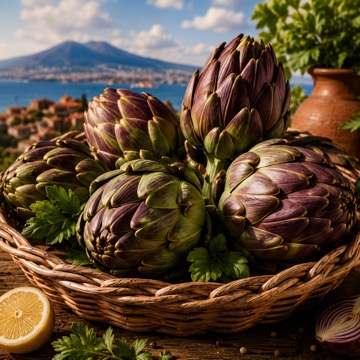
The season matters here. These are made in spring — February through May — when the Carciofo Violetto di Schito and similar Campanian varieties are available: tender, spineless, with a flavour and texture that stands up to direct frying without becoming tough. Outside that window, the artichokes are a different thing entirely.
Frying raw artichokes sounds counterintuitive — most vegetables are blanched first to guarantee they cook through. But artichoke wedges at 5–8 mm thickness will cook from raw in 3–4 minutes in oil at 175°C. The reason not to blanch is that blanching removes moisture from the cells. That internal moisture is what creates steam during frying, which cooks the centre while the exterior forms a crust. A blanched artichoke fries drier and can become tough at the edges before the centre is cooked.
The egg-and-Pecorino coating works in two ways. The egg proteins coagulate rapidly at 70–80°C, forming an immediate bond with the artichoke surface that seals in moisture and prevents oil absorption. The Pecorino adds fat and protein that accelerate Maillard browning — at 140°C and above, the sugars in the cheese interact with the egg proteins to produce the characteristic golden colour and nutty flavour. This is why the coating becomes golden before the interior would naturally brown: the cheese creates ideal Maillard conditions at lower temperatures than the artichoke itself would reach.
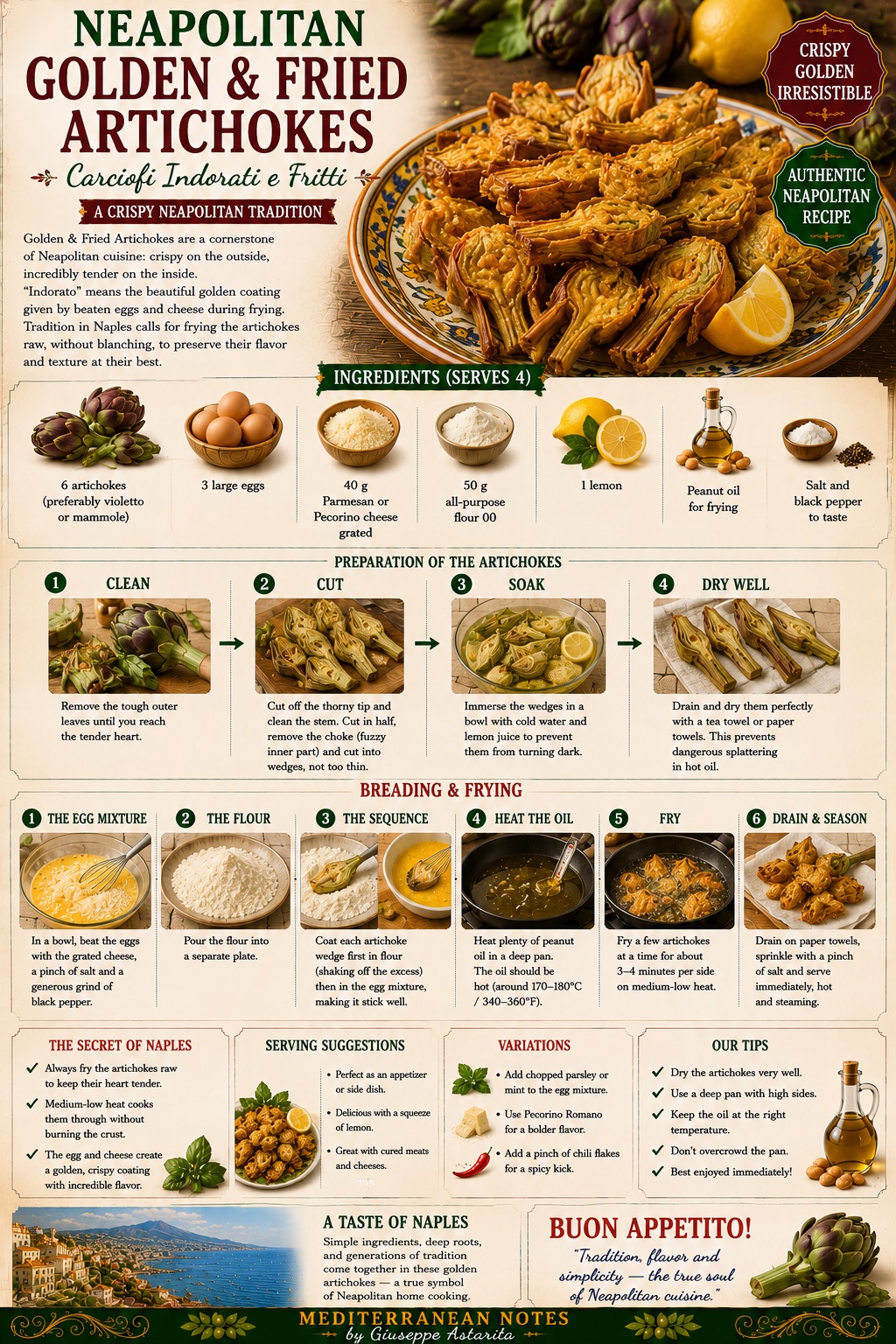
Tap to enlarge — Carciofi indorati: ingredienti, metodo, consigli
Recipe — Carciofi Indorati e Fritti
Serves 4 as a side · Ready in 40 minutes
- 6 medium artichokes Carciofo Violetto di Schito or any tender variety
- 1 lemon for acidulated water
- 3 large eggs
- 40 g Pecorino Romano finely grated
- 50 g plain flour for dredging
- Peanut or sunflower oil generous, for frying
- Salt and black pepper to taste
- Lemon wedges to serve
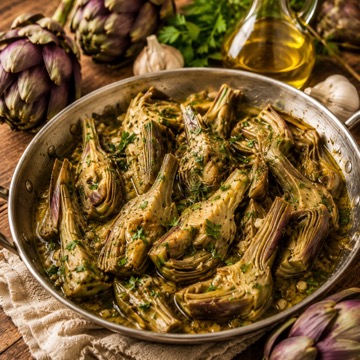
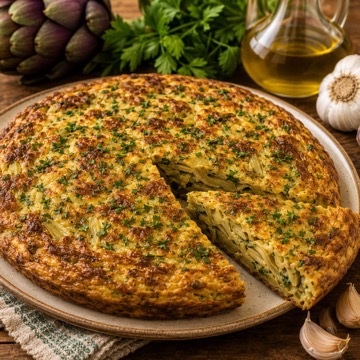
Carciofi indorati e fritti are a spring dish in the most direct sense — there is a specific window when the right artichokes are available, and outside it the dish is not the same. My mother made them during that window, and I ate them without thinking about how brief it was. Now I think about it. The carciofi stufati and the frittata di carciofi belong to the same season and the same ritual. The lemon water bowl on the counter is the signal that spring has started.