Besciamella
Béchamel — the white sauce behind half the baked dishes on this blog
Butter, flour, milk, a little nutmeg. It shows up quietly inside arancini, conchiglioni al forno, timballi, and more — never the headline of a dish, always doing structural work underneath something else.
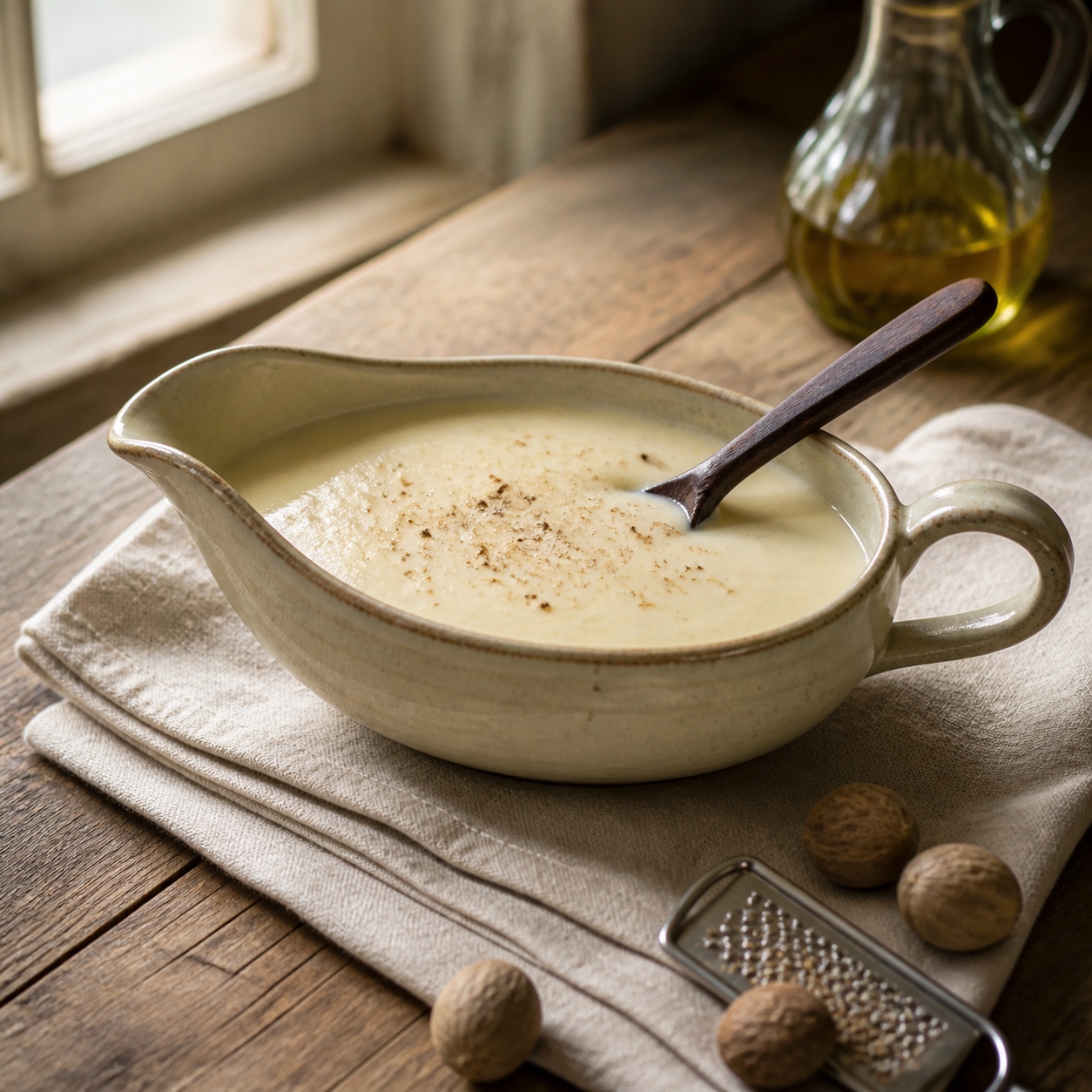
Besciamella is the one base sauce on this blog that shows up the most often without ever being the point of the dish. It thickens the filling of arancini, binds a layer inside conchiglioni al forno, gives a timballo its structure, and occasionally replaces part of the ricotta in a baked pasta for something richer and more delicate. Every one of those recipes names besciamella as an ingredient, expects you to already know how to make it, and moves on. This page is where that knowledge actually lives.
It is, at its core, one of the simplest sauces in any kitchen: a roux of butter and flour cooked briefly, then thinned with milk added gradually and whisked until smooth, seasoned with salt, white pepper, and a scrape of nutmeg. The whole process takes fifteen minutes and the only real risk is lumps, which come from adding the milk too fast or too cold, or not whisking constantly enough while it thickens.
The consistency you want depends on what it is going into. A thinner besciamella, more like a pourable cream, works well folded through a filling or layered thin between sheets of pasta. A thicker one, closer to a paste, is what you want for binding something like an arancino filling, where it needs to hold its shape rather than run.
A roux — equal parts butter and flour cooked together briefly — works because the fat coats the flour's starch granules, which prevents them from clumping together when liquid is added later. When milk goes in gradually, each addition has time to hydrate the coated starch evenly before more is added, which is what produces a smooth sauce. Adding all the milk at once, or adding it cold to a hot roux, causes the outer layer of each starch granule to gelatinize instantly and unevenly, trapping dry flour inside small lumps that whisking afterward cannot fully break up. Warming the milk first — or at least bringing it to room temperature — reduces this shock and makes a smooth result far more reliable.
The sauce thickens because starch granules absorb water and swell as the mixture is heated, a process called gelatinization that becomes complete around 85–90°C. This is why besciamella needs to come to a gentle simmer, not just a warm temperature, to reach its final thickness — and why it continues to thicken slightly as it cools, since the swollen starch network firms up further once heat is removed.
The recipe
Makes about 500 ml — enough for a medium baked pasta dish, or a batch of arancini filling. Scale up or down keeping the 1:1:10 ratio of butter to flour to milk.
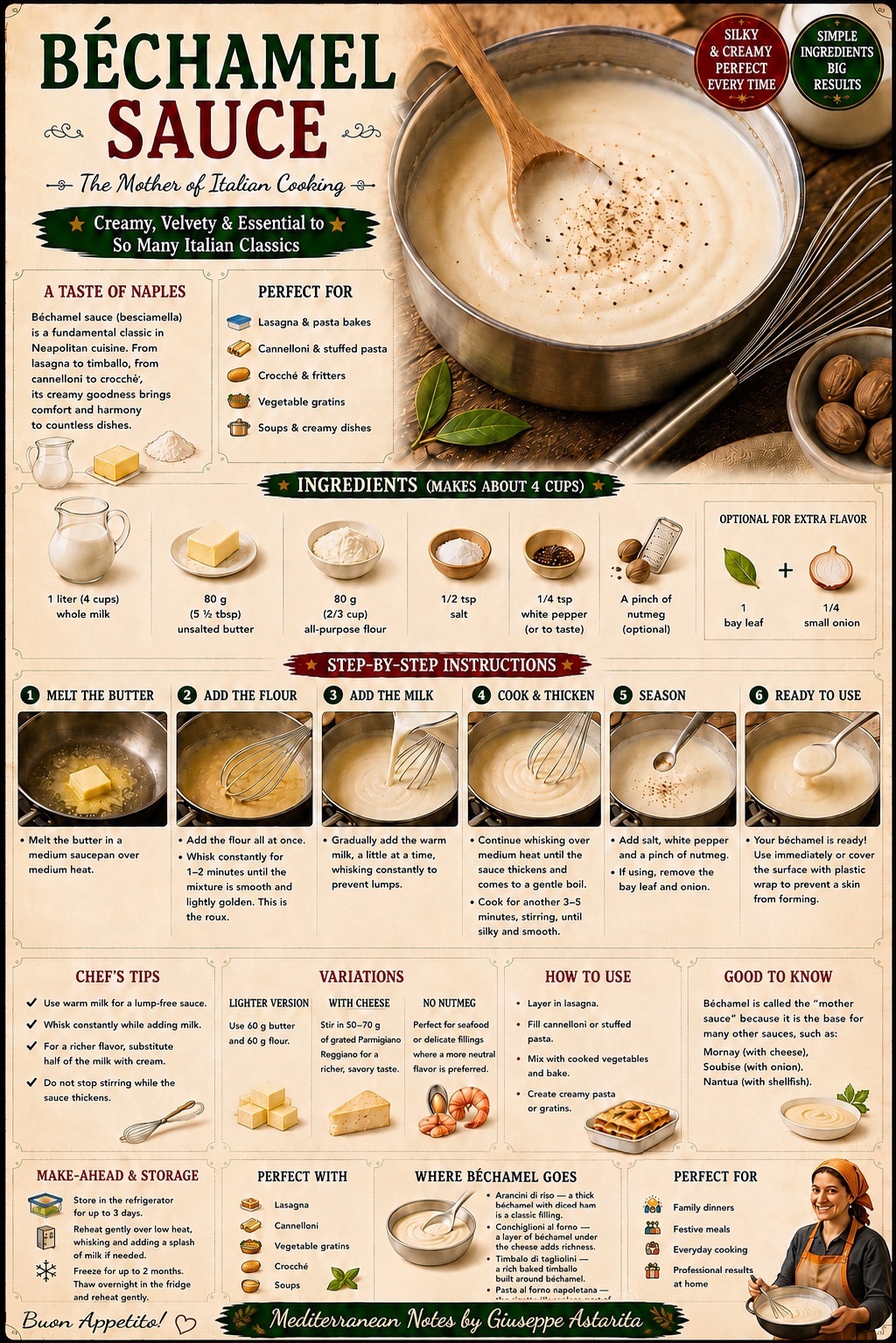
Where it shows up on this blog
Una salsa, mille impieghi silenziosi.