Timballo di Tagliolini
With Béchamel, Peas and Ham — Rich, Creamy, Perfect for Special Occasions
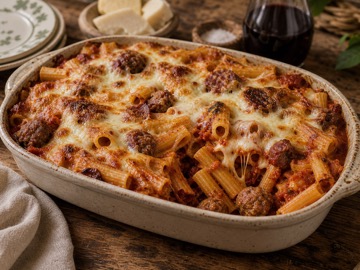
My mother sometimes made béchamel sauce — and when she did, this was often the result. A sumptuous baked timballo of tagliolini, creamy béchamel, sweet peas and ham, unmolded from a ring pan at the table. The tagliolini were notable for being used here in a completely different way from their usual appearance in this kitchen: otherwise we only had them in broth. Sometimes she packed the timballo for picnics on the mountains near Caserta.
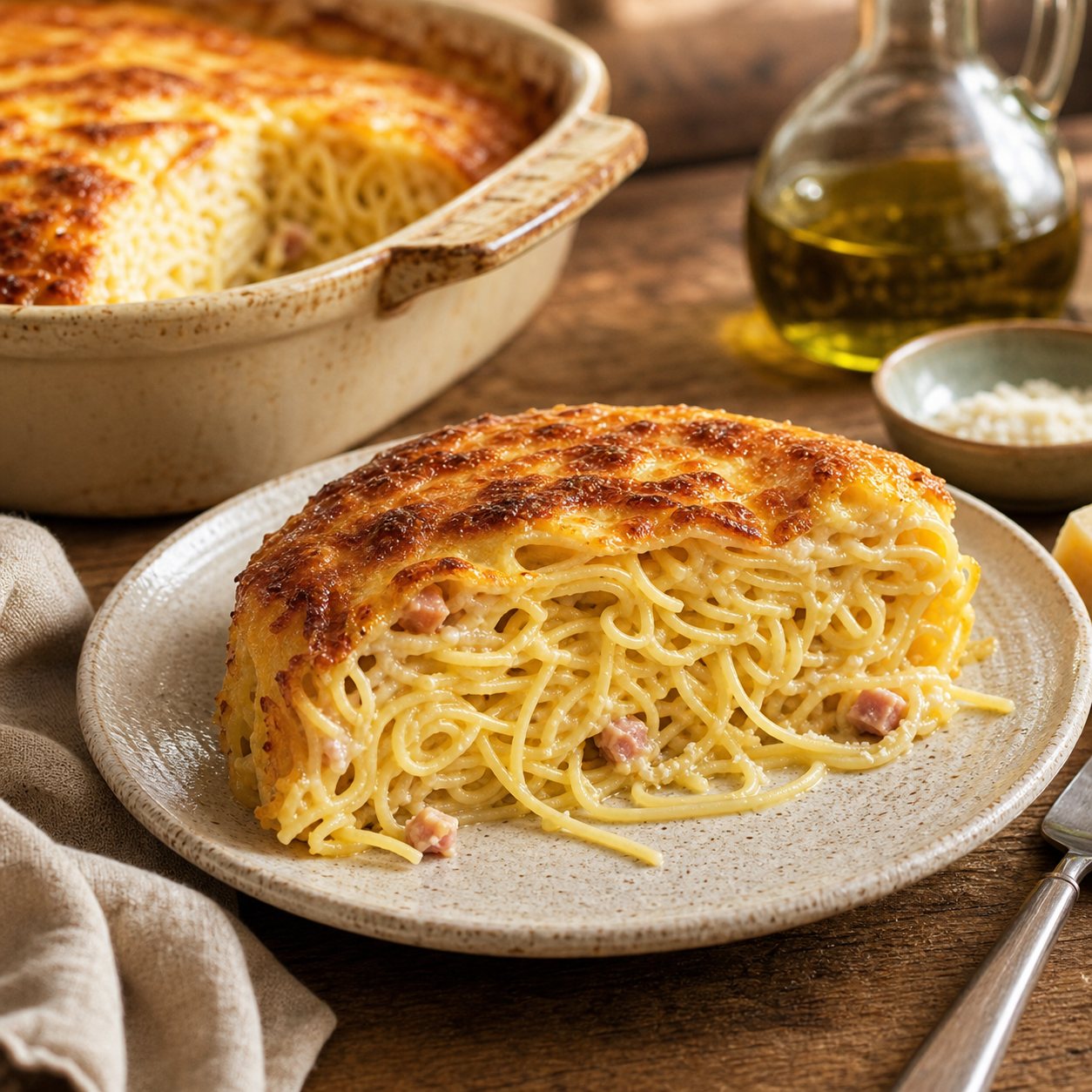
The mountain picnics near Caserta — in the hills of the Campanian hinterland, on the slopes of the Matese or toward Roccamonfina — were another world from the midday table at home. The timballo traveled well: baked in the morning, wrapped, unmolded at the picnic site and sliced on a cloth on the ground. Cold, or at the ambient temperature of an October hillside, it held its shape and tasted completely different from the hot version at the table — the béchamel firmer, the crust more pronounced, the peas still distinct in their sweetness. A made-ahead dish that became a better dish for the travel.
The timballo is one of the most specifically Neapolitan of all pasta preparations — a baked pasta molded in a pan and unmolded to reveal a golden crust around a dense, creamy interior. The word timballo comes from the French timbale (kettle drum), named for the cylindrical shape of the mold. The preparation arrived in the Neapolitan court kitchen through the French chefs of the Bourbon dynasty, where it was elaborate and theatrical — a full pastry crust, multiple fillings, served at formal dinners. By the time it reached the domestic kitchen, it had simplified considerably: the pastry crust reduced to a coating of buttered breadcrumbs, the filling simplified to pasta with whatever the kitchen had. The court dish became a family dish. It is better for the simplification.
The recipe — serves 6
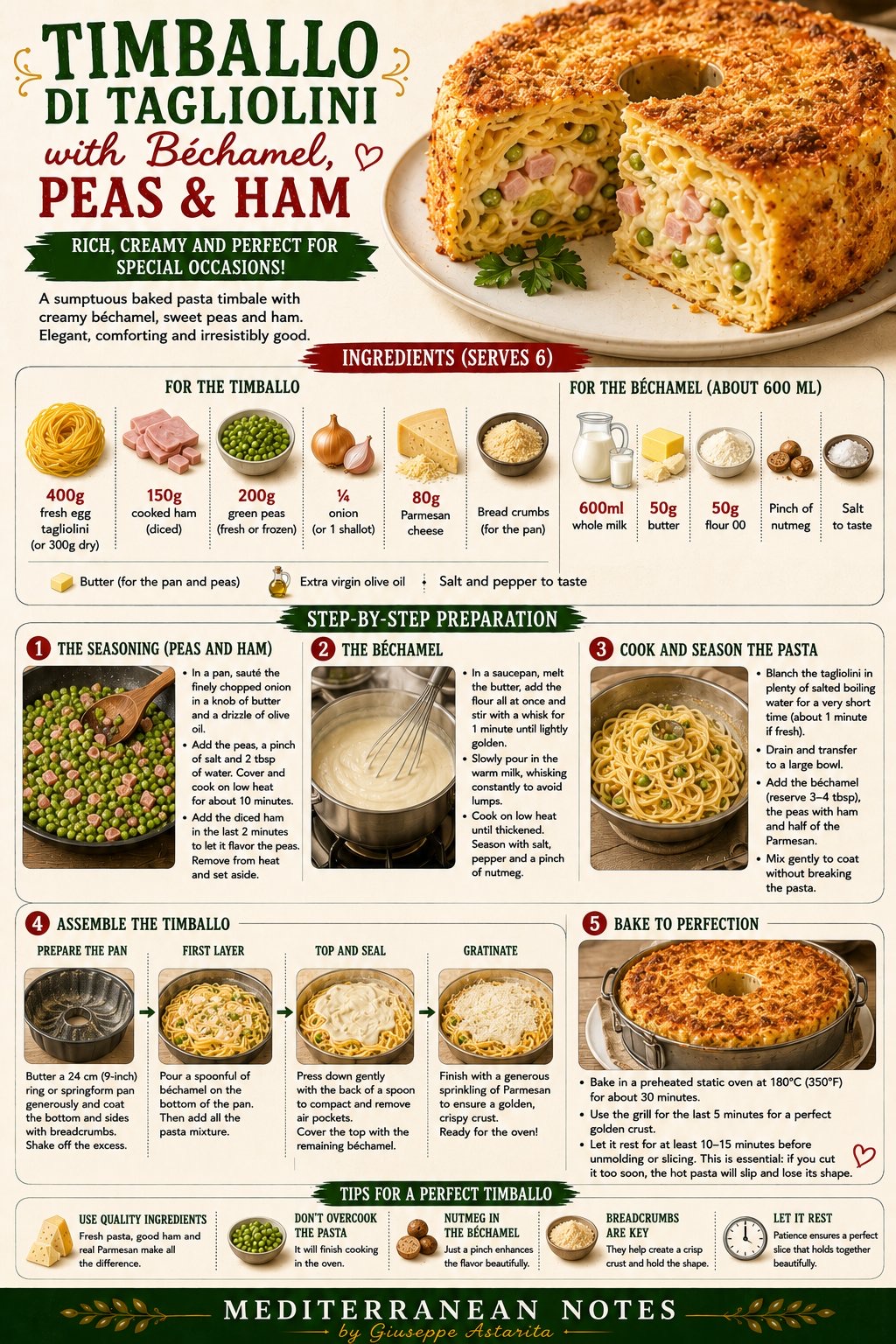
Béchamel — a roux-thickened milk sauce — owes its body to the gelatinization of the wheat starch granules in the flour, which absorb water and swell when heated above approximately 65°C, forming a continuous gel that thickens the milk. When the assembled timballo is baked, the béchamel that coats the pasta and fills the spaces between the noodles is subjected to a second heating. The starch gel firms further, the milk proteins coagulate partially, and the béchamel transitions from a fluid sauce to a semi-solid binding matrix that holds the pasta in its molded shape. This is why the béchamel does not simply drain out when the timballo is unmolded — it has set around the pasta structure. The breadcrumb crust forms an additional physical barrier through Maillard browning and dehydration, producing the specific crispy golden shell.
Nutmeg contains myristicin, safrole, and several dozen other volatile aromatic compounds including monoterpenes and phenylpropanoids that are highly fat-soluble. In béchamel — a fat-rich sauce — these compounds dissolve into the butter fat and distribute throughout the sauce far more effectively than they would in a water-based preparation. The sensory effect is not simply "nutmeg flavor" but a broader warm, slightly sweet, slightly spicy aromatic note that complements the lactic flavor of the milk and the slightly toasty flavor of the roux, producing the specific taste profile of classic béchamel. A béchamel without nutmeg tastes flat and floury; with nutmeg it tastes complete. This is why the infographic calls nutmeg essential, and why this note repeats across every serious béchamel recipe in the Italian tradition.
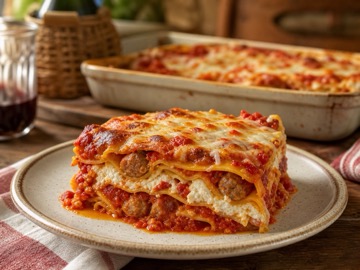
This is the most elaborate dish in the collection — more assembled, more composed, more of a production than even the pasta al forno. It belongs to the category of dishes that announce themselves as special by their form alone: a golden ring, unmolded at the table, sliced to reveal the creamy interior. The béchamel connects this preparation to the French Bourbon influence on Neapolitan cuisine that appears throughout the collection — in the pastry tradition, in the elaborate Sunday preparations, in the specific refinement that distinguishes Neapolitan haute cuisine from the cucina povera that constitutes most of this collection. The two traditions coexisted in the same kitchen, made by the same hands on different days.
Packed into foil for the mountains near Caserta, it was neither haute cuisine nor cucina povera. It was lunch, carried uphill, eaten on a cloth on the ground among the chestnut trees with the plain of Campania visible below. The same timballo, in a completely different context, tasting slightly different because it was cold and the air was thin and the occasion was not a table but a hillside. Food that travels with you becomes part of the travel.
Per le occasioni speciali — e per i picnic in montagna.
The same timballo, two completely different meals.